


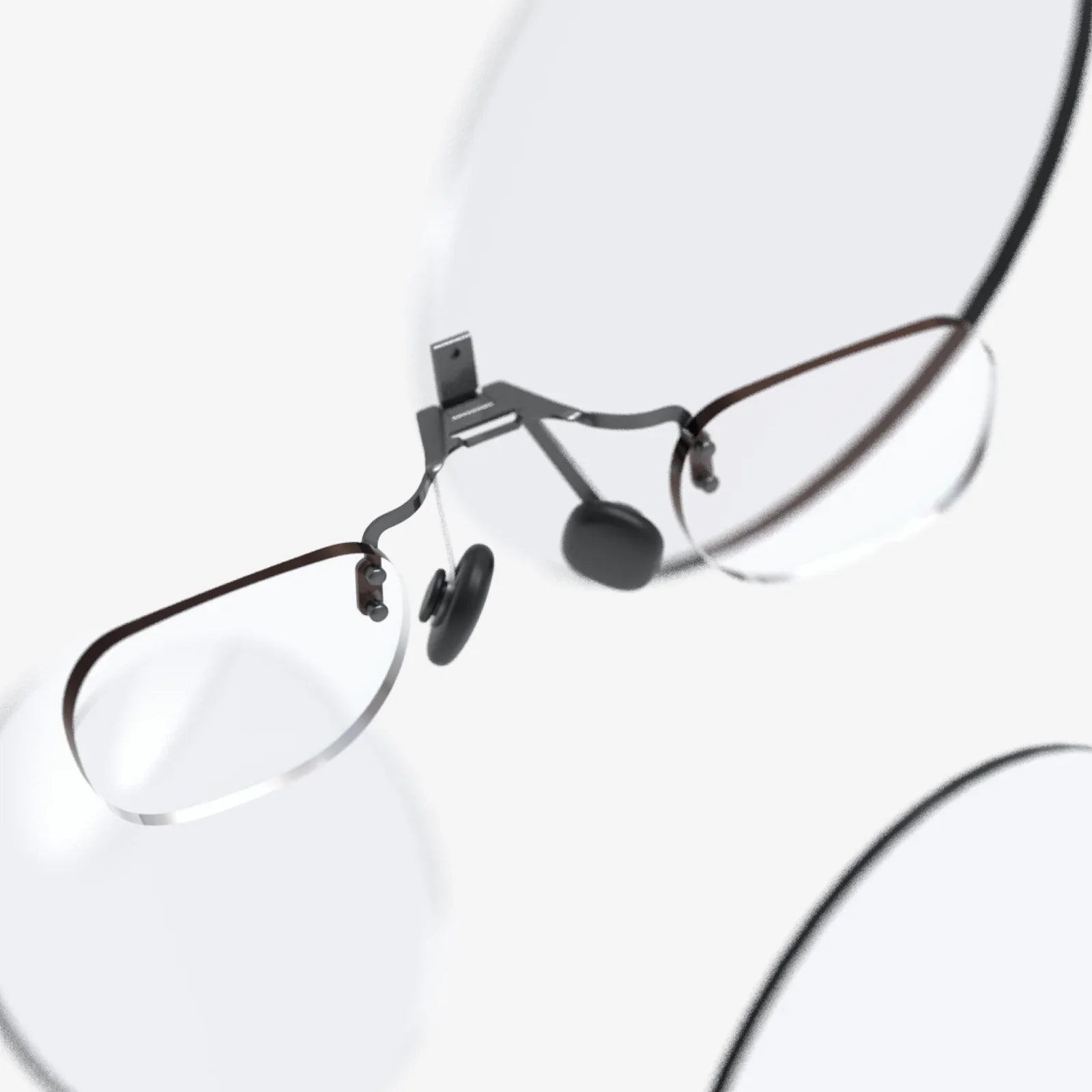
Imagine a world where your most pressing questions are answered not by pulling a device from your pocket, but by a quiet whisper in your ear, where the digital and physical realms don't just coexist but are elegantly, seamlessly intertwined. This is the promise of AI glasses in 2025, a technological leap poised to redefine our very perception of reality and our interaction with information. The era of clunky prototypes and niche applications is over; we are standing on the precipice of a mainstream revolution in wearable intelligence.
The Core: A Truly Contextual and Predictive Assistant
At the heart of the 2025 AI glasses experience is an artificial intelligence that has evolved from a reactive tool into a proactive, contextual partner. This is a monumental shift from the assistants of yesterday.
Hyper-Personalized Environmental Awareness
Powered by a sophisticated sensor array—including high-resolution cameras, LiDAR, microphones, and advanced inertial measurement units (IMUs)—these glasses construct a real-time, three-dimensional understanding of the user's environment. The AI doesn't just see a street; it recognizes the specific storefronts, crosswalks, and potential hazards. It doesn't just hear noise; it distinguishes between a car horn, a friend's greeting, and the specific melody of your favorite song playing in a café. This environmental data is continuously cross-referenced with your personal data (calendar, preferences, goals) and cloud-based information, creating a rich, layered context for every moment.
Proactive and Predictive Intelligence
The AI's true power lies in its predictive capabilities. Based on your routine, it might proactively display your boarding pass and gate number as you enter the airport. While walking through a foreign city, it could instantly and accurately translate street signs and menus in your field of view, overlaying the translation without a perceptible delay. If your calendar shows a meeting with a person you haven't seen in a while, it might discreetly remind you of their name and your last conversation topic. This is not a command-based interface; it's an anticipatory one, aiming to deliver the right information at the right time, before you even know you need it.
The Eyes: Revolutionary Display and Visual Technologies
For augmented reality to become truly pervasive, the technology projecting the digital world onto our physical one must be indistinguishable from magic. The AI glasses of 2025 have made significant strides here.
Advanced Waveguide and Holographic Optics
The bulky optics of the past have given way to sleek, fashionable designs thanks to breakthroughs in waveguide technology. These microscopic structures, etched into the lenses, channel light from micro-projectors at the temples to the user's eyes, painting high-resolution, full-color images onto the real world. Furthermore, holographic optical elements (HOEs) are enabling wider fields of view, often exceeding 70 degrees, which is crucial for immersive experiences. This creates a seamless blend where digital objects appear fixed in space, whether it's a navigation arrow on the road ahead or a virtual monitor on your desk.
Dynamic Focus and Eye Tracking
A critical challenge overcome in this generation is the vergence-accommodation conflict—the discomfort caused when virtual objects appear to be at one distance but your eyes must focus at another. 2025's glasses feature varifocal or light-field displays that dynamically adjust their focus based on where you are looking, creating a natural and comfortable viewing experience for both near and far objects. This is enabled by sophisticated, high-speed eye-tracking systems that not only manage focus but also serve as a primary input method, allowing for intuitive control simply by looking at different interface elements.
The Voice: Natural and Multimodal Interaction
Interacting with such a powerful device requires an interface that feels effortless and natural. The keyboard and touchscreen are relegated to a secondary role.
Ambient and Conversational Voice Control
Voice control has moved far beyond simple wake words and commands. Advanced beamforming microphone arrays isolate the user's voice from ambient noise with incredible fidelity, allowing for quiet, conversational interactions. The AI can engage in a natural, contextual dialogue, understanding follow-up questions and complex, multi-part requests. You can simply murmur, "Remember that building?" while looking at an interesting piece of architecture, and the glasses will pull up its history, or ask "How do I say 'thank you' here?" and get an instant audio and visual translation.
Gesture and Neurological Inputs
For situations where voice is impractical, subtle gesture control takes over. Tiny inward-facing cameras track finger movements, allowing users to swipe through menus, select items, or resize windows with discreet pinches and swipes in the air. The most cutting-edge models are beginning to incorporate nascent electroencephalogram (EEG) sensors, capable of detecting basic intentionality signals. While not for typing emails, this could allow for control via concentrated thought for simple commands like "select" or "open," offering a glimpse into a truly hands-free future.
The Engine: On-Device AI and Next-Generation Connectivity
The sleek form factor belies a tremendous amount of computing power, fundamentally rearchitected for efficiency and speed.
The Rise of the Neural Processing Unit (NPU)
Massive, dedicated Neural Processing Units (NPUs) are the workhorses of 2025's AI glasses. These specialized chips are designed from the ground up to perform trillions of operations per second (TOPS) required for real-time computer vision, natural language processing, and deep learning inference with extreme power efficiency. This shift to on-device AI processing is critical for two reasons: it eliminates the latency of sending data to the cloud, enabling real-time interactions, and it drastically improves user privacy by keeping sensitive visual and audio data locally on the device.
Seamless Connectivity with 5G-Advanced and Wi-Fi 7
When a task requires more computational muscle or access to live information, the glasses seamlessly offload it. Connectivity via 5G-Advanced and Wi-Fi 7 provides ultra-reliable, low-latency communication, enabling complex cloud-based rendering or instant access to vast knowledge bases without any perceivable lag. This hybrid approach—balancing powerful on-device processing with robust cloud connectivity—ensures a smooth and always-capable user experience.
The Impact: Transforming Industries and Daily Life
The implications of these features extend far beyond consumer convenience, poised to revolutionize numerous professional fields and social interactions.
Revolutionizing Enterprise and Healthcare
In industrial settings, a technician wearing AI glasses can see schematics overlaid onto machinery, receive step-by-step repair instructions, and have a remote expert annotate their real-world view to guide them. Surgeons can visualize patient vitals and 3D scans directly in their line of sight during procedures. These glasses are becoming indispensable tools for enhancing productivity, accuracy, and safety.
Redefining Social Connection and Accessibility
For individuals who are deaf or hard of hearing, real-time speech-to-text transcription can be displayed during conversations, breaking down communication barriers. For those with low vision, the glasses can highlight obstacles, recognize faces, and read text aloud from any surface. They promise to create a more accessible and connected world, augmenting human ability in profoundly meaningful ways.
Navigating the New Frontier: Privacy and the Future Self
This always-on, always-sensing technology inevitably raises profound questions about privacy and the nature of human experience.
The Privacy Imperative
The industry's success hinges on building and maintaining trust. Features like physical lens shutters, clear LED indicators showing when cameras are active, and robust, encrypted local data processing are no longer optional; they are fundamental requirements. Users must have absolute control over their data, with transparent policies on what is recorded, processed, and stored. The ethical development of this technology will be as important as the technological development itself.
The Augmented Human Experience
As these devices become more integrated into our lives, we must consciously navigate their impact on our cognition and memory. Will we offload too much? Will the constant stream of information enhance our experiences or distract us from them? The glasses of 2025 are not just a piece of technology; they are a mirror reflecting our choices about how we want technology to shape our humanity, offering the potential to augment our intelligence without replacing our innate curiosity and presence in the world.
The AI glasses of 2025 are far more than a hands-free smartphone; they are the gateway to a new layer of reality, a silent partner that enhances perception, unlocks knowledge, and empowers action. They represent the culmination of advancements in miniaturization, connectivity, and artificial intelligence, converging into a device that promises to fundamentally alter how we work, connect, and navigate the world. The future is not something we will look at on a screen; it is something we will see through, and it is arriving now.
Share:
When Was Augmented Reality Created? The Surprising 60-Year Journey
3D Glasses Technology: A Deep Dive into the Science of Depth Perception