


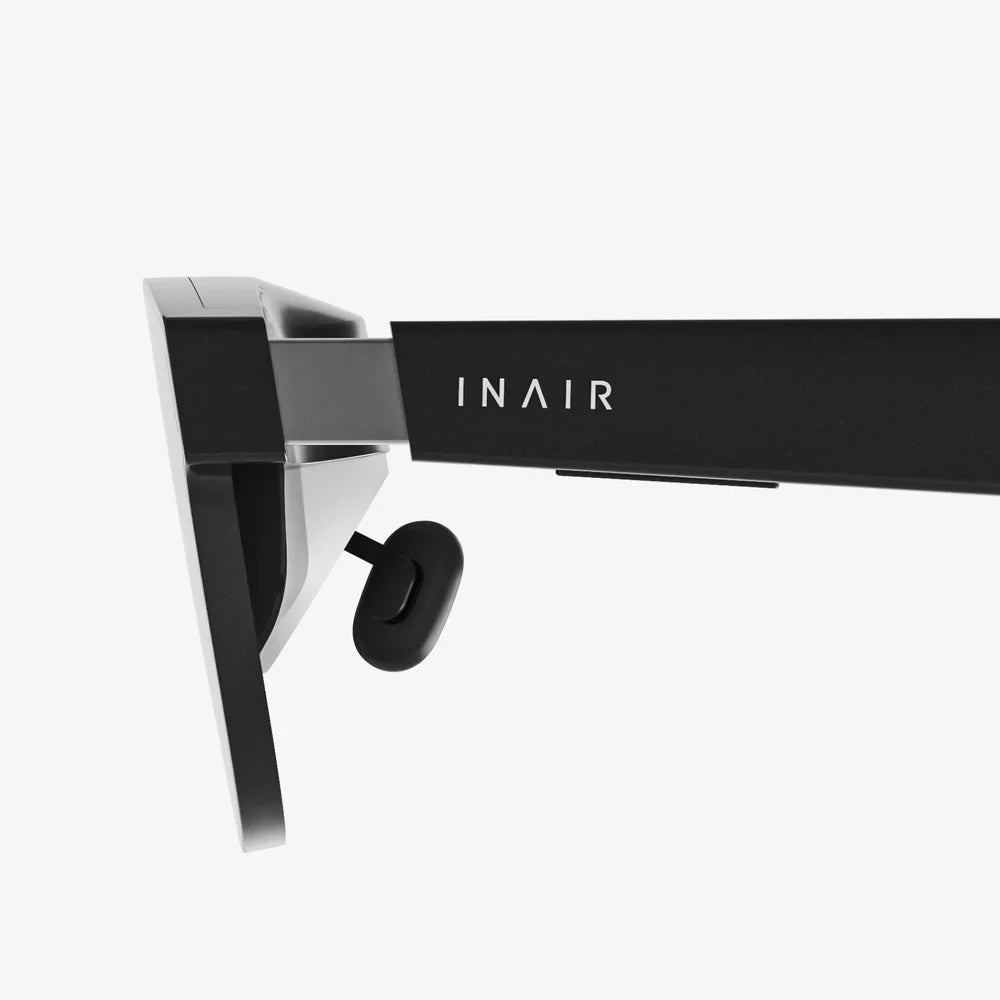
Imagine reaching out and touching a digital object floating in mid-air. Picture a medical student dissecting a perfect, shimmering holographic heart, a designer sculpting a new prototype as if it were clay, or a family gathered around a table, sharing stories with a lifelike hologram of a grandparent living across the globe. This is not a scene from a science fiction film; it is the imminent future promised by the 3D hologram monitor, a technology that is shattering the two-dimensional confines of our screens and ushering in a new era of spatial computing.
Beyond the Screen: Defining the Holographic Display
To understand the 3D hologram monitor, one must first move beyond the traditional concept of a display. A standard monitor, whether LCD or OLED, is a flat surface that emits light to form a two-dimensional image. We perceive depth through visual cues like perspective and shading, but the image itself is confined to the physical plane of the screen. A 3D hologram monitor operates on an entirely different principle. Its primary function is to project, create, or render a light field that replicates how light scatters off a physical object, creating the perception of a three-dimensional volume existing in free space, without the need for any special glasses or headgear.
This is achieved through a variety of sophisticated techniques. Some systems utilize precisely arranged arrays of micro-lenses or diffraction gratings to bend light and create points of convergence in space. Others employ rapidly moving or vibrating surfaces to reflect light and scan a three-dimensional image into existence. More advanced prototypes might use acoustic levitation to suspend a particle, which is then illuminated with RGB lasers to trace out a volumetric image. The common goal is to fool the human visual system into seeing a solid, tangible object where none exists, offering a 360-degree viewing experience that changes naturally as the observer moves around it.
The Engine Room: How It Creates the Illusion of Reality
The magic of a holographic display is woven from a complex tapestry of hardware and software. The process typically begins with data—a 3D model created in computer-aided design (CAD) software, a scan from a 3D scanner, or even footage from multiple cameras capturing an object or person from every angle. This digital information is then processed by powerful algorithms that calculate the precise interference patterns required to reconstruct that object as a hologram.
This computational load is immense. Generating a convincing, real-time hologram requires processing staggering amounts of data to manage the light field for every point in space. This is where advancements in processing power, particularly in parallel computing architectures, become critical. The calculated pattern is then sent to a spatial light modulator (SLM), a crucial component that acts like a dynamic transparency, controlling the phase and amplitude of the light waves passing through it. Coupled with a coherent light source like a laser, the SLM modulates the light to create the constructive and destructive interference patterns that form the holographic image. The result is a collection of voxels—volumetric pixels—suspended in air, each a point of light with a defined position in X, Y, and Z coordinates.
A Spectrum of Applications: Transforming Industries
The potential applications for this technology extend far beyond novelty, poised to become fundamental tools across numerous sectors.
Revolutionizing Medicine and Healthcare
In medicine, the impact will be profound. Surgeons can use interactive 3D holograms of a patient's specific anatomy, derived from CT or MRI scans, to plan complex procedures. They can rotate a holographic brain, zoom into a coronary artery, or practice a delicate operation without ever making an incision. For medical education, it replaces static textbooks and 2D screens with interactive, true-to-life models of organs, skeletons, and biological processes, enabling a deeper, intuitive understanding of the human body.
Reimagining Design and Engineering
For architects, industrial designers, and engineers, the 3D hologram monitor is the ultimate design tool. Instead of viewing a building model on a computer screen, they can walk around a full-scale holographic rendering, assessing proportions, sightlines, and structural elements in a way that feels real. Automotive designers can examine a holographic car chassis from every angle, and mechanical engineers can assemble and disassemble complex machinery virtually, identifying potential design flaws long before a physical prototype is ever built.
The Future of Communication and Collaboration
Telepresence and remote collaboration will be utterly transformed. Video conferencing, with its grid of flat faces, will give way to holographic conferencing, where participants appear as realistic holograms around a meeting table, able to make eye contact and use natural gestures. This creates a powerful sense of shared presence, collapsing geographical distances in a way that feels genuinely human. Imagine a global design team manipulating a shared holographic model in real time, from different continents.
Unlocking New Realms of Entertainment
The entertainment industry will be completely upended. Gaming will evolve from an activity on a screen to an interactive experience with characters and environments existing in your living room. Concerts could be experienced with holographic performers, and films could be told in three-dimensional space, offering narratives that unfold all around the viewer. Museums could exhibit priceless artifacts as perfect holographic duplicates, allowing visitors to examine them closely from all sides.
Navigating the Challenges: The Path to Mainstream Adoption
Despite the breathtaking potential, the path to a world where every home has a hologram monitor is fraught with significant technical and practical hurdles. The most pressing challenge is resolution and fidelity. Current systems often struggle with producing holograms that are both high-resolution and large-scale, often resulting in images that can appear ethereal or speckled. The computational power required is still prohibitively expensive for consumer applications, demanding specialized hardware.
Furthermore, achieving a wide field of view and a large viewing zone—the "sweet spot" where the hologram is perfectly visible—remains difficult. Many early systems require the viewer to be positioned within a specific area. There are also questions of content creation; an entirely new ecosystem of software and media formats needs to be developed to create native content for these 3D displays, moving beyond simply converting existing 3D models.
The Horizon of Possibility: What Tomorrow Holds
The evolution of the 3D hologram monitor is intrinsically linked to progress in adjacent fields. Breakthroughs in artificial intelligence are already being leveraged to reduce the computational complexity of generating holograms, making real-time rendering more feasible. Advances in nanotechnology could lead to new materials for more efficient and precise spatial light modulators. The integration of eye-tracking and gesture recognition will create seamless and intuitive interfaces, allowing users to manipulate holograms with their hands and eyes.
We are moving towards a future of truly ambient computing, where digital information is not locked behind glass but is integrated gracefully into our physical environment. The monitor, as a distinct object, may eventually disappear altogether, replaced by surfaces and spaces that can generate holograms on demand. This will blur the line between the digital and the physical, creating a hybrid reality where our interactions with technology become more natural, more intuitive, and profoundly more powerful.
The flicker of a shape materializing in your periphery is no longer just a fantasy. It is the early glimmer of a new reality being assembled, voxel by voxel, in labs and studios around the world. The age of flat screens is yielding to a more profound dimension, one where our digital creations can finally step out into our world and share our space. The question is no longer if this future will arrive, but how quickly we are ready to reach out and touch it.
Share:
Visual Reality Headset: A Portal to New Worlds and Limitless Potential
Visual Reality Headset: A Portal to New Worlds and Limitless Potential