


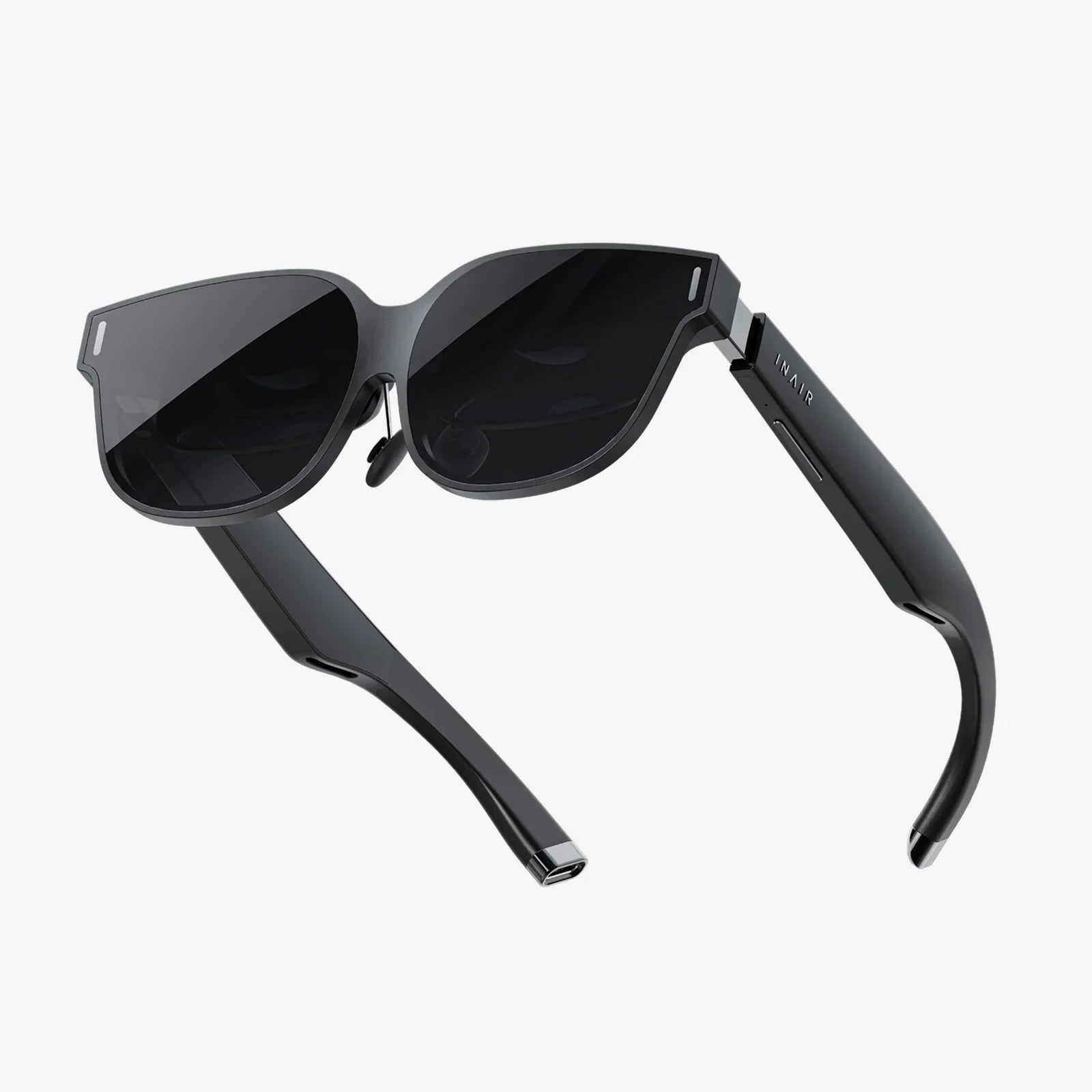
Imagine a device that can instantly transport you from your living room to the peak of Mount Everest, the surface of Mars, or the front row of a concert happening a thousand miles away. This is no longer the stuff of science fiction; it is the tangible, awe-inspiring power of the modern visual reality headset, a technological marvel that is redefining the very fabric of human experience and connection.
The Anatomy of Immersion: How a Visual Reality Headset Works
At its core, a visual reality headset is a feat of sensory engineering designed to trick the human brain into accepting a digital world as real. This illusion, known as presence, is achieved through a sophisticated interplay of hardware and software. The primary components include high-resolution displays placed mere centimeters from the user's eyes, often through specialized lenses that warp the image to fill the entire field of view. This creates a wide field of view that is critical for immersion, eliminating the "binoculars effect" of earlier technologies.
These displays refresh at a very high rate, typically 90Hz or higher, to ensure smooth motion and prevent the disorientation and nausea that can occur with lag or stutter. This is complemented by precise head-tracking technology, using a combination of gyroscopes, accelerometers, and external or internal cameras to monitor the user's head movements in real-time. As you turn your head, the world within the headset adjusts instantly, maintaining the crucial link between your physical movement and the virtual response.
Beyond sight, advanced audio is a cornerstone of the experience. Spatial audio technology mimics how sound behaves in the real world, allowing users to pinpoint the direction and distance of a sound. The rustle of leaves will seem to come from your left, while a voice speaking behind you will sound exactly as it should. For deeper immersion, many systems incorporate haptic feedback controllers. These devices translate digital events into physical sensations, allowing you to feel the recoil of a virtual weapon, the vibration of a steering wheel, or the subtle texture of a virtual object.
Beyond the Game: Applications Reshaping Industries
While gaming and entertainment were the initial driving forces, the value of visual reality headsets has exploded into a multitude of professional and practical fields, proving to be far more than a novelty.
Revolutionizing Education and Training
Imagine medical students performing intricate virtual dissections or practicing complex surgical procedures without risk to a patient. Pilots can train for emergency scenarios in hyper-realistic flight simulators. Mechanics can learn to repair new engine models by interacting with a full-scale 3D hologram. Visual reality headsets provide a safe, scalable, and incredibly effective platform for experiential learning, dramatically improving knowledge retention and skill acquisition.
The Future of Remote Work and Collaboration
The concept of the office is being transformed. With a visual reality headset, remote teams from across the globe can meet in a shared virtual space, interacting with 3D models, whiteboards, and data visualizations as if they were in the same room. Architects and engineers can walk clients through unbuilt designs at a 1:1 scale, and designers can collaborate on 3D prototypes in real-time. This goes far beyond video conferencing, fostering a level of collaboration and spatial understanding that was previously impossible.
Breakthroughs in Healthcare and Therapy
The therapeutic potential is staggering. Exposure therapy conducted in VR is being used to successfully treat phobias, anxiety, and PTSD by allowing patients to confront their fears in a controlled, safe environment. Physical rehabilitation patients are using engaging VR games to make repetitive exercises more enjoyable and track progress with precision. Furthermore, VR is providing escapes and cognitive stimulation for bedridden patients, offering virtual travel and social interaction that can significantly improve mental well-being.
Architecture, Design, and Retail
Before a single brick is laid, potential homeowners can take a fully immersive tour of their new house, allowing them to experience the flow of space, the quality of light, and the feel of different materials. Car buyers can configure and explore the interior of a vehicle from their home. Retailers are creating virtual showrooms where customers can try on clothes or place virtual furniture in their actual living space to see how it fits and looks. This "try before you buy" paradigm is reducing uncertainty and revolutionizing customer engagement.
The Hurdles on the Path to Ubiquity
Despite its immense promise, the widespread adoption of visual reality technology faces significant challenges that developers and engineers are racing to overcome.
The Comfort and Accessibility Conundrum
Early headsets were often bulky, heavy, and tethered to powerful computers, limiting mobility and session length. While standalone devices have alleviated the cable issue, achieving a perfect blend of high performance, long battery life, and lightweight, comfortable design remains a primary goal. Making the technology accessible and comfortable for extended use is crucial for its move into the mainstream.
The Specter of Simulator Sickness
A disconnect between what the eyes see and what the body feels can lead to simulator sickness, a form of motion sickness that includes dizziness, nausea, and eye strain. While high refresh rates, low latency, and better design have reduced this issue, it persists for some users and is a barrier to universal acceptance. Ongoing research into vestibular stimulation and improved motion tracking continues to mitigate this problem.
The Social and Ethical Dimension
As we spend more time in virtual spaces, questions about social isolation, data privacy, and psychological impact arise. What are the long-term effects of substituting real-world interaction with digital avatars? How is user data within these immersive environments collected and used? Furthermore, the potential for hyper-realistic virtual experiences raises ethical concerns about content regulation and the blurring line between reality and simulation. Establishing norms and safeguards is as important as the technological advancement itself.
Gazing into the Crystal Ball: The Future of Visual Reality
The current generation of visual reality headsets is merely the foundation. The future points toward even more seamless and powerful experiences. The next frontier is the development of true photorealistic graphics powered by evermore powerful processors and cloud streaming. We are moving towards varifocal displays that dynamically adjust to where the user's eyes are focused, solving the vergence-accommodation conflict that contributes to eye strain.
Perhaps the most transformative development on the horizon is the integration of eye-tracking and facial expression tracking. This will allow avatars to convey nuanced emotion through lifelike eye contact and smiles, making social interaction profoundly more authentic. Foveated rendering, which uses eye-tracking to render only the area of central vision in high detail while reducing the detail in the periphery, will drastically reduce the computational power needed for stunning visuals.
Further out, research into haptic suits, gloves, and even neural interfaces promises to engage the sense of touch more completely, moving beyond simple vibrations to simulate weight, temperature, and resistance. The ultimate goal is a full sensory immersion that feels indistinguishable from physical reality, opening up possibilities we can scarcely imagine today.
The journey of the visual reality headset is just beginning. It is a key that unlocks doors to uncharted territories of human potential, from solving complex global problems through collaborative visualization to providing profound new forms of art and storytelling. It challenges our perceptions, expands our capabilities, and reminds us that the only true limit is the boundary of our own imagination. Strap on a headset and step through the portal—the future is waiting to be built, and it will be an experience unlike any other.
Share:
3D Hologram Monitor: The Future of Visual Interaction is Here
3D Hologram Monitor: The Future of Visual Interaction is Here