


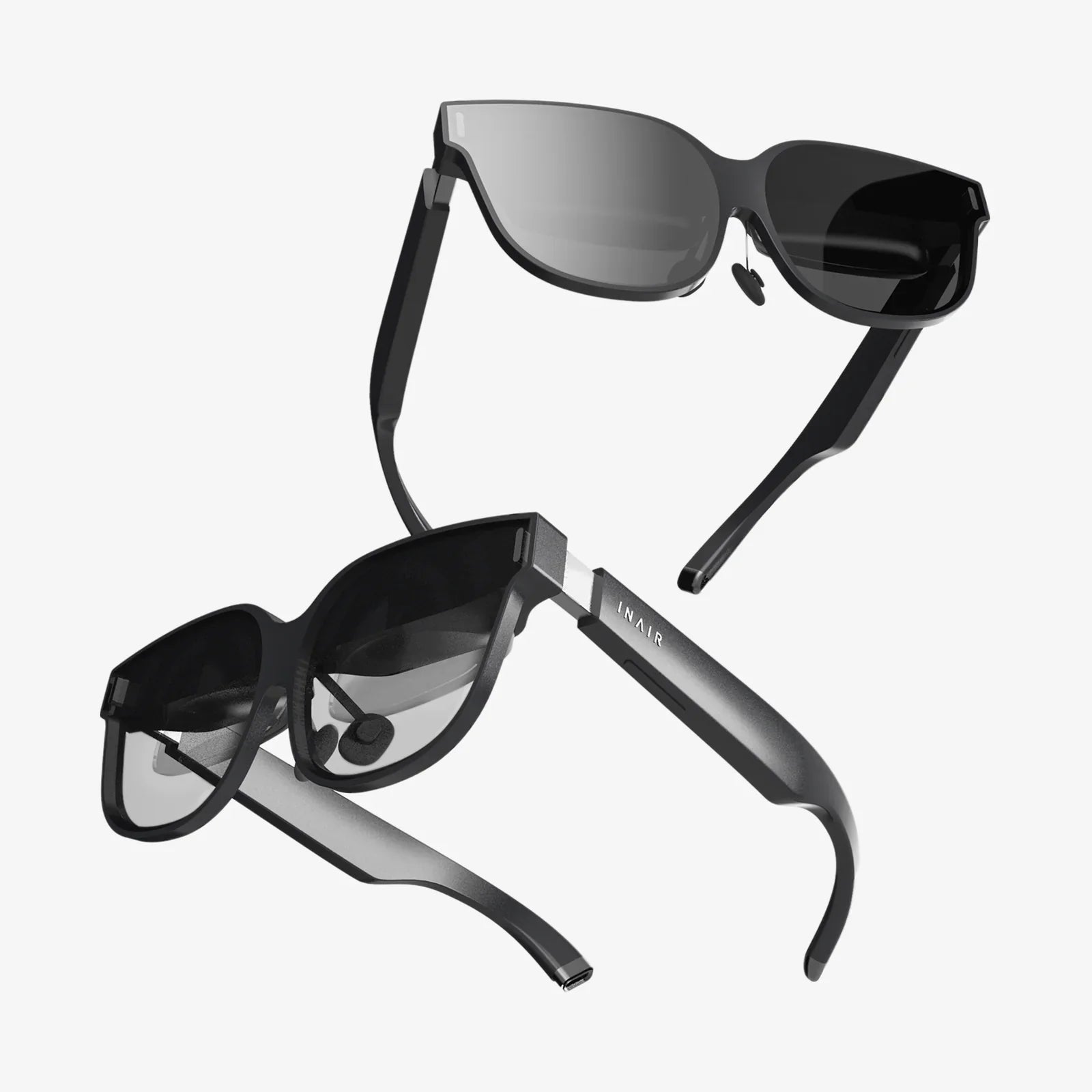
Close your eyes. Remember the last time you were at a live concert, the roar of the crowd swelling from behind you, the crisp strum of a guitar from your left, the singer's voice piercing the air directly in front of you. Or recall standing in a forest, hearing a birdcall from a high branch to your right, the rustle of a squirrel in the leaves behind you, and the distant whisper of the wind moving through the canopy above. This is the magic of sound in the real world—it’s not a flat, one-dimensional experience. It’s a sphere. It’s immersive. And now, this three-dimensional sonic reality is no longer confined to nature or live events. A technological revolution is underway, promising to shatter the flat, walled-in experience of traditional audio. This is the world of 3D immersive audio, and it’s poised to fundamentally change how we listen to everything.
Beyond Stereo: Understanding the Soundscape
For over half a century, stereo audio has been the gold standard. By using two channels (left and right), it created a sense of directionality and width, a massive leap from the single-point source of mono sound. We learned to accept the “sweet spot” between two speakers or the contained, left-right panning of headphones as a sufficient representation of sound. But it was a facsimile, a clever trick that never truly replicated the way we naturally hear.
Our biological hearing is a binaural miracle. We have two ears separated by our head, a structure known as the Head-Related Transfer Function (HRTF). Sound waves interact with our head, torso, and the unique folds of our outer ears (pinnae) before reaching our eardrums. These subtle interactions—differences in timing, intensity, and frequency—provide our brain with the data it needs to triangulate the precise location of a sound source in three-dimensional space: up, down, left, right, front, and back.
3D immersive audio, also known as spatial audio, is the technological pursuit of replicating this natural hearing experience. It’s not merely about adding more speakers; it’s about creating a coherent, spherical sound field around the listener, whether through a sophisticated multi-speaker setup or, more commonly today, through a standard pair of headphones.
The Architectures of Immersion: How It Works
The creation of a 3D audio experience relies on two primary technological approaches: channel-based audio and object-based audio. Understanding the difference is key to appreciating the revolution.
Channel-Based Audio: The Foundation
This is the evolution of the stereo concept. Systems like 5.1 surround sound (left, right, center, left surround, right surround, and a low-frequency effects channel) and its more advanced cousins, 7.1.4 (which adds overhead speakers), are channel-based. The audio is mixed for a specific, pre-determined speaker layout. The sound engineer assigns sounds to specific channels. If you have the correct speaker setup, you will hear the helicopter fly from behind you to in front of you because the audio signal is literally moving from the rear speakers to the front speakers.
The limitation is rigidity. The experience is entirely dependent on the physical speaker configuration. If you don’t have rear speakers, you lose the rear soundscape. It doesn’t adapt to the listener’s environment.
Object-Based Audio: The True Revolution
This is where 3D immersive audio truly comes into its own. In an object-based mix, the sound engineer doesn’t assign a sound to a specific speaker channel. Instead, they treat individual sounds as distinct “objects” within a three-dimensional space. For example, a bird, a ringing phone, or a character's voice becomes an audio object. The mix contains metadata for each object: not just what the sound is, but its intended coordinates in the 3D space (e.g., 30 degrees to the right, 15 degrees up, and 10 feet away).
The magic happens during playback. The consumer's audio receiver—be it a soundbar, an AV receiver, or the software in a pair of headphones—reads this metadata. It then uses a digital rendering engine, applying sophisticated HRTF algorithms, to precisely position each of these audio objects in the sound field based on the listener's actual playback equipment. If you’re using a 5.1 system, the renderer translates the 3D coordinates into signals for your five speakers and subwoofer. If you’re listening on headphones, the renderer uses binaural processing to simulate the entire 3D space directly through the left and right drivers, tricking your brain into perceiving sounds coming from all around and above you.
This adaptive intelligence is the core strength of object-based audio. It allows a single mix to scale elegantly from a massive 24-speaker cinema setup down to a simple pair of earbuds, preserving the artist's intended spatial intent across vastly different devices.
A Universe of Applications: More Than Just Entertainment
While the most obvious application is in film and music, the tentacles of 3D immersive audio extend far deeper into our digital lives.
The Cinematic Experience
Film is the flagship use case. Imagine watching a thriller and hearing the creak of a floorboard not just from the left or right, but directly from the dark hallway behind the character on screen. In a nature documentary, the sensation of being in the jungle is complete when you can pinpoint the location of every insect and birdcall around you. Action sequences become breathtakingly visceral as debris scatters overhead and bullets whiz past your ears. It’s a level of engagement that pulls viewers out of their living rooms and directly into the narrative.
The Future of Music
Music production is being reborn. Instead of placing instruments on a flat, left-right stereo field, producers can now place them in a 360-degree sphere. The lead vocalist can be positioned right in front of you, the backup singers can be placed behind and to the sides, and the percussion can feel like it's emanating from above. Listening to a symphony becomes an experience of sitting amidst the orchestra, able to distinguish the violins on your left from the cellos on your right and the brass section at the rear. It’s a return to a more natural, concert-like listening experience that adds emotional depth and texture to music.
Gaming and Virtual Realities
In interactive media, 3D audio is not just an enhancement; it’s a critical functional tool. In competitive gaming, auditory cues are vital. Hearing the precise direction of footsteps, the reload of a weapon behind a wall, or the approach of a vehicle from above can be the difference between virtual life and death. It provides a tactical advantage and deepens immersion exponentially.
In Virtual Reality (VR) and Augmented Reality (AR), 3D immersive audio is non-negotiable. For a virtual world to feel authentic, the audio must perfectly match the visual stimuli. If you turn your head to look at a virtual waterfall, the sound of that waterfall must shift accordingly to remain anchored in its virtual space. This audiovisual cohesion is essential for achieving true presence—the ultimate goal of VR—and preventing the disorientation that breaks the illusion.
Communication and Telepresence
Video conferencing is a staple of modern life, but it remains a largely flat, disconnected experience. 3D audio can transform it. Imagine a business meeting in a virtual boardroom where each participant's voice comes from a distinct location around a virtual table, making it easy to identify who is speaking without relying on video cues. This recreates the natural flow of a real-life conversation and reduces “Zoom fatigue.” The potential for remote education, telemedicine, and social connection is profound, creating a genuine sense of “being there” with others.
Challenges on the Horizon
Despite its potential, the path to ubiquitous 3D audio is not without obstacles.
The “garbage in, garbage out” principle applies. A poorly executed immersive mix can be disorienting and unpleasant. It requires a new skillset for audio engineers, moving from a channel-focused mindset to a 3D spatial one. The tools are complex and the learning curve is steep.
Furthermore, the human ear is unique. Generic HRTF algorithms work well for many people, but for some, the effect can be less convincing, with sounds feeling “inside the head” rather than externalized. Research into personalized HRTFs, created by scanning an individual's ears, is ongoing and could be the next frontier for perfection.
Finally, there is the challenge of standardization and adoption. While major formats have emerged and been widely adopted in film and gaming, the ecosystem needs to continue to mature. Content creation, distribution pipelines, and playback devices all need to align seamlessly to deliver the experience consistently to the mass market.
The Silent Revolution in How We Perceive Reality
3D immersive audio represents a fundamental shift in our relationship with technology. It moves audio from being a passive accompaniment to visuals into an active, environmental force that shapes our perception of reality. It’s a technology that appeals to our most primal sense—the sense that kept our ancestors safe by alerting them to predators they couldn’t see. By tapping into this deep-seated neurology, it creates experiences that are not just heard but felt on an instinctual level.
We are moving towards a future where our digital soundscapes will be indistinguishable from our physical ones. The line between the recorded and the real will blur, not just for our eyes, but for our ears. This is not merely an improvement in fidelity; it is the closing of a technological gap that has existed since the invention of the phonograph. We are finally learning to record and reproduce not just sound, but space itself.
Imagine putting on a pair of headphones and not just listening to a recording of a rainforest, but being teleported into its heart, with complete and utter sonic believability. Imagine a future where architects use immersive audio to simulate the acoustics of a building before it's built, or where historians can create authentic sonic recreations of ancient events. The potential is as limitless as sound itself. This is the promise of 3D immersive audio: a richer, deeper, and more human connection to the digital universe, one breathtaking sound at a time.
Share:
Smart Work Office: The Future of Productivity and Employee Well-being
What Can You Do With AR Glasses - A Glimpse Into the Future of Reality