


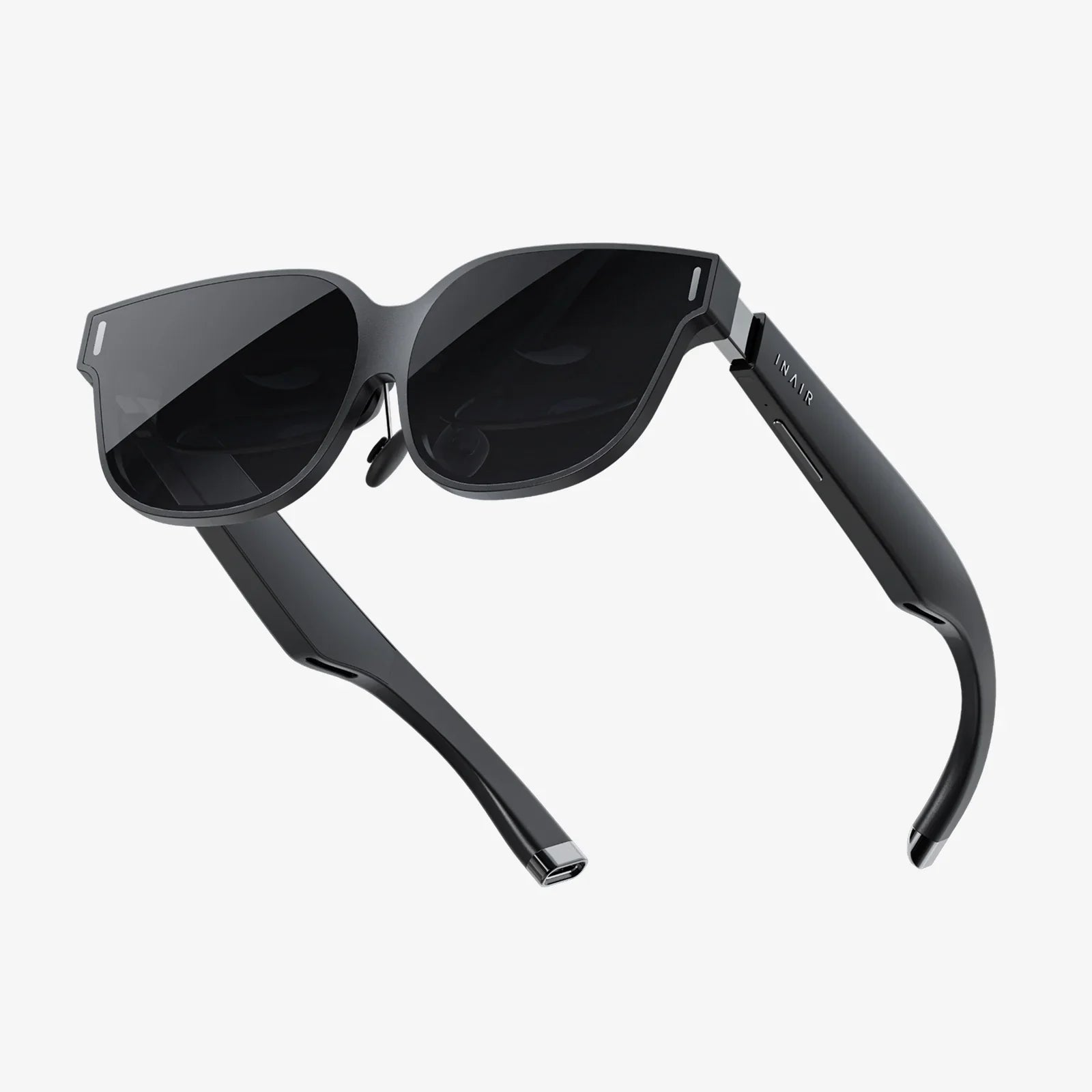
Imagine a world where digital information doesn’t just live on a screen in your hand or on your desk, but is seamlessly woven into the very fabric of your physical reality. A world where your commute is overlaid with navigational arrows, your cooking tutorial is projected directly onto your ingredients, and a distant colleague can appear in your living room as a lifelike hologram to help you fix a complex piece of equipment. This is the extraordinary promise of Augmented Reality (AR) glasses, a technology that is rapidly moving from science fiction to tangible reality, poised to redefine our personal and professional lives in ways we are only beginning to comprehend.
Beyond the Hype: Understanding the Core Technology
At its essence, AR is a technology that superimposes a computer-generated image or information—often called digital twins or holograms—onto a user's view of the real world. Unlike Virtual Reality (VR), which creates a completely immersive, digital environment that replaces reality, AR enhances the real world by adding a digital layer to it. AR glasses are the primary hardware designed to deliver this experience directly into your field of vision. They accomplish this through a sophisticated combination of technologies:
- Advanced Optics and Waveguides: Tiny, transparent lenses project images directly onto the retina, allowing you to see digital content while still clearly viewing the world around you.
- Spatial Mapping Cameras and Sensors: An array of cameras, LiDAR scanners, and depth sensors continuously scan the environment to understand the geometry of the space, the position of objects, and surfaces. This allows digital content to be placed and to persist accurately on a table, a wall, or a factory floor.
- Powerful Onboard Processing: Sophisticated chipsets interpret the sensor data in real-time, anchor the digital content, and ensure it interacts convincingly with the physical world (e.g., a virtual ball bouncing under a real table).
- Intuitive Input Methods: Control is moving beyond simple hand controllers. Voice commands, hand-tracking gestures, and even eye-tracking allow for a natural and hands-free interaction with the digital overlay.
This technological symphony enables a fundamentally new way of interacting with computing, one that is contextual, spatial, and intimately connected to our immediate surroundings.
Transforming the World of Work and Industry
While consumer applications often grab headlines, the most immediate and impactful use cases for AR glasses are emerging in enterprise and industrial settings, where they are solving real-world problems and delivering significant returns on investment.
Revolutionizing Field Service and Remote Assistance
Imagine a field technician tasked with repairing a complex, malfunctioning piece of machinery. Instead of fumbling through a thick paper manual or trying to balance a tablet while holding a tool, they are wearing AR glasses. A remote expert, seeing exactly what the technician sees through a live video feed, can annotate the technician's real-world view with digital arrows, circles, and text instructions, pointing directly to the components that need attention. The expert can even pull up a 3D schematic and virtually place it over the physical machine, showing the internal workings. This "see-what-I-see" capability drastically reduces errors, slashes resolution time, and allows a single senior expert to guide dozens of junior technicians anywhere in the world, eliminating travel costs and downtime.
Supercharging Manufacturing and Complex Assembly
On assembly lines, particularly for complex products like aircraft engines or custom machinery, AR glasses are becoming an indispensable tool. Workers can have digital work instructions, torque specifications, and wiring diagrams overlaid directly onto the physical components they are assembling. The system can visually confirm that the correct part is selected from a bin and guide the user through each step in the process, significantly reducing errors and the need for extensive training. For quality assurance, inspectors can see deviation highlights that compare a finished product against its perfect digital twin, instantly identifying any flaws.
Enhancing Design and Prototyping
Architects, interior designers, and engineers are using AR glasses to step inside their creations long before a single physical resource is expended. A life-size 3D model of a new building's layout can be projected into an empty warehouse, allowing designers to walk through the virtual space, assess sightlines, and make changes in real-time. Car designers can place a full-scale hologram of a new vehicle prototype in a real showroom to evaluate its design in a realistic context. This ability to visualize and iterate in real-world scale saves immense amounts of time and money.
Redefining Everyday Life and Personal Productivity
The potential of AR glasses extends far beyond the factory floor, promising to become the next major personal computing platform, seamlessly integrating into our daily routines.
The Ultimate Personal Navigator
Navigation will evolve from looking down at a phone to having contextual directions appear in the world around you. Giant floating arrows will guide you to your gate at a busy airport. Walking through a new city, you could see historical information and user reviews pop up above restaurants as you pass them. Your glasses could highlight the exact shelf in a large supermarket where your next item is located, transforming a tedious chore into an efficient treasure hunt.
A Constant, Contextual Information Stream
AR glasses promise an end to the constant, distracting cycle of pulling out your phone. Notifications for messages, calls, and calendar reminders can appear subtly in your periphery. But more powerfully, the information becomes contextual. When you look at your smartwatch, your glasses could display your health metrics. When you approach your smart home door, it could show you who is inside and the status of your appliances. This creates a computing experience that is ambient, useful, and less intrusive than our current screen-dominated reality.
Immersive Learning and DIY
Whether you're learning to play a new song on the guitar, trying a complex recipe, or assembling flat-pack furniture, AR glasses can provide step-by-step visual guidance overlaid onto the task itself. Finger placement guides could hover over the guitar frets. Recipe steps and measurements could be projected directly onto your mixing bowl. This hands-free, in-context guidance makes learning new physical skills more intuitive and effective than ever before.
A New Dimension of Social Connection and Entertainment
One of the most exciting prospects for AR is its ability to create new forms of shared experience and entertainment that blend the physical and digital.
The Future of Communication is Spatial
Video calls will evolve into holographic presence. Instead of talking to a grid of faces on a screen, a photorealistic hologram of a friend or family member could appear sitting on your couch, as if they were truly there with you. This sense of shared physical space, of being able to make eye contact and read body language naturally, could make remote communication feel profoundly more human and connected, reducing the fatigue associated with traditional video conferencing.
Gaming in the World Around You
Gaming will break free from the television and explode into your living room, your backyard, and your entire city. Imagine defending your home from an alien invasion with virtual creatures scrambling over your actual furniture, or engaging in a magical duel with a friend in a local park, using real-world objects as cover. This transforms the entire world into a playground and encourages physical activity and exploration in a way console gaming never could.
Experiencing Art and Live Events
Museums and galleries can use AR to bring static exhibits to life. Viewing a dinosaur skeleton could trigger a full-size, animated render of the creature roaring and moving within the hall. At a concert, your glasses could display setlists, lyrics, and immersive visual effects that are unique to your vantage point. Sports fans could see real-time player stats and first-down lines overlaid directly on the field during a live game, creating a deeply enriched viewing experience.
Navigating the Challenges on the Path to Adoption
For all its promise, the widespread adoption of AR glasses faces significant hurdles that must be overcome. The technology itself, while advancing rapidly, still needs refinement. The field of view—the size of the digital canvas—needs to expand to feel truly immersive. Battery life remains a constraint for all-day use. The form factor needs to evolve from bulky headsets to something as socially acceptable and comfortable as everyday eyewear. Beyond hardware, there are critical software and social challenges. A robust and intuitive spatial operating system needs to be developed. Killer apps that provide undeniable value for the average consumer must emerge. Perhaps most importantly, society will need to grapple with complex questions of digital etiquette, privacy, and data security. The constant recording and analysis of our environments raise profound questions about who has access to that data and how it is used.
The journey from our current reality to one seamlessly blended with a digital layer is already underway. The question is no longer if this future will arrive, but how quickly we will adapt to it and shape it to enhance, rather than detract from, our human experience. The true power of this technology lies not in replacing the world we see, but in deepening our understanding of it and unlocking new potentials for creativity, connection, and productivity that we have only just begun to imagine.
Share:
3D Immersive Audio The Future of Sound is Here and It's All Around You
Interactive Smart Technology: Redefining Our Digital and Physical Worlds