


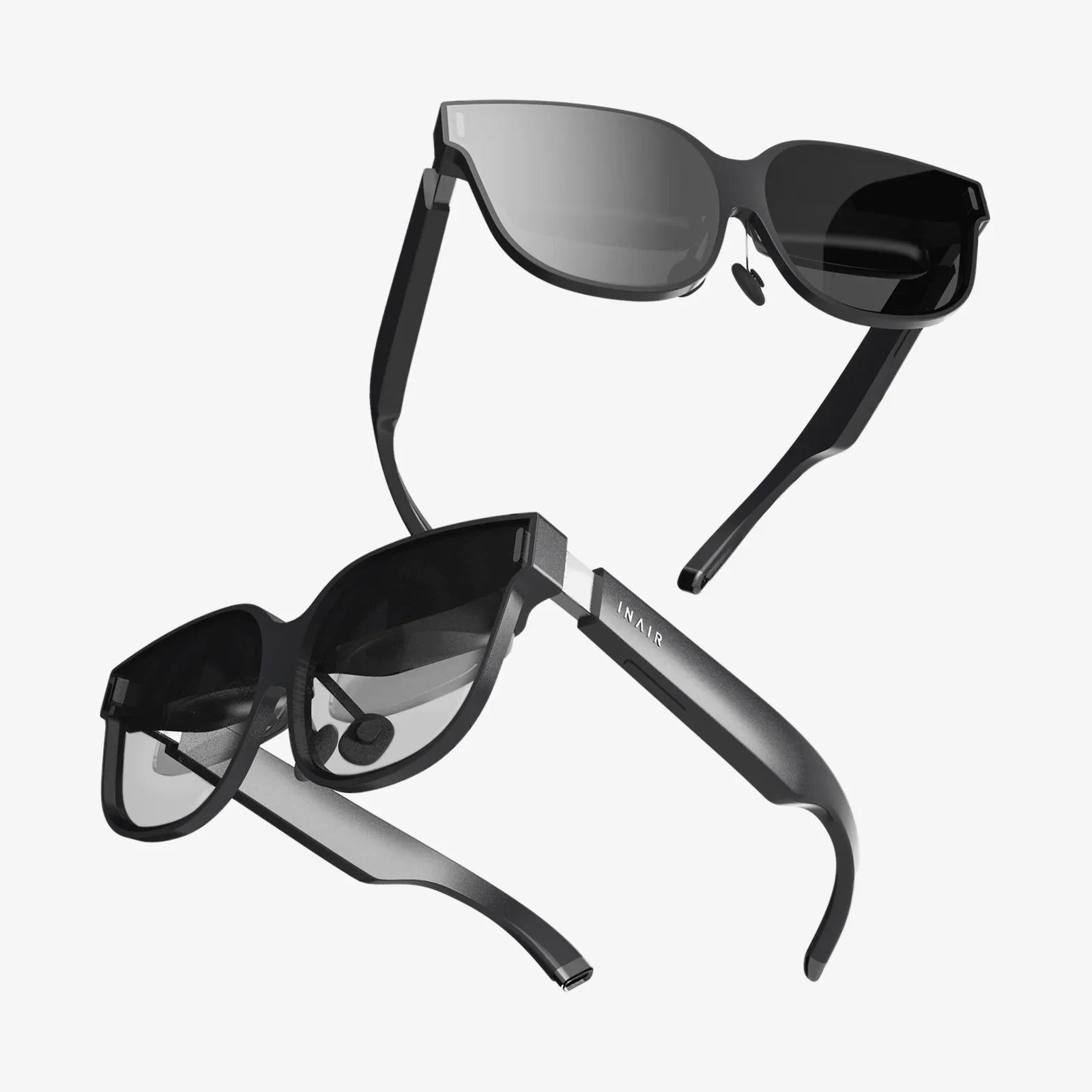
Imagine a device so powerful it can collapse continents, resurrect history, and conjure worlds from the ether, all from the comfort of your living room. This is no longer the stuff of science fiction; it is the burgeoning reality offered by modern 3D reality goggles. These headsets are not merely screens worn on the face; they are portals, promising to redefine everything from how we work and learn to how we connect and escape. The race to perfect this technology is more than a corporate battle; it is a fundamental reshaping of the human experience, and it’s happening right before our eyes—or more accurately, right over them.
The Technological Tapestry: How 3D Reality Goggles Weave Illusion into Perception
At their core, 3D reality goggles are a masterclass in sensory deception, a symphony of hardware and software working in perfect harmony to trick the brain into accepting a digital reality. The magic begins with two high-resolution displays, one for each eye, which present slightly offset images. This stereoscopic vision mimics the way our eyes naturally perceive depth in the real world, creating a convincing and immersive three-dimensional effect.
But vision is only one part of the puzzle. For true immersion, the virtual world must respond to the user’s movements with imperceptible latency. This is achieved through a complex array of sensors, including accelerometers, gyroscopes, and magnetometers, which track the rotation and orientation of the head. Advanced systems employ outward-facing cameras for inside-out tracking, allowing the goggles to map the physical room and understand the user’s position within it, enabling them to walk around and interact with virtual objects as if they were physically present.
Audio is the often-overlooked hero of immersion. Spatial audio technology uses head-related transfer functions (HRTFs) to simulate how sound waves interact with the human head and ears. A sound emanating from behind and to the left in the virtual world will be processed to reach the left ear a fraction of a second later and with a different frequency signature than the right, creating a stunningly realistic auditory landscape that grounds the user firmly in the experience.
Finally, haptic feedback, through controllers or even advanced gloves and suits, provides the sense of touch. The gentle vibration of a controller when picking up a virtual object or the resistant force felt when pulling a bowstring completes the sensory loop, bridging the last gap between the digital and the physical.
Beyond Entertainment: The Enterprise Revolution Powered by Immersive Technology
While gaming and entertainment are the most visible applications, the most profound impact of 3D reality goggles is occurring far from the living room, in the boardrooms, factories, and operating theaters of the world.
Design and Prototyping
Industries from automotive to aerospace are using immersive technology to revolutionize their design processes. Engineers and designers can step inside a full-scale, photorealistic 3D model of a new vehicle or aircraft long before a physical prototype is ever built. They can inspect every weld, test ergonomics, and simulate airflow, identifying potential issues and making iterative changes at a fraction of the traditional cost and time. This virtual prototyping is accelerating innovation and reducing waste on an unprecedented scale.
Remote Assistance and Training
Imagine a specialist engineer being able to see through the eyes of a technician on an oil rig thousands of miles away. Using 3D reality goggles, the expert can annotate the technician’s real-world view with arrows, diagrams, and instructions, guiding them through a complex repair procedure as if they were standing side-by-side. This application is transforming fields like manufacturing, field service, and healthcare, slashing downtime, reducing travel costs, and preserving crucial institutional knowledge.
Healthcare and Therapy
The medical field is embracing this technology for both training and treatment. Surgeons practice complex procedures on virtual patients, medical students explore detailed anatomical models, and therapists use controlled immersive environments to treat conditions like PTSD, phobias, and anxiety disorders. By gradually exposing patients to their triggers within a safe, virtual space, practitioners can guide them toward recovery in ways previously unimaginable.
The Social Fabric: Redefining Connection in a Virtual Age
One of the most compelling promises of 3D reality goggles is the creation of a truly embodied internet, often referred to as the metaverse. This is not merely a series of webpages but a persistent, shared virtual space where people can interact through digital avatars.
The potential for human connection is staggering. Families separated by oceans could gather in a virtual living room, sharing presence and conversation as if they were physically together. Colleagues from across the globe could collaborate around a virtual whiteboard, their avatars conveying body language and nuance that flat video calls simply cannot. Concerts, conferences, and social gatherings could become globally accessible events, offering a sense of shared experience that transcends geographical and physical limitations.
However, this new frontier also raises critical questions. How do we curate our digital identities? How do we prevent the creation of toxic virtual environments? And perhaps most importantly, as these immersive worlds become more compelling, what are the social and psychological implications of choosing a digital life over a physical one? The technology offers profound opportunities for connection, but it also risks fostering a new kind of isolation if not developed and adopted thoughtfully.
Navigating the Ethical Labyrinth: The Challenges on the Horizon
The ascent of 3D reality goggles is not without its perils. The very power that makes them transformative also introduces a host of ethical and societal challenges that demand urgent attention.
Privacy and Data Security
These devices are data collection machines. They can track eye gaze, pupil dilation, facial expressions, hand movements, and even biometric responses like heart rate. They map the user’s physical environment in intricate detail. This data is a goldmine for understanding human behavior but also a profound privacy nightmare. Without robust regulation and transparent data policies, this intimate information could be exploited for targeted advertising, manipulation, or even surveillance.
The Reality Gap: Addiction and Mental Health
The allure of a perfect virtual world can be a powerful escape from an imperfect reality. This raises legitimate concerns about addiction and the potential for users to withdraw from their physical lives and responsibilities. Furthermore, experiencing a disconnect between a curated virtual ideal and the messiness of the real world could exacerbate issues of anxiety, depression, and body dysmorphia. The long-term psychological effects of prolonged immersion are still largely unknown.
Access and Inequality
There is a real danger that immersive technology could become a new vector for inequality. The cost of high-end hardware and the bandwidth required for seamless experiences could create a digital divide far more extreme than the current one. Will access to the best education, the most lucrative virtual jobs, and the richest social experiences be gated behind a paywall, creating a class of those who can afford a full reality and those who are stuck with a partial one?
The Next Frontier: Where Do We Go From Here?
The current generation of 3D reality goggles, while impressive, is still in its adolescence. The future points toward devices that are lighter, more powerful, and more socially acceptable. We are moving toward varifocal displays that naturally accommodate the eye’s focus, solving a major source of discomfort. Brain-computer interfaces are being explored for more intuitive control, moving beyond hand gestures to thought commands. The ultimate goal is a pair of glasses that is indistinguishable from ordinary eyewear, yet capable of overlaying rich digital information onto the physical world or replacing it entirely at will.
This evolution will blur the line between augmentation and virtuality even further. The concept of the “real world” may become fluid, a spectrum from pure physical reality to fully digital realms, with most of our experiences being a hybrid of the two. This mixed reality will become the new substrate for computing, changing our relationship with technology from something we use to something we wear and experience.
The journey of 3D reality goggles is just beginning. They hold a mirror to our greatest ambitions for connection and creation, but also reflect our deepest fears about technology’s role in our lives. They are a canvas upon which we will paint the next chapter of human experience. The brush is in our hands; we must wield it with both wonder and wisdom.
The line between the digital and the physical is dissolving, and a new era of human experience is dawning. What you see through these lenses will change everything you know—the only question left is, are you ready to look?
Share:
Multi Screen Desktop Computer: The Ultimate Guide to Unlocking Unprecedented Productivity
Better Display Virtual Display: The Next Frontier in Visual Experience