


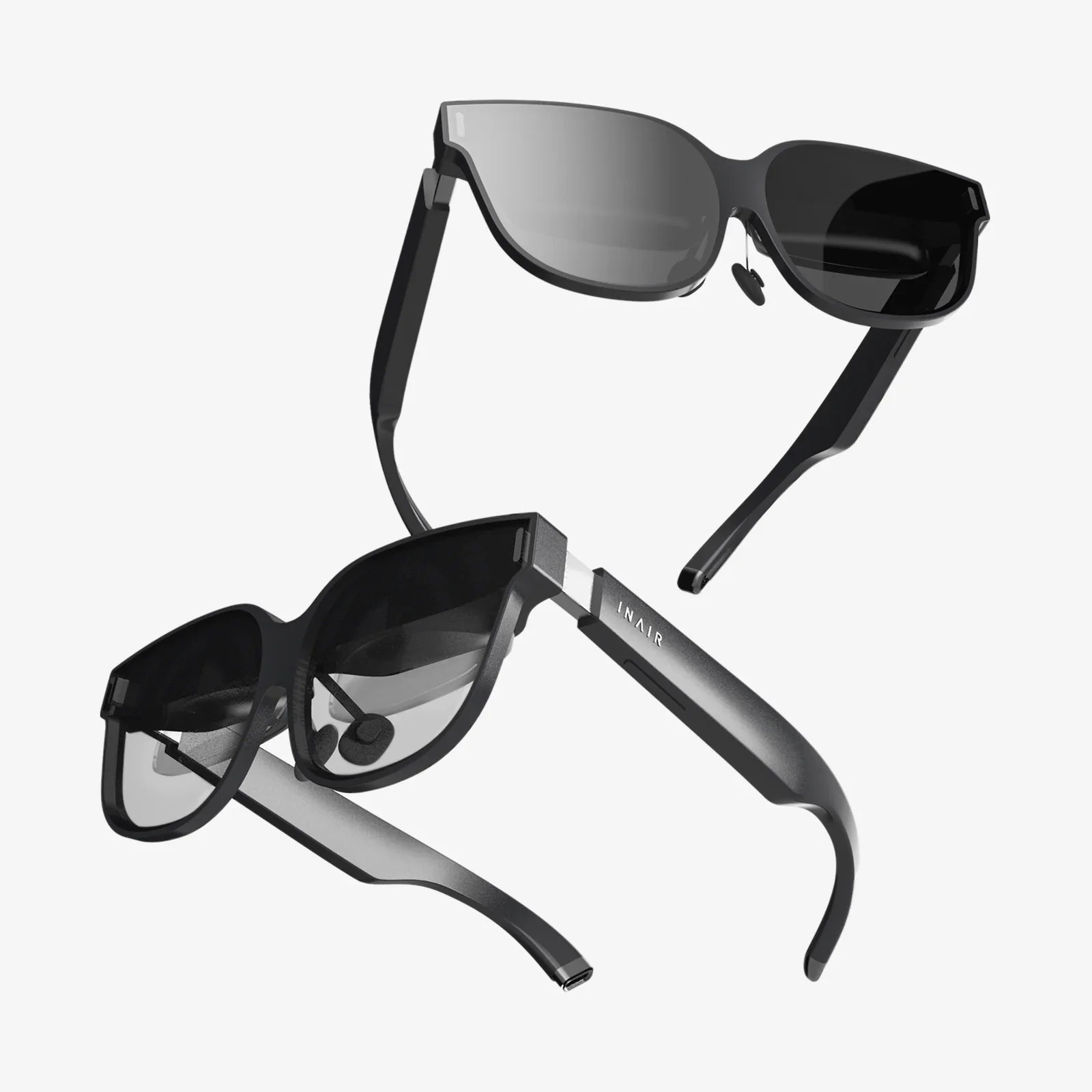
Imagine stepping into a video, where the world on your screen isn't just a flat window but a tangible space you can almost reach out and touch. This is the promise of 3D video, a technology that has evolved from a niche novelty to a powerful tool for storytelling, education, and entertainment. The magic that makes this possible hinges on one critical element: the right 3D video equipment. Whether you're a curious hobbyist or an aspiring professional, the journey into the third dimension is an exhilarating technical and creative challenge, and it all starts with understanding the gear that can bring your vision to life.
The Foundational Principle: Stereoscopic Vision
Before diving into the hardware, it's crucial to grasp the basic concept that all 3D video equipment is designed to replicate: human stereoscopic vision. We perceive depth because our two eyes are spaced approximately 2.5 inches (63mm) apart, each capturing a slightly different view of the world. Our brain seamlessly merges these two two-dimensional images into a single, coherent three-dimensional picture. All 3D video equipment, from the simplest to the most complex, works on the principle of capturing two distinct images—one for the left eye and one for the right—and then presenting them in a way that tricks the brain into seeing depth on a flat surface.
Categories of 3D Capture Systems
The landscape of 3D video equipment is diverse, catering to different budgets, skill levels, and desired outcomes. They can be broadly categorized into three main types.
1. Integrated 3D Cameras
These are the most accessible entry points for beginners and consumers. An integrated unit houses two lenses and two image sensors within a single camera body, meticulously calibrated to mimic the interocular distance of human eyes. The primary advantage of this setup is its simplicity and portability. There's no complex setup or calibration required; you simply power it on and start recording. The system handles the synchronization of the two lenses automatically, ensuring perfect alignment of the left and right eye feeds. This makes it ideal for capturing spontaneous events, travelogues, or family moments in 3D. The limitations often lie in the fixed interocular distance, which can sometimes be too wide for very close-up shots, potentially causing viewer discomfort, and a general lack of manual control over the 3D parameters.
2. Professional 3D Rigs and Beam Splitters
For high-end film production, broadcast, and professional videography, the tool of choice is often a sophisticated 3D rig. This system utilizes two identical high-quality cameras, mounted side-by-side or on a specialized beam splitter apparatus. A side-by-side rig is exactly what it sounds like: two cameras mounted next to each other on a metal bar. The distance and angle between them can be adjusted to perfectly match the scene's requirements, a process known as convergence and interaxial adjustment. This allows for incredible creative control over the depth effect. For even greater flexibility, especially for close-up macro shots, a beam splitter rig is used. This device uses a semi-transparent mirror to allow one camera to shoot through the glass while the other captures a reflection from it. This allows the lenses to be positioned much closer together than physically possible with a side-by-side setup, eliminating issues with excessive parallax on tight shots. These rigs offer unparalleled image quality and control but require a dedicated technician, known as a stereographer, to operate and constantly adjust the parameters during a shoot.
3. 3D Camera Attachment Lenses
Sitting between consumer and professional gear are attachment lenses. These are clip-on devices that fit over the lens of a standard smartphone or consumer camera. They work by splitting the incoming light into two separate paths, creating two side-by-side images on the camera's single sensor. While this is a very affordable and convenient way to experiment with 3D video, it typically results in a significant reduction in resolution and overall image quality, as the sensor's pixels are now being shared between two images.
Beyond the Camera: Essential Supporting Gear
Capturing the two images is only half the battle. A successful 3D production relies on a suite of supporting equipment to ensure the final result is comfortable and compelling to watch.
Synchronization Units
When using a two-camera rig, perfect synchronization is non-negotiable. Any slight delay between the left and right feeds will cause eye strain and headaches for the viewer. Professional setups use genlock (generator locking) to synchronize the scanning of the image sensors precisely. Additionally, a synchronization box is used to ensure both cameras start and stop recording at the exact same moment, down to the individual frame. For less critical applications, software can sometimes be used to sync the footage in post-production, but this is a less reliable method.
Rigorous Monitoring Solutions
You cannot properly shoot in 3D by merely looking at a standard 2D monitor. On-set monitoring is critical. This requires a dedicated 3D monitor that can display the combined feed. The director and stereographer use this to assess the depth grade in real-time, checking for positive parallax (objects appearing behind the screen), negative parallax (objects seeming to pop out in front of the screen), and, most importantly, ensuring the stereo window is correctly aligned to avoid visual errors that break the illusion. They also watch for common pitfalls like excessive divergence, which can make viewing uncomfortable.
Specialized Tripods and Mounting Systems
Stability is paramount. Any unintentional movement or misalignment between the two cameras will ruin the 3D effect. Heavy-duty, fluid-head tripods are essential to provide a rock-solid foundation. For 3D rigs, the mounting hardware itself is a precision instrument, allowing for micro-adjustments to the toe-in (angle) and interaxial distance (separation) of the two cameras to fine-tune the stereoscopic image.
The Post-Production Pipeline
The work done with the 3D video equipment on set is just the beginning. The post-production process for 3D is uniquely complex.
Stereo Editing and Color Grading
The two streams of video must be edited in tandem. Specialized software is used to treat the left and right eye feeds as a single linked clip. Any cut, effect, or transition must be applied identically to both. Color grading is also doubly important; even a slight color or exposure difference between the two eyes will be immediately noticeable and can cause viewer fatigue. The goal is to create two perfectly matched but slightly different images.
Depth Grading and Correction
This is the unique art of 3D post-production. A depth grader, or stereoscopic editor, can manipulate the perceived depth of the scene in software. They can adjust the convergence point in post (to a limited degree), subtly shift the imagery to correct for vertical misalignment (a major cause of discomfort), and even fix floating window issues. This process is essential for creating a comfortable and intentional depth narrative throughout the video.
Rendering and Delivery Formats
The final stereoscopic video can be delivered in several formats. The traditional side-by-side (SBS) or top-and-bottom (Over/Under) formats are common for online platforms and broadcast, as they pack both images into a single video file that can be decoded by a television or headset. For digital cinema, the left and right eye may be delivered as separate full-resolution files. The choice of format depends entirely on the intended display platform.
The Future is Immersive: Beyond Stereoscopic 3D
While traditional two-camera 3D is a mature technology, the next frontier of immersive video is already being shaped by new forms of 3D video equipment. Light field cameras represent a revolutionary leap. Instead of capturing just color and light intensity for a flat image, they capture information about the direction and intensity of light rays across a plane. This creates a "living" image where the perspective and depth of field can be algorithmically adjusted after the fact. This technology, though in its early stages for video, promises a future where the viewer has some agency over the perspective within a scene. Furthermore, the rise of volumetric video capture, which uses arrays of dozens or even hundreds of cameras to reconstruct a dynamic 3D model of a person or object, is opening doors for true interaction within virtual and augmented reality spaces. This moves beyond a fixed perspective, allowing a user to walk around a captured subject as if it were a real object in their space.
The barrier to entry for creating compelling 3D content is lower than ever before, yet the ceiling for quality and innovation is higher than it has ever been. From the simple integrated camera that fits in your palm to the vast volumetric capture stages of tomorrow, 3D video equipment is the key that unlocks a deeper layer of reality for the viewer. It’s a challenging, technical, and immensely rewarding field that pushes the boundaries of how we tell stories and share experiences. The question is no longer if you can capture in 3D, but what breathtaking world you will choose to bring to life.
Share:
Spatial Design AR: Redefining Our Interaction with the Built Environment
Virtual Places Are Redefining Reality, Community, and Human Experience