


Imagine walking through the skeletal frame of a building that doesn’t yet exist, watching as walls rise from the concrete dust and finishes materialize at your fingertips. Envision rearranging an entire living room without lifting a single piece of furniture, or seeing how the sunlight will filter through a proposed skyscraper at precisely 4:32 PM on a winter afternoon. This is no longer the stuff of science fiction; it is the present and future of spatial design, powered by the revolutionary capabilities of Augmented Reality (AR). This technology is not merely a new tool in the designer’s kit—it is a fundamental shift, a new lens through which we perceive, interact with, and ultimately shape the world around us, blurring the lines between the digital and the physical until they become one immersive, interactive canvas.
The Convergence of Realms: Defining AR in a Spatial Context
At its core, Augmented Reality is a technology that superimposes a layer of computer-generated information onto a user’s view of the real world. Unlike Virtual Reality (VR), which creates a completely synthetic environment, AR enhances reality by adding digital elements to it. In the context of spatial design, this means overlaying digital models, data, and interactive elements onto physical spaces. This convergence is made possible through a sophisticated combination of hardware—like cameras, sensors, and displays—and software that understands the geometry and context of the environment.
The magic of spatial design AR lies in its ability to bridge the persistent gap between the two-dimensional drawing and the three-dimensional experience. For centuries, designers have relied on plans, sections, elevations, and physical scale models to communicate their vision. These are, by their nature, abstractions. They require the viewer to possess a significant amount of spatial intelligence to translate lines on paper into a mental image of a lived experience. AR shatters this barrier. It allows the designer, the client, and the end-user to experience the design intent at a 1:1 scale, in situ, before a single physical resource is committed. This is a paradigm shift from representation to simulation, from abstraction to immersion.
Revolutionizing the Design Workflow: From Conception to Completion
The impact of AR is felt across the entire lifecycle of a spatial project, creating a more fluid, intuitive, and efficient workflow.
Ideation and Conceptualization
The earliest stages of design are often the most abstract. AR tools now allow designers to sketch and model in three dimensions within the actual space. Instead of drawing a new wall on a screen, a designer can use a handheld device to literally draw it in the air, seeing the virtual wall appear anchored to the floor and ceiling of the room. This facilitates a more intuitive understanding of volume, massing, and proportion from the very first moments of creation. Conceptual models can be placed on a site, viewed from every angle, and understood in relation to existing structures, topography, and solar paths.
Client Presentation and Collaboration
This is perhaps the most transformative application for many design firms. The age-old challenge of convincing a client to trust a vision based on flat renderings is over. With AR, clients can walk through their future home, office, or retail space. They can open virtual doors, look out virtual windows, and assess the feel of a space in a way that is emotionally resonant and intellectually clear. This fosters a collaborative environment where feedback is based on experience rather than imagination. Changes can be made in real-time; a client can request a different color for the walls or a new furniture layout, and see the alteration instantly reflected in the augmented space. This demystifies the design process and creates a powerful shared understanding between designer and client.
Pre-Construction and Construction Coordination
On the construction site, AR moves from a presentation tool to a critical precision instrument. Using AR headsets or tablets, construction teams can visualize complex Building Information Modeling (BIM) data overlaid directly onto the unfinished structure. This allows them to:
- Verify Layouts: See exactly where electrical conduits, plumbing lines, and HVAC ducts should be run before cutting or drilling, minimizing errors and rework.
- Clash Detection: Identify conflicts between different building systems (e.g., a pipe running through a beam) in the real world before they become costly problems.
- Guidance for Complex Assemblies: Receive step-by-step visual instructions for assembling intricate components, with digital arrows and diagrams pointing to exact locations.
This application drastically reduces errors, improves safety, and accelerates project timelines by providing unparalleled on-site access to design intelligence.
The Core Technologies Powering the Revolution
This seamless blending of worlds is powered by several key technological advancements.
- Simultaneous Localization and Mapping (SLAM): This is the foundational technology that allows an AR device to understand its position within an environment while simultaneously mapping the geometry of that environment. It’s what allows a virtual chair to stay anchored to a spot on the floor as you walk around it.
- Advanced Depth Sensing: Using LiDAR (Light Detection and Ranging) scanners and other depth sensors, devices can create a detailed 3D point cloud of a space, understanding the precise distance to every surface. This enables realistic occlusion (where a virtual object can be hidden by a real-world physical object) and interaction.
- Cloud Computing and 5G: Processing complex 3D models and vast datasets requires significant computational power. Cloud computing allows this processing to happen off-device, while high-speed 5G networks enable the seamless streaming of this data to AR glasses and mobile devices in real-time, untethering the user from powerful local hardware.
Overcoming the Hurdles: Challenges in Adoption
Despite its immense potential, the widespread adoption of spatial design AR faces several challenges.
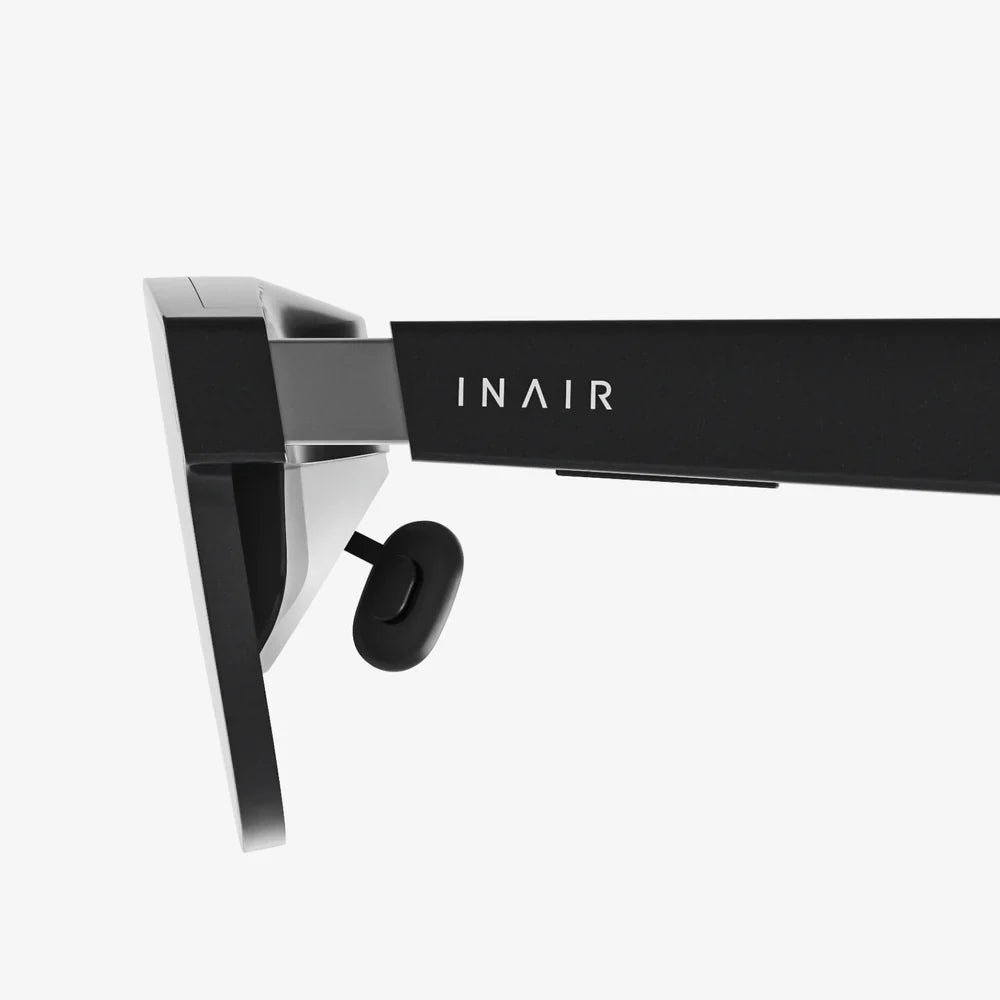
- Hardware Limitations: For truly immersive, hands-free design, wearable AR glasses are the ideal form factor. Current generations often face trade-offs between field of view, resolution, battery life, comfort, and cost. The technology is rapidly improving, but the perfect device for all-day professional use is still on the horizon.
- Software Integration: For AR to be truly effective, it must be deeply integrated into existing design software ecosystems like CAD and BIM platforms. This requires robust APIs and a rethinking of traditional software workflows to be truly spatial and real-time.
- The Digital Divide and Skill Gaps: Adopting AR requires investment in new technology and, more importantly, training for professionals to develop new skills. There is a risk of a divide between firms that can afford to adopt these cutting-edge tools and those that cannot.
- Data Management and Overload: Overlaying immense amounts of BIM data onto a physical site can lead to visual clutter and information overload. Developing intuitive user interfaces and filters to display only the most relevant information at the right time is a critical software challenge.
The Future is Spatially Augmented: What Lies Ahead
The trajectory of spatial design AR points toward a future where the technology becomes as ubiquitous and essential as the computer mouse is today. We are moving toward lighter, more powerful, and socially acceptable AR wearables that designers will use throughout their day. The line between the design software and the built environment will continue to erode, enabling real-time generative design where the space itself becomes the interface. Furthermore, the rise of the digital twin—a dynamic, real-time virtual replica of a physical asset—will be perfectly visualized and interacted with through AR, allowing for unprecedented facilities management, predictive maintenance, and adaptive reuse of spaces long after construction is complete.
The very essence of spatial design is being redefined. It is evolving from a practice of creating static representations of space to one of choreographing dynamic, data-rich experiences within space. Augmented Reality is the medium making this evolution possible, transforming every room, every building, and every city into a living, breathing canvas waiting to be designed, experienced, and understood in ways we are only just beginning to imagine. The door to this new dimension is now open, inviting us all to step through and see what we can build together.
Share:
Expand Content: The Ultimate Strategy for Digital Authority and Growth
3D Video Equipment: A Comprehensive Guide to Capturing and Creating Immersive Content