


Imagine stepping into a world where digital creations bleed into our physical reality, where a dragon doesn't just appear on a screen but seems to soar right into your living room, and a medical scan isn't a flat image but a intricate, explorable model of the human heart. This is no longer the stuff of science fiction; it is the palpable present and the exhilarating future being unlocked by the rapid evolution of the 3D video screen. This technology is quietly orchestrating a revolution, poised to redefine not only how we are entertained but how we work, learn, and connect with information on a fundamental level.
Beyond the Glasses: Demystifying the Technology
The term "3D video screen" often conjures images of clunky glasses and underwhelming cinema experiences. However, modern incarnations are a world apart, relying on sophisticated technology to create the illusion of depth without auxiliary equipment. The core principle is stereoscopy, which mimics human binocular vision. Our two eyes, spaced slightly apart, see the world from two slightly different angles. Our brain merges these two images into one, interpreting the discrepancies as depth and dimension.
Advanced 3D screens replicate this process in several ingenious ways:
- Autostereoscopy: This is the holy grail of consumer 3D—a screen that provides a depth effect without the need for glasses. This is often achieved through a parallax barrier or lenticular lens sheet placed over the display. These technologies act like a filter, directing a different image to the viewer's left and right eyes, creating the stereoscopic effect. The viewer simply needs to be in the correct "sweet spot" to experience the 3D illusion.
- Volumetric Displays: Pushing the boundaries even further, these displays actually create visual representations of objects in three physical dimensions. Instead of projecting light onto a flat surface, they generate imagery within a transparent vessel, often using lasers to excite particles in the air or a special medium. The result is a hologram-like object that can be viewed from 360 degrees, a true digital sculpture in space.
- Holographic Projection: While true holography, as seen in popular media, is still in its relative infancy for dynamic video, significant strides are being made. These systems use interference patterns of light to create ghost-like 3D images that float in mid-air, viewable from multiple angles without a traditional screen substrate.
A Canvas for Creativity: Revolutionizing Entertainment and Media
The most obvious and exciting application for 3D video screens is in the realm of entertainment. The potential to transform passive viewing into an active, immersive experience is immense.
- Cinematic Experiences: Imagine a film where the environment feels truly expansive, where rain appears to fall in front of and behind the characters, and the sense of scale in a space epic is genuinely awe-inspiring. 3D screens in theaters and, eventually, homes will dissolve the barrier between the audience and the narrative, creating emotional and visceral connections that flat screens cannot match.
- Next-Generation Gaming: The gaming industry is poised to be the biggest beneficiary. Esports arenas equipped with massive 3D screens would allow spectators to see the game world with unparalleled depth and clarity, following the action as if looking through a window into another reality. For home gamers, it promises a level of immersion that will make virtual worlds feel tangible and truly alive.
- Live Events and Concerts: The live events industry was revolutionized by large LED screens; 3D is the next logical step. Imagine a concert where a performer's hologram interacts with the crowd on a stage-spanning 3D screen, or a sporting event where complex plays are diagrammed in real-time with 3D models hovering over the field. It will add a spectacular new layer to live performances and broadcasts.
More Than Spectacle: Practical Applications Changing Industries
While entertainment captures the imagination, the profound impact of 3D video screens will be felt across critical, practical fields, enhancing precision, understanding, and efficiency.
- Medical Imaging and Surgery: This is perhaps one of the most impactful applications. Surgeons can study CT or MRI scans not as a series of 2D slices but as a full, rotatable 3D model of a patient's anatomy. This allows for better pre-operative planning, more precise identification of issues, and can even guide surgeons during procedures by overlaying 3D data onto their field of view, reducing risk and improving outcomes.
- Engineering and Architecture: For architects and engineers, 3D screens become a dynamic design sandbox. They can walk clients through a photorealistic 3D model of a building before a single brick is laid, exploring sightlines and spatial relationships with complete realism. Engineers can deconstruct and analyze complex machinery, from jet engines to microchips, in three dimensions, identifying potential flaws and optimizing designs in ways that are impossible with traditional CAD on a 2D monitor.
- Education and Training: Learning complex subjects is transformed. Students of biology can explore a beating heart, those studying astronomy can navigate the solar system, and history classes can walk through ancient Rome, reconstructed in stunning detail. For training, from flight simulators to heavy machinery operation, 3D screens provide a safe, hyper-realistic environment to practice and hone skills.
- Data Visualization: In our world of big data, making sense of vast, complex datasets is a major challenge. 3D screens allow scientists and analysts to visualize data spatially. Network security threats, financial market trends, or climate patterns can be represented as interactive 3D landscapes, making it easier to spot correlations, anomalies, and insights that would remain hidden in spreadsheets or on 2D graphs.
Navigating the Challenges: The Road Ahead
Despite the incredible potential, the path to ubiquitous 3D screens is not without its obstacles. The technology faces several significant hurdles that engineers and designers are racing to overcome.
- The Cost Barrier: Currently, high-resolution, large-format autostereoscopic and volumetric displays are prohibitively expensive, confining them to research labs and high-budget commercial installations. Widespread adoption hinges on driving down manufacturing costs through innovation and economies of scale.
- Content Creation: A 3D screen is useless without native 3D content. Creating this content requires new tools, new techniques, and a fundamental shift in how filmmakers, game developers, and designers think about their craft. The industry needs to develop robust pipelines and standards to make 3D content creation as accessible as 2D is today.
- Viewer Comfort and Accessibility: Early 3D technologies often caused eye strain, headaches, and nausea for a significant portion of the audience. Modern systems are far better, but ensuring comfort for extended viewing periods remains a priority. Furthermore, the technology must be made accessible to individuals with visual impairments, such as those who have limited vision in one eye.
- The "Sweet Spot" Problem: For many autostereoscopic displays, the 3D effect is only perfect from a specific viewing angle. Moving outside this zone can cause the image to break down or reverse. Expanding this comfortable viewing zone is crucial for multi-person viewing experiences in living rooms or conference rooms.
The Future is in Depth: What Comes Next?
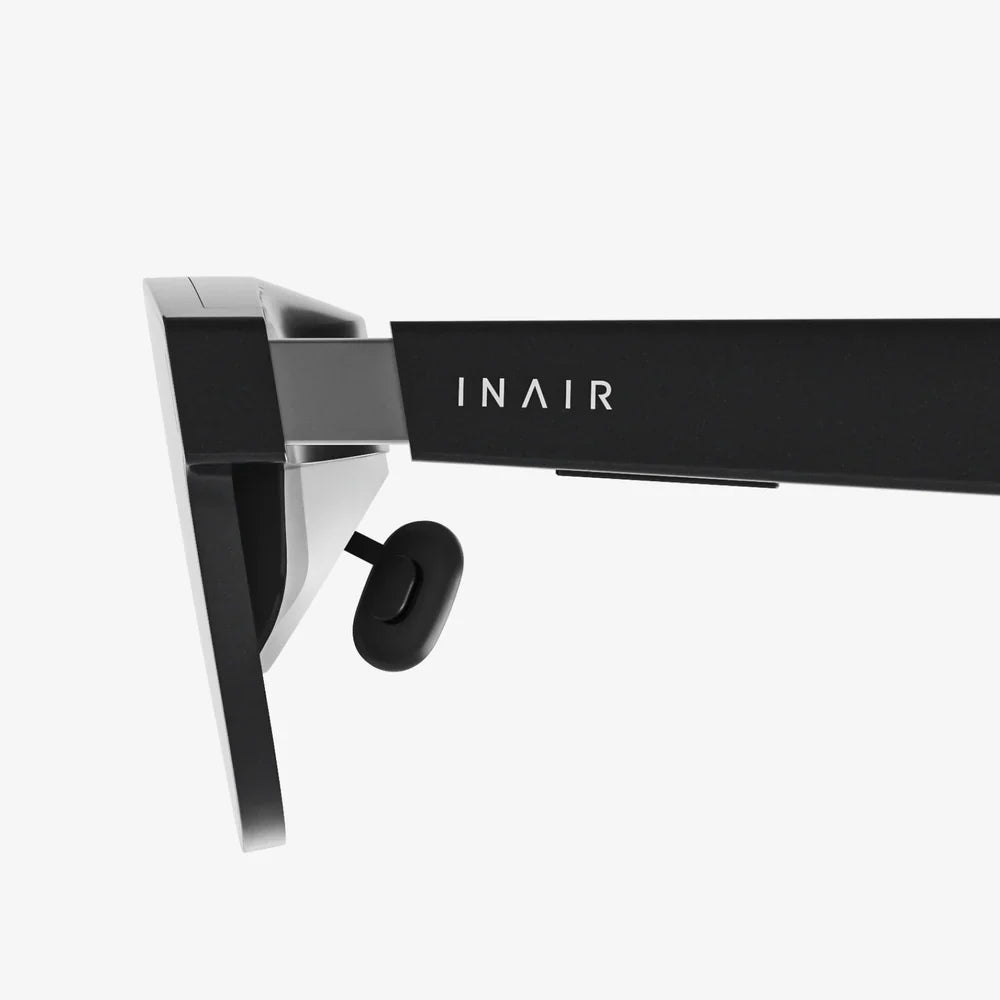
The evolution of the 3D video screen is inextricably linked with other cutting-edge technologies. Its future will be shaped by convergence with fields like artificial intelligence and augmented reality. AI will be crucial for automatically converting vast libraries of existing 2D content into 3D, and for generating real-time 3D environments. Furthermore, as AR glasses become more advanced, they will essentially function as personal, wearable 3D screens, overlaying digital information onto the real world with perfect spatial alignment.
We are moving towards a paradigm where the screen ceases to be a destination and becomes an interface—a window or a portal. The 3D video screen is the critical hardware stepping stone to that future. It represents a fundamental shift from representing information to recreating it, from showing us a picture to inviting us into a space.
The flicker you see on the horizon is not a trick of the light; it is the dawn of a new dimension in visual communication. The 3D video screen is quietly dismantling the flat confines of our digital worlds, promising a future where our interactions with technology are more intuitive, more impactful, and astonishingly real. The question is no longer if this future will arrive, but how quickly we are ready to embrace the depth of its potential and step through the screen.
Share:
Immersive 3D Glasses: Redefining Reality Through Advanced Visual Technology
Multifunctional Smart Zoom Glasses: The Next Frontier in Personal Augmentation