


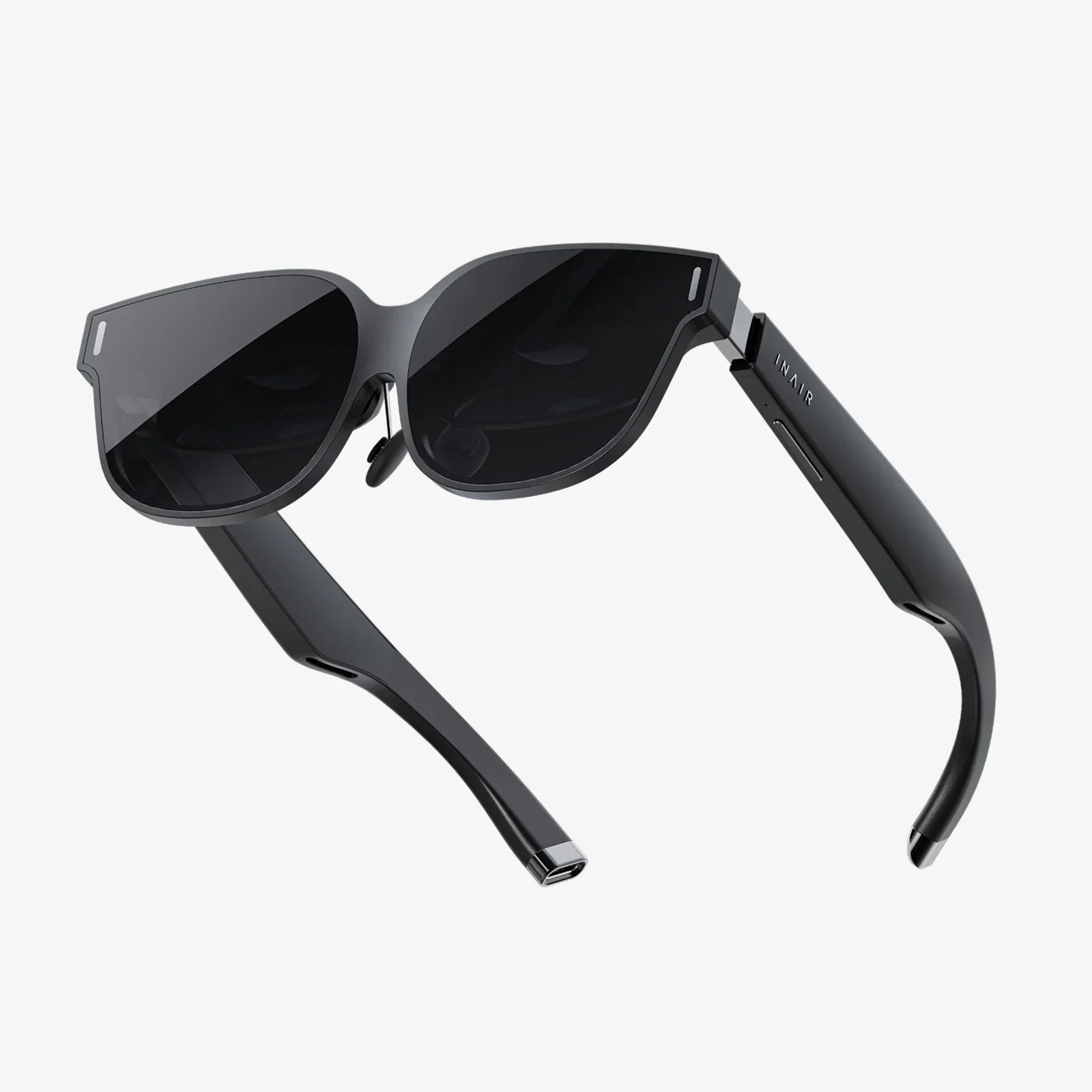
Imagine a world where your vision is not limited by biology, where you can zoom in on a street sign blocks away, instantly translate a foreign menu, or receive contextual information overlaid seamlessly onto your reality, all through a device that looks like ordinary eyewear. This is no longer the realm of science fiction; it is the imminent future being shaped by the development of multifunctional smart zoom glasses. This nascent technology represents a monumental leap in wearable computing, promising to augment human perception and redefine our interaction with the digital and physical worlds in ways we are only beginning to comprehend.
The Convergence of Vision and Computation
The core innovation of multifunctional smart zoom glasses lies in their sophisticated integration of several advanced technologies into a single, wearable form factor. Unlike their predecessors, which often focused on a single function like photography or audio, these devices are true polymaths of personal tech.
At the heart of their functionality is the optical zoom mechanism. Early attempts at zooming eyewear relied on bulky, motorized components that were impractical for daily wear. Modern iterations, however, leverage breakthroughs in liquid lens technology, meta-optics, and even electro-active polymers. These systems can change their focal length and magnification power almost instantaneously with a simple voice command, touchpad gesture, or even a deliberate blink, eliminating the need for clumsy physical motors. This allows the wearer to seamlessly transition from normal vision to a powerful telephoto view, capturing crisp, clear details of distant objects as if they were mere feet away.
This optical prowess is married to a powerful, miniaturized computing unit, typically housed in the frame's temples. This onboard processor is the brain of the operation, running complex algorithms for computer vision, artificial intelligence, and augmented reality. It is supported by an array of sensors including high-resolution cameras, microphones, inertial measurement units (IMUs) for tracking head movement, and depth sensors to map the surrounding environment in 3D.
A Symphony of Functions: Beyond Mere Magnification
The term "multifunctional" is the true differentiator. These glasses are designed to be a Swiss Army knife for the senses. The zoom capability, while impressive, is merely the foundation upon which a vast ecosystem of applications is built.
- Real-Time Translation and Transcription: Point your gaze at a restaurant menu, a street sign, or a document in a foreign language, and see an instant, accurate translation overlaid onto your field of view. Conversations with someone speaking another language could be transcribed and translated in near-real-time, appearing as subtitles, effectively breaking down language barriers.
- Visual Search and Contextual Information: See a landmark and wonder about its history? Glance at a book in a store and immediately see reviews and ratings? Look at a complex piece of machinery and have its parts identified with helpful annotations? The glasses can perform visual searches and pull relevant data from the cloud, presenting it contextually without ever requiring you to pull out a phone.
- Augmented Reality Navigation: Directional arrows and cues can be projected directly onto the path in front of you, guiding you through a new city or a large airport terminal with intuitive ease. This heads-up, hands-free navigation is far safer and more immersive than constantly glancing down at a phone screen.
- Accessibility and Assistive Features: The potential for empowering individuals with visual or auditory impairments is profound. For those with low vision, the ability to zoom in and enhance contrast on text or faces can be life-changing. Real-time captioning of conversations can greatly assist those who are hard of hearing, turning the glasses into a powerful assistive hearing device.
- Content Creation and Documentation: For professionals, the applications are endless. Engineers could document inspections hands-free, zooming in on hard-to-reach components. Journalists could discreetly capture interviews and footage. Doctors could consult on procedures from afar, seeing a colleague's point of view with perfect clarity. The first-person perspective (POV) content captured can be incredibly stable and immersive, thanks to advanced stabilization algorithms.
The Invisible Infrastructure: AI and Connectivity
None of these functions would be possible without the silent, constant hum of artificial intelligence and ubiquitous connectivity. The AI models running on the device (and often supplemented by cloud computing) are what transform raw sensor data into actionable intelligence. They are responsible for:
- Object Recognition and Segmentation: Identifying and isolating specific objects, people, or text within the camera's view.
- Natural Language Processing: Understanding voice commands and processing language for translation and transcription services.
- Spatial Mapping: Understanding the geometry of the environment to place AR objects persistently and accurately.
- Predictive Analytics: Anticipating user needs based on context, location, and past behavior.
This constant processing requires a persistent, high-bandwidth connection to the internet, typically via Bluetooth to a paired smartphone or through built-in cellular connectivity. This link to the cloud is what provides the vast databases of information, the processing power for more complex AI tasks, and the means to share captured media instantly.
Navigating the Ethical and Social Minefield
With such transformative power comes a host of significant ethical, privacy, and social challenges that society must confront. The ability to record video and audio discreetly raises profound questions about consent and surveillance. The legal and social norms surrounding recording in public and private spaces are ill-equipped to handle a world where anyone could be recording at any time without others' knowledge.
Furthermore, the data collected by these devices is incredibly intimate—a continuous log of everything the user sees and hears. The security of this data is paramount. Breaches could reveal a person's daily habits, personal interactions, and even their biometric data (like iris patterns). Robust encryption, transparent data policies, and perhaps even new legal frameworks will be required to prevent misuse and protect individual privacy.
There is also the risk of a new digital divide. If these devices become essential tools for work, education, or social interaction, their cost could create a barrier, exacerbating existing inequalities. Additionally, the constant stream of digital information could lead to cognitive overload, social isolation, or a further blurring of the lines between work and personal life, as the office effectively follows you everywhere you look.
The Road Ahead: From Prototype to Mainstream
The path to perfecting and popularizing multifunctional smart zoom glasses is fraught with technical hurdles. Battery life remains a primary constraint; powering high-resolution displays, cameras, and a powerful processor for an entire day on a single charge is a formidable challenge that requires advances in both battery chemistry and power-efficient chip design.
Display technology is another critical area. Projecting bright, high-contrast, full-color information onto lenses that are also transparent requires ingenious solutions, such as waveguides or holographic optical elements, to ensure the digital overlays are clear and immersive without obstructing the user's natural vision. Finally, the social hurdle of acceptance is key. The success of this technology hinges on it becoming socially invisible—it must be fashionable, comfortable, and unobtrusive. Designs must evolve to cater to diverse tastes and needs, offering various styles and prescription lens compatibility.
Despite these challenges, the momentum is undeniable. As the underlying technologies mature and converge, we will see iterations that are lighter, more powerful, longer-lasting, and, crucially, more affordable. The initial adopters will likely be professionals in fields like engineering, medicine, and logistics, where the ROI is clear. From there, prices will fall, and functionality will expand, paving the way for broader consumer adoption.
We stand at the precipice of a new era of personal technology, one where the boundary between our biological senses and digital augmentation dissolves. Multifunctional smart zoom glasses are not merely a new gadget; they are a portal to an enhanced layer of reality, offering a glimpse of a future where our tools don't just reside in our pockets but are woven directly into our perception, empowering us to see, understand, and interact with our world in ways previously unimaginable. The question is no longer if this future will arrive, but how quickly we can adapt to the profound possibilities and responsibilities it brings.
Share:
3D Video Screen: The Unseen Revolution Reshaping Our Visual World
Addicted to Virtual Reality: The Allure and Peril of a Digital Existence