


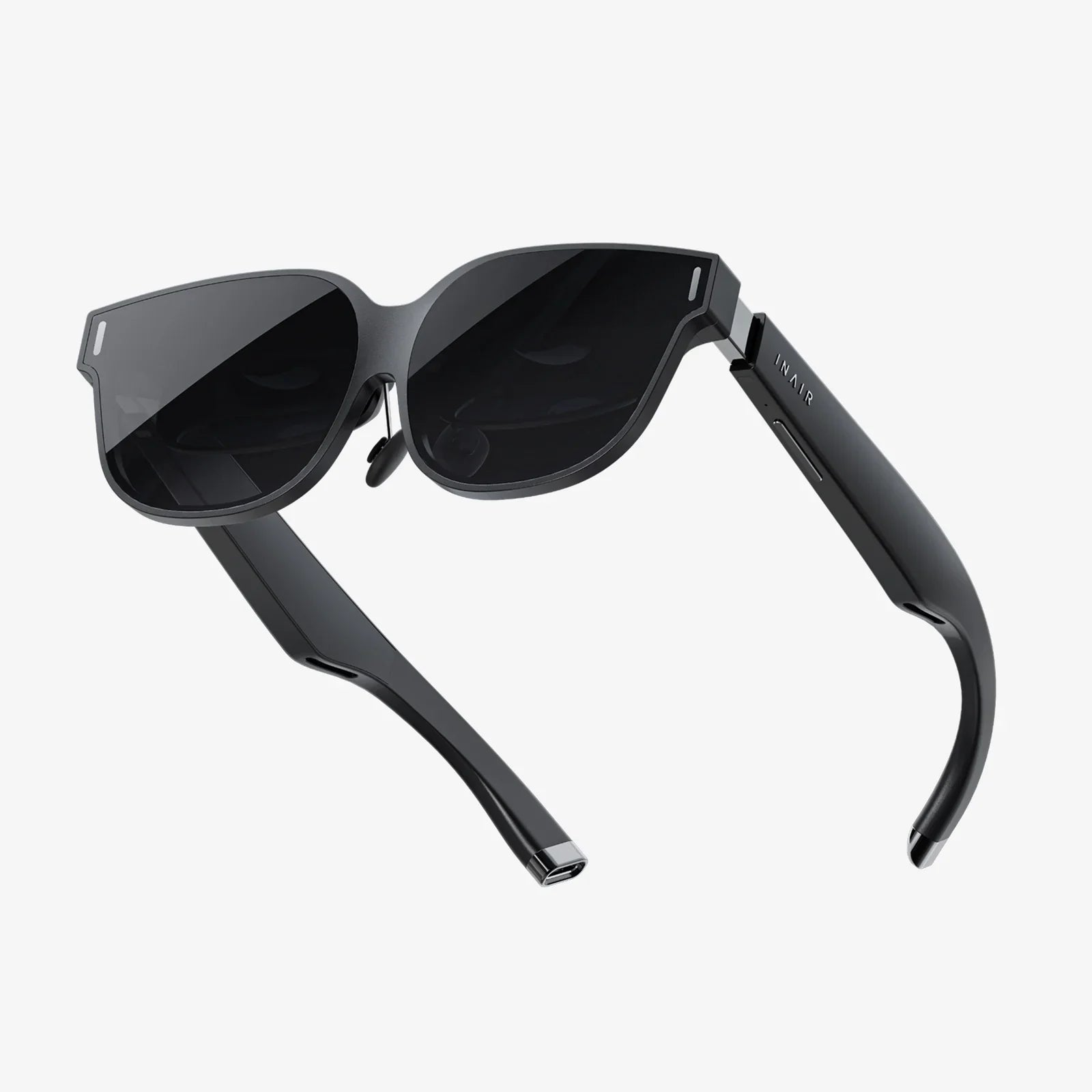
Imagine leaning into your screen, not just metaphorically but physically, as a dragon's wing brushes past your cheek or a dancer’s ribbon twirls into the space of your living room. This is no longer the stuff of science fiction. The era of flat, two-dimensional viewing is giving way to a profound new depth of experience, all thanks to the rapid evolution of 3D vision video. This technology is poised to shatter the screen barrier, transforming passive observation into active immersion and redefining our relationship with digital content forever.
The Science Behind the Illusion: More Than Meets the Eye
At its core, 3D vision video is a sophisticated trick played on the human brain, one that replicates the way we naturally perceive depth in the real world. Our binocular vision—the fact that we have two eyes spaced slightly apart—is the fundamental principle. Each eye captures a unique two-dimensional image from a slightly different perspective. The brain then processes these two separate images, calculates the disparities between them, and fuses them into a single, coherent three-dimensional picture with depth, volume, and space.
3D vision video technology meticulously recreates this process. It begins with capture: using specialized camera rigs equipped with two or more lenses that mimic human eyes, recording simultaneous footage from offset viewpoints. The complexity of this capture phase cannot be understated; it requires precise calibration to ensure the interocular distance is accurate, avoiding viewer discomfort and creating a natural sense of depth.
The next stage involves processing and encoding this stereoscopic footage. The two distinct video streams must be synchronized, color-matched, and potentially adjusted for alignment. This data can be packaged in various formats for delivery. Some systems transmit the left-eye and right-eye views side-by-side or in a top-and-bottom configuration. Others use more advanced codecs that intelligently combine the streams into a single file with depth map information, which can be interpreted by compatible displays.
Finally, the display technology takes over to present the separate images to each eye. This is achieved through several methods:
- Active Shutter Systems: Viewers wear glasses that rapidly alternate between opaque and transparent lenses, synchronized with a display that alternates between the left-eye and right-eye perspectives at a high frequency. This ensures each eye only sees the image intended for it.
- Polarized Filter Systems: The screen projects the two images simultaneously, each polarized differently (e.g., clockwise and counter-clockwise). The glasses have corresponding polarized lenses that filter the light, allowing each eye to see only its designated image.
- Autostereoscopic Displays: The holy grail of 3D viewing, this technology requires no glasses at all. Using lenticular lenses or parallax barriers layered over the screen, these displays direct the two slightly different images to the viewer's left and right eyes automatically, creating a glasses-free 3D effect, though often within a limited "sweet spot."
A Journey Through Time: The Tumultuous History of 3D Imagery
The quest for three-dimensional imagery is far from new. Its origins trace back to the 19th century with the invention of the stereoscope, a device that presented two nearly identical photographs to each eye, creating a stunningly realistic diorama effect for Victorian audiences. The 1950s saw the first major boom in 3D cinema, with films using dual-strip projection and anaglyph (red-and-blue) glasses to lure audiences away from their television sets. However, the technology was cumbersome, often caused headaches and eyestrain, and was frequently dismissed as a gimmick.
The cycle repeated in the 1980s and again in the early 2000s, with each wave introducing incremental improvements but ultimately failing to achieve lasting mainstream adoption. The critical turning point came in the late 2000s with the confluence of digital cinema and high-definition video. James Cameron's Avatar (2009) was a watershed moment. It demonstrated that 3D, when executed with artistic intent and cutting-edge technology, could be a powerful narrative tool rather than a cheap trick. It proved that audiences would embrace and pay a premium for a premium immersive experience.
This success catalyzed a renaissance, spurring investment and innovation that moved beyond the cinema into broadcast, gaming, and now, the burgeoning realms of virtual and augmented reality. The lessons from past failures were learned: comfort, quality, and content are king.
Transforming the Silver Screen and the Living Room
The most visible application of 3D vision video remains in the entertainment industry. In cinemas, it has evolved from novelty to a staple format for blockbuster filmmaking. Directors and cinematographers now compose shots with depth in mind, using it to draw the audience's focus, enhance the scale of environments, and create more emotionally resonant and engaging scenes. A well-executed 3D sequence can make you feel the claustrophobic confines of a spaceship or the awe-inspiring expanse of an alien jungle.
The push into the home has been more challenging but is steadily advancing. Broadcasters have experimented with 3D channels, and streaming services are exploring it as a potential differentiator. The real catalyst for home adoption will be the maturation of autostereoscopic technology. As high-resolution, large-format glasses-free displays become more affordable and effective, the convenience barrier will vanish, making 3D vision video a seamless part of the home entertainment ecosystem. Sporting events, concerts, and nature documentaries are particularly compelling use cases, offering a front-row seat experience from the comfort of home.
Beyond Entertainment: The Industrial and Medical Revolutions
While entertainment captures the public imagination, the most impactful applications of 3D vision video are occurring in industry, medicine, and science. Here, it is not a feature but a fundamental tool that enhances precision, safety, and understanding.
In manufacturing and robotics, 3D cameras are integral to machine vision systems. They allow robots to perceive depth, accurately identify and pick objects from bins, guide assembly operations, and perform quality control inspections with superhuman accuracy. This capability is a cornerstone of advanced automation and smart factories.
The medical field has been revolutionized by 3D video. Laparoscopic and robotic-assisted surgeries are performed using 3D imaging systems that provide surgeons with a true-to-life depth perception inside the patient's body. This dramatically improves spatial awareness, precision of movement, and ultimately, patient outcomes. Furthermore, 3D imaging is crucial in diagnostics, from detailed volumetric scans in MRI and CT imaging to 3D ultrasounds that provide expectant parents with unprecedented views of their developing child.
In architecture, engineering, and construction (AEC), 3D models are standard, but 3D video is used for virtual walkthroughs of unbuilt structures, allowing clients and engineers to experience a space at a human scale, identifying potential design issues long before ground is broken. Similarly, in education and cultural preservation, 3D video documents archaeological sites, historical artifacts, and biological specimens with incredible fidelity, creating immersive educational resources and preserving humanity's heritage for future generations.
The Future is Depth-Sensing and Holographic
The trajectory of 3D vision video is inextricably linked with other transformative technologies. Its integration with Virtual Reality (VR) and Augmented Reality (AR) is where its full potential is being unlocked. VR is inherently a 3D medium; it relies on stereoscopic visuals to create a convincing sense of presence in a digital world. 3D video capture, specifically volumetric capture, allows for the recording of real people and places that can be placed inside these virtual environments, enabling hyper-realistic social interactions, training simulations, and virtual tourism.
Augmented Reality overlays digital information onto the real world. For these overlays to be believable and interact convincingly with physical objects, the AR device must understand the depth and geometry of the environment. This is achieved through advanced 3D vision systems like LiDAR scanners and time-of-flight cameras that map the room in real-time. This allows a digital character to hide behind your sofa or a new piece of furniture to be perfectly placed in your room before you buy it.
Looking further ahead, the horizon points toward light field technology and holography. These technologies aim to capture and reproduce not just two images, but the entire field of light rays moving through a space. This would allow for truly photorealistic 3D imagery that you can view from any angle, just like a real object, moving us from a world of screens into a world of projected light and volume.
Navigating the Challenges: Comfort, Content, and Computation
The path forward is not without significant hurdles. The "vergence-accommodation conflict" remains a primary source of viewer discomfort. Our eyes naturally converge (cross) and accommodate (focus) on the same point. In stereoscopic 3D, our eyes converge on a virtual object appearing in front of or behind the screen, but they must still focus on the physical screen itself. This mismatch can cause eyestrain and fatigue. Solving this requires next-generation displays that can dynamically adjust focal planes.
Furthermore, creating high-quality 3D content is still more expensive and technically demanding than 2D production. It requires specialized equipment and skilled practitioners who understand the art of depth composition. There is also a massive computational and bandwidth burden. 3D video files are inherently larger, and streaming them demands robust infrastructure and advanced compression algorithms to be feasible for widespread consumer use.
Finally, the question of artistic merit persists. The technology must serve the story, not the other way around. The industry must continue to foster creators who can wield depth as a nuanced narrative brush rather than a blunt instrument for jump scares and gimmicks.
The screen that has defined a century of media is dissolving before our eyes. We are stepping through it, into a world where video has volume, stories have space, and connection has a new, profound dimension. The next time you press play, you might not just be watching a story unfold; you might be stepping inside it.
Share:
Discovery Mind Blown: How a Virtual Reality Headset is Rewriting Reality Itself
AR Glasses China: The Unseen Engine Powering a Global Tech Revolution