


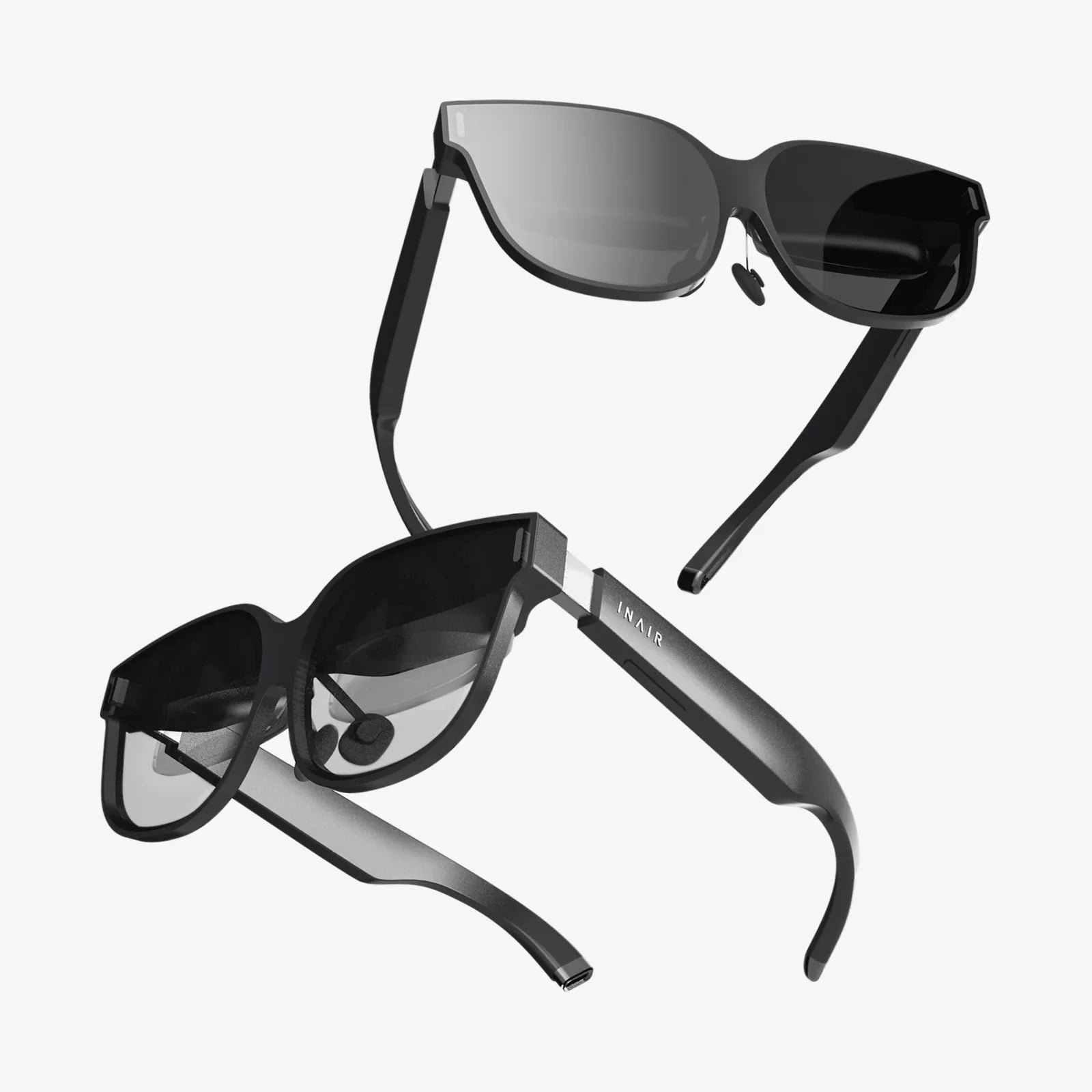
You slip on the sleek, futuristic visor, and in an instant, the world you know vanishes. The familiar confines of your living room dissolve into pixels, replaced by an impossible vista—perhaps the surface of Mars, the depths of the Marianas Trench, or a canvas where your thoughts materialize in three dimensions. This is the promise, the profound shift, the moment of pure, unadulterated discovery that leaves your mind blown. A virtual reality headset is no longer a figment of science fiction; it is a key, a portal, and arguably, one of the most transformative pieces of technology to emerge in the last decade, poised to redefine everything from how we play to how we perceive our very existence.
The Alchemy of Presence: More Than Just Screens
To understand why the experience can be so jarringly real, one must look beyond the simple specs of resolution and refresh rate. The true magic of a modern headset lies in its engineering of presence—the uncanny, brain-tricking sensation of actually being in the digital environment. This is achieved through a symphony of advanced technologies working in perfect harmony.
High-field-of-view displays placed mere centimeters from your eyes fill your entire peripheral vision, eliminating the framed-in feeling of a television or monitor. But the real genius is in the tracking. Inside-out positional tracking, using a constellation of tiny cameras and sensors on the device itself, monitors the subtlest movements of your head and body with millimetric precision. When you lean forward to examine a digital artifact, the world adjusts with imperceptible latency. Your brain expects this. When it happens flawlessly, the illusion holds. This biological lockstep is the foundation upon which reality is rebuilt.
This technical ballet is further enhanced by 3D binaural audio. Unlike standard stereo sound, spatial audio mimics how sound waves interact with the human head and ears. A whisper from your left in the virtual world will sound like it’s coming from your left, even if you turn your head. This multi-sensory assault on your perception is what separates VR from any prior media. It’s not something you watch; it’s a place you visit, and the feeling of discovery upon arriving there for the first time is an experience that is universally mind-blowing.
A Canvas for the Mind: Unleashing Creativity and Expression
Beyond consumption, these devices have emerged as one of the most powerful tools for human creativity ever conceived. Imagine a painter no longer confined to a flat, two-dimensional canvas. With motion-tracked controllers that become brushes, knives, and tools of light, artists can step inside their own work, sculpting in three dimensions, walking around their creation, and building worlds from the void. This is a fundamental shift in the creative process.
This new medium allows for the visualization of the previously unvisualizable. Architects can walk clients through unbuilt homes, allowing them to experience the scale of a room and the fall of light through a virtual window. Medical students can dissect a detailed, beating human heart from every angle, peeling back layers without a single physical specimen. Designers can prototype complex machinery at full scale, identifying flaws in ergonomics and assembly long before a single piece of metal is cut.
The act of creation within this space is itself a form of profound discovery. The learning curve is not about memorizing complex software menus but about learning to move and think in a new way. It’s intuitive, physical, and deeply immersive. The moment a user first sculpts a form out of thin air or paints a stroke of light that hangs in the space before them is a moment of pure, childlike wonder. It’s a return to a tactile form of making, but with the infinite possibilities of the digital realm. The headset becomes less of a viewing device and more of a workshop for the imagination.
The Empathy Machine: Walking in Another's Shoes
Perhaps the most profound and socially significant application of this technology is its use as a powerful engine for empathy. Journalists and documentarians are now using it to transport viewers directly into the stories they tell. It’s one thing to read about the plight of refugees in a news article; it is an entirely different, emotionally resonant experience to stand in a virtual recreation of a camp, to hear the sounds and see the scale of the environment surrounding you.
These experiential narratives can place you in the body of another person, offering a glimpse into perspectives far removed from your own. Simulations can recreate the sensory overload of an autistic child in a crowded classroom or the disorienting world of someone with a neurodegenerative disease. This is not about sympathy from a distance; it is about fostering a deeper, more visceral understanding. It’s a difficult, often uncomfortable, but incredibly important form of discovery. It has the power to break down barriers of prejudice and misunderstanding by making abstract struggles tangible and real.
This application extends to soft skills training and therapy. Professionals can practice high-stakes conversations in a simulated environment, from firing an employee to delivering difficult news to a patient. Therapists are using controlled virtual environments to help patients safely confront and manage phobias, anxiety, and PTSD. The headset provides a safe space to explore these challenging emotions, a digital sandbox for the psyche where the mind can learn and heal through direct, embodied experience.
Redefining Connection: The Social Metaverse
The caricature of a virtual reality user is often a lone individual, isolated from the real world. In practice, the technology is becoming intensely social. The concept of a persistent, shared "metaverse"—a collective virtual space—is rapidly evolving. In these spaces, your avatar is your passport. You can meet friends from across the globe not as a floating username in a chat window, but as a embodied presence. You can watch a movie together in a virtual cinema, your avatars sitting side-by-side. You can attend a live concert, feeling the collective energy of the crowd as you jump and dance with people from a dozen different countries.
This form of communication is rich with non-verbal cues. Spatial audio allows for natural side conversations; you can lean over and whisper to the person next to you without interrupting the main group. Avatars can gesture, nod, and express body language. This adds a layer of human connection that is completely absent from video calls or text-based communication. The discovery here is about the new ways we can be together when geography is no longer a constraint. It’s about the feeling of shared presence, of co-existing in a common digital space, and the novel forms of community and collaboration that can emerge from it.
Navigating the Frontier: Challenges and Ethical Considerations
This powerful technology is not without its significant challenges and ethical quandaries. The very immersion that makes the experience so compelling also necessitates a serious discussion around safety, both physical and psychological. Users can become so engrossed that they forget the physical boundaries of their play area, leading to potential injuries. Designing for user safety within an experience that encourages free movement remains a primary concern for developers.
On a deeper level, the long-term psychological effects of prolonged immersion are still being studied. The line between the virtual and the real could potentially become blurred for some individuals. Issues of data privacy are also magnified. A headset can track not only where you look but how long you look at it, your physiological responses, and your precise movements in space. This constitutes a incredibly detailed biometric dataset that demands robust ethical handling and transparent policies.
Furthermore, the potential for addiction and escapism is real. If a virtual world becomes more appealing than the real one, what are the societal consequences? There is also the risk of exacerbating the digital divide, creating a world where some have access to these incredible realms of discovery and others are left behind. Navigating this new frontier responsibly is just as important as the technological innovation itself. The goal must be to harness the mind-blowing potential of VR while building guardrails that protect users and society.
The Horizon of Human Experience
The journey of the virtual reality headset is just beginning. We are currently standing at the base camp, marveling at the initial view, while the true summit lies somewhere in the clouds ahead. The hardware will continue to evolve, becoming lighter, wireless, with higher resolution and more intuitive interfaces. Haptic feedback suits will allow us to feel virtual objects and sensations, deepening the immersion to levels we can scarcely imagine today.
The content and applications will expand exponentially. We will see entirely new art forms born in this medium, experiences that are neither game nor film but something entirely new. Education will be revolutionized, with history lessons becoming time-travel journeys and biology classes transforming into cellular-level adventures. Remote work will be redefined through persistent, collaborative virtual offices that feel tangibly present.
This is more than just a new gadget; it is a new layer of human reality. It is a tool for exploration, not of distant stars, but of the infinite landscapes of human imagination, empathy, and connection. The ultimate discovery it offers is a new understanding of ourselves and our potential. The mind-blowing moment when the headset first transports you is not just a novelty; it is a glimpse into a future where our reality is not a fixed destination, but a flexible, malleable, and infinitely expandable experience, limited only by the creativity of the human spirit.
Ready to see what your mind can truly handle? The portal awaits, and the other side will change everything you thought you knew about the possible. Your next great discovery is just a headset away, promising to dismantle your reality only to rebuild it, wider, deeper, and more astonishing than ever before.
Share:
3D Visual: The Unseen Engine Reshaping Our World
3D Vision Video: The Next Frontier in Immersive Storytelling and Digital Experience