


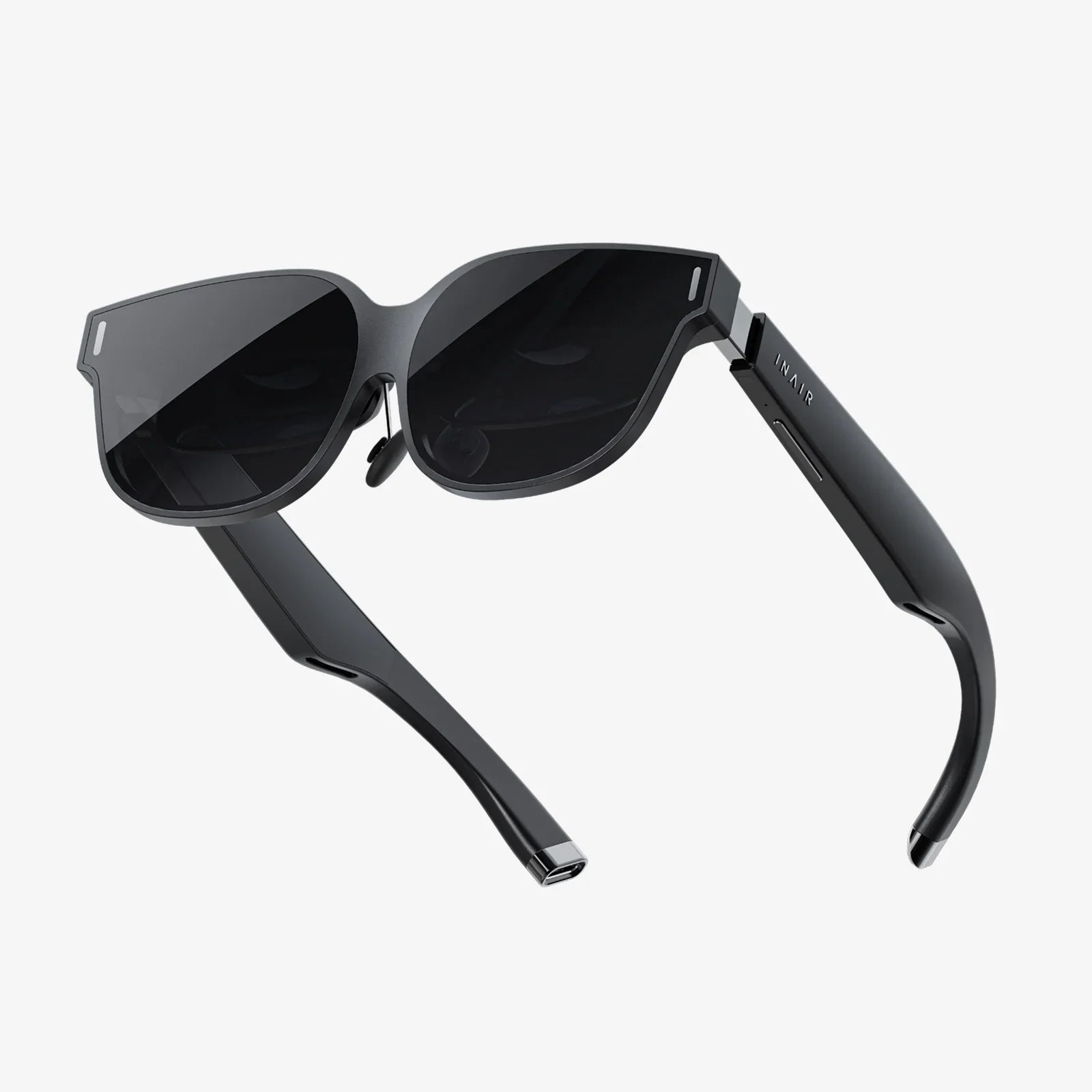
Imagine a world where you can walk through your dream home before the foundation is even poured, where a surgeon can practice a complex procedure on a perfect digital replica of your heart, or where ancient ruins not only rise from the dust but teem with the life of their heyday. This is not a glimpse into a distant future; it is the reality being built today, pixel by precise pixel, through the revolutionary power of 3D visual technology. This invisible engine is no longer confined to the realms of entertainment and fantasy; it is fundamentally reshaping how we create, communicate, and comprehend our world, weaving itself into the fabric of industries we once considered purely physical.
The Bedrock of the Digital Realm: Understanding the Core
At its essence, 3D visual is the process of creating and manipulating digital representations of objects and environments in three dimensions—width, height, and depth. This is a significant leap from traditional 2D imagery, which is flat and lacks spatial context. The magic lies in the creation of a 3D model, a digital skeleton built from vertices, edges, and faces that defines the shape of an object. This model is then given life through a process called texturing, where surfaces are painted with color, detail, and material properties like metal, glass, or fabric. Finally, lighting and rendering simulate how light interacts with these surfaces, calculating shadows, reflections, and refractions to produce the final, photorealistic or stylized image or animation.
The journey of 3D visuals began in the laboratories of academia and the ambitious studios of pioneering filmmakers. Early applications were computationally monstrous and visually simplistic by today's standards, but they laid the groundwork for everything that was to come. The video game industry acted as a massive accelerator, driving innovation in real-time rendering and pushing hardware to its limits to create ever more immersive and believable worlds. Simultaneously, the film industry embraced 3D for creating breathtaking visual effects and entirely computer-generated feature films, proving that digital artistry could evoke genuine emotion and wonder.
Beyond the Screen: Revolutionizing Industry and Innovation
While entertainment provided the proving grounds, the true explosion of 3D visual technology has occurred in its practical, real-world applications. It has become an indispensable tool across a vast spectrum of professions.
Architecture, Engineering, and Construction (AEC)
This sector has been utterly transformed. Building Information Modeling (BIM) utilizes detailed 3D models that are more than just visual; they are intelligent databases containing information about every component of a building—from the structural integrity of a beam to the manufacturer of a faucet. This allows for unprecedented collaboration, clash detection (identifying if a pipe is running through a steel beam before it's built), and project management. Clients are no longer presented with abstract blueprints but are taken on immersive virtual walkthroughs, enabling them to experience the scale, flow, and lighting of a space, leading to better design decisions and significantly reducing costly changes during construction.
Healthcare and Medicine
Here, 3D visuals are quite literally saving lives. Medical imaging data from CT and MRI scans can be converted into precise, interactive 3D models of a patient's anatomy. Surgeons use these models to pre-plan complex surgeries, navigating around critical nerves and blood vessels before making a single incision. Medical students can learn anatomy by dissecting virtual cadavers, and custom 3D-printed prosthetics and implants are designed from these exact digital models, ensuring a perfect fit. This technology is providing a clarity and understanding that 2D scans alone could never offer.
Retail and E-Commerce
The biggest hurdle of online shopping—the inability to see, touch, or try a product—is being dismantled. Brands are now creating photorealistic 3D models of their products, from furniture and electronics to sunglasses and sneakers. Customers can rotate, zoom in, and often even see these products placed in their own space using augmented reality on their smartphones. This dramatically reduces purchase hesitation and product return rates, creating a more confident and engaging shopping experience that bridges the gap between the digital and physical storefront.
Manufacturing and Product Design
The design process has been accelerated from years to months. Engineers and designers use 3D modeling software to create, test, and iterate prototypes entirely in a digital space. They can run simulations for stress, fluid dynamics, and thermal performance, identifying and solving problems when they are easiest and cheapest to fix—on the digital prototype. This digital thread runs straight through to the factory floor, where the same models guide automated manufacturing machinery, ensuring absolute precision from concept to creation.
The Tools of Creation: A Democratizing Force
The power to create in 3D was once locked away in expensive software suites that required years of specialized training. Today, that power is rapidly democratizing. A new generation of intuitive, accessible, and often browser-based tools is empowering a much wider range of creators. Artists, designers, architects, and even hobbyists can now model, texture, and render stunning 3D visuals without a background in complex coding or computer science. Furthermore, vast online libraries of pre-made 3D models allow anyone to incorporate high-quality assets into their projects, accelerating workflows and lowering the barrier to entry. This democratization is fueling an explosion of creativity and innovation, as more minds are empowered to build and share their visions.
The Future is Rendered in Real-Time: The Next Frontier
The evolution of 3D visual technology is far from over; it is accelerating toward a more integrated and interactive future. The concept of the digital twin—a live, dynamic, and connected virtual replica of a physical object, system, or city—is becoming a reality. Urban planners can simulate traffic flow and the impact of new policies. Factory managers can monitor and optimize entire production lines from a digital dashboard. This is 3D visualization as a living, breathing system, not a static image.
This is all powered by advances in real-time rendering, particularly through powerful game engines that can generate cinematic-quality imagery instantaneously. This technology is the backbone of the emerging metaverse—a persistent network of shared 3D virtual spaces. It is also revolutionizing live events, enabling broadcasters to create virtual sets and augmented reality graphics that are indistinguishable from physical ones, but infinitely more flexible and spectacular.
Finally, the rise of Generative AI is poised to be the next great disruptor. AI models are now capable of generating 3D assets, textures, and even animations from simple text prompts or 2D images. While still in its early stages, this technology promises to further streamline and automate the creation process, allowing artists to focus on high-level creative direction while AI handles the heavy lifting of model generation. This symbiotic relationship between human creativity and artificial intelligence will define the next chapter of 3D visual storytelling.
We stand at the threshold of a new dimension of human experience, one where the line between what is real and what is rendered becomes increasingly, and beautifully, blurred. This is the silent revolution of 3D visual technology—not just showing us a new world, but providing the tools to build it ourselves, to solve age-old problems with newfound clarity, and to imagine possibilities that were once confined to the pages of science fiction. The screen is no longer a barrier; it is a window, and on the other side, an entire universe is waiting to be explored, one stunning pixel at a time.
Share:
Advantages and Disadvantages of Portable Computers: A Comprehensive Guide to Modern Mobility
Discovery Mind Blown: How a Virtual Reality Headset is Rewriting Reality Itself