


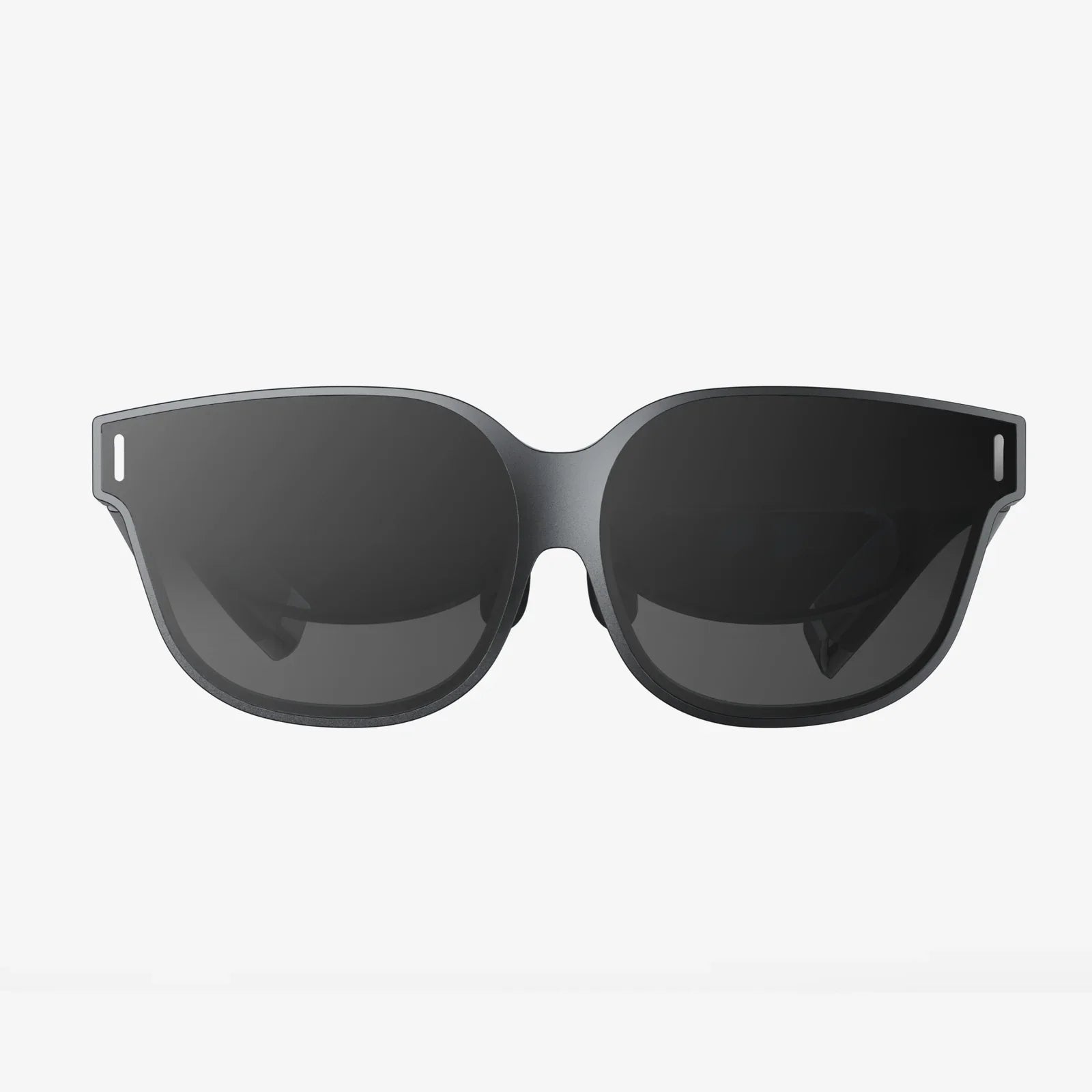
Imagine a world where the digital and physical seamlessly intertwine, where data leaps from the screen and inhabits your space, and where complex ideas are no longer confined to 2D blueprints but can be walked around, peered into, and manipulated with your own hands. This is no longer the realm of science fiction; it is the emerging reality being forged at the powerful intersection of 3D visualisation and augmented reality. This convergence is not just an incremental step in technological evolution; it represents a fundamental shift in how we create, communicate, and interact with information, promising to redefine countless aspects of our personal and professional lives.
The Bedrock: Understanding 3D Visualisation
Before we can appreciate the synergy, we must first understand the components. 3D visualisation is the process of creating graphical content using 3D software to represent an object or environment. It is the art and science of translating data, designs, and concepts into photorealistic or stylised three-dimensional images, animations, and models. This discipline has been the backbone of industries like film, video games, and architecture for decades.
The power of 3D visualisation lies in its ability to convey information with unparalleled clarity. A complex engineering assembly, the flow of traffic in a new urban development, or the intricate internal workings of a mechanical device—all can be understood intuitively when presented in three dimensions. It allows for the exploration of 'what if' scenarios without the prohibitive cost and time of physical prototyping. Designers can test aesthetics, ergonomics, and functionality in a virtual sandbox, iterating at digital speed. This process democratises understanding, making complex spatial and structural data accessible to experts and non-experts alike, bridging the gap between technical specification and human comprehension.
The Bridge to Reality: The Rise of Augmented Reality
Augmented reality (AR) acts as the crucial bridge that brings these digital creations into our world. Unlike virtual reality, which seeks to replace your environment with a digital one, AR overlays and anchors digital information—be it images, text, or 3D models—onto the user's view of the real world through a device, typically a smartphone, tablet, or set of smart glasses.
AR's genius is in its contextuality. It provides information relevant to what you are looking at and where you are. This could be navigation arrows painted onto the road through your windshield, historical facts popping up as you point your phone at a monument, or instructions superimposed onto a piece of machinery you are trying to repair. By blending the digital with the physical, AR enhances our perception and capabilities, turning our immediate environment into an interactive interface. It adds a layer of intelligence to the world, making the invisible visible and the complex simple.
The Powerful Convergence: A Symbiotic Relationship
While powerful on their own, 3D visualisation and augmented reality achieve their true potential when combined. They engage in a symbiotic relationship: 3D visualisation provides the high-fidelity, data-rich digital content, and AR provides the immersive, spatially-aware medium through which to experience it.
This fusion transforms static 3D models from something you look at on a screen into something you look through and interact with in your own space. A 3D model of a new piece of furniture is useful on a website. But viewing that same model in AR, scaled to perfect size and placed in the exact corner of your living room, is transformative. It shifts the user experience from passive observation to active participation. This is the core of the revolution—moving from visualisation to actualisation.
Transforming Industries: From Concept to Concrete Reality
The applications of this combined technology are vast and are already disrupting numerous sectors.
Architecture, Engineering, and Construction (AEC)
In the AEC industry, this synergy is a game-changer. Architects and clients can walk through a full-scale, photorealistic 3D model of a building long before the foundation is poured. They can assess spatial relationships, natural lighting at different times of day, and material finishes in situ. On the construction site, workers can use AR glasses to see holographic building plans, piping, or electrical conduits superimposed onto the unfinished structure, drastically reducing errors and rework. This 'see-through-walls' capability is enhancing safety, improving precision, and streamlining complex projects.
Retail and E-Commerce
The retail landscape is being reshaped. The 'try before you buy' paradigm is being redefined. Customers can now visualise how a new sofa will fit their décor, how a watch will look on their wrist, or how a new shade of paint will transform a room—all from their homes. This reduces purchase hesitation and product returns, while creating an engaging and memorable shopping experience that blurs the line between online and in-store browsing.
Manufacturing and Design
From initial concept to factory floor, 3D and AR are streamlining processes. Designers collaborate around a shared holographic prototype, making adjustments in real-time. For assembly line workers, AR can project animated, step-by-step instructions directly onto their workstations, guiding them through complex wiring harnesses or component placement, thereby accelerating training and reducing error rates for both new and experienced staff. Maintenance technicians can see interactive schematics overlaid on the equipment they are servicing, identifying parts and following repair procedures hands-free.
Education and Training
This technology is creating profound new learning methodologies. Medical students can practice procedures on detailed 3D anatomical models that appear to float in mid-air, peeling back layers to explore musculature, vascular systems, and organs. History students can walk through a reconstructed ancient Roman forum, watching it come to life around them. This experiential learning fosters deeper understanding and retention by engaging multiple senses and allowing for interactive exploration.
Technical Foundations and Considerations
Delivering a seamless 3D AR experience relies on several key technologies. Powerful rendering engines are required to generate high-quality 3D graphics in real-time. Accurate tracking and mapping—using cameras, sensors, and algorithms like SLAM (Simultaneous Localization and Mapping)—are essential for the digital content to stay persistently and correctly anchored in the physical world. Furthermore, the creation of optimised 3D assets is critical; models must be detailed enough to be believable yet lightweight enough to run smoothly on mobile processors or standalone AR glasses.
Challenges remain. Achieving perfect occlusion (where real-world objects correctly block digital ones) and realistic lighting integration between the virtual and physical environments are ongoing areas of innovation. The hardware, particularly AR glasses, needs to become lighter, more powerful, and more socially acceptable for all-day wear to achieve ubiquitous adoption.
The Future: A World Augmented
Looking ahead, the trajectory points towards even deeper integration. The concept of the 'digital twin'—a dynamic, virtual replica of a physical object or system—will be fully realised through AR. An engineer could stand in a power plant and see not just the physical machinery, but its real-time operational data, performance metrics, and predictive maintenance alerts floating above it, creating a living dashboard of the physical world.
As 5G and eventual 6G networks reduce latency and increase bandwidth, complex rendering could be offloaded to the cloud, allowing for ever more sophisticated experiences on thinner, lighter devices. Advances in AI will enable more intelligent and context-aware AR interactions, where the system understands the objects in a room and can place digital content accordingly. We are moving towards a spatial computing future where information is unshackled from screens and becomes an integral part of our environment.
The fusion of 3D visualisation and augmented reality is dismantling the final barriers between imagination and reality. It is empowering us to design with greater vision, learn with deeper understanding, work with enhanced efficiency, and shop with increased confidence. This is more than a technological trend; it is the dawn of a new interface between humanity and the digital dimension, one that promises to enrich our reality rather than replace it, forever changing how we see and shape the world around us.
Share:
AR VR Headset Comparison: A Deep Dive into the Future of Immersive Technology
How Do Smartglasses Work: A Deep Dive into the Technology Shaping Our Future