


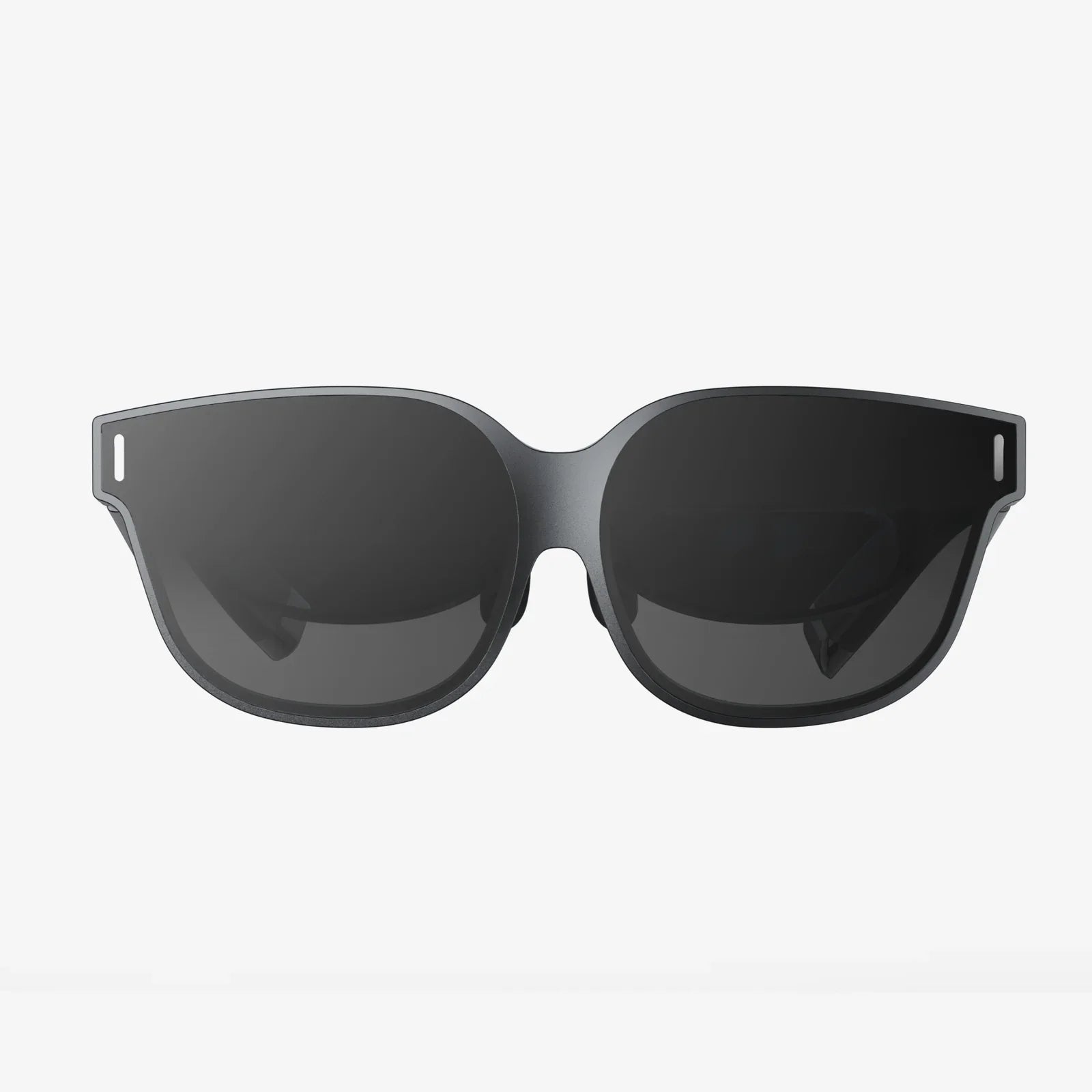
The digital frontier is expanding at a breathtaking pace, and at the very edge of this new horizon are two technologies vying to redefine our reality: Augmented Reality (AR) and Virtual Reality (VR). Choosing between an AR or VR headset isn't just about picking a gadget; it's about selecting a portal to a different kind of experience. This isn't a simple spec-sheet rundown; it's a deep dive into the very philosophy of immersion, a journey to help you understand which digital dimension is right for you. The battle for your perception begins now, and the stakes have never been higher.
The Fundamental Divide: Augmented vs. Virtual Reality
Before we can compare specific headset attributes, we must first establish a clear understanding of the core philosophies that separate AR and VR. They are often mentioned in the same breath, but their purposes and implementations are distinct.
Virtual Reality (VR) is the technology of total immersion. A VR headset functions as a complete blindfold to the physical world, replacing your entire field of view with a computer-generated simulation. By tracking your head movements (and often your hands and body), it creates a convincing illusion that you have been transported elsewhere—be it a fantasy game world, the surface of Mars, or a virtual meeting room. The primary goal of VR is to isolate you from your surroundings to tell a story, train a skill, or provide an escape.
Augmented Reality (AR), in contrast, is the technology of enhanced reality. Rather than replacing your world, an AR headset or device overlays digital information onto your view of the real environment. Think of digital schematics hovering over a piece of machinery you're repairing, navigation arrows painted onto the street in front of you, or a virtual dinosaur stomping through your living room. The goal of AR is to contextualize and augment your reality with useful data and experiences, blending the digital and physical seamlessly.
Delving into the VR Spectrum: Tethered, Standalone, and Mobile
The VR landscape itself is not a monolith. It is broadly divided into three categories, each with its own strengths, weaknesses, and ideal user base.
Tethered VR Headsets
These are the powerhouses of the virtual reality world. A tethered headset, as the name implies, is physically connected by a high-speed cable to a powerful external computer or gaming console. This external source handles the intense graphical processing required for the most high-fidelity experiences.
Pros:
- Unmatched Performance: They deliver the highest resolution, most detailed textures, most complex physics, and smoothest framerates available.
- Premium Experiences: This is the domain of deep, graphically intensive games and professional-grade simulations.
- Often use external base stations for millimeter-accurate tracking of your entire body and environment.
Cons:
- High Cost: Requires a significant investment not only in the headset itself but also in the high-end computer to run it.
- Lack of Portability: You are confined to the area near your computer, and the cable can be a tripping hazard and immersion-breaker.
- Complex Setup: Involves configuring sensors and managing cables.
Ideal For: Hardcore gamers, professional developers, and enterprise users who require the absolute best visual fidelity and processing power.
Standalone VR Headsets
This category represents the most significant growth in the VR market. Standalone headsets have all the necessary computing hardware—processor, memory, sensors—built directly into the headset. There are no wires and no external computer required.
Pros:
- Complete Freedom & Portability: The ultimate convenience factor. You can use it anywhere indoors or out (with care), with no cables to limit movement.
- Ease of Use: The setup is incredibly simple; often, you just put on the headset and go.
- Accessibility: Generally more affordable than a tethered setup when you factor in the cost of the PC.
Cons:
- Compromised Performance: Mobile processors cannot match the raw power of a desktop GPU, leading to simpler graphics and less complex environments.
- Battery Life: Sessions are limited to 2-3 hours by the internal battery, which also adds weight.
Ideal For: The mass market, fitness users, families, and those who value convenience and accessibility above cutting-edge graphics.
Mobile VR (The Declining Category)
This early approach involved slotting a smartphone into a holder worn on the head. The phone's screen and sensors provided the VR experience. This category has been largely superseded and outperformed by modern standalone headsets.
Navigating the AR Landscape: From Smart glasses to Spatial Computers
AR technology is on a broader spectrum, ranging from simple filters on your phone to futuristic see-through glasses.
Smart glasses (Consumer-Focused)
These are lightweight, often stylish glasses designed for all-day wear. They prioritize form factor and battery life over raw power. Their AR capabilities are typically more subtle—showing notifications, translating text, taking photos, or giving simple directions in your peripheral vision. They are an extension of your smartphone.
Ideal For: Early adopters who want lightweight, always-available information overlays for daily life.
Spatial Computers (Enterprise-Focused)
This is the high-end of current AR. These are powerful, self-contained computers worn on your face. They use advanced waveguides or micro-OLED projectors to blend high-resolution, persistent digital holograms with the real world. They are designed for productivity, design, and industrial use, often featuring hand-tracking and voice control as primary inputs.
Ideal For: Surgeons visualizing patient data during an operation, engineers collaborating on a 3D model of a jet engine, or warehouse workers seeing picking lists and optimal routes.
Key Comparison Factors: A Buyer's Checklist
When evaluating any headset, AR or VR, these are the critical specifications and features to consider.
Visual Fidelity: Resolution, FOV, and Optics
Resolution: Measured in pixels per eye. Higher numbers mean sharper images with less “screen door effect” (the visible lines between pixels). This is crucial for both reading text in AR and believing a VR world.
Field of View (FOV): How much of your vision the display covers, measured diagonally in degrees. A narrow FOV feels like looking through binoculars, while a wide FOV is more immersive. VR headsets strive for the widest FOV possible (>100°), while AR glasses often have a smaller, targeted FOV for specific tasks.
Optics: Pancake lenses are a newer, compact technology that allows for thinner headsets compared to the older, heavier Fresnel lenses. The quality of the lenses directly affects clarity and edge-to-edge sharpness.
Tracking and Interaction: How You Connect with the Digital
Inside-Out vs. Outside-In Tracking: Most modern headsets use inside-out tracking, where cameras on the headset itself map the room and track its own position. This is convenient and portable. Outside-in tracking uses external sensors placed in the room for ultra-precise tracking, typically found on high-end tethered VR setups.
Controllers vs. Hand Tracking: Most systems come with dedicated handheld controllers, which are great for gaming. The emerging trend is advanced hand tracking, which uses cameras to see your bare hands, allowing for more intuitive and natural interaction, especially valuable in AR productivity scenarios.
Comfort and Form Factor: The Long-Term Experience
This is arguably as important as any spec. A headset must be comfortable enough to wear for the duration of its intended use.
Weight Distribution: Is the weight on your forehead, cheeks, or balanced? A top strap can help immensely.
Materials: Foam cushions, adjustable straps, and breathable materials prevent heat buildup and pressure points.
IPD Adjustment: Interpupillary Distance adjustment (physical or software) allows you to match the lens spacing to your eyes, which is critical for visual comfort and preventing eye strain.
Audio: The Other Half of Immersion
Good spatial audio is vital. Many headsets have built-in directional speakers that don't cover your ears, allowing you to stay aware of your real surroundings—a key feature for AR. Others offer high-quality built-in headphones or audio jacks for your own. 3D spatial audio that changes as you move your head is a game-changer for immersion.
The Software Ecosystem: The World Beyond the Hardware
A headset is just a window; the software is the world you see through it. The available apps, games, and productivity tools are a decisive factor.
VR: Dominated by gaming and social experiences. The depth and quality of the game library are paramount. Also consider professional software for 3D design, architecture, and training simulations.
AR: Currently, the most compelling software is in the enterprise and productivity space—remote assistance, digital manuals, and 3D design visualization. The consumer app ecosystem is still developing.
The Verdict: Which Digital Dimension is Yours?
The choice between AR and VR, and within their sub-categories, ultimately boils down to a single question: What do you want to do?
- Choose a Tethered VR Headset if you are a gamer seeking the most powerful, immersive experiences and have the budget and space for a high-end PC setup.
- Choose a Standalone VR Headset if you value convenience, portability, and accessibility for fitness, social apps, and more casual gaming, and want an all-in-one package.
- Explore Consumer AR Smart glasses if you are an enthusiast who wants a taste of the future with lightweight, always-on notifications and basic information overlays in your daily life.
- Look into Enterprise AR Spatial Computers if you are a professional whose work could be transformed by having hands-free, interactive digital information layered onto your physical workflow.
We are standing at the precipice of a fundamental shift in how we interact with computers. The journey from clunky prototypes to sleek, powerful headsets has been remarkably fast, and the road ahead promises even more seamless integration of the digital and physical. The lines between AR and VR will eventually blur into a unified spectrum of mixed reality experiences. The perfect headset for everyone doesn't exist yet, but by understanding the core comparisons laid out here, you hold the key to unlocking the immersive experience that will define your tomorrow. Your new reality is waiting to be chosen—will you augment it or replace it?
Share:
AI Blocking Glasses: The Unexpected Frontier of Personal Privacy and Digital Defense
3D Visualisation and Augmented Reality: The Confluence Reshaping Our Digital and Physical Worlds