


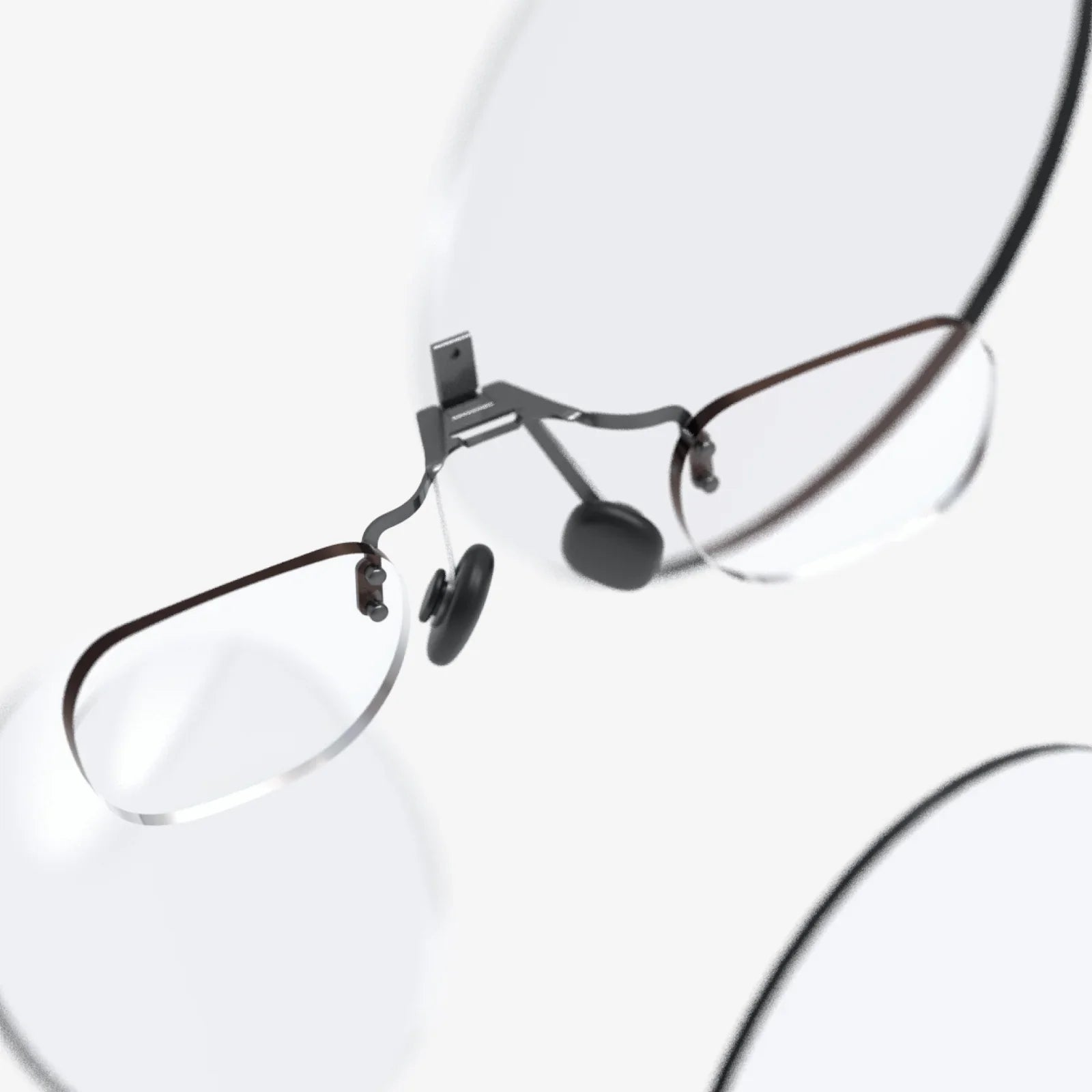
- by wangfred
3D VR Glasses: A Portal to New Realities and the Future of Human Experience
- by wangfred
Imagine slipping on a pair of sleek, futuristic glasses and instantly being transported. One moment you’re in your living room; the next, you’re standing on the surface of Mars, watching dust devils swirl across the rust-red plains. Or perhaps you’re sitting in the front row of a roaring concert, the bass thumping in your chest, or peering into the intricate workings of a human heart, larger than life. This is the profound promise and rapidly evolving reality of 3D VR glasses, a technology that is not merely a new screen for our entertainment but a fundamental portal to new ways of learning, working, connecting, and understanding our world. This is more than innovation; it’s a quiet revolution unfolding right before our eyes.
At first glance, a modern headset might seem like a simple box of lenses, but it is, in fact, a marvel of miniaturized engineering, a symphony of components working in perfect harmony to fool your senses into accepting a digital reality as truth. The magic lies in a concept known as stereoscopy, which mimics the way human vision naturally creates depth perception.
Our two eyes are spaced apart, each receiving a slightly different two-dimensional image of the world. The brain’s visual cortex brilliantly merges these two flat images into a single, coherent three-dimensional picture with depth, distance, and perspective. 3D VR glasses replicate this biological process with stunning precision.
Inside the headset, mere centimeters from your eyes, are two high-resolution displays—one for each eye. These are not your average smartphone screens; they are engineered for extremely low persistence, meaning pixels illuminate for mere microseconds to prevent motion blur during rapid head movements. These screens render two distinct images, each representing the perspective from the corresponding eye’s position in the virtual space.
These images are then viewed through a set of specialized lenses placed between the screens and your eyes. These lenses perform a critical function: they focus and reshape the light from the flat panels, bending it to fill your entire field of view. This creates the sensation of looking into a vast, immersive world rather than at a small, flat screen sitting on your nose. The combination of wide field-of-view (FOV) lenses and high-resolution displays is paramount to achieving the feeling of presence—the ultimate goal where your brain is convinced you are truly somewhere else.
Visuals are only one part of the equation. For the illusion to hold, the virtual world must respond to your movements instantly and accurately. This is achieved through a sophisticated array of sensors, including gyroscopes, accelerometers, and magnetometers, which collectively track the rotation of your head—where you are looking up, down, left, and right.
More advanced systems incorporate external cameras or built-in outward-facing sensors for positional tracking. These systems map your physical room and track the precise movement of your head through space—leaning in, crouching down, or walking around. This data is fed to a powerful processor, either housed within the headset itself or housed in an external computing unit, which recalculates the entire 3D scene in real-time, adjusting the perspective for your new position with imperceptible latency. Any delay, even a few milliseconds, can break the sense of immersion and cause discomfort.
True immersion is a multi-sensory experience. Spatialized 3D audio is a crucial, yet often overlooked, component. Instead of standard stereo sound, advanced audio algorithms simulate how sound waves interact with the human head and ears. A sound coming from your virtual left will be louder in your left ear and slightly delayed and filtered in your right ear, exactly as it would be in reality. This allows you to hear the direction and distance of sounds, making a whispered secret behind you feel genuinely unsettling.
Finally, interaction completes the loop. Hand-held controllers, equipped with their own tracking capabilities, haptic feedback motors, and input buttons, become extensions of your hands in the virtual world. You can reach out, grab objects, push buttons, and feel a subtle vibration when you pull a virtual trigger. Emerging technology is pushing this further with hand-tracking, allowing you to use your bare hands to manipulate the digital environment, and haptic feedback suits that can simulate touch, temperature, and even impact, bringing us closer than ever to the Holodeck dream.
While gaming remains a massive and incredibly popular driver of consumer adoption, the potential applications for this technology stretch far beyond virtual battlefields and fantasy realms. We are witnessing the emergence of VR as a powerful tool for practical, profound, and life-changing purposes.
Imagine a history class where students don’t just read about ancient Rome; they can walk through a meticulously reconstructed Forum, hearing the echoes of the crowd. Medical students can practice complex surgical procedures on virtual patients, making critical mistakes without consequence and mastering techniques in a risk-free environment. Aspiring mechanics can disassemble and reassemble the engine of a jet aircraft, with each part animated and labeled. This experiential learning paradigm boosts retention, engagement, and understanding in ways textbooks and videos simply cannot match. From safety drills for firefighters to soft-skills training for corporate employees, VR provides a safe, scalable, and highly effective training platform.
For architects, industrial designers, and engineers, VR has become an indispensable part of the creative and review process. Instead of viewing a building design on a 2D monitor, architects can step inside their own creation while it’s still a digital model. They can experience the scale of a room, test sightlines, check for lighting issues, and make adjustments before a single brick is laid. Car designers can sit in the driver’s seat of a vehicle that doesn’t physically exist, evaluating the dashboard layout and ergonomics. This “presence” within the design saves immense amounts of time and resources by identifying problems early and allowing clients to truly experience and approve a final product.
The global shift toward remote work has highlighted both the convenience and the limitations of video conferencing. VR offers a compelling alternative: the virtual meeting room. Colleagues from across the globe can gather as lifelike avatars in a shared digital space, standing around a 3D model of a new product, brainstorming on a virtual whiteboard that feels natural, or sharing documents on virtual screens. The sense of shared presence fosters a stronger connection and more productive collaboration than a grid of faces on a screen. This concept of the “metaverse” as a persistent virtual workplace is rapidly moving from science fiction to corporate reality.
The therapeutic potential of VR is vast and deeply impactful. It is being used for exposure therapy, helping patients with phobias like fear of heights or flying to confront their anxieties in a controlled, gradual, and safe virtual environment. It provides powerful distraction techniques for patients undergoing painful wound care or chemotherapy, immersing them in calming, engaging worlds to reduce perceived pain and anxiety. For patients undergoing physical rehabilitation, VR can turn repetitive exercises into engaging games, boosting motivation and adherence to recovery programs. Furthermore, VR experiences are providing cognitive stimulation and virtual travel for seniors experiencing mobility issues or cognitive decline, greatly enhancing their quality of life.
Despite its incredible promise, the path forward for widespread VR adoption is not without its obstacles and important ethical considerations that society must address.
Early iterations of the technology were often bulky, wired, and prone to inducing cybersickness—a form of motion sickness caused by a disconnect between what the eyes see and what the body feels. While modern standalone devices are lighter, wireless, and feature higher refresh rates to minimize this issue, comfort during extended use remains a focus for engineers. Furthermore, the cost of high-end hardware and the required computing power can still be a barrier to entry for many, though the market is steadily moving toward more accessible options.
As we spend more time in rich, compelling virtual worlds, questions arise about the long-term psychological effects. Could a retreat into idealized digital realities lead to increased social isolation or dissatisfaction with the physical world? The development of robust social protocols and etiquette for these new spaces is crucial. Furthermore, the collection of incredibly detailed biometric data—precise eye movement, hand gestures, reaction times—presents serious privacy and security concerns. How is this data stored, used, and protected? Establishing clear ethical guidelines and regulations will be essential to building trust and ensuring the technology develops responsibly.
The current state of the technology is impressive, but it is merely the foundation for an even more transformative future. Research and development are pushing the boundaries in several key areas that will make the virtual indistinguishable from the real.
Varifocal and light-field displays are being developed to solve the vergence-accommodation conflict, a technical challenge that can cause eye strain by tricking the brain into focusing on a fixed distance. These new displays will allow for natural focus on near and far objects, enhancing comfort and realism dramatically. Haptic technology is evolving from simple vibration motors into full suits and gloves that can simulate pressure, texture, and temperature, truly bridging the gap between seeing a virtual object and “feeling” it.
Perhaps the most futuristic frontier is Brain-Computer Interfaces (BCI). Companies are already experimenting with non-invasive sensors that can read neural signals, potentially allowing users to control the virtual environment through thought alone—moving a virtual object simply by intending to do so. This could eventually lead to experiences where the virtual world can not only simulate sensory input but also respond directly to our unspoken intentions, creating a seamless flow between mind and machine.
The journey of 3D VR glasses is just beginning. They are evolving from a niche peripheral into a universal tool, a new lens through which we will see and interact with digital information, with each other, and with ourselves. It is a gateway to experiences that were once confined to our dreams, poised to reshape every facet of our lives in ways we are only starting to imagine.
This isn't just about the next generation of entertainment; it's about the next chapter of human connection and exploration. The line between the digital and the physical is blurring, creating a new hybrid reality where the only true limit is imagination. The headsets are getting lighter, the graphics more photorealistic, and the experiences more profound—so the question is no longer if you will step through this portal, but when, and what incredible worlds will you choose to explore first?