


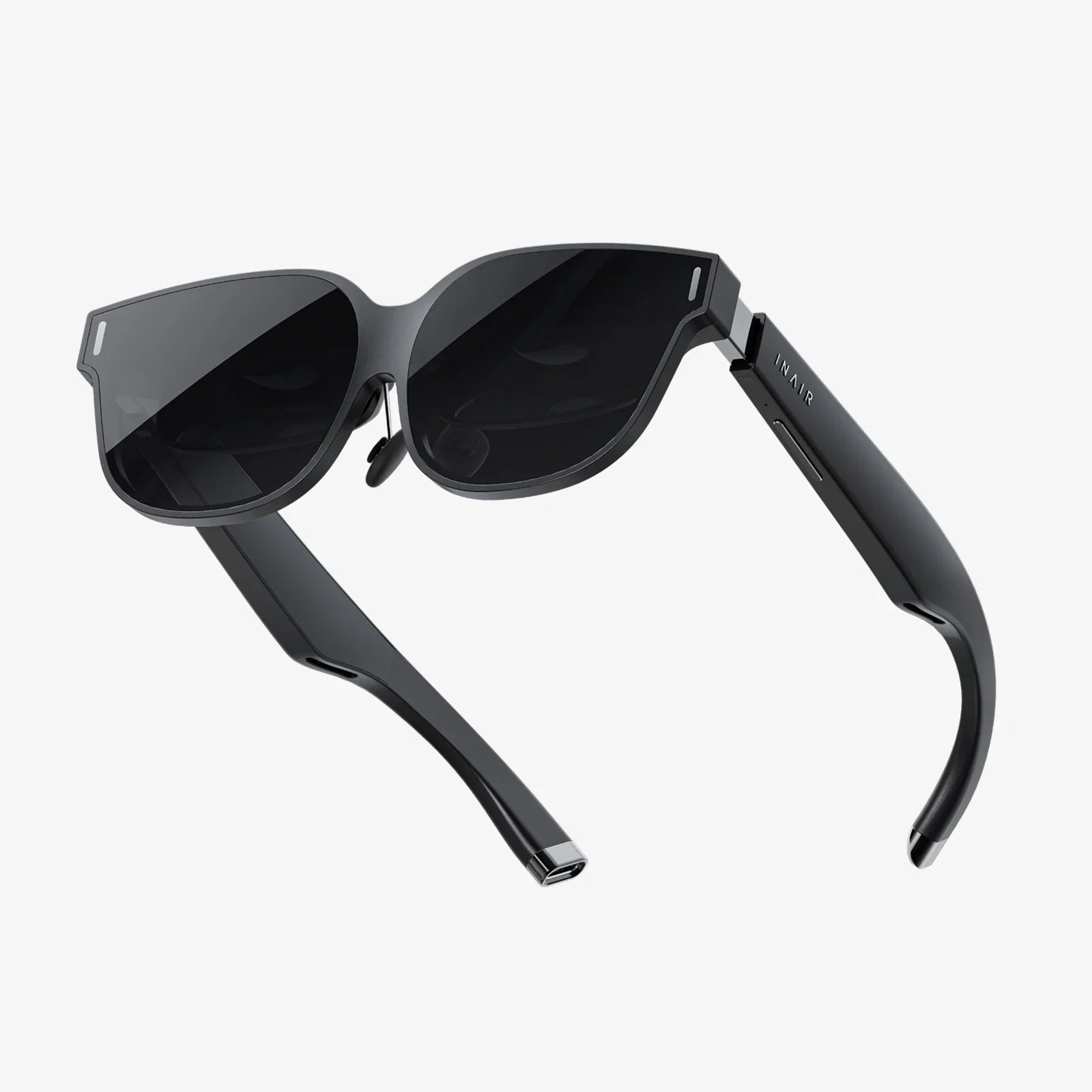
Imagine a world where digital information doesn't just live on your screen but seamlessly blends with your physical surroundings, enhancing everything you see, do, and experience. This is the promise of augmented reality (AR), a technology that is rapidly moving from science fiction to an integral part of our daily lives and professional workflows. The question isn't just what augmented reality is, but what is augmented reality used for that makes it such a revolutionary force across countless sectors? The answers are as diverse as they are transformative, weaving a digital layer of intelligence, information, and imagination over the very fabric of our reality.
Demystifying the Core Concept
Before delving into its myriad uses, it's crucial to understand the fundamental principle of augmented reality. Unlike virtual reality (VR), which creates a completely immersive, computer-generated environment, AR superimposes digital content—images, video, 3D models, data points—onto the user's view of the real world. This is typically achieved through devices like smartphones, tablets, smart glasses, and heads-up displays. The magic lies in the synergy; the digital elements are not just overlaid but contextually aware, interacting with and responding to the physical environment in real-time. This core capability to enhance, rather than replace, reality is the engine driving its vast and varied applications.
Revolutionizing Retail and E-Commerce
The retail sector has been one of the earliest and most enthusiastic adopters of AR, fundamentally altering the consumer journey from browsing to purchasing.
Virtual Try-On and Visualization
One of the most prominent answers to 'what is augmented reality used for' in retail is solving the 'try-before-you-buy' problem online. Shoppers can now use their smartphone cameras to see how a pair of glasses fits their face, how a new shade of lipstick looks on their skin tone, or how a watch sits on their wrist. This extends far beyond apparel and accessories into home decor. Customers can project a life-sized, 3D model of a new sofa into their living room, a lamp onto their side table, or a fresh coat of paint onto their walls, ensuring style, scale, and color match their space perfectly before committing to a purchase. This dramatically reduces purchase hesitation and minimizes return rates, creating a more confident and satisfying shopping experience.
Interactive Marketing and In-Store Navigation
AR is also a powerful tool for immersive marketing. Brands create interactive AR experiences that users can access by scanning a product's packaging, a poster, or an in-store display. This might reveal a 3D animation, a brand story, or exclusive promotional content. Furthermore, large retail stores are implementing AR wayfinding apps. By holding up their phone, shoppers can see digital arrows and pathways overlaid on the live camera feed, guiding them directly to the aisle and shelf containing the product they need, eliminating the frustration of searching vast stores.
Transforming Manufacturing and Industrial Design
On factory floors and in engineering labs, AR is moving from a novel tool to a critical component of the operational workflow, enhancing precision, safety, and efficiency.
Complex Assembly and Maintenance
Technicians wearing AR smart glasses can have digital work instructions, schematic diagrams, and animated guides superimposed directly onto the machinery they are assembling or repairing. Instead of constantly glancing back and forth between a physical manual or a computer screen, the information is contextually presented in their line of sight. For instance, when repairing a complex engine, an AR system can highlight the specific bolt that needs to be turned next and display the exact torque setting, reducing errors, speeding up the process, and significantly lowering the training curve for new employees.
Design and Prototyping
Engineers and designers use AR to visualize and interact with 3D prototypes at a 1:1 scale before any physical prototype is built. They can walk around a full-scale model of a new vehicle engine, inspect the interior of a new building's architectural design, or see how new components fit into an existing assembly line. This allows for rapid iteration, early detection of design flaws, and improved collaboration, as multiple stakeholders can view and discuss the same virtual model in a shared physical space.
Remote Expert Assistance
This is a powerful application for solving problems when an expert cannot be on-site. A field technician equipped with AR glasses can stream a live video feed of their viewpoint to a senior engineer located thousands of miles away. The remote expert can then draw digital annotations—arrows, circles, notes—directly into the technician's field of view, guiding them through complex procedures as if they were standing right beside them. This saves immense time and travel costs while ensuring problems are resolved correctly the first time.
Advancing Healthcare and Medicine
The applications of AR in medicine are saving lives, improving patient outcomes, and revolutionizing medical training, providing some of the most compelling examples of its value.
Enhanced Surgical Planning and Execution
Surgeons are using AR to gain X-ray vision during operations. By overlaying CT or MRI scan data—such as the precise location of a tumor or the path of a critical blood vessel—onto the patient's body during surgery, surgeons can navigate with unprecedented accuracy. This allows for more precise incisions, minimizes damage to surrounding healthy tissue, and leads to less invasive procedures, which in turn reduces patient recovery time.
Medical Training and Education
Medical students no longer need to rely solely on cadavers and textbooks. AR applications can project detailed, interactive 3D models of the human anatomy onto a mannequin or even a fellow student. Learners can peel back virtual layers of muscle, examine the circulatory system, or practice complex surgical procedures in a risk-free, repeatable environment. This immersive form of learning accelerates understanding and retention of complex biological systems.
Patient Education and Rehabilitation
Doctors can use AR to visually explain a medical condition, a surgical procedure, or how a specific medication works inside the body, helping patients better understand their health and treatment options. In physical therapy, AR games and exercises can make the rehabilitation process more engaging. Patients recovering from a stroke or injury might be guided through motion exercises by an interactive digital coach or play a game that encourages specific movements, turning tedious rehab into a motivating activity.
Reshaping Education and Training
Beyond medical schools, AR is creating dynamic, interactive learning experiences across all educational levels and subjects, moving learning from passive reception to active exploration.
Interactive Textbooks and Learning Materials
Static images in a history book can spring to life. Students can scan a picture of a ancient Roman ruin with their tablet and see a complete, digitally reconstructed Colosseum emerge from the page, complete with gladiators and crowds. A biology textbook chapter on the heart can project a beating, interactive 3D model that students can explore from every angle. This transforms abstract concepts into tangible, memorable experiences.
Skill-Based Training
From vocational schools to corporate training rooms, AR is used to teach practical skills. Automotive students can practice working on a virtual engine. Electricians can learn wiring techniques on a virtual circuit board. Employees can be trained on new equipment or safety procedures through interactive AR simulations that would be too dangerous, expensive, or disruptive to perform on real machinery.
Enhancing Navigation and Travel
AR is beginning to change how we navigate our cities and explore new places, turning the world itself into an information-rich interface.
Contextual Wayfinding
Early AR navigation apps are already available, using a smartphone's camera to overlay directional arrows onto the real-world street in front of you, making it intuitive to follow GPS instructions without having to interpret a map. This can be used for walking directions in a complex urban environment, finding the right gate in a massive airport, or locating your car in a crowded parking garage.
Interactive Tourism
Tourists pointing their phones at a historic monument, a restaurant, or a museum exhibit can instantly see floating digital tags providing information, reviews, historical facts, or opening hours. This creates a powerful, on-demand tour guide experience, allowing for deeper and more self-directed exploration of new cultures and locations.
Powering Entertainment and Gaming
The explosive popularity of a certain mobile game famously answered the question 'what is augmented reality used for' for millions of people, but its applications in entertainment extend far beyond.
Immersive Gaming
AR games blend game characters and gameplay with the player's real-world environment. Fantastical creatures can appear to be hiding behind your sofa, puzzle-solving can involve physically walking to different locations, and interactive stories can unfold on your kitchen table. This creates a uniquely physical and social gaming experience that encourages movement and exploration of one's surroundings.
Live Events and Broadcasting
During sports broadcasts, AR is used to overlay real-time statistics, first-down lines on a football field, or the racing line of a Formula 1 car directly onto the live feed, enriching the viewing experience with data. At live concerts, AR can be used to create stunning visual effects and animations that appear to interact with the stage and performers, visible to the audience through their smartphones or AR glasses.
The Future is Overlaid
The trajectory of AR points toward even deeper integration into our lives. The future likely holds always-available, lightweight AR glasses that will replace smartphones, offering a permanent, personalized digital assistant that provides contextual information about everything and everyone we see. The concept of the 'metaverse'—a persistent network of shared 3D virtual spaces—is deeply intertwined with AR, suggesting a future where our digital and physical realities are inextricably linked. As the technology matures, with improvements in processing power, battery life, and display technology, the question will shift from 'what is augmented reality used for' to 'what can't it be used for?' The potential applications in fields like social interaction, remote work, and personal productivity are limited only by our imagination.
From the moment you virtually place a new piece of furniture in your home to the surgeon who navigates a complex procedure with augmented precision, augmented reality is ceasing to be a novelty and becoming a fundamental utility. It's a bridge between data and reality, between imagination and manifestation, quietly weaving itself into the fabric of industries and igniting new forms of creativity, connection, and understanding. The next time you look at the world around you, just imagine the invisible digital layer waiting to be unlocked, ready to transform your perception of what's possible.
Share:
Best Screen Glasses: The Ultimate Guide to Protecting Your Eyes in the Digital Age
3D VR Glasses: A Portal to New Realities and the Future of Human Experience