


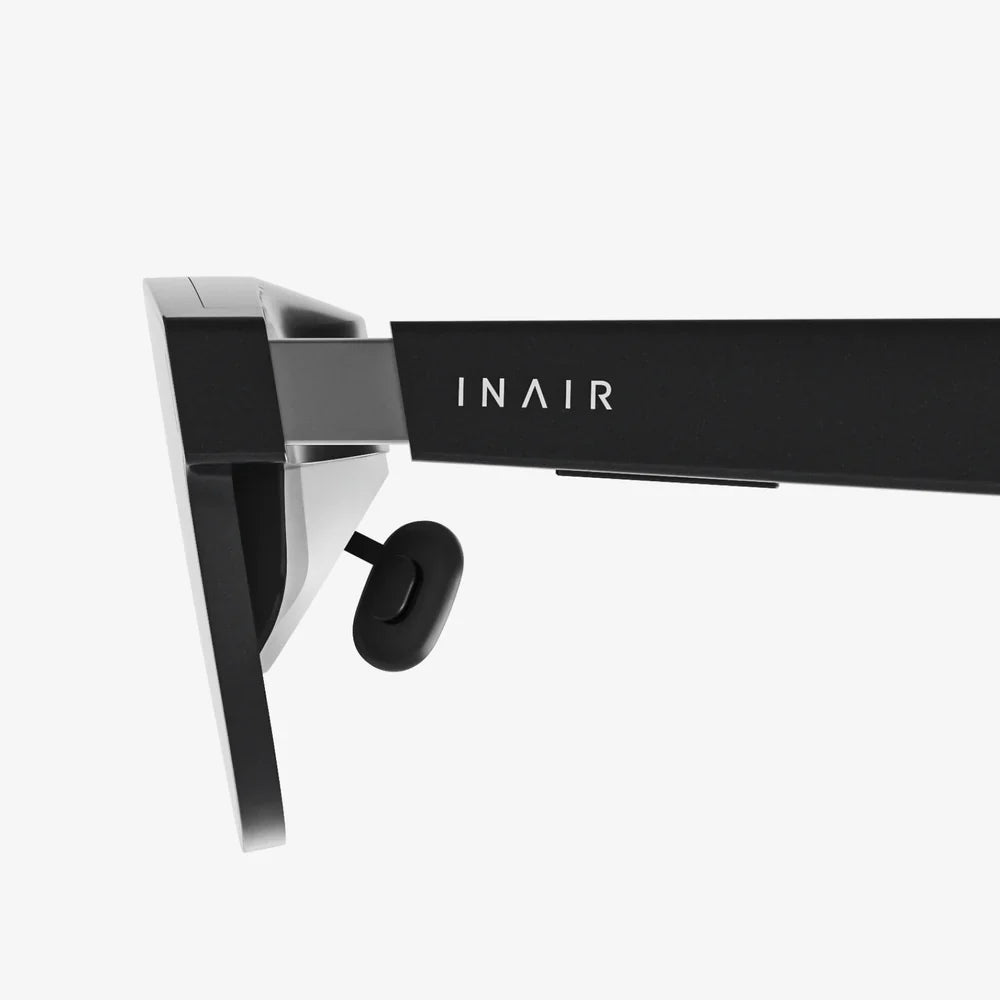
Imagine slipping on a pair of sleek, modern glasses and instantly being transported. The bland walls of your living room dissolve, replaced by the breathtaking vista of a Martian landscape, the front row of a roaring concert, or the calm of a deep-sea reef. This is no longer the stuff of science fiction; it’s the tangible, awe-inspiring reality offered by the latest generation of 3D VR glasses with built-in screens, a technological leap that is fundamentally redefining our perception of presence and possibility.
The Architectural Leap: From Smartphone Sleeves to All-in-One Holographic Displays
The journey to today's sophisticated devices is a story of rapid innovation. Early virtual reality experiences were largely dependent on external hardware. Users would slot their smartphones into a head-mounted holder, using the phone's display as a rudimentary viewfinder. This approach, while accessible, was fraught with limitations: low-resolution graphics, the strain on the phone's battery and processor, and a complete lack of positional tracking, making true immersion a distant dream.
The paradigm shift arrived with the integration of dedicated, high-resolution screens directly into the headset itself. This evolution birthed a new category of device, often referred to as standalone or all-in-one VR glasses. By decoupling from a phone or an expensive gaming computer, these devices became self-contained powerhouses. The core components—a powerful processor, dedicated motion sensors (gyroscopes, accelerometers), and, most crucially, twin micro-OLED or LCD displays—were all engineered into a single, streamlined unit.
This internal architecture is what creates the magic of stereoscopic 3D. Each display is dedicated to one eye, presenting two slightly offset images. Our brain naturally fuses these two images together, processing the difference in perspective to construct a convincing illusion of depth and volume. This is the foundational principle that transforms a flat movie into a theater-like experience and a video game into a world you can step inside.
Deconstructing the Experience: Resolution, Field of View, and Beyond
To understand the quality of immersion, one must look at the key specifications engineered into these glasses.
- Display Resolution and PPI: Often quoted as a per-eye resolution (e.g., 1832x1920 per eye), the combined visual output is exceptionally sharp. The pursuit of higher resolutions is relentless, aimed squarely at eliminating the "screen-door effect"—that faint grid-like pattern users once saw between pixels. Modern high-end devices achieve such pixel density that the image appears perfectly continuous and real.
- Field of View (FoV): Measured in degrees, the FoV determines how much of your vision is occupied by the virtual world. A wider FoV, typically between 90 and 110 degrees on current models, is critical for fostering a true sense of presence. It reduces the perception of looking through binoculars, allowing your peripheral vision to engage with the digital environment.
- Refresh Rate: Expressed in Hertz (Hz), this is how many times per second the image on the screen refreshes. A higher refresh rate—90Hz, 120Hz, or even beyond—results in incredibly smooth motion, which is vital for fast-paced games and for reducing latency-induced motion sickness. It makes virtual movement feel natural and instantaneous.
- Lens Technology and Optical Stack: Between the tiny screens and your eyes lies a sophisticated array of pancake lenses. These multi-element lenses focus the image and allow the physical design of the glasses to be much slimmer and lighter than the bulky headsets of the past. Advanced models also feature IPD (Interpupillary Distance) adjustments, mechanically shifting the lenses to perfectly align with the unique spacing of the user's eyes for optimal clarity and comfort.
A Universe in Your Living Room: Applications Transforming Industries
The value of this technology extends far beyond novel entertainment. It is becoming a powerful tool across diverse sectors.
Gaming and Interactive Entertainment
This is the most celebrated application, and for good reason. 3D VR glasses with screens are the ultimate gaming peripheral. Instead of controlling a character on a screen, you become the character. You physically duck behind virtual cover, aim your weapon by moving your hands, and look around environments with natural head movements. The immersion is total, creating adrenaline-pumping experiences that flat screens cannot replicate. Beyond games, virtual cinemas allow you to watch movies on a simulated giant screen, and live events are being broadcast in VR, giving you a front-row seat to sports games and music festivals from anywhere in the world.
Professional and Remote Collaboration
The concept of the "office" is being reimagined. With VR glasses, remote meetings are no longer confined to a grid of faces on a monitor. Colleagues from across the globe can meet as lifelike avatars in a shared virtual boardroom, workshop, or even a 3D model of a new architectural design. They can manipulate 3D prototypes, annotate the air, and interact with data in a spatially intuitive way that feels more natural and productive than traditional video calls. This has profound implications for design, engineering, medicine, and education.
Education and Training
Imagine medical students practicing complex surgical procedures on virtual patients, mechanics learning to repair engines by taking apart virtual 3D models, or history students taking a guided tour of ancient Rome. VR glasses make this possible. They provide a safe, scalable, and incredibly effective platform for experiential learning. The ability to practice high-stakes tasks in a risk-free environment saves costs and, crucially, saves lives in fields like aviation and healthcare.
Social Connection and Fitness
New social platforms are built entirely around VR presence. You can meet friends in virtual spaces to play games, watch movies, or simply chat as if you were in the same room. Furthermore, a surge of VR fitness applications has turned exercise into an adventure. Users can box against virtual opponents, dance through rhythm games, and explore fantastical worlds—all while getting a serious cardiovascular workout, tracked precisely by the motion sensors within the glasses and controllers.
Navigating the Current Landscape: Considerations for the Curious
Despite the incredible progress, the technology is still maturing, and potential users should be aware of a few considerations. Comfort is paramount; a device must be well-balanced and not overly heavy for long sessions. Battery life typically ranges from two to three hours of active use, which is sufficient for most experiences but requires planning for extended adventures. While the library of content is vast and growing rapidly, it is not yet as infinite as the traditional app stores for smartphones. Finally, there is an ongoing societal conversation about data privacy, digital etiquette, and the long-term effects of spending significant time in virtual spaces—a conversation we must all engage in as this technology becomes more woven into the fabric of daily life.
The Horizon of Possibility: What Comes Next?
The trajectory of 3D VR glasses with screens points toward even more seamless integration into our lives. We are moving toward even lighter, sunglasses-like form factors. The future lies in technologies like varifocal displays, which will dynamically adjust focus to mimic how our eyes naturally work, reducing eye strain. The integration of high-resolution passthrough cameras is already blurring the line between VR and AR (Augmented Reality), allowing digital objects to be convincingly anchored in your real-world environment. This mixed-reality capability will unlock a new class of applications for productivity, design, and play.
Your couch is about to become a launchpad, your office a gateway to a global workspace, and your classroom a window to any point in history or the universe. The promise of 3D VR glasses with a screen is not just about better technology; it’s about expanding the very canvas of human experience, offering a glimpse into a future where our digital and physical realities are not separate, but beautifully, powerfully intertwined. The portal is open, and an entire universe is waiting for you to take the first step through.
Share:
AI Glasses: What Are AI Glasses and How They Are Redefining Reality
Augmented Reality Case Studies: Transforming Industries from the Factory Floor to the Operating Room