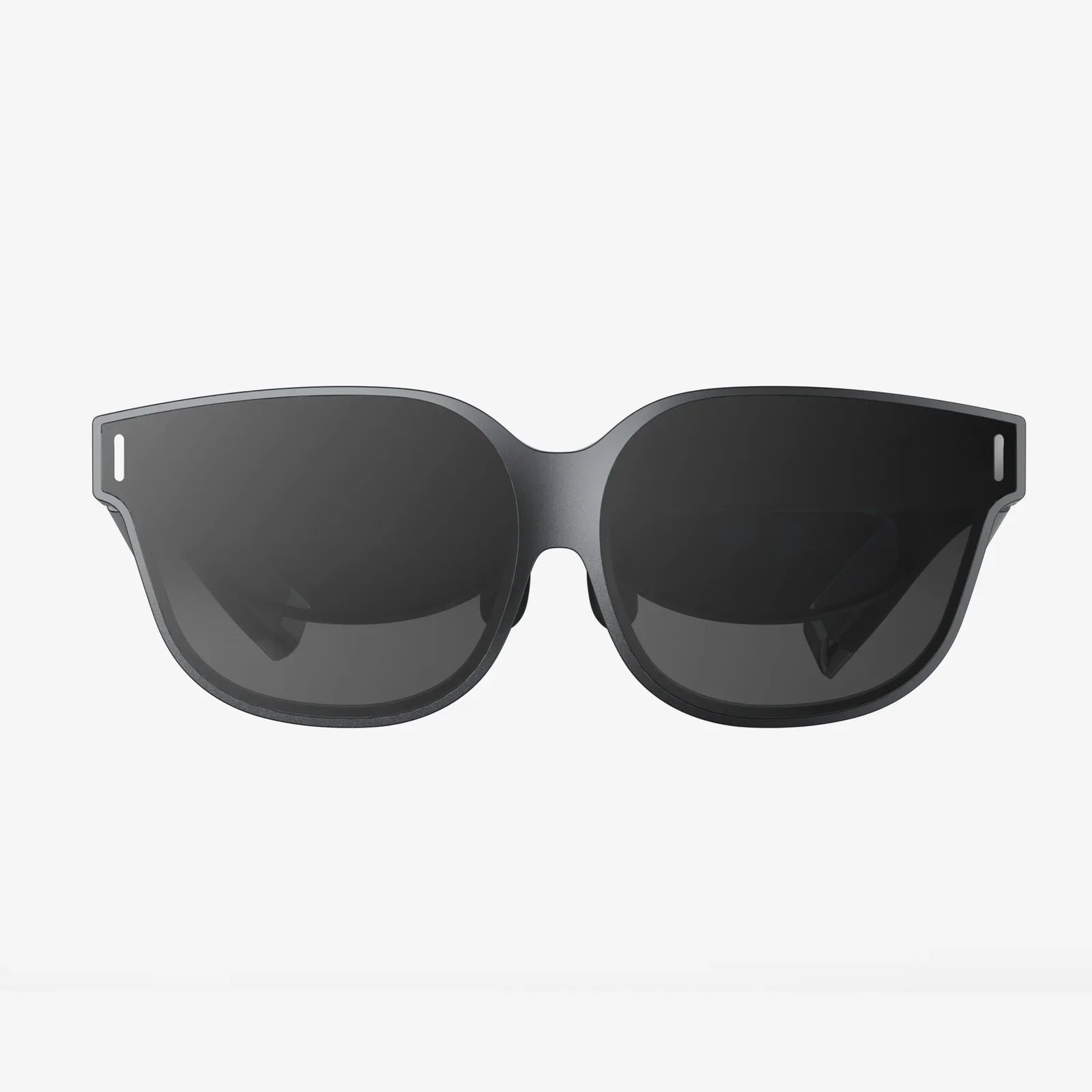
Imagine a world where information doesn't live on a screen in your hand but is seamlessly painted onto the canvas of your reality. Where directions appear as floating arrows on the street, the name of that intriguing building materializes before your eyes, and a foreign language is instantly translated into subtitles beneath the speaker's face. This is no longer the realm of science fiction; it is the imminent future being built today, and it arrives in the most unassuming form factor: a pair of glasses. AI glasses are poised to become the most personal and powerful computer we have ever known, moving computing from our pockets directly into our field of vision, fundamentally altering our perception of and interaction with the world.

The Core Concept: Beyond Augmented Reality

At their most fundamental level, AI glasses are a wearable technology that integrates a visual display, a suite of sensors, audio capabilities, and computational power into the frame of eyeglasses. Their primary purpose is to overlay digital information—images, text, data, and 3D objects—onto the user's real-world view. This is known as augmented reality (AR). However, the critical differentiator that earns them the "AI" prefix is the integration of sophisticated artificial intelligence and machine learning models. This AI acts as the brain, interpreting the world in real-time, understanding context, predicting user intent, and delivering relevant, personalized information without explicit commands.

Unlike virtual reality (VR) headsets that completely immerse you in a digital environment, or the smartphones we constantly glance down at, AI glasses are designed for ambient computing. They keep you present in your environment while providing a constant, context-aware stream of digital assistance. They are not meant to be a destination for your attention but a subtle guide within it.

The Technological Symphony Inside the Frame

The magic of AI glasses is a symphony of cutting-edge hardware and software components working in perfect harmony. Packing supercomputer-level processing into a device that must remain lightweight and socially acceptable is one of the greatest engineering challenges of our time.

1. The Hardware Foundation

  • Visual Display Systems: This is the window to the digital layer. Several technologies are employed, including waveguide optics that pipe light to the lenses, micro-LED displays for brightness and efficiency, and laser beam scanning to project images directly onto the retina. The goal is to create bright, high-resolution graphics that appear to exist in the real world without obstructing the user's natural vision.
  • Sensors: The Digital Senses: AI glasses are equipped with a sophisticated array of sensors that act as their eyes and ears. This typically includes high-resolution cameras for computer vision, depth sensors (like LiDAR or time-of-flight sensors) to understand spatial relationships, inertial measurement units (IMUs) for tracking head movement and orientation, microphones for audio input, and often environmental sensors for temperature, pressure, or air quality.
  • Onboard Processing: The raw data from the sensors is immense. Dedicated, low-power processors, often called AI accelerators or Neural Processing Units (NPUs), are tasked with the heavy lifting of running complex machine learning models for object recognition, spatial mapping, and natural language processing directly on the device. This "on-edge" computing is crucial for responsiveness and user privacy, as data often doesn't need to be sent to the cloud.
  • Audio System: Spatial audio is key for immersion. Bone conduction technology or miniature speakers can deliver private audio without earbuds, allowing the user to hear digital sounds while still being aware of ambient noises in their environment.
  • Battery and Connectivity: Powering all this technology is a significant hurdle. Batteries are ingeniously integrated into the arms of the frames, and power management is paramount. 5G and Wi-Fi 6 provide high-speed, low-latency connectivity for offloading more complex computations when necessary.

2. The Intelligent Software: The True Brain

The hardware is nothing without the intelligent software that brings it to life. This is where the AI truly shines.

  • Computer Vision: This is the ability of the glasses to see and identify objects, people, text, and places. AI models can recognize a specific dog breed, read a restaurant menu from across the street, or identify a product on a shelf.
  • Simultaneous Localization and Mapping (SLAM): This technology allows the glasses to understand their position in an unknown environment while simultaneously mapping that environment in 3D. It's how digital objects can appear to stay pinned to a physical table or how navigation arrows can accurately curve along a path.
  • Natural Language Processing (NLP) and Understanding (NLU): Advanced NLP allows for seamless voice control. The AI can understand conversational language, context, and intent, moving beyond simple wake words to become a true auditory assistant.
  • Contextual Awareness and Predictive AI: This is the ultimate goal. By combining data from all sensors and understanding user habits, the AI can predict what information might be useful. Walking past a bus stop might automatically pull up the schedule. Glancing at your fridge could trigger a suggestion for recipes based on the ingredients it sees inside.

A World Transformed: Applications Across Industries

The potential use cases for AI glasses extend far beyond consumer novelty. They are poised to revolutionize professional fields and redefine daily life.

Professional and Industrial Revolution

  • Healthcare: Surgeons could see vital signs and 3D anatomical guides overlaid on a patient during an operation. Medical students could learn from interactive holograms of the human body. A doctor could instantly translate a patient's symptoms from a foreign language.
  • Manufacturing and Field Service: A technician repairing a complex machine could see digital instructions and arrows pointing directly to the components that need attention. They could have a remote expert see their view and annotate the real world to guide them through a repair, saving immense time and cost.
  • Logistics and Warehousing: Workers fulfilling orders could have the most efficient route through a warehouse displayed before them, with digital markers highlighting the exact shelf and item to pick, dramatically increasing accuracy and speed.
  • Design and Architecture: Architects and engineers could walk through a physical construction site and see their full-scale 3D building models perfectly aligned with the unfinished structure, identifying potential clashes or design issues before they become costly problems.

Everyday Life Reimagined

  • Navigation and Exploration: Turn-by-turn directions become a natural part of the world, with arrows painted onto the sidewalk. Looking at a landmark could bring up its history, and scanning a restaurant could show its reviews and menu.
  • Accessibility and Inclusion: This is one of the most powerful applications. For the hard of hearing, speech could be converted to real-time subtitles. For the visually impaired, the glasses could describe scenes, identify currency, read signs aloud, and warn of obstacles.
  • Language Translation: The longstanding sci-fi dream of a Babel Fish becomes reality. Conversations with someone speaking another language could happen naturally, with translated subtitles appearing near the speaker or their speech converted and spoken in your native tongue through the audio system.
  • Memory and Learning: The glasses could act as a perfect memory aid, remembering where you left your keys or the name of someone you met at a conference. For learning, complex concepts could be visualized as interactive 3D models.

The Inevitable Challenges: Privacy, Security, and Society

With such transformative power comes profound responsibility and significant challenges that society must address.

The Privacy Paradox

AI glasses, by their very nature, are always-on cameras and microphones. This raises enormous privacy concerns for both wearers and non-wearers. The potential for constant surveillance, facial recognition on a mass scale, and the unauthorized collection of data in private and public spaces is a dystopian threat. Clear ethical frameworks, robust regulations, and transparent user controls over data collection are non-negotiable. Features like a prominent recording indicator light and strict geofencing rules for certain functionalities will be essential for social acceptance.

The Social Conundrum

How will this technology affect human interaction? If everyone is partially immersed in a digital layer, will it enhance our conversations or erode genuine connection? The specter of a even more distracted society, where people are mentally absent from their physical surroundings, is a real concern. Establishing new social etiquettes—digital manners for the augmented age—will be crucial.

Security and Safety

These devices will contain a treasure trove of personal data, making them a prime target for hackers. Securing the devices, the data they collect, and the networks they operate on is a monumental task. Furthermore, digital distractions overlayed on the real world could pose physical safety risks if not designed carefully.

The Path Forward: From Prototype to Paradigm Shift

Current iterations of AI glasses are still in their relative infancy. Many are limited to a niche audience of developers and enthusiasts, often constrained by battery life, field of view, social awkwardness, and high cost. The journey to a ubiquitous, consumer-ready product requires breakthroughs in miniaturization, battery technology, and display clarity.

However, the trajectory is clear. The convergence of advancements in AI, semiconductor design, and optics is accelerating at an exponential pace. The first truly successful pair of AI glasses will not try to do everything at once. They will likely focus on nailing a few key use cases—superior translation, unparalleled navigation, or hands-free assistance for specific professions—with an elegant, socially acceptable design.

We are standing at the precipice of the next major computing platform. Just as the graphical user interface moved us from command lines to desktops, and touchscreens moved computing into our pockets, ambient computing through AI glasses will move intelligence directly into our perception. It is a shift from looking at a computer to looking through one.

The age of staring down at a glowing rectangle is slowly coming to a close. The future of technology is not about a better screen; it's about no screen at all. It's about enhancing human capability and perception without separation, weaving intelligence so seamlessly into the fabric of our daily lives that it feels like a natural extension of our own thoughts. The next time you put on a pair of glasses, you might not just be seeing the world more clearly—you might be seeing an entirely new one.

Latest Stories

This section doesn’t currently include any content. Add content to this section using the sidebar.