


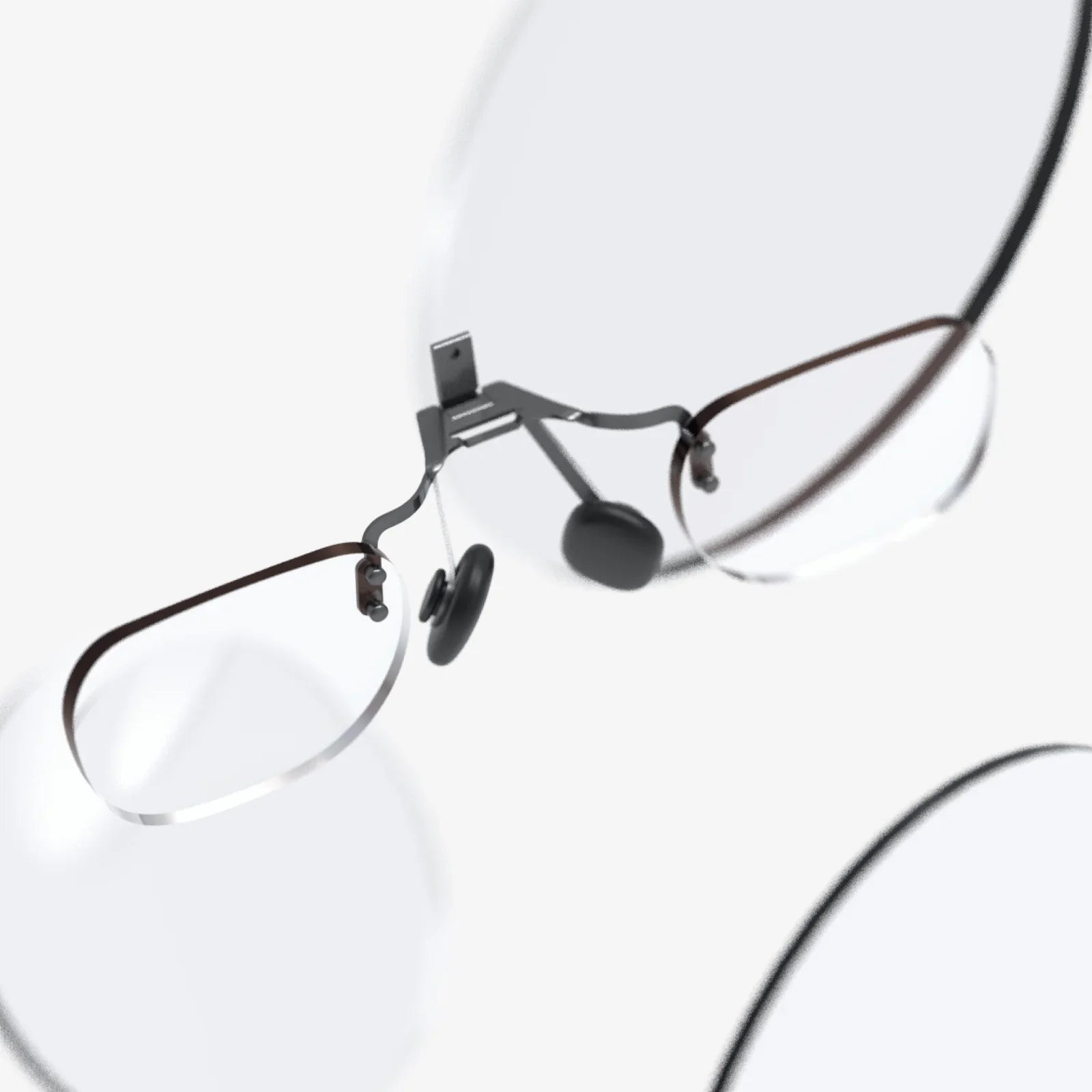
Imagine a world where information floats before your eyes, where translations appear in real-time over street signs, and where the digital and physical realms seamlessly merge. This isn't a distant sci-fi fantasy; it's the promise held within a simple, yet profoundly complex, accessory: AI glasses. But what do these harbingers of the future actually look like? The answer is as multifaceted as the technology itself, spanning a spectrum from near-invisible sophistication to bold, statement-making visors. The external form is a direct conversation between cutting-edge engineering, user necessity, and the timeless principles of fashion, offering a tantalizing glimpse into the future we're about to step into.
The Design Philosophy: Form Following a Very Smart Function
Unlike their purely visual corrective or sun-protective predecessors, AI glasses are computational devices worn on the face. This fundamental shift dictates every aspect of their design. Engineers and designers must solve a complex puzzle: how to pack processors, batteries, sensors, and optical displays into a form factor that is comfortable, socially acceptable, and aesthetically pleasing. The overarching design philosophy is a brutal negotiation between technological capability and human wearability.
The primary constraints are heat, power, and space. A powerful processor generates heat, which is dangerously uncomfortable and inefficient when placed mere millimeters from the skin. This necessitates innovative passive cooling systems or the use of lower-power, highly efficient chipsets. The battery, essential for untethered operation, must be large enough to provide meaningful usage time but small and light enough to not make the glasses unbearably heavy or unbalanced. Designers often分散 (distribute) this weight, placing the battery in the temples or even in a separate, pocketable pack connected via a thin, discreet cable.
Finally, the array of sensors—which can include cameras, microphones, depth sensors, and accelerometers—must be positioned to have an unobstructed view of the world and the user without making the glasses look like a robotic cyclops. This has led to designs where cameras are subtly integrated into the frame's brow or bridge, and microphones are hidden within the temples. The challenge is to make the technology recede, allowing the glasses to remain, first and foremost, glasses.
A Spectrum of Styles: From Minimalist to Immersive
The current and conceptual landscape of AI glasses can be broadly categorized into three distinct stylistic approaches, each serving a different primary function and user experience.
1. The Minimalist or "Enhanced" Smart Glasses
These designs prioritize discretion above all else. To the casual observer, they are indistinguishable from a stylish pair of contemporary eyeglasses. The goal is social acceptance and all-day wearability.
- Appearance: Thin, lightweight frames made from materials like titanium, acetate, or composite plastics. They often feature a slightly thicker-than-average temple, which houses the battery and electronics, but the difference is minimal. There are no obvious displays or cameras visible from the front.
- The Technology Hidden Within: The magic of these glasses is subtle. Audio is delivered through miniature bone conduction or open-ear speakers embedded in the temples, allowing the user to hear digital audio without blocking ambient noise. A small, discreet LED might indicate recording status. Input is handled through touch-sensitive swipe panels on the temples or voice commands. The display technology, if present, is often a tiny projector that casts a monochrome (usually green) image onto a minimalist waveguide lens, creating a small, transparent notification area in the upper corner of the user's field of view, showing things like incoming calls, messages, or navigation arrows.
- User Experience: These are designed for information glanceability and ambient computing—offering just-in-time information without overwhelming the user or isolating them from their environment.
2. The Augmented Reality (AR) Visors
This category represents a more advanced and immersive experience. Here, the design makes no attempt to hide its technological purpose; it celebrates it. The function is to overlay rich, interactive digital graphics onto the real world.
- Appearance: These are noticeably bulkier, often with a wraparound or shield-like design that provides a larger canvas for display technology. They may have a distinct "goggle" or visor aesthetic, with thicker arms and a more pronounced front piece that contains the complex optical stacks.
- The Technology on Display: AR visors employ more advanced optical systems like birdbath optics, holographic waveguides, or free-form optics. These require more space, leading to the thicker design. They often feature full-color, high-resolution displays that can fill a significant portion of the user's vision with digital content. Multiple cameras and sensors for tracking the environment and the user's hands are visibly integrated into the frame. They are a statement of technological prowess.
- User Experience: This is for immersive applications: complex data visualization for engineers, step-by-step holographic guides for surgeons or mechanics, interactive 3D models for designers, and rich gaming experiences. They are task-oriented devices, likely worn for specific purposes rather than all day.
3. The Camera-First or Specialist Glasses
This design is optimized for a specific function: capturing first-person point-of-view (POV) video and audio or providing data for specific professional use cases.
- Appearance: The most striking feature is a central or lateral camera module that is clearly visible. The design is often sportier, with rubberized elements for grip and a more rugged build. They can resemble high-end sunglasses or safety goggles, signaling their active or professional intent.
- The Technology at the Forefront: The camera is the star of the show, accompanied by high-fidelity microphones for spatial audio recording. They may lack advanced display systems, instead relying on a simple LED indicator and a smartphone app for control and playback. Their design is about providing a stable platform for the camera and ensuring it has an unobstructed view.
- User Experience: Built for creators, athletes, journalists, and field technicians. The value is in seamless, hands-free documentation, live streaming, or data capture, not in viewing augmented reality.
Deconstructing the Components: What You're Actually Looking At
Beyond the overall form, the look of AI glasses is defined by their individual components.
- The Lenses: This is where the magic happens. For display-equipped glasses, the lenses are not simple polycarbonate. They are layered with nano-structures or coatings that act as waveguides, bending light from projectors on the temples into the user's eye while remaining transparent. They might have a faint, silvery or purple tint when viewed from certain angles—a telltale sign of this embedded optics technology. Some designs use dynamic liquid crystal lenses that can electronically tint from clear to dark, replacing traditional photochromic or sunglass lenses.
- The Cameras: A small, glossy black dot is the window to the world for the AI. Its placement is critical. A central camera aligns with the user's perspective, which is ideal for first-person video and AR alignment. Cameras on the temples are better for capturing the user's environment for context-aware computing. The number of cameras (often two for depth perception) directly impacts the device's capabilities and its visual profile.
- The Temples: These are the workhorses. The subtle thickening of the arms is almost universally where the brain of the operation resides—the processor and battery. You might find pogo pins or magnetic connectors at the end of the temples for charging. Touch-sensitive strips allow for swipe and tap controls without visible buttons.
- Materials: Lightweight strength is key. Titanium offers a premium, strong, and light feel. Durable polymers and composites allow for more radical shapes and colors. Silicone and rubberized elements provide grip for active models and comfort for the nose and ears.
The Invisible Aesthetics: UI, UX, and the Social Lens
The look of AI glasses isn't just physical; it's also behavioral. A critical design element is the status indicator. A small, bright LED—usually green or red—that clearly signals to others when a camera or microphone is active is a non-negotiable feature for privacy and social trust. Its design and placement are crucial.
Furthermore, the user's interaction with the glasses defines their aesthetic. Are they constantly talking to them, gesturing wildly in the air, or staring blankly at an invisible screen? The most successful designs will be those that enable subtle, socially graceful interactions—a quick tap on the temple, a glance upwards to dismiss a notification, or a voice command spoken sotto voce.
The ultimate goal for many manufacturers is to achieve what is known as " technological invisibility"—where the hardware fades into the background, and the user experiences only the benefits of the AI. The glasses become a true extension of the self, a cognitive prosthetic that is seen not as a device, but as a part of the person.
The Future Look: Where Design is Headed
The trajectory of AI glasses design is moving relentlessly towards normalization and integration. Future iterations will become thinner, lighter, and more powerful, thanks to advancements in micro-LED displays, photonic chipsets, and battery technology. We can expect several key trends:
- Biometric Integration: Sensors for measuring health metrics like heart rate, blood oxygen, and even glucose levels will be woven into the frames and nose pads, requiring new material sciences and contact points.
- Adaptive Frames: Glasses that can automatically adjust their fit for perfect alignment or even change their shape slightly for different tasks.
- Hyper-Personalization: Beyond choosing frame color, users may select different optical modules (display quality, camera specs) to slot into a universal frame, truly customizing their device.
- The End of the "Screen": The ultimate goal is retinal projection, where images are painted directly onto the retina with low-power lasers, eliminating the need for bulky waveguide lenses entirely. This could lead to AI glasses that look virtually identical to classic frames, unleashing a revolution in both technology and fashion.
The question of what AI glasses look like is being answered not in a single product, but in a dazzling array of forms. They are a canvas upon which engineers, designers, and society itself are painting the future of human-computer interaction. From the nearly invisible assistant to the powerful immersive portal, their design is a language telling us what they can do and who they are for. One thing is certain: the most iconic and widespread look—the pair that finally bridges the digital and physical worlds for everyone—has likely not even been unveiled yet. It's waiting in a design lab somewhere, a perfect blend of art and science, ready to change how we see everything.
Share:
Creating Augmented Reality Content: The Ultimate Guide to Building Immersive Digital Worlds
AI Glasses: What Are AI Glasses and How They Are Redefining Reality