


- by wangfred
3D VR Goggles: A Portal to New Realities and the Future of Human Experience
- by wangfred
Imagine slipping on a sleek, futuristic headset and, in an instant, being transported from your living room to the edge of a Martian canyon, the front row of a concert thousands of miles away, or the operating theater of a world-class surgeon. This is no longer the stuff of science fiction; it is the palpable reality offered by 3D VR goggles, a technology that is rapidly evolving from a niche novelty into a powerful portal reshaping entertainment, education, work, and human connection itself. The journey beyond the screen begins here, and it promises to fundamentally alter our perception of what is possible.
At its core, the magic of 3D VR goggles is a sophisticated orchestration of hardware and software designed to trick the human brain into accepting a digital reality. The experience is built on two fundamental pillars: immersion and interactivity.
The process begins with a high-resolution display, or often two displays—one for each eye—positioned mere centimeters from the user's face. These displays show slightly different images, mimicking the binocular vision our eyes use in the real world to perceive depth. This stereoscopic 3D effect is the foundational layer of depth perception in VR.
However, a static image is not enough. For the illusion to hold, the virtual world must respond to the user's movements in real-time. This is achieved through a complex array of sensors embedded within the goggles, including gyroscopes, accelerometers, and magnetometers. These components work in concert, a system known as Inside-Out Tracking or, in some setups, aided by external sensors, to precisely track the rotation and orientation of the user's head. When you turn your head to the left, the sensors detect this movement instantly, and the software renders the corresponding view of the virtual environment without perceptible delay.
This leads to the critical concept of low latency. Any lag between the user's movement and the update of the visual display can break immersion and cause discomfort, often manifesting as simulation sickness, a cousin of motion sickness. Advanced processors and optimized software are dedicated to minimizing this latency to imperceptible levels, typically aiming for under 20 milliseconds.
Beyond head tracking, true interactivity requires knowing where the user is in physical space. This is known as positional tracking, which maps the user's physical movements—leaning, crouching, walking—into the virtual space. Audio is another crucial layer. 3D spatial audio technology ensures that sounds come from their correct virtual locations. A spaceship whooshing overhead will sound like it's actually coming from above, further cementing the brain's belief in the reality of the experience.
Finally, user input is handled through dedicated motion controllers. These are equipped with their own sensors, allowing the system to track the position of your hands and gestures, enabling you to reach out, grab, throw, and manipulate the virtual world. This combination of visual, auditory, and haptic feedback creates a cohesive and astonishingly believable sensory experience.
While gaming provided the initial commercial thrust for consumer 3D VR goggles, the technology's potential extends far beyond virtual battlefields and fantasy realms. We are witnessing a silent revolution across numerous professional and creative fields.
VR offers an unparalleled tool for experiential learning. Instead of reading about ancient Rome, students can take a guided tour through a meticulously reconstructed digital Forum. Medical students can practice complex surgical procedures on virtual patients, making critical mistakes without consequences and honing their skills in a risk-free environment. Aspiring mechanics can disassemble and reassemble virtual engines, and firefighters can train for dangerous scenarios in a perfectly safe digital simulation. This learning-by-doing approach dramatically improves knowledge retention and skill acquisition.
The therapeutic applications of VR are proving to be profoundly effective. It is being used for exposure therapy, helping patients with phobias—such as fear of heights, flying, or public speaking—to confront their triggers in a controlled, gradual manner. For patients undergoing painful medical procedures like wound care or physical rehabilitation, immersive VR experiences can act as a powerful distraction, significantly reducing perceived pain and anxiety. Furthermore, VR is offering new avenues for cognitive rehabilitation for stroke victims and providing serene virtual escapes for patients in stressful hospital settings.
For architects, industrial designers, and urban planners, 3D VR goggles are revolutionizing the design process. Instead of viewing a building or product prototype on a 2D screen, creators and their clients can step inside a full-scale model before a single brick is laid or a tool is manufactured. This allows for intuitive understanding of spatial relationships, lighting, and ergonomics, enabling the identification and correction of design flaws early in the process, saving immense time and resources.
The concept of the metaverse is deeply tied to VR's potential for connection. Remote work is evolving from flat video calls into shared virtual workspaces. Colleagues from across the globe can meet as lifelike avatars in a virtual boardroom, interact with 3D data models, brainstorm on virtual whiteboards, and feel a sense of co-presence that Zoom calls cannot replicate. This has the potential to make remote collaboration more natural, engaging, and productive.
VR is creating new frontiers for social interaction and entertainment. Platforms exist where users can socialize, play games, and attend events as avatars. The implications for live events are staggering: you could have a front-row seat at a sporting event, a music concert, or a Broadway show from anywhere in the world, sharing the cheers and excitement with a global audience in real-time, creating a sense of community that transcends physical location.
Despite its breathtaking potential, the path forward for 3D VR goggles is not without its obstacles and ethical considerations. Widespread adoption hinges on addressing several key challenges.
The issue of simulation sickness remains a barrier for a significant portion of the population. While technological improvements have lessened its impact, discrepancies between visual motion and physical stillness can still cause discomfort. Continued advancements in display refresh rates, tracking accuracy, and predictive rendering are essential to making the experience comfortable for all.
There is also the question of social isolation. Does retreating into a captivating virtual world come at the cost of disconnecting from our immediate physical environment and the people in it? The long-term psychological effects of prolonged VR use are still being studied. Furthermore, the creation of persistent virtual worlds raises complex questions about data privacy, identity, and digital ownership. The data collected on user behavior, movements, and even biometric responses is incredibly intimate and must be handled with stringent ethical standards and robust security.
Finally, for VR to become a truly universal tool, it must overcome physical and economic barriers. The cost of high-quality hardware and the powerful computing systems needed to run it can be prohibitive. The industry is actively working on more affordable and accessible solutions, including standalone headsets that require no external computer, but achieving a truly mainstream price point is an ongoing effort.
The current state of 3D VR goggles is impressive, but it is merely a stepping stone to an even more immersive and integrated future. Several emerging technologies are poised to push the boundaries even further.
Varifocal and Eye-Tracking technology will solve a current limitation: the vergence-accommodation conflict. Our eyes naturally change focus (accommodate) based on the distance of an object, but in today's VR, the display is fixed at a single focal plane. Advanced systems that track your eyes and adjust the focal plane of the display accordingly will make visuals more comfortable, realistic, and easier to process for long periods.
The pursuit of photorealistic graphics in real-time continues, driven by more powerful processors and advanced rendering techniques like foveated rendering (which uses eye-tracking to render only the area you're directly looking at in high detail, saving computational power). Haptic feedback is also evolving beyond simple controller vibrations to include full-body haptic suits and tactile gloves that can simulate the feeling of touch, temperature, and resistance, allowing you to feel the virtual rain on your skin or the texture of a virtual object.
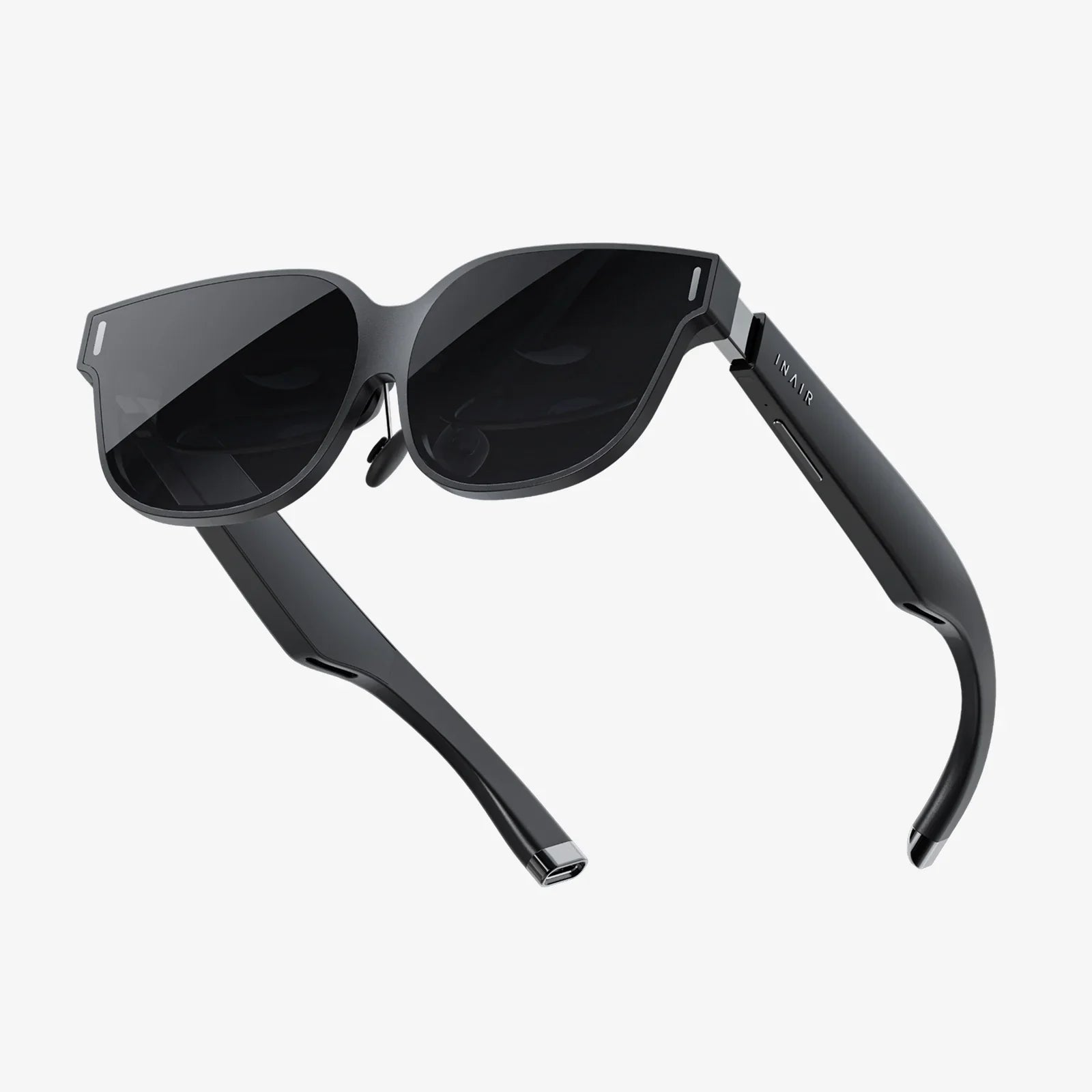
Perhaps the most significant evolution will be the move towards more seamless form factors. The goal is to create goggles, or eventually glasses, that are as lightweight, comfortable, and socially acceptable as a pair of sunglasses. This will involve breakthroughs in display technology, battery life, and miniaturization, ultimately blurring the line between being in VR and being in the real world until the two can coexist and augment each other seamlessly.
The true endpoint of this trajectory is a future where 3D VR goggles cease to be a separate device we “put on” and instead become an intuitive window—a constant, lightweight portal to infinite experiences, information, and connections, seamlessly integrated into the fabric of our daily lives and enhancing our reality rather than replacing it.
This is the ultimate promise of 3D VR goggles: not to help us escape our world, but to provide us with the tools to understand it better, connect with it more deeply, and experience realities we could once only dream of. The headset is your ticket, and an entire universe of potential is waiting just on the other side of the lens.