


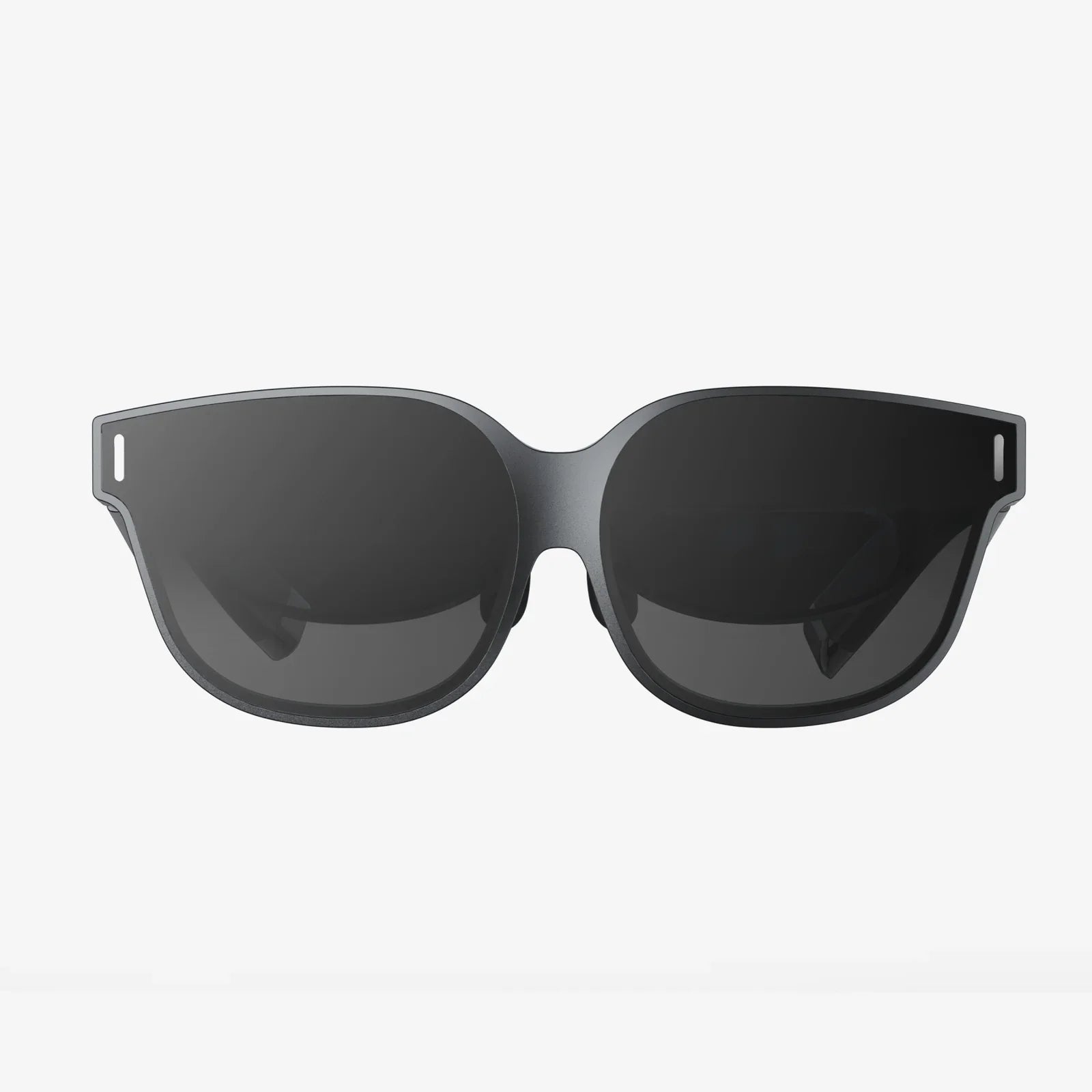
Imagine a world where digital information doesn't just live on a screen but is seamlessly woven into the very fabric of your reality. This is the promise of augmented reality, and at the forefront of this technological revolution is a specific, powerful standard: 600 AR Glass. This isn't just another piece of tech jargon; it represents a significant leap in clarity, comfort, and computational power, poised to fundamentally change how we work, learn, play, and connect. The journey into this enhanced world starts with understanding the engineering marvel that makes it all possible.
Demystifying the Specification: What Does "600" Truly Mean?
The term "600" is not a random model number but a critical specification referring to the nit brightness of the micro-display engine within the glasses. A nit is a unit of measurement for luminance, or perceived brightness. To put this into perspective, a typical smartphone screen might range from 500 to 1,000 nits for HDR content, but it is viewed in a dark environment against a black background. The challenge for transparent eyewear is vastly different.
These devices must project an image that is bright enough to be clearly visible in a wide range of ambient lighting conditions, from a dimly lit office to a brightly sunlit outdoor environment. The light from the display must compete with the real world passing through the lenses. A 600-nit display provides the necessary luminous intensity to ensure the digital overlay remains vivid, crisp, and legible even in challenging light, effectively solving one of the most persistent hurdles in consumer AR adoption.
The Core Architecture: How 600 AR Glass Creates Magic
The achievement of this brightness level is not trivial. It is the result of sophisticated optical engineering that combines several advanced technologies into a compact, wearable form factor.
Waveguide Technology: The Invisible Path
At the heart of most high-end AR glasses is an optical component called a waveguide. This is a transparent substrate, often made of glass or plastic, that acts as a conduit for light. The process begins with a micro-display, such as a Liquid Crystal on Silicon (LCoS) or MicroLED panel, generating the initial image. This image is then coupled into the waveguide.
Through a process of total internal reflection and the use of nanoscale gratings (either diffractive or holographic), the light is "piped" through the transparent lens. Finally, an out-coupler element redirects the light toward the user's eye. The efficiency of this system is paramount; every step loses some light, so a bright initial source is required to deliver a final bright image to the retina. The 600-nit specification ensures the output remains effective despite these inherent optical losses.
Birdbath and Free-Form Optics
Another common architecture, often found in slightly larger form factors, is the "birdbath" design. Here, a beamsplitter cube is used to combine the light path from a micro-display with the view of the real world. The image from the display is reflected off a curved, semi-transmissive mirror (the "birdbath") and into the eye. This design can be highly efficient but often results in a bulkier appearance. Free-form optics, with complex, asymmetrical surfaces, are also employed to create wider fields of view and correct for optical aberrations, all while maintaining a sleek profile. The high brightness of the display complements these optical systems, allowing for a more immersive and visually accurate experience.
Beyond Brightness: The Symphony of Supporting Technologies
While the 600-nit display is the star, it does not perform alone. Its effectiveness is enabled and amplified by a suite of other critical technologies.
Advanced Processing Units
Rendering complex digital objects and interfaces in real-time and anchoring them persistently in the real world requires significant computational power. A dedicated processing unit, often housed in a companion device or within the glasses' temples, handles tasks like simultaneous localization and mapping (SLAM), gesture recognition, and spatial audio processing. This engine must be powerful yet energy-efficient to ensure all-day usability without excessive heat generation.
Precise Tracking Systems
For the digital world to stay locked to physical spaces, sophisticated tracking is non-negotiable. This is achieved through a combination of inward and outward-facing sensors. Cameras, inertial measurement units (IMUs), depth sensors, and LiDAR scanners work in concert to map the environment, understand surfaces, and track the user's head and eye movements with extreme precision. This constant data flow ensures that a virtual screen appears to sit on your wall and a digital character can hide behind your real sofa.
Intuitive Interaction Modalities
Interacting with a floating interface requires new paradigms. 600 AR Glass platforms typically support a blend of interaction methods:
- Hand Tracking: Cameras track finger movements and gestures, allowing users to pinch, select, and drag virtual elements as if they were physical objects.
- Voice Commands: Natural language processing allows for hands-free control, ideal for issuing commands or inputting text.
- Companion Device: A smartphone or a dedicated ring can serve as a touchpad or controller for more precise input.
A World Transformed: Revolutionary Applications Across Industries
The combination of high brightness, seamless optics, and powerful computing unlocks a vast array of practical applications that extend far beyond gaming and entertainment.
Enterprise and Manufacturing
This is where the technology is making its most immediate impact. Technicians can have repair manuals, schematics, or animated instructions overlaid directly onto the machinery they are servicing, freeing their hands and drastically reducing errors. Warehouse workers can see optimized picking paths and inventory information, accelerating logistics. Designers and architects can visualize and manipulate 3D prototypes at full scale before a single physical resource is spent.
Healthcare and Medicine
Surgeons can access vital patient statistics, ultrasound data, or MRI scans in their field of view during procedures without turning away from the operating table. Medical students can learn anatomy through detailed 3D holograms of the human body, and physical therapists can guide patients through exercises with perfect digital form demonstrated right before their eyes.
Education and Remote Collaboration
Imagine a history class where students can walk through a reconstructed ancient Rome, or a chemistry lesson where molecules can be assembled and disassembled in mid-air. Remote collaboration ceases to be about staring at a grid of faces on a screen. Instead, colleagues from across the globe can appear as lifelike avatars in your physical space, working together on a shared 3D model as if they were standing right next to you.
Daily Life and Navigation
For the consumer, the implications are profound. Turn-by-turn navigation can be projected onto the road ahead, eliminating the need to look down at a phone. Reviews and historical information about a restaurant could pop up as you walk past it. Your messages and notifications could be displayed contextually, only appearing when relevant and without completely pulling you out of your surroundings.
The Road Ahead: Challenges and the Future Beyond 600
Despite the incredible progress, the journey is not over. The industry continues to grapple with challenges such as achieving all-day battery life, reducing the form factor to something indistinguishable from regular eyewear, and solving the complex social questions of privacy and etiquette. The 600-nit benchmark is a milestone, not the finish line. Research is already underway into laser-based scanning displays, even more efficient optical polymers, and contextual AI that can better understand user intent to make the technology more intuitive and power-efficient.
The evolution will likely see brightness levels stabilize as efficiency improves, shifting the focus toward even higher resolution, wider fields of view, and more advanced visual capabilities like variable focal planes to combat eye strain. The goal is a pair of glasses that feels natural, looks normal, and provides an indispensable utility, effectively making the technology fade into the background while bringing its benefits to the foreground.
We are standing at the threshold of a new era of computing, one that moves beyond the confines of rectangles and into the infinite canvas of our world. 600 AR Glass is the key that unlocks this door, offering a glimpse of a future where our digital and physical lives are not just connected, but harmoniously intertwined. The clarity it provides is more than just visual; it is a clarity of purpose and possibility, redefining what is possible and inviting us all to see the world through a new lens.
Share:
Home Wireless Music Streaming: The Ultimate Guide to a Whole-House Audio Experience
AR Glasses Live Text Display: How Do They Work to Translate the World in Real-Time?