


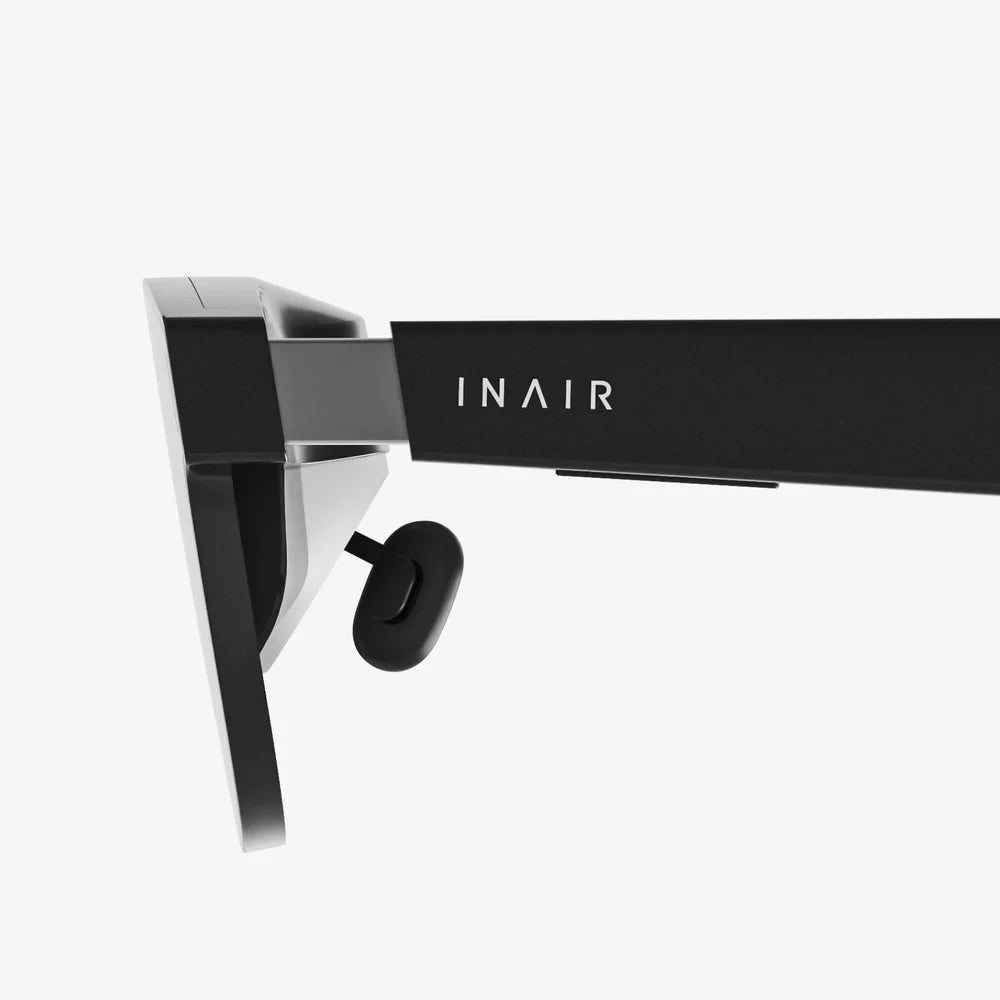
Imagine slipping on a headset and stepping into a perfect digital replica of a human heart, a fully realized architectural model, or a prototype vehicle that doesn't physically exist. This isn't the consumer-grade virtual reality you know; this is a portal to another dimension of professional creation, diagnosis, and design, and its entry fee is a cool $7000. The very notion of a VR headset costing as much as a used car is enough to make anyone pause, but behind the staggering price tag lies a technological revolution that is quietly reshaping entire industries, pushing the boundaries of what's possible in simulation, training, and visualization. This isn't a toy; it's a precision instrument, and for the professionals who use it, the return on investment isn't measured in gameplay hours, but in breakthroughs, efficiencies, and saved lives.
The Great Divide: Consumer VR vs. Professional Immersion
To understand the justification for such a cost, one must first abandon any comparison to mainstream consumer VR systems. The devices found in living rooms are marvels of accessibility, designed for mass production, entertainment, and casual use. A $7000 headset exists in an entirely different category, often referred to as "professional-grade," "enterprise-level," or "high-fidelity" VR. The difference is not one of degree but of kind.
Consumer headsets prioritize a balance of cost, comfort, and good-enough performance. They aim to provide a fun and engaging experience for a few hours at a time. The professional headset, however, is engineered with one primary goal: absolute fidelity and reliability. Every component, from the lenses to the tracking sensors, is the absolute best available, with cost being a secondary concern to performance. These devices are built for experts—surgeons, engineers, scientists, architects—for whom visual accuracy and flawless performance are non-negotiable. A dropped frame or a slight tracking jitter might be a minor annoyance in a game, but in a surgical simulation or a complex engineering review, it could render the entire system useless or, worse, dangerous.
Deconstructing the Price: Where Does $7000 Go?
The cost of such a system isn't arbitrary; it's the sum of its bleeding-edge parts and the specialized research and development required to create them. Let's break down the key technological differentiators that command this premium.
Visual Fidelity: Beyond Resolution
While consumer headsets have made great strides in resolution, a $7000 system takes it several steps further. We're talking about dual micro-OLED displays, each offering resolutions that exceed 4K per eye. This results in a pixel density so high that the dreaded "screen door effect"—where users can see the gaps between pixels—is completely eliminated. The image is crisp, sharp, and incredibly lifelike.
But resolution is only part of the story. These displays also boast exceptional color gamut and high dynamic range (HDR). They can reproduce colors that standard LCDs in consumer headsets cannot, and they offer vastly superior contrast ratios. This means deep, true blacks and brilliant whites existing simultaneously in the same scene, which is critical for simulating realistic environments, analyzing material finishes in design, or distinguishing subtle tissue variations in medical imagery.
The Imperative of Varifocal Displays and Eye-Tracking
One of the most significant physiological challenges in VR is the vergence-accommodation conflict. In the real world, your eyes converge (point inward or outward) and accommodate (change focal length) simultaneously to focus on an object at a given distance. In most VR headsets, the screen is at a fixed focal distance, causing a disconnect that can lead to eye strain, headaches, and long-term discomfort—a major barrier to prolonged professional use.
High-end professional systems solve this with a combination of advanced eye-tracking and varifocal displays. High-speed cameras meticulously track the user's pupils, determining exactly where they are looking and at what depth. The headset then physically adjusts the lenses or uses software-driven focal planes to shift the focus of the display to match that depth. This creates a natural and comfortable viewing experience, allowing an engineer to scrutinize a close-up component and then glance at a distant part of the assembly without any strain, enabling all-day productivity.
Precision Tracking: Millimeter Accuracy
For professional applications, approximate tracking is insufficient. Inside-out tracking systems in these headsets use a suite of high-resolution cameras and sensors to map the environment with incredible precision, achieving sub-millimeter accuracy. This means a digital scalpel in a surgeon's hand moves exactly as their real hand does, with zero perceptible latency or jitter. In automotive design, a virtual panel fits into a digital chassis with perfect alignment. This level of precision is table stakes for any professional application, and it requires immense computational power and sophisticated algorithms that are absent from consumer gear.
Ergonomics and Design for Extended Use
A professional headset is designed to be worn for an entire workday. This necessitates premium materials, superior weight distribution, and modular design. Think balanced headstraps, swappable facial interfaces, and lightweight, durable alloys instead of plastic. Comfort features like active cooling to prevent lens fogging and reduce heat on the face are standard. These are not cost-cutting areas; the ergonomic design is as critical as the internal technology for ensuring user adoption in a professional setting.
The Software Ecosystem: Powering the Hardware
The most advanced hardware is useless without software capable of leveraging it. The ecosystem surrounding a $7000 headset is as specialized as the device itself. This isn't about accessing a game store; it's about seamless integration into professional workflows.
These platforms offer enterprise-grade support, security, and deployment tools. They integrate with industry-standard software suites for CAD, CAM, medical imaging, and scientific visualization. The value proposition lies in proprietary software that can render incredibly complex models in real-time, support multi-user collaborative sessions with perfect synchronization, and provide detailed analytics on user interaction within the simulation. The development and licensing of this specialized software contribute to the overall system's cost but are essential for delivering tangible business value.
Real-World Applications: Where the Value Is Realized
The true justification for a $7000 VR headset is not in its specs sheet, but in the problems it solves. Across numerous fields, it is providing a return on investment that quickly eclipses its initial cost.
Healthcare and Surgical Training
In medicine, the stakes are the highest. Surgeons are using these systems to practice complex procedures on patient-specific anatomical models generated from CT or MRI scans. The combination of haptic feedback devices and ultra-high-fidelity visuals allows them to feel the resistance of tissue and see layers of anatomy with a clarity that rivals real life. This reduces risk, improves patient outcomes, and provides a training platform that is both scalable and free from the ethical and practical constraints of cadavers. Medical students can repeat procedures infinitely, and seasoned surgeons can rehearse a unique operation beforehand.
Engineering and Manufacturing
Global engineering firms are using high-end VR for design review and virtual prototyping. Instead of building multi-million dollar physical prototypes of a new car or aircraft, teams from around the world can meet in a virtual space and inspect a full-scale digital twin. They can check for ergonomics, identify assembly interferences, and test maintenance procedures long before any metal is cut. The ability to spot a design flaw at this stage can save tens of millions of dollars and shave months off the development cycle.
Architecture, Engineering, and Construction (AEC)
Architects and clients no longer need to rely on 2D blueprints or static 3D renders. They can walk through a building at a 1:1 scale before the foundation is even poured. They can experience the sightlines, assess the lighting at different times of day, and make informed decisions about space and materials. This improves client satisfaction, reduces change orders during construction, and ensures the final product matches the vision perfectly.
Research and Science
Scientists are immersing themselves in data visualizations, from molecular models to astrophysical simulations. A researcher can "stand inside" a complex protein structure to understand its behavior or navigate a visualization of a hurricane's data to improve predictive models. This immersive interaction with data can lead to insights that are difficult to achieve on a flat screen.
Is It Worth It? The ROI Calculation
For an individual, a $7000 VR headset is an unimaginable luxury. For a Fortune 500 company, a leading research hospital, or a top-tier university, it's a strategic capital investment. The calculation is simple: does the technology save or make more money than it costs?
When a single avoided prototype can save $500,000, the headset pays for itself many times over. When a surgeon's improved preparedness leads to a 10% reduction in procedure time and better outcomes, the value is incalculable. When a design firm wins a major contract because its immersive client presentation was overwhelmingly convincing, the ROI is clear. These devices are not sold on promises of fun; they are sold on a proven business case that demonstrates efficiency, cost-saving, and innovation.
The Future Trickle-Down Effect
The technology pioneered in these elite systems never remains exclusive for long. The eye-tracking, varifocal displays, and micro-OLED panels that define today's $7000 headsets are the R&D proving grounds for tomorrow's consumer technology. The lessons learned in ergonomics and interface design from enterprise applications will eventually filter down, improving comfort and usability for everyone. Today's professional marvel is the foundation for the next generation of mainstream VR, making the entire ecosystem richer and more advanced.
So, the next time you hear about a $7000 VR headset, don't think of it as an overpriced gaming peripheral. See it for what it truly is: a highly specialized, incredibly powerful tool that is pushing the limits of human-computer interaction. It represents the absolute zenith of immersive technology available today, a glimpse into a future where the line between the digital and physical worlds becomes increasingly blurred, and for the professionals who are already living in that future, the price of admission is worth every penny. The experiences it unlocks aren't just games; they are the blueprints, diagnoses, and discoveries that will shape our real world for years to come.
Share:
VR Headset with Inbuilt Screen: The Definitive Guide to Immersive Technology
AR Headset Comparison: The Ultimate Guide to Choosing Your Augmented Reality Platform