


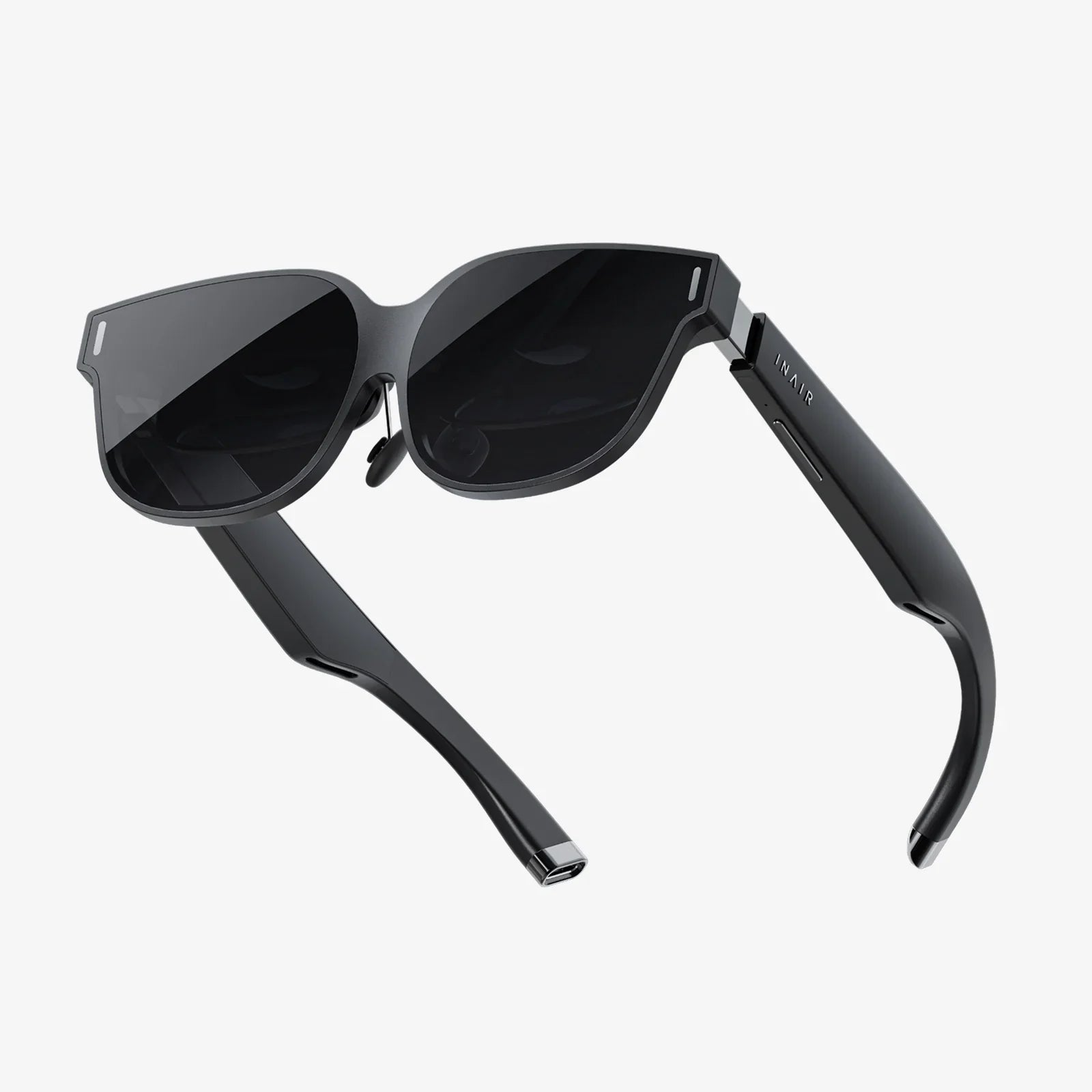
Imagine slipping on a device and being instantly transported to another world, a digital realm so crisp and vivid it blurs the line between simulation and reality. This is no longer the stuff of science fiction; it's the tangible promise delivered by the modern VR headset with inbuilt screen. This technological leap is redefining the very essence of virtual experiences, moving beyond clunky prototypes into an era of seamless, all-in-one immersion. For anyone curious about the future of entertainment, education, and human connection, understanding this technology is not just interesting—it's essential. The journey into truly convincing virtual worlds begins here.
The Architectural Heart: Understanding the Integrated Display
At the core of every VR headset with inbuilt screen is its namesake feature: the self-contained, high-resolution display system. Unlike earlier PC-dependent models that acted as mere windows into a computer's processing power, these integrated units are marvels of consolidated engineering. They house the entire visual apparatus within the headset itself, creating a closed, optimized ecosystem for generating visuals.
The most critical component is, of course, the screen technology itself. Most modern units utilize fast-switching LCD or vibrant OLED panels. OLED (Organic Light-Emitting Diode) technology is particularly prized for its ability to produce true, deep blacks by turning off individual pixels completely. This dramatically enhances contrast and is crucial for creating a believable sense of depth and space, preventing the "washed-out" greys that can break immersion. The screens are positioned mere centimeters from the user's eyes, necessitating incredibly high pixel densities to avoid the "screen door effect"—that distracting grid of visible lines between pixels that plagued early VR. Advanced optical lenses, placed between the eyes and the screens, then warp and focus the image to fill the user's entire field of view, creating the stereoscopic 3D effect that is fundamental to VR.
A Paradigm Shift in User Experience
The integration of the screen directly into the headset represents more than just a technical specification; it catalyzes a complete paradigm shift in how users interact with virtual reality. The most immediate and profound impact is the eradication of the tethered cable. Without a physical link to a stationary computer, users experience an unprecedented level of physical freedom. They can turn, crouch, walk, and explore their virtual environment without a second thought for tripping hazards or cable length. This untethered liberty is the single greatest contributor to presence—the psychological state where the user's brain accepts the virtual world as real.
Furthermore, the all-in-one nature of these devices drastically lowers the barrier to entry. There is no need for a expensive, high-end gaming computer with a powerful dedicated graphics card. The convenience factor cannot be overstated; users can power on their headset and be inside an application within seconds, making VR a spontaneous activity rather than a planned technical session. This accessibility is democratizing VR, moving it from a niche hobby for tech enthusiasts into the mainstream living room.
The Engine Room: Processing Power and Tracking
To drive these high-resolution displays, a significant amount of processing power is required. This is handled by a miniaturized computing system housed within the headset's body. Equipped with a Systems-on-a-Chip (SoC)—similar to those found in high-end smartphones but often optimized for the intense graphical and computational demands of VR—these processors render complex environments in real-time. This on-board computing handles everything from game physics and AI to the intricate tracking systems.
Tracking is what grounds the user in the virtual space. Modern headsets employ Inside-Out tracking, a method where cameras and sensors mounted on the headset itself continuously scan the surrounding environment. By identifying fixed points in the room, the headset can precisely calculate its own position and orientation in 3D space without any external beacons or sensors. This technology also enables features like Passthrough mode, where the headset can use its cameras to display a grayscale or color video feed of the real world, allowing users to see their physical surroundings without removing the device—perfect for finding a drink or avoiding furniture when setting up a play space.
The Critical Specs: What to Look For
When evaluating a VR headset with an inbuilt screen, several specifications are paramount to the quality of the experience:
- Resolution and PPI (Pixels Per Inch): This is the most direct measure of clarity. Higher resolutions (e.g., 1832x1920 per eye or greater) and PPI values directly combat blurriness and the screen door effect, making text sharper and distant objects more defined.
- Refresh Rate: Measured in Hertz (Hz), this dictates how many times the image on the screen refreshes per second. A higher refresh rate (90Hz and above) is critical for smooth motion and reducing latency, which is the delay between a user's movement and the visual update. Low latency is essential for preventing motion sickness and maintaining comfort.
- Field of View (FoV): This is the extent of the observable world seen at any given moment, measured diagonally in degrees. A wider FoV (around 100 degrees is common) increases the sense of immersion by reducing the binocular-like view. The ultimate goal is a seamless, natural FoV that mimics human sight.
- IPD Adjustment: Interpupillary Distance is the space between the centers of your pupils. Mechanical IPD adjustment allows users to physically shift the lenses to match their specific measurement, ensuring the 3D effect is correct and the image is as sharp as possible for their eyes.
Beyond Gaming: The Expansive Universe of Applications
While gaming remains a flagship application, the utility of standalone VR headsets stretches far beyond. They are becoming powerful tools in fields such as:
- Education and Training: Medical students can practice complex surgeries on virtual patients. Mechanics can learn to repair engines in a risk-free simulated environment. History students can take guided tours of ancient Rome. The potential for experiential learning is limitless.
- Remote Work and Collaboration: Virtual meeting rooms allow distributed teams to collaborate as if they were in the same physical space, interacting with 3D models and whiteboards in a way flat video calls could never allow.
- Social Connection: Platforms exist where users can gather as stylized avatars to watch movies, attend concerts, or simply hang out, offering a new dimension to long-distance relationships and online communities.
- Fitness: A growing category of applications turns workouts into engaging games, boxing against rhythm-based targets or slashing through obstacles, making exercise fun and motivating.
Navigating the Trade-Offs and Considerations
No technology is without its compromises. The primary trade-off for the convenience of an all-in-one design is raw graphical power. While the integrated processors are impressive, they cannot match the sheer output of a top-tier desktop graphics card. This means the visual fidelity in the most graphically intensive experiences may be lower on a standalone headset compared to a tethered one. Battery life is another key consideration; most devices offer two to three hours of continuous use, which dictates the length of immersion sessions. Finally, comfort and ergonomics are highly subjective but vitally important; a headset must be well-balanced and adjustable to be worn for extended periods without causing fatigue.
The Horizon: What the Future Holds
The evolution of the VR headset with inbuilt screen is accelerating at a breathtaking pace. The near future promises even higher-resolution displays, often referred to as "retina" resolution, where pixels become indistinguishable to the human eye. Varifocal lenses, which can dynamically adjust focus to match the depth of the virtual object the user is looking at, are in development to solve the Vergence-Accommodation Conflict—a primary source of eye strain in current headsets. Advancements in inside-out tracking will continue to improve accuracy and allow for more nuanced full-body tracking without external hardware. Furthermore, the integration of artificial intelligence will lead to smarter, more responsive environments and more realistic non-player characters.
The line between the digital and the physical is not just blurring; it is being actively redrawn by the capabilities of the self-contained VR headset. This is more than an evolution in display technology; it is the foundation for the next great computing platform, one that promises to reshape how we work, learn, play, and connect. The gateway to these boundless virtual frontiers is now self-contained, accessible, and sitting on the cusp of mainstream adoption, waiting to be explored.
Share:
VR Headset Side Effects: Navigating the Physical and Psychological Impacts of Immersive Technology
$7000 VR Headset: The Unseen Revolution in Professional Immersion