


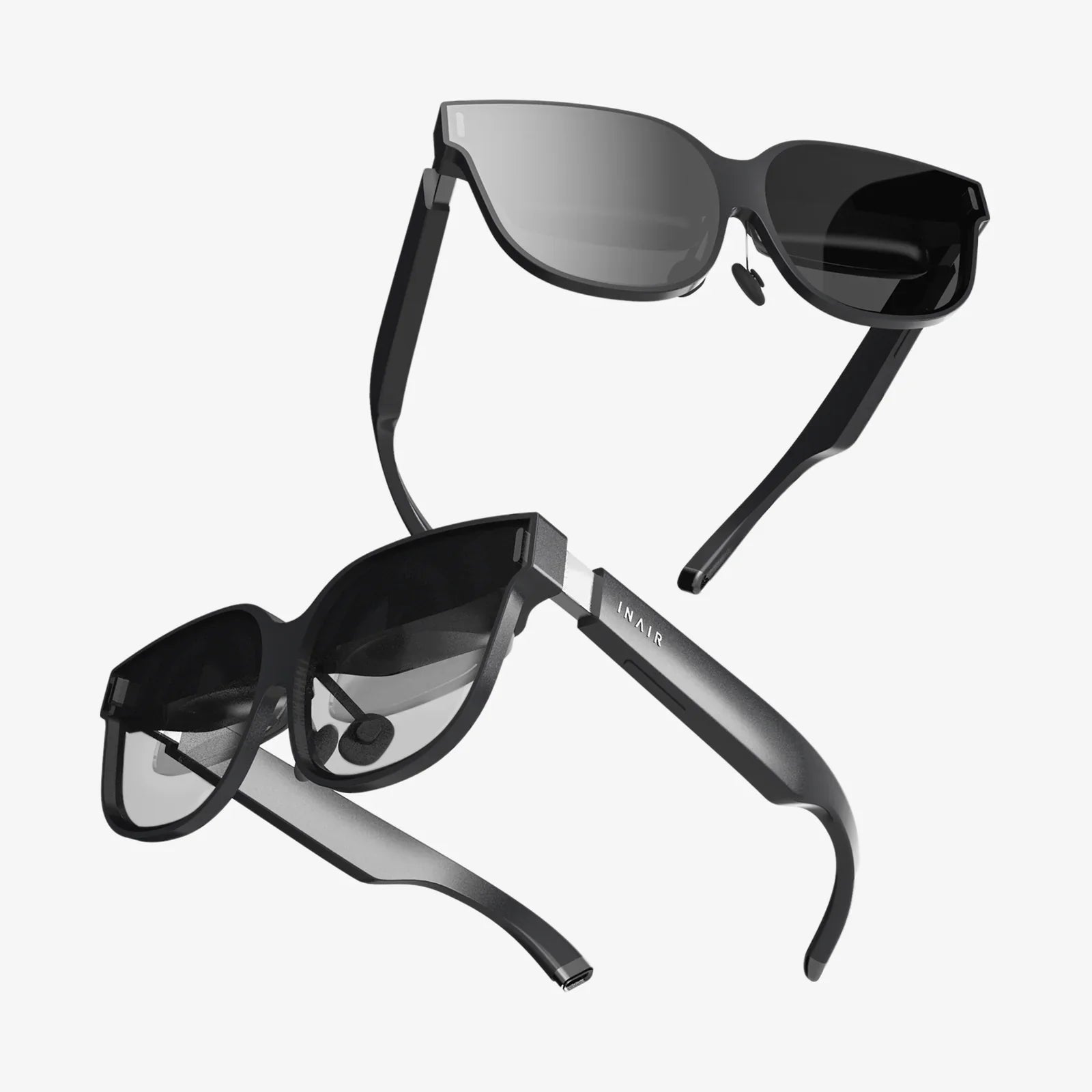
Imagine slipping on a headset and being instantly transported. Not to a pixelated approximation of a place, but to a reality so crisp, so vivid, and so breathtakingly real that the line between the physical and the virtual begins to genuinely blur. This is no longer the stuff of science fiction; it is the promise held within the sleek, sophisticated form of the modern 8K VR headset. This isn't just an incremental upgrade; it's a fundamental leap towards true visual fidelity, and it's poised to redefine our entire relationship with digital worlds.
The Resolution Revolution: Seeing is Believing
For years, virtual reality has been hamstrung by a single, persistent adversary: the screen-door effect. This visible grid of lines between pixels constantly reminded users they were looking at a screen, breaking immersion and preventing that crucial suspension of disbelief. Early headsets, while revolutionary for their time, operated at resolutions that, by modern flat-panel standards, were decidedly last generation.
The move to 8K resolution is the definitive answer to this problem. But what does "8K" actually mean in the context of VR? It's more complex than a simple television specification. True 8K for VR often refers to a combined resolution across two displays (one for each eye) that totals approximately 7680 x 2160 pixels. This results in a staggering per-eye resolution of 3840 x 2160—that's 4K clarity for each individual eye. This massive pixel count, packed into a display sitting just centimeters from your retina, is what annihilates the screen-door effect. Text becomes razor-sharp, distant objects in virtual environments retain their detail, and the world feels solid, tangible, and real.
Beyond the Pixel Count: The Technology Inside the Beast
Delivering a seamless 8K VR experience is a monumental technical challenge that extends far beyond just slapping high-resolution screens into a headset. It requires a symphony of advanced components working in perfect harmony.
Advanced Display Panels
The heart of any headset is its display. Modern 8K VR headsets primarily utilize two types of cutting-edge screen technology: fast-switch LCDs and OLED. Each has its advantages. High-end LCDs offer incredible pixel density and can eliminate motion blur with very fast response times, which is critical for comfort. Meanwhile, advancements in OLED technology promise perfect blacks, infinite contrast ratios, and richer, more vibrant colors, making virtual scenes pop with a lifelike luminosity previously unattainable.
The Rendering Powerhouse
Rendering a 3D environment at 8K resolution, at a minimum of 72 frames per second (and ideally 90Hz or higher for comfort), is one of the most demanding tasks you can ask of computing hardware. It requires a level of graphical processing power that was exclusive to high-end desktop systems until very recently. This has driven innovation in graphics hardware, with new architectures designed specifically for high-fidelity VR rendering, including advanced foveated rendering techniques.
Foveated Rendering: The Secret Weapon
This is arguably the most important innovation enabling the 8K VR era. The human eye only sees a small central area (the fovea) in high detail; our peripheral vision is significantly lower resolution. Foveated rendering uses internal headset sensors to track your eye movements. It then renders the exact point you are looking at in full, native 8K resolution, while intelligently reducing the rendering quality in your peripheral vision. This can reduce the GPU's workload by up to 70% without the user ever perceiving a difference. It's a brilliant piece of bio-mimicry that makes high-resolution VR practically achievable.
Optics: The Window to the Virtual World
All those pixels are useless if the lenses in front of them are poor quality. Fresnel lenses, common in earlier headsets, often suffered from god rays, glare, and a small "sweet spot" for clarity. The latest generation of 8K headsets is moving to custom-engineered pancake lenses or aspherical elements. These provide a much larger sweet spot, dramatically reduce glare, and offer edge-to-edge clarity, ensuring the entire field of view is as sharp as the center.
A Universe of Applications: Far Beyond Gaming
While hardcore gaming is the most obvious and enthusiastic beneficiary of this technology, the implications of crystal-clear virtual reality extend into nearly every professional and creative field.
Professional and Enterprise Use
- Architecture and Design: Architects can walk clients through photorealistic renderings of unbuilt homes. Interior designers can place virtual furniture in a real space with perfect scale and detail. The ability to read fine text on virtual blueprints or examine the texture of a material sample is invaluable.
- Medicine and Healthcare: Medical students can practice complex surgical procedures on hyper-realistic virtual cadavers. Therapists can use calming, high-resolution environments for treating anxiety and PTSD with unprecedented effectiveness. The clarity allows for the accurate representation of anatomical details.
- Remote Collaboration and Training: Engineers across the globe can collaborate on a full-scale, 1:1 model of a jet engine, examining minute details together as if they were in the same room. This has huge potential for complex machinery training and maintenance.
Social and Experiential
Social VR platforms will be transformed. Instead of interacting with cartoonish avatars, we may see photorealistic digital humans, allowing for more nuanced and genuine communication through eye contact and expression. Imagine attending a virtual concert and feeling like you're in the front row, or visiting a historical monument reconstructed in perfect detail, able to see the wear and tear of centuries on its stones.
The Content Conundrum
The greatest challenge facing 8K VR is not the hardware, but the software. Creating content that truly leverages this resolution is expensive, time-consuming, and requires immense data storage and bandwidth. The industry is responding with more powerful game engines, better 3D scanning technology, and higher-resolution 360-degree cameras. The ecosystem is building, but the availability of native 8K experiences is currently the limiting factor, not the headset technology itself.
The Human Factor: Comfort, Accessibility, and the Future
For VR to become truly mainstream, it must be comfortable, accessible, and intuitive. The next generation of headsets is addressing this on all fronts.
- Ergonomics and Form Factor: New designs are lighter, better balanced, and often use flexible materials to distribute weight more comfortably, aiming for extended session usability.
- Wireless Freedom: The pursuit of high-fidelity wireless streaming is relentless. New, uncompressed wireless protocols are emerging to cut the cord without sacrificing the pristine 8K visual quality, which is essential for full freedom of movement.
- The Path to Mainstream Adoption: As with all technology, costs will eventually fall. The incredible experience offered by these devices will drive demand, leading to economies of scale and more affordable options for consumers, moving VR from a niche enthusiast market to a central home entertainment and productivity platform.
The journey of virtual reality is a relentless march towards perfection—perfection of sight, sound, and sensation. The 8K VR headset is not the final destination on this journey, but it is the most significant milestone we have yet reached. It solves the fundamental visual complaints that have held VR back and opens the door to applications we are only beginning to imagine. It transforms the experience from a novel tech demo into a genuine window to other worlds, other lives, and other possibilities. The door to the next reality is now open, and the view has never been clearer.
Share:
Extended Reality Projects: Reshaping Industries and Redefining Human Experience
VR Headset Requirements: The Ultimate Guide to a Seamless Immersive Experience