


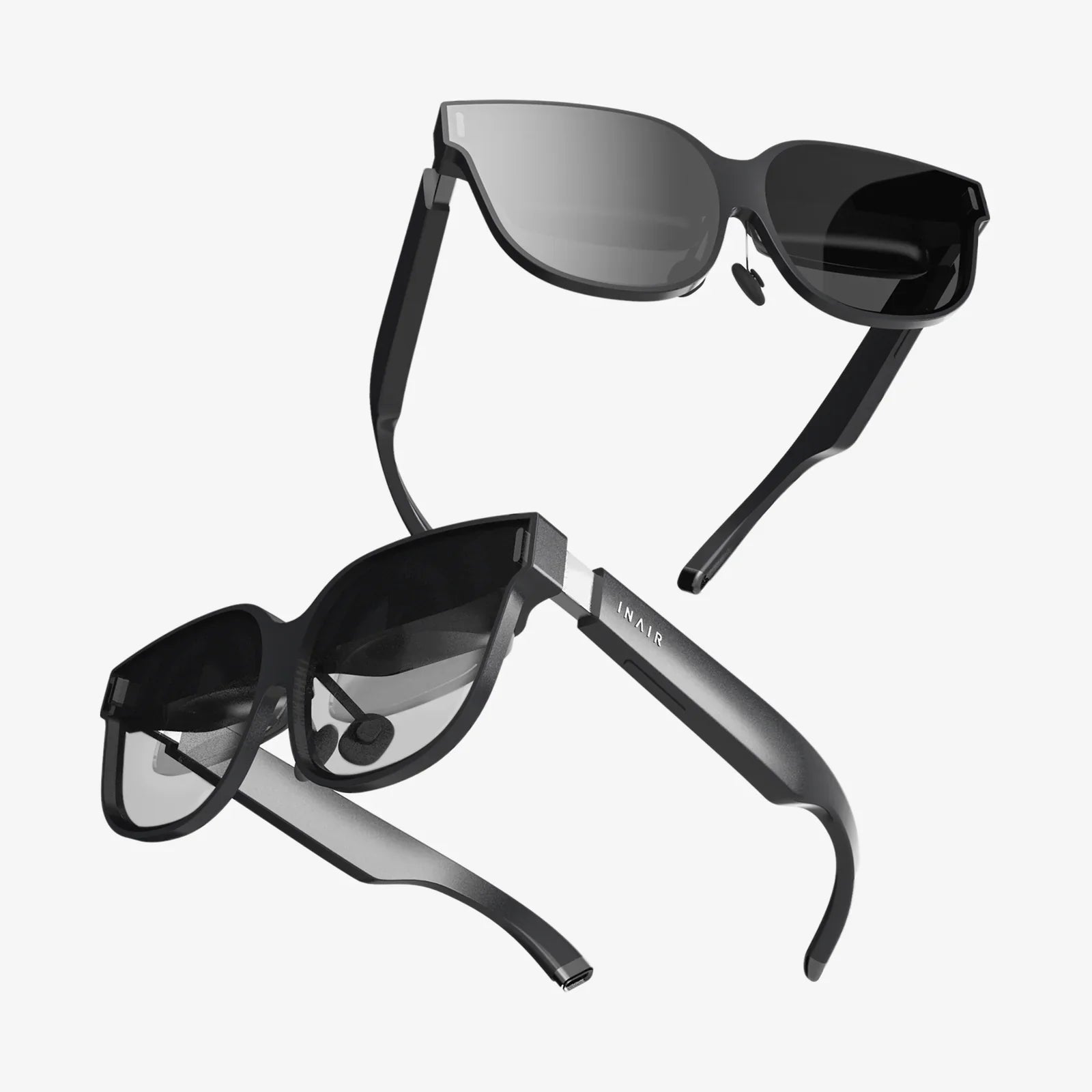
Imagine a world where the line between the digital and the physical isn't just blurred—it's erased. A world where a surgeon in one country can guide a procedure in another through a pair of transparent lenses, where a history student can walk through ancient Rome as it teemed with life, and where an architect can step inside their own blueprint before a single brick is laid. This is not a distant sci-fi fantasy; it is the imminent future being built today, one project at a time, through the powerful and pervasive force of extended reality. The convergence of virtual, augmented, and mixed realities is creating a new canvas for human innovation, and the projects emerging from this fusion are poised to revolutionize everything we know.
The XR Spectrum: Defining the New Reality
Before delving into the projects themselves, it's crucial to understand the tapestry of technologies that fall under the XR umbrella. Extended Reality is not a single technology but a spectrum that encompasses all combined real-and-virtual environments generated by computer technology and wearables.
Virtual Reality (VR) immerses users in a completely digital environment, effectively shutting out the physical world. This is typically achieved through a head-mounted display (HMD) that tracks the user's head and, often, hand movements. Successful extended reality projects in the VR space are those that achieve a sense of presence—the convincing feeling of being somewhere else.
Augmented Reality (AR) overlays digital information onto the user's view of the real world. Unlike VR, it does not replace reality but enhances it. This can be experienced through smartphone screens, tablets, or increasingly, through smart glasses. The magic of AR-based extended reality projects lies in their ability to provide contextually relevant information exactly when and where it is needed.
Mixed Reality (MR) is perhaps the most advanced and intriguing part of the spectrum. It not only overlays digital objects but anchors them to the physical world, allowing for real-time interaction. A digital character can hide behind your physical sofa, or a virtual control panel can be fixed to your wall. MR extended reality projects require sophisticated understanding of the user's environment, making the digital and physical worlds coexist and interact seamlessly.
The Engine Room: Core Technologies Powering XR
The breathtaking experiences delivered by modern extended reality projects are made possible by a symphony of advancing technologies.
- Computer Vision: This is the eyes of XR. Algorithms enable devices to understand and interpret the visual world—recognizing surfaces, objects, gestures, and even people. This allows digital content to interact intelligently with the physical environment.
- Simultaneous Localization and Mapping (SLAM): SLAM technology is the reason a virtual dinosaur can know to walk around your coffee table instead of through it. It allows a device to map an unknown environment while simultaneously tracking its own location within that space, creating a persistent digital understanding of a physical room.
- Cloud Computing & 5G: Processing incredibly dense 3D models and environments requires immense computational power. Cloud computing offloads this processing to remote servers, while high-bandwidth, low-latency 5G networks ensure this data is streamed to headsets and devices seamlessly, without lag that can break immersion.
- Haptics and Sensory Feedback: Truly immersive extended reality projects engage more than just sight and sound. Advanced haptic gloves and vests can simulate the feeling of touch, from the texture of a virtual object to the impact of a virtual punch, deepening the sense of presence.
Transforming the Corporate Landscape: XR in Enterprise
While consumer entertainment grabs headlines, the most significant and rapid adoption of extended reality projects is occurring within enterprise. Companies are leveraging XR to solve real-world problems, increase efficiency, reduce costs, and enhance safety.
Revolutionizing Design and Prototyping
In fields like automotive, aerospace, and architecture, the prototyping phase is notoriously expensive and time-consuming. XR is changing this entirely. Designers and engineers can now create and interact with 1:1 scale digital prototypes long before physical materials are used. They can walk around a full-scale model of a new jet engine, inspect the ergonomics of a car's interior from the driver's seat, or test the structural integrity of a building design under simulated stress conditions. These extended reality projects drastically reduce development cycles and allow for iterative testing that was previously impossible.
Supercharging Training and Skill Development
From training surgeons to preparing field technicians for complex repairs, XR provides a risk-free, repeatable, and highly effective training environment. Medical students can practice intricate procedures on virtual patients, receiving instant data feedback on their performance. Warehouse employees can learn complex picking and packing systems in a virtual replica of their facility. These extended reality projects create a "learning by doing" environment that dramatically improves knowledge retention and skill proficiency compared to traditional manuals or videos.
Enabling Remote Collaboration and Assistance
The concept of the "remote expert" is a killer app for enterprise AR. A seasoned engineer sitting at headquarters can see exactly what a field technician sees through their smart glasses. The expert can then annotate the technician's real-world view with arrows, diagrams, and text instructions, guiding them through a complex repair in real-time. This application of extended reality projects saves enormous amounts of travel time and cost while ensuring problems are resolved correctly the first time.
Beyond the Boardroom: XR's Impact on Society
The potential of extended reality projects extends far beyond corporate profit margins, touching and improving fundamental aspects of human life.
A New Dimension for Education
XR is transforming education from a passive to an active experience. Instead of reading about the Roman Empire, students can explore a reconstructed Forum. Instead of watching a video about cellular mitosis, they can shrink down and witness the process happening around them. These immersive extended reality projects foster empathy, curiosity, and a deeper conceptual understanding by allowing learners to experience knowledge firsthand.
Advancements in Healthcare and Therapy
The healthcare sector is witnessing a revolution fueled by XR. Surgeons use AR to overlay patient scan data like MRI or CT scans directly onto their body during operations, providing x-ray vision. Phobia treatment is being revolutionized through exposure therapy in controlled, virtual environments. For patients suffering from physical injuries, VR-based physical therapy turns repetitive exercises into engaging games, improving motivation and outcomes. These life-changing extended reality projects are not just improving care; they are saving lives.
Redefining Social Connection and Storytelling
XR is evolving into a new medium for social interaction and narrative. Social VR platforms allow people to gather as lifelike avatars for concerts, meetings, or simply to hang out, transcending geographical barriers with a sense of shared presence. Storytellers and artists are using the medium to create immersive narratives where the audience is no longer a passive viewer but an active participant within the story. These extended reality projects are building the foundation for a potential successor to the flat, 2D internet we know today—a fully embodied, spatial web.
Navigating the Challenges: The Road Ahead for XR
For all its promise, the path for extended reality projects is not without significant hurdles that developers, companies, and society must address.
- Technical Limitations: Issues like visual fidelity, field of view, battery life, and device weight and comfort remain barriers to all-day use. Overcoming the "uncanny valley" in avatars and achieving perfect, lag-free tracking are ongoing pursuits.
- Content Creation Complexity: Designing for 3D, interactive spaces is fundamentally different from designing for 2D screens. It requires new skills, tools, and design philosophies, creating a shortage of experienced developers and slowing content production.
- The Privacy Paradigm: XR devices, by their very nature, are data collection powerhouses. They have cameras, microphones, and sensors that map our most intimate spaces—our homes and offices. Establishing robust, transparent data privacy and security frameworks is paramount to earning public trust.
- Social and Ethical Considerations: The potential for addiction, the psychological effects of living in alternate realities, and the risk of creating even more immersive forms of misinformation are serious concerns that must be proactively studied and mitigated.
The Future is Spatial: What Comes Next?
The trajectory of extended reality projects points toward a future where the technology becomes as ubiquitous and invisible as the smartphone. We are moving towards lightweight, socially acceptable glasses that will seamlessly blend our digital and physical lives. The concept of the "spatial web" will mature, where information is not on pages but placed in the world around us. Your morning run metrics could float beside you, a virtual art gallery could be curated on your living room wall, and a virtual assistant could appear as a hologram to help you cook dinner using an AR-recipe. The most successful future extended reality projects will be those that enhance human capability without isolating us, that provide utility without intrusion, and that amplify our reality rather than seeking to replace it.
The next time you put on a headset or use your phone to see a virtual object in your room, remember you are not just testing a piece of technology; you are glimpsing the foundational layer of a new reality. The architects of this new world are the developers, designers, and visionaries behind these groundbreaking extended reality projects. They are building the bridge to a future where our physical and digital selves finally converge, and the journey is only just beginning. The ultimate project is the redesign of human experience itself, and the tools to start building are already in our hands.
Share:
Monitor Glasses: The Ultimate Guide to Reducing Digital Eye Strain
8K VR Headset: The Ultimate Immersion and the Future of Virtual Reality