


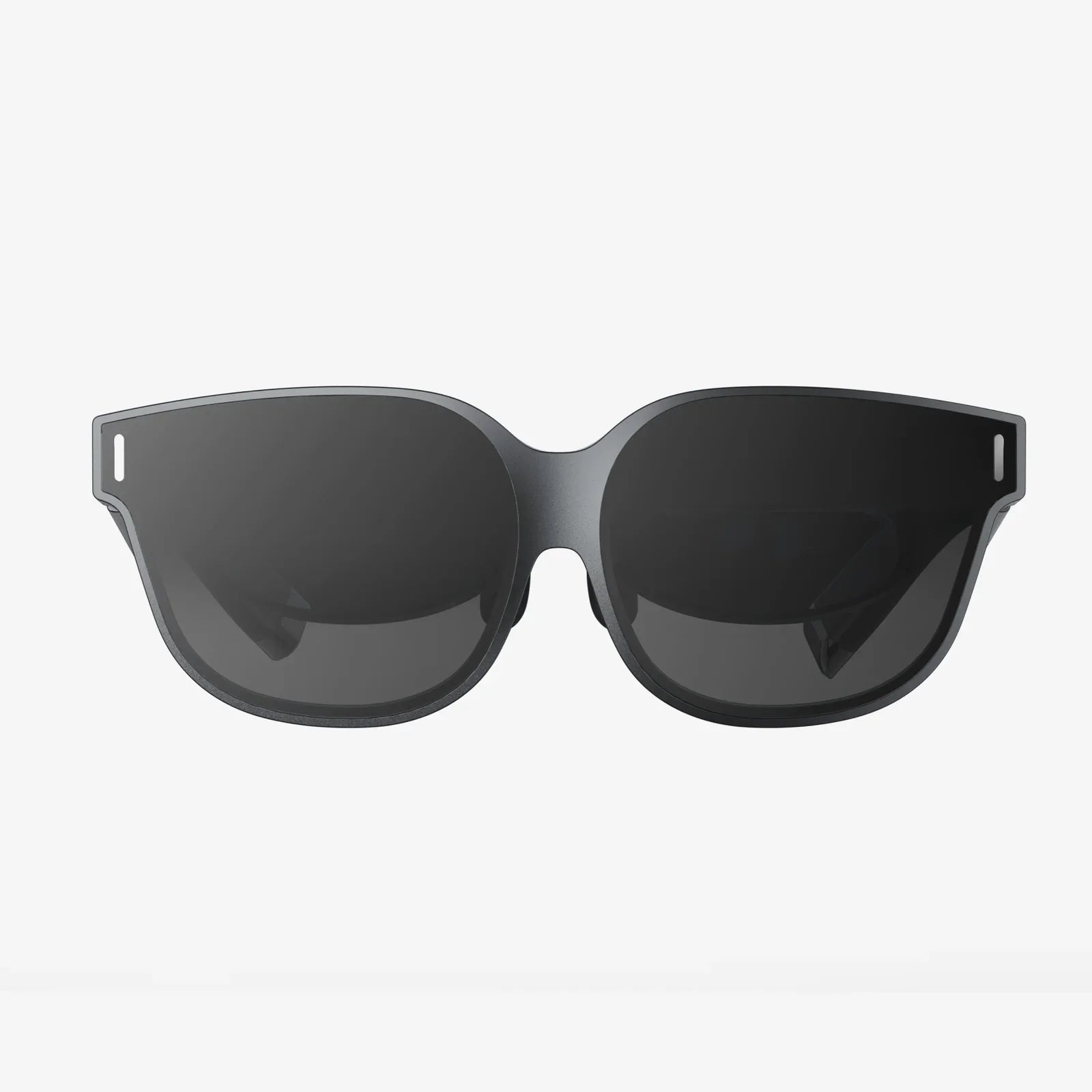
Imagine a world where the line between the digital and the physical doesn't just blur—it disappears. Where information isn't confined to a screen but is painted onto the very fabric of your reality, accessible with a glance, a gesture, or a spoken word. This is not a distant sci-fi fantasy; it is the emerging, tangible promise of augmented reality, a technology poised to revolutionize how we work, learn, play, and connect. To understand its potential is to peer into the next chapter of human-computer interaction, a future where our environment becomes an intelligent, interactive canvas.
Beyond the Buzzword: Defining the Digital Overlay
At its most fundamental level, a good explanation for augmented reality begins with a simple distinction: unlike Virtual Reality (VR), which seeks to replace your world with a simulated one, AR aims to supplement and enhance your real-world experience. It is a technology that superimposes computer-generated perceptual information—be it images, sounds, haptic feedback, or data streams—onto our view of the physical environment in real-time. Think of it as a dynamic, context-aware layer of digital content seamlessly integrated into your immediate surroundings.
This digital overlay can take many forms. It can be as simple as a navigation arrow floating on the street in front of you, guiding you to your destination. It can be a historical figure seemingly standing in your living room, recounting tales from the past. It can be the precise wiring diagram for an engine component, projected directly onto the machinery a technician is repairing. The key differentiator is that AR does not remove you from your setting; instead, it makes your setting richer, more informative, and more interactive.
The Engine Behind the Illusion: How AR Actually Works
The magic of AR feels like wizardry, but it is the product of sophisticated hardware and software working in concert. A good explanation for augmented reality must delve into the core technologies that make it possible. The process generally involves three critical steps: scanning, processing, and projecting.
First, cameras and sensors on the AR device (be it a headset, smart glasses, or a smartphone) scan the user's environment. These sensors collect a massive amount of data, including video footage, depth information, and positional data. Advanced systems use a technique called SLAM (Simultaneous Localization and Mapping), which allows the device to both map an unknown environment and track its own location within that environment simultaneously. This creates a spatial understanding, essentially allowing the digital world to 'know' where the floor, walls, and objects are.
Next, the device's software processes this data. This is where the real computational heavy lifting occurs. Algorithms analyze the scene to identify flat surfaces (like tables or walls), recognize objects (is that a chair or a person?), and understand lighting conditions and occlusions. This contextual understanding is crucial for placing digital content in a way that feels grounded and realistic. The software determines not only *what* to display but *where* and *how* to display it so it interacts believably with the real world.
Finally, the device projects or renders the digital content onto the user's field of view. This can be done through various display technologies. Some systems use transparent lenses that allow you to see the real world directly while miniature projectors display images onto those lenses. Others use cameras to capture the real world and then display a composite video feed on an opaque screen, blending the real and the virtual—a method known as video pass-through. The result is the convincing illusion that digital objects coexist with physical ones.
A Spectrum of Experience: From Simple Annotation to Full Immersion
Not all AR is created equal. A good explanation for augmented reality acknowledges that it exists on a spectrum, often categorized by its level of immersion and interactivity.
On one end, we have Marker-Based AR (or Image Recognition AR). This is one of the earliest and simplest forms. It requires a specific visual marker, like a QR code or a printed image, to trigger the digital overlay. The device's camera identifies the unique pattern of the marker, which acts as an anchor point, and superimposes a pre-programmed 3D model or animation onto it. While limited by its dependence on a marker, it is highly reliable and effective for specific applications like interactive marketing or educational flashcards.
More advanced is Markerless AR (or Location-Based AR). This form uses GPS, digital compasses, and accelerometers in smartphones to place digital content in a specific real-world location. The popular game that had millions chasing digital creatures in parks is a prime example. This technology allows for experiences tied to a place, such as historical tours where information about a building pops up as you point your phone at it.
The most sophisticated and immersive form is often called Projection-Based AR and Superimposition-Based AR. Projection-based AR literally projects light onto physical surfaces, creating interactive displays that can respond to touch or movement. Superimposition-based AR uses object recognition to digitally replace, enhance, or alter a real-world object entirely. For instance, a surgeon might use it to see a patient's anatomy with a tumor highlighted, or an interior designer could replace your old sofa with a new virtual model to see how it fits the room.
Transforming Industries: The Practical Power of AR
While entertainment and gaming provided the initial spark for public interest, the true transformative power of AR lies in its vast practical applications across countless industries. A good explanation for augmented reality must highlight its role as a powerful tool for productivity, education, and safety.
In manufacturing and field service, AR is a game-changer. Technicians wearing AR smart glasses can see schematics, instruction manuals, and expert guidance overlaid on the equipment they are servicing. This provides hands-free access to critical information, drastically reducing errors, shortening training times, and improving first-time fix rates. A remote expert can see what the on-site technician sees and draw digital arrows or notes directly into their field of view, enabling collaborative problem-solving from across the globe.
The healthcare sector is witnessing profound benefits. Medical students can explore detailed, interactive 3D models of the human body, peeling back layers of anatomy in a way textbooks could never allow. Surgeons use AR for pre-operative planning, visualizing the surgical site with critical structures highlighted, which can increase precision and reduce operative time. It also aids in complex procedures like placing injections or incisions with pinpoint accuracy.
In retail and e-commerce, AR is dissolving the barrier between online shopping and physical try-ons. Customers can use their smartphones to see how a new piece of furniture would look in their home at scale, how a new shade of paint would transform their wall, or how a pair of glasses would fit their face. This "try before you buy" digital experience significantly enhances consumer confidence and reduces return rates.
Education and training are being revolutionized. AR turns abstract concepts into tangible, interactive experiences. A chemistry student can mix virtual elements without risk, seeing the molecular interactions unfold. A history class can explore ancient ruins, rebuilt in stunning detail around them. This experiential learning leads to dramatically improved engagement, retention, and understanding.
The Human Factor: Challenges and Considerations
No good explanation for augmented reality is complete without addressing its current limitations and the societal questions it raises. Technologically, challenges remain in creating devices that are socially acceptable, comfortable for long-term wear, and possess the immense processing power and battery life required for all-day use. Creating truly photorealistic digital objects that interact with complex lighting and physics in real-time is still a significant computational hurdle.
Beyond hardware, there are profound software challenges in perfecting spatial understanding and user interaction. How do we design intuitive interfaces for a world without screens, mice, and keyboards? Gesture, gaze, and voice control are emerging paradigms, but creating a universal language for AR interaction is an ongoing effort.
Perhaps the most critical discussions are ethical and societal. The concept of augmented reality brings with it serious concerns about data privacy. These devices, by their very nature, are constantly scanning and analyzing their surroundings—which includes people and private spaces. Who owns this data? How is it stored and used? The potential for constant surveillance and data harvesting is a legitimate fear.
Furthermore, the proliferation of persistent digital content layered onto the world raises questions about digital litter, advertising overload, and reality itself. If everyone sees a different, personalized version of reality, does a shared common experience cease to exist? The potential for misinformation, manipulated realities, and social isolation are challenges that must be addressed proactively by developers, policymakers, and society as a whole.
The Invisible Revolution: The Future is Augmented
The ultimate goal for many in the field is for AR to become as ubiquitous, intuitive, and invisible as the smartphone—or even more so. The future may not involve holding a device at all, but rather lightweight, stylish glasses or even contact lenses that seamlessly integrate digital information into our natural vision. This shift would represent a move from looking *at* a device to looking *through* a window into an enhanced world.
We are moving towards a world of contextual computing, where your environment understands you and presents information relevant to your immediate task, location, and needs. Your AR device could recognize a person you're meeting and discreetly display their name and last meeting notes. It could translate a foreign street sign in real-time. It could warn you of a potential hazard on the road ahead that is outside your line of sight. The technology will fade into the background, and the enhanced human experience will move to the foreground.
This is the true promise of a good explanation for augmented reality: it is not about escaping our world, but about deepening our connection to it. It’s a tool for enhancing human capability, democratizing knowledge, and bridging gaps—both physical and informational. It represents a fundamental shift in our relationship with technology, from a tool we actively use to an intelligent partner that empowers our everyday lives. The bridge between our atoms and our bits is being built right before our eyes, and it promises to redefine reality itself.
The next time you look around your room, your street, or your workplace, don't just see what is there now. Imagine the invisible layers of useful data, connection, and knowledge that could be woven into that space, waiting to be unlocked. The screen-based era of computing is reaching its peak; the next revolution will not be held in your hand, but will live in the world all around you, transforming every blank space into an opportunity and every task into an interactive experience. The future isn't just coming; it's preparing to augment everything you know.
Share:
Most Expensive VR Headset Price: A Deep Dive Into the Pinnacle of Immersive Technology
VR Headset Types: A Comprehensive Guide to Navigating the Virtual Reality Landscape