


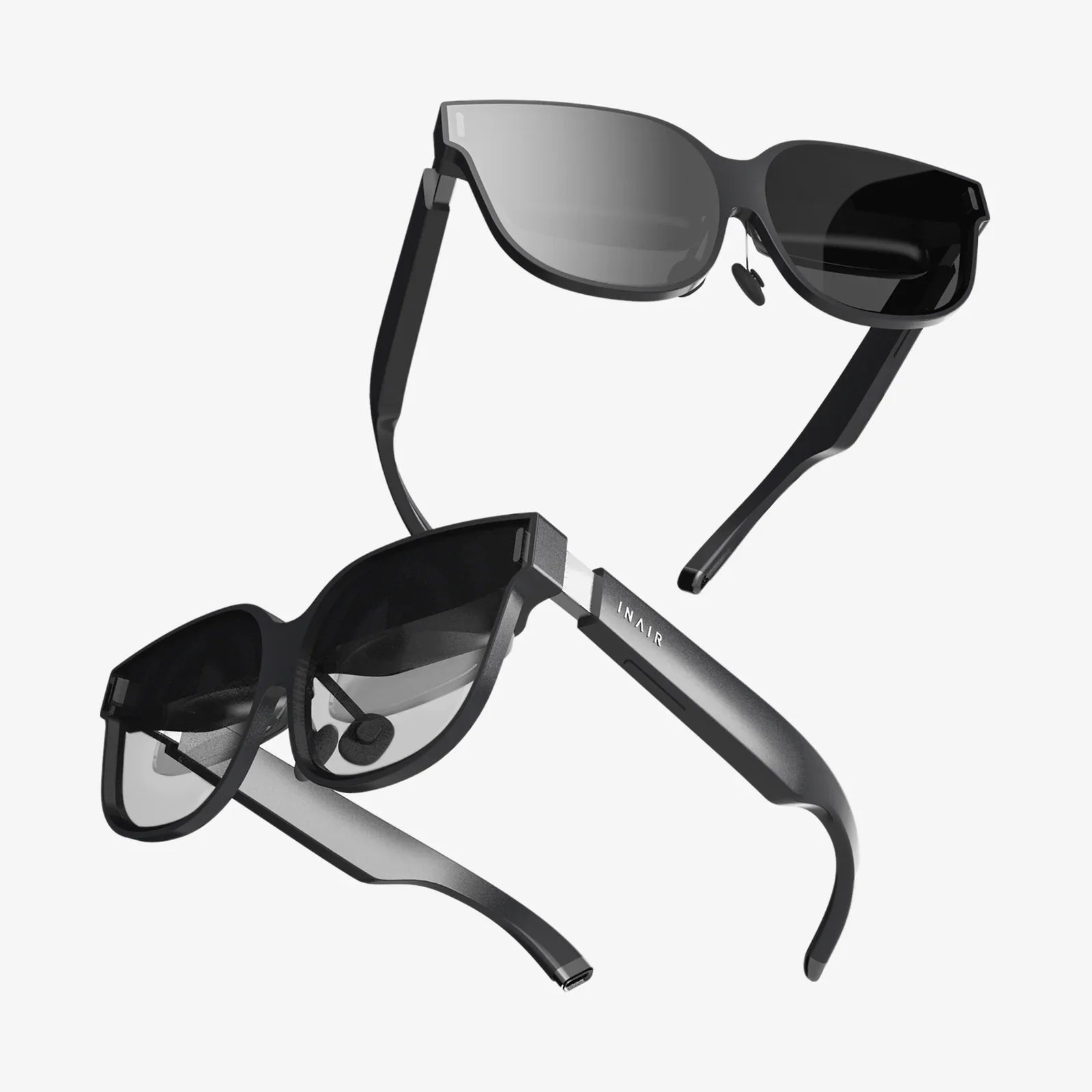
Imagine a world where the line between the digital and the physical isn't just blurred—it's elegantly erased. Where information floats before your eyes, historical figures walk beside you on empty streets, and complex machinery is repaired with guidance from a holographic expert. This is the promise of mixed reality, a technological frontier that is rapidly evolving from science fiction into tangible reality. But to truly grasp this revolution, one must first understand the map that charts its entire territory: a taxonomy of mixed reality visual displays. This framework is the essential key to unlocking how we see, interact with, and ultimately merge our world with the digital realm.
The Foundation: Understanding the Reality-Virtuality Continuum
The journey into mixed reality begins not with a specific device, but with a conceptual model. In 1994, Paul Milgram and Fumio Kishino introduced a groundbreaking paper titled "A Taxonomy of Mixed Reality Visual Displays." Their central thesis was the "Reality-Virtuality (RV) Continuum." This continuum represents a spectrum of experiences, with the completely real environment at one extreme and a fully virtual environment at the other.
This was a radical departure from thinking in binary terms (real vs. virtual). Instead, Milgram and Kishino proposed that mixed reality (MR) encompasses all experiences that lie somewhere between these two poles. It's not a single point but a vast landscape of possibilities. This continuum is the bedrock upon which all modern understanding of MR is built, providing the language and structure to classify the myriad of emerging technologies.
Deconstructing the Four Key Classes of Display
Within this continuum, the taxonomy identifies four primary classes of visual displays. These categories are defined by how they combine real-world and computer-generated elements and, crucially, how the user perceives that combination.
1. Real Environment
This is our baseline—the unadulterated physical world as perceived directly by the human eye. While it may seem trivial to include, it serves as the essential anchor point for the entire continuum. Any technology that aims to augment or mediate our view of reality must be measured against the fidelity and richness of natural human vision.
2. Augmented Reality (AR)
Augmented Reality sits closest to the real environment end of the spectrum. In AR, the user's primary view is of the real world, which is then enhanced or "augmented" with digital overlays. These overlays are spatially registered, meaning they appear to be attached to real-world objects or locations.
- Defining Characteristic: The real world is primary; digital content is supplementary.
- User Perception: The user feels present in their actual environment, which is now imbued with additional digital information.
- Example: Viewing navigation arrows superimposed on the road through a smartphone screen or seeing furniture models placed in your living room via a tablet.
3. Augmented Virtuality (AV)
Often considered the less explored cousin of AR, Augmented Virtuality resides nearer to the virtual environment pole. Here, the primary view is a virtual world, but it is punctuated or enhanced with elements streamed from the real world.
- Defining Characteristic: The virtual world is primary; real-world content is supplementary.
- User Perception: The user feels immersed in a digital space that is made more authentic or responsive by incorporating real-world data.
- Example: A fully virtual cockpit for a flight simulator that live-feeds video from a real external camera to display the actual outside environment, or a virtual meeting room where participants are represented as avatars but a real-world document is streamed in and placed on the virtual table.
4. Virtual Environment (VR)
At the far end of the spectrum lies the completely virtual environment, more commonly known as Virtual Reality. In a true VR experience, the user's visual field is entirely filled with computer-generated imagery, completely replacing their view of the physical world.
- Defining Characteristic: The experience is fully synthetic and immersive.
- User Perception: The user is transported to a different place, with the goal of creating a strong sense of "presence" within the digital world.
- Example: Exploring a meticulously recreated ancient city or conducting a walkthrough of a building that has not yet been constructed.
The Engine of Perception: How Displays Mediate Reality
The taxonomy's power lies not just in categorization but in its analysis of how these displays work. Milgram and Kishino detailed two fundamental methods for combining real and virtual imagery, which remain highly relevant today.
Optical See-Through Displays
This method relies on optics to blend the views. The user looks directly at the real world through a transparent combiner, such as a beam splitter or waveguide. Computer-generated graphics are then projected onto this combiner, reflecting into the user's eyes and overlaying the real-world view.
- Advantages: Offers a high-fidelity, lag-free view of the real world. Since the user sees light directly from the environment, the resolution and depth of field are perfect.
- Challenges: It is extremely difficult to occlude real-world objects with virtual ones convincingly (making a virtual cup hide a real book behind it). The digital graphics can also appear dim or ghost-like when superimposed on bright real-world scenes.
Video See-Through Displays
This method uses cameras and screens. One or more cameras mounted on the display capture the real world. A computer then takes this video feed, composites digital graphics onto it in real-time, and presents the final combined image on an opaque display in front of the user's eyes.
- Advantages: Allows for perfect registration and occlusion—the system can easily make virtual objects hide real ones since it controls the entire final image. It also enables more advanced image processing, like altering the appearance of the real world (applying filters, enhancing darkness).
- Challenges: The user's view of reality is mediated by a camera and screen, which limits resolution, field of view, and introduces latency—a delay that can cause discomfort if not minimized.
Beyond the Basics: Expanding the Original Taxonomy
While the 1994 taxonomy is remarkably prescient, the evolution of technology has introduced new considerations that expand upon the original model.
The Spatial Mapping Revolution
Modern MR systems rely heavily on a process not deeply explored in the original paper: environmental understanding. Through technologies like SLAM (Simultaneous Localization and Mapping), depth sensors, and LiDAR, devices can now create a detailed 3D mesh of their surroundings in real-time. This spatial map is what allows virtual objects to not just float in front of you, but to truly interact with the real world—sitting on a physical table, rolling behind a couch, or bouncing off a wall. This transforms the display from a simple projector of graphics into an intelligent mediator that understands the geometry and context of the space it occupies.
The Spectrum of Immersion and Presence
The taxonomy focuses on visual display, but the human experience of MR is multisensory. True immersion is achieved through a combination of visuals, spatial audio, and increasingly, haptic feedback. The goal is to generate a sense of "presence"—the undeniable feeling of being in a place, whether that place is your augmented living room or a fantastical virtual realm. Displays are the primary gateways to this feeling, but they are part of a larger ecosystem designed to fool the brain into accepting the digital as real.
The Future: Towards a Seamless Fusion
The trajectory of MR display technology is clear: the pursuit of the ultimate display, one that seamlessly blends the real and virtual so perfectly that the user cannot discern the difference. This involves overcoming the remaining technical hurdles identified by the taxonomy decades ago.
Future advancements will focus on varifocal and light field displays that accurately replicate how our eyes naturally focus on objects at different distances, eliminating the vergence-accommodation conflict that can cause eye strain. We will see the development of more efficient and compact holographic waveguides for optical see-through systems, offering wide fields of view and vibrant colors. Furthermore, the fusion of neural interfaces with visual displays could eventually allow us to bypass screens altogether, projecting imagery directly into the visual cortex and creating experiences that are truly indistinguishable from reality.
The original taxonomy of mixed reality visual displays provided the necessary coordinates to navigate a then-hypothetical future. Today, it remains the most vital tool for developers, designers, and innovators to understand the past, categorize the present, and invent the future of human-computer interaction. It reminds us that the goal is not to escape reality, but to enrich it, enhance it, and connect with it in ways we are only just beginning to imagine.
From the subtle data overlays of AR that will guide our daily tasks to the profound immersive worlds of VR that will redefine entertainment and empathy, the entire spectrum of mixed reality is now open for exploration. The map has been drawn; the next step is to venture into its uncharted territories and build the experiences that will redefine our very perception of what is real. The journey from spectator to active participant in a blended world is beginning, and it all starts with understanding the lens through which we will see it all.
Share:
Virtual Reality for Smartphones: The Pocket Portal to Immersive Worlds
Popular Science Virtual Reality: A New Frontier in Immersive Learning and Exploration