


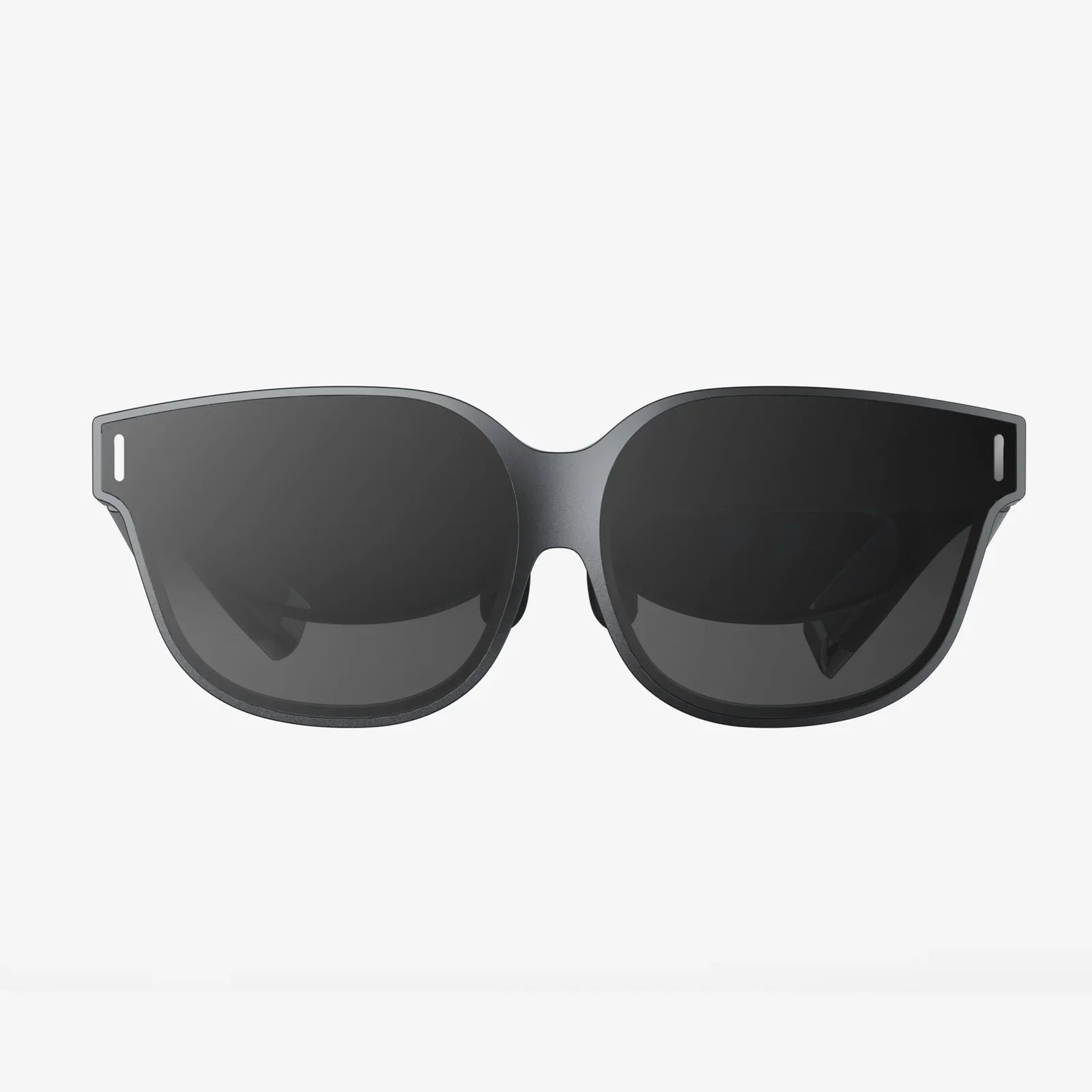
Imagine standing on the surface of Mars, watching a dust devil swirl across the rust-colored horizon, or shrinking down to the size of a cell to witness the intricate dance of proteins and DNA. These are no longer scenes from a distant sci-fi future; they are the tangible, breathtaking experiences made possible by the marriage of popular science and virtual reality. This powerful fusion is not just changing how we learn; it's fundamentally altering our relationship with knowledge itself, transforming abstract data into lived experience and turning every curious mind into an intrepid explorer.
From Textbooks to Total Immersion: The Evolution of Science Communication
For centuries, popular science has relied on a linear progression of media: books, articles, documentaries, and television shows. While effective, these mediums operate at a distance. We observe a supernova through a telescope's photograph; we read about quantum mechanics in a book filled with complex equations and thought experiments. Virtual reality shatters this pane of glass. It doesn't show you the science; it places you inside it. This shift from observation to immersion represents the most significant leap in science communication since the invention of the moving image. It leverages the brain's innate preference for spatial learning and experiential memory, making complex information not just understandable but unforgettable.
The Cognitive Power of Presence: Why VR Learning Sticks
The efficacy of VR in popular science isn't just a novelty; it's rooted in cognitive psychology. The concept of "presence"—the genuine feeling of being in a virtual environment—triggers the brain to process the experience as if it were real. This has profound implications for memory retention and comprehension. Instead of memorizing the phases of mitosis from a textbook diagram, a student can don a headset and be guided through a fantastical, accurately scaled-up version of a cell, manually pulling apart chromosomes during anaphase. This embodied learning, where knowledge is tied to physical action and spatial awareness, creates stronger neural pathways. The science becomes a memory of something you did, not something you read, dramatically enhancing long-term recall and deepening conceptual understanding.
Journeys to the Impossible: Exploring Scales and Environments Beyond Reach
Perhaps the most obvious application of popular science virtual reality is in granting access to the otherwise inaccessible. This spans vast scales of time, size, and distance.
Astronomical Adventures
VR allows users to stand on the moon and watch the Earth rise, to navigate the rings of Saturn, or to witness the collision of galaxies. These experiences provide a visceral sense of scale and cosmic dynamics that flat screens cannot convey. You don't just learn that the sun is large; you feel its overwhelming immensity as it dwarfs your virtual body.
Microscopic and Quantum Worlds
Conversely, VR can expand the infinitesimally small. Applications exist that take users on a journey through the human bloodstream, fighting off pathogens as a white blood cell, or into the weird, probabilistic world of quantum mechanics, where particles can be in multiple places at once. Visualizing these abstract concepts in three dimensions makes them significantly less abstract and more intuitive.
Prehistoric and Paleontological Expeditions
Travel back in time to walk among dinosaurs in a digitally reconstructed Cretaceous forest, based on the latest paleontological evidence. These experiences can show the creatures as active, living animals in their ecosystems, not just skeletons in a museum, bringing a new level of understanding to evolutionary biology.
Simulating the Complex: Interactive Models and Data Visualization
Beyond mere exploration, VR enables deep interaction with complex systems. Scientists are using VR to visualize massive datasets, from climate models to genetic sequences. In a popular science context, this means a member of the public can step inside a simulation of a hurricane to understand the mechanics of its formation, or manipulate a 3D model of a virus to see how its structure informs function. This interactive data visualization turns numbers and models into manipulable objects, fostering a much deeper, intuitive grasp of systemic relationships and cause-and-effect chains that are difficult to grasp from graphs and charts alone.
The Virtual Laboratory: Safe, Unlimited Experimentation
Virtual reality creates the ultimate sandbox for scientific experimentation. In a VR chemistry lab, users can combine elements with wild abandon to see the reactions, without fear of explosion or toxic fumes. Physics students can adjust gravity and friction to see their effects on motion in real-time. This safe, cost-effective environment removes the barriers of expensive equipment, rare materials, and potential danger, democratizing experimental science and encouraging a mindset of playful curiosity and discovery, which is at the very heart of the scientific method.
Empathy and the Human Body: A Journey Within
Popular science VR is also fostering a new kind of biological and medical literacy. Applications allow users to embark on a narrated tour of the human body, flying through the chambers of the heart or navigating the neural pathways of the brain. For patient education, this is revolutionary. Instead of a doctor describing a procedure, a patient can experience it from the perspective of a surgeon or even see the targeted organ and intended surgical outcome in immersive 3D. This builds understanding and reduces anxiety, bridging the gap between clinical terminology and personal experience.
Challenges and Considerations on the Road to Widespread Adoption
Despite its immense potential, the integration of VR into popular science faces hurdles. The cost of high-quality hardware, while decreasing, remains a barrier for some. Issues of motion sickness, known as simulator sickness, affect a portion of the population and must be mitigated through better design and technology. Furthermore, there is a risk of the "gimmick factor"—where the wow factor of immersion overshadows the actual scientific content. The best popular science VR experiences are those crafted with rigorous scientific accuracy and strong narrative storytelling at their core, ensuring the technology serves the science, not the other way around.
The Future is Immersive: What Lies Ahead for Science Communication
The trajectory points toward even deeper integration. The rise of standalone, more affordable headsets will continue to democratize access. Haptic feedback technology will evolve from simple controllers to full gloves and suits, allowing users to feel the texture of a rock on Mars or the resistance of a cell wall. Multi-user social VR platforms will enable collaborative learning, where classes of students can explore the cosmos or a DNA strand together, guided by an educator. As artificial intelligence advances, these experiences will become dynamic and responsive, allowing for real-time questioning and exploration within the simulation.
The ultimate promise of popular science virtual reality is the dissolution of the final barrier between the knower and the known. It is moving from being told about the universe to stepping into it for yourself. It’s a tool that empowers wonder, satisfies curiosity on a deeply personal level, and has the potential to cultivate a more scientifically literate and engaged global society. The next great discovery might not begin in a lab or a library, but in a virtual world that inspires a generation to look at reality with new, more questioning, and more passionate eyes.
Share:
A Taxonomy of Mixed Reality Visual Displays: Mapping the Spectrum from Real to Virtual
Which Virtual Reality is the Best? The Ultimate 2024 Headset Guide