


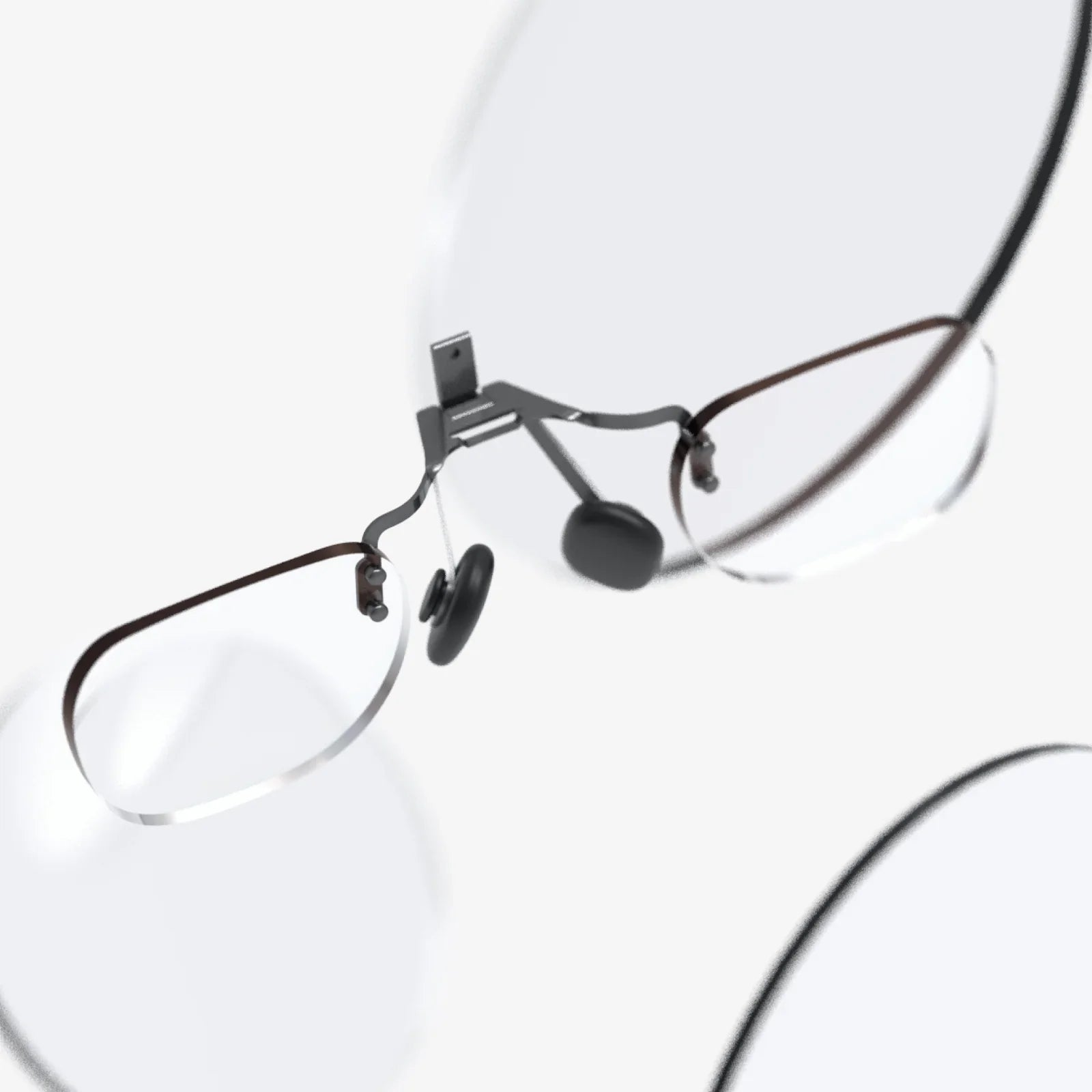
Imagine a world where the digital and the physical are no longer separate realms but a seamless, integrated experience, where information is not just on your screen but layered onto the very fabric of your reality. This is the promise, and increasingly the reality, of augmented reality—a technology not confined to science fiction but actively weaving itself into the tapestry of our daily lives, from how we work and learn to how we play and connect.
The Essence of Augmentation: Beyond the Hype
At its core, augmented reality (AR) is a technology that superimposes a computer-generated overlay—be it images, video, text, or 3D models—onto a user's view of the real world. Unlike Virtual Reality (VR), which creates a completely immersive, digital environment that replaces the real world, AR enhances reality by adding to it. It acts as a dynamic lens, providing context, information, and digital objects that interact with the physical space in real-time. The goal is to blend these elements so seamlessly that the digital augmentation is perceived as a natural part of the environment.
A Spectrum of Experience: From Simple to Complex
AR is not a monolithic technology but exists on a broad spectrum of complexity and immersion.
Marker-Based AR
This is one of the earliest and most straightforward forms of AR. It uses a visual object, known as a marker or target (often a QR code or a specific image), to trigger the display of digital content. The device's camera recognizes the marker, and the software uses it as an anchor point to position and orient the digital overlay. This method is highly reliable and is commonly used in advertising, packaging, and educational materials.
Markerless AR
This more advanced form does not require a predefined marker. Instead, it uses technologies like Simultaneous Localization and Mapping (SLAM) to understand the environment and place digital content contextually. It can anchor objects to surfaces like tables, floors, or walls. This is the technology behind popular furniture placement apps that let you see how a new sofa would look in your living room before you buy it.
Projection-Based AR
This method projects synthetic light onto physical surfaces, sometimes allowing for interaction. These projections can be as simple as a keyboard on a desk or complex, interactive museum exhibits. It creates a tangible interface without the need for a headset or handheld device.
Superimposition-Based AR
This form replaces the original view of an object with an augmented one, either partially or fully. A prime example is in medical fields, where a surgeon might use AR to see a CT scan overlaid onto a patient's body during a procedure, effectively providing "X-ray vision."
The Technological Engine Room: How AR Works
The magic of AR is powered by a sophisticated symphony of hardware and software components working in unison.
Sensors and Cameras
These are the eyes of an AR system. Cameras capture the live video feed of the user's environment. Depth sensors (like LiDAR) measure the distance to objects, creating a detailed 3D map of the space. Other sensors, including accelerometers and gyroscopes, track the device's orientation and movement in space, ensuring the digital content stays locked in place.
Processing Power
The raw data from the sensors is meaningless without immense computational power. A central processing unit (CPU), graphics processing unit (GPU), and often a dedicated vision processing unit (VPU) work together to analyze the video feed, recognize surfaces and objects, and render complex 3D graphics in real-time. This all must happen with minimal latency to maintain the illusion of a stable augmented world.
Software and Algorithms
This is the brain of the operation. SLAM algorithms are crucial, as they allow the device to simultaneously map an unknown environment and track its own location within it. Computer vision software enables object recognition, allowing the AR system to understand what it is looking at—be it a face, a product, or a specific machine part.
Display Technology
This is the final output, the window through which the user experiences augmentation. It can range from the familiar screens of smartphones and tablets to more immersive headsets and smart glasses. Emerging technologies like waveguides and holographic optics are creating sleek, wearable glasses that can project high-resolution images directly onto the user's retina.
Transforming Industries: The Practical Power of AR
The value of AR extends far beyond novelty filters and games. It is proving to be a powerful tool for solving real-world problems across numerous sectors.
Revolutionizing Manufacturing and Maintenance
In industrial settings, AR is a game-changer. Technicians wearing smart glasses can see digital work instructions overlaid directly onto the machinery they are repairing, highlighting the exact components to adjust and providing animated guidance. This reduces errors, slashes training time, and allows less experienced workers to perform complex tasks. Designers and engineers can use AR to visualize and interact with full-scale 3D prototypes long before physical models are built, facilitating collaboration and identifying design flaws early.
Enhancing Healthcare and Medicine
Medical professionals are leveraging AR for enhanced precision and improved outcomes. Surgeons use AR guidance systems for complex procedures, overlaying patient scans to visualize anatomy beneath the surface, leading to smaller incisions and faster recovery times. Medical students can practice procedures on detailed, interactive 3D models of the human body, and AR can even assist nurses in finding veins for injections.
Redefining Retail and E-Commerce
AR is bridging the gap between online shopping and the in-store experience. Customers can use their phones to see how a new piece of furniture will fit and look in their home, how a pair of glasses will suit their face, or how paint color will transform a room. This "try before you buy" capability reduces purchase anxiety and minimizes returns, creating a more confident and engaging shopping journey.
Empowering Education and Training
AR brings learning to life. Textbooks can become interactive portals, with diagrams animating into 3D models. History students can witness historical events unfold in their classroom, and biology students can dissect a virtual frog. This immersive, visual form of learning improves engagement and knowledge retention, making complex subjects more accessible and understandable.
The Human and Societal Dimension: Challenges and Considerations
As with any transformative technology, the rise of AR brings a host of ethical, social, and practical challenges that must be thoughtfully addressed.
Privacy in an Augmented World
AR devices, by their very nature, are equipped with always-on cameras and sensors that continuously scan their surroundings. This raises profound privacy concerns. Who has access to the video feed? How is the data being used and stored? The potential for unauthorized surveillance, data harvesting, and the creation of detailed behavioral profiles is significant, necessitating robust privacy frameworks and transparent user consent protocols.
The Digital Divide and Accessibility
The cost of advanced AR hardware could create a new digital divide, where access to augmented information and experiences becomes a privilege for those who can afford it. Furthermore, ensuring that AR applications are designed to be accessible to people with disabilities is crucial to prevent the technology from becoming exclusionary.
Psychological and Social Effects
Pervasive augmentation could alter our perception of reality and our relationship with the physical world. Will we become overly reliant on digital overlays for basic navigation and information retrieval? How will constant notifications and digital stimuli impact attention spans and mental well-being? The social etiquette of wearing AR glasses in public—recording interactions or being distracted by a digital feed—is yet to be established.
Safety and Security
An immersive AR experience can be distracting, posing obvious risks in situations requiring full attention, such as driving or walking near traffic. There is also the threat of malicious attacks, where hackers could inject false or dangerous information into a user's field of view, potentially leading to physical harm or manipulation.
The Future is Augmented: What Lies on the Horizon
The trajectory of AR points toward a future where the technology becomes increasingly invisible, powerful, and integrated. We are moving toward lightweight, socially acceptable smart glasses that offer all-day battery life and high-fidelity displays. The concept of the "spatial web" or "Web 3.0" envisions a world where digital information is spatially mapped onto the real world, creating a persistent, shared layer of intelligence over our cities and homes.
Advancements in AI will be the key catalyst. Smarter contextual understanding will allow AR systems to not just display information, but to anticipate needs and offer intelligent assistance. The convergence of AR with 5G and edge computing will enable complex processing to be done remotely, allowing for thinner, more powerful devices. Ultimately, the goal is to create technology that feels less like a tool and more like a natural extension of our own cognition.
The line between our digital and physical existences is not just blurring; it is being deliberately and thoughtfully redrawn. About augmented reality is no longer a question of what it is, but how we will choose to wield this extraordinary power to augment our human potential, enrich our understanding, and navigate the world in ways we are only beginning to imagine.
Share:
VR Glasses for Gaming: The Ultimate Portal to New Realities
Is Augmented Reality Artificial Intelligence? The Symbiotic Future of Perception and Cognition