


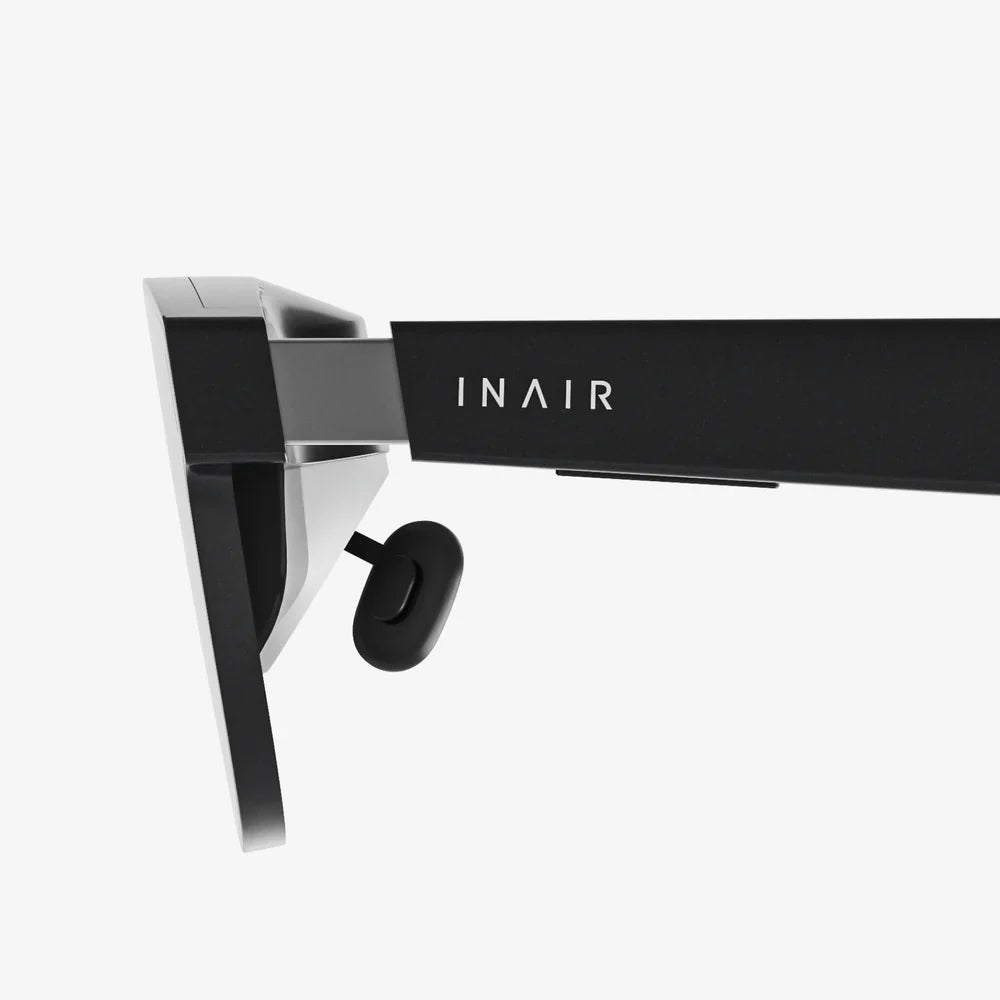
Imagine stepping through the screen, leaving your living room behind, and finding yourself standing on the surface of an alien planet, the grip of a plasma rifle solid in your hands. This is no longer the stuff of science fiction; it's the promise held within a pair of VR glasses for gaming, a technological marvel that is fundamentally reshaping our concept of play, storytelling, and human connection. The journey from a novel concept to a mainstream gaming peripheral has been nothing short of revolutionary, offering an allure of immersion so potent that it beckons every gamer to ask one simple question: what if you could truly step inside your favorite game?
The Core Technology: More Than Just a Screen on Your Face
At first glance, VR glasses might appear to be a sophisticated helmet with lenses, but the engineering beneath the surface is a symphony of advanced technology working in perfect harmony. Understanding these components is key to appreciating the magic they create.
Visual Fidelity: The Window to Another World
The display is the soul of the experience. Modern VR headsets utilize high-resolution OLED or LCD panels, often one for each eye, to create a stereoscopic 3D image. The quest for visual perfection is relentless, with manufacturers pushing for higher pixels-per-degree (PPD) to eliminate the "screen door effect"—that faint grid-like pattern that once reminded users they were looking at a screen. Combined with a high refresh rate, often 90Hz or 120Hz and beyond, these displays ensure smooth, fluid motion that is critical for maintaining immersion and preventing the disorientation of motion sickness. It’s a delicate balance of resolution, speed, and graphical processing power that creates a convincing visual谎言.
Precision Tracking: Knowing Where You Are
Immersion shatters the moment the virtual world doesn't align with your movements. This is where tracking technology comes in. There are two primary methods:
- Inside-Out Tracking: Cameras mounted on the headset itself observe the physical environment, tracking the position of the controllers and mapping the room without the need for external sensors. This offers fantastic ease of setup and portability, perfect for users who want a less cluttered space.
- Outside-In Tracking: External sensors or base stations placed around the room precisely monitor the position of the headset and controllers. This method is often hailed for its millimeter accuracy and superior performance for competitive gaming and experiences requiring rapid, precise movements, though it sacrifices some simplicity.
This constant, sub-millisecond calculation of your head's position and orientation—a process called 6 Degrees of Freedom (6DoF)—is what allows you to lean around a corner, duck under a low-hanging pipe, or peer over a virtual cliff edge with natural, one-to-one movement.
Audio and Haptics: Completing the Sensory illusion
Visuals are only part of the story. Spatial 3D audio is a game-changer. Unlike traditional stereo sound, this technology mimics how sound waves interact with the human head and ears, allowing you to hear exactly where a foe is creeping up behind you or from which direction a spaceship is roaring overhead. This auditory cue is incredibly powerful for situational awareness and deepening the sense of presence.
Similarly, haptic feedback has evolved far beyond a simple rumble. Advanced controllers can simulate the tension of drawing a bowstring, the recoil of a virtual weapon, or the subtle texture of a virtual object. This tactile communication bridges the final gap between the digital and the physical, making interactions feel tangible and real.
A New Dimension of Gameplay: How VR Transforms Interactivity
VR gaming isn't just about playing a game; it's about inhabiting it. This fundamental shift has given rise to entirely new genres and reinvented old ones.
Physicality and Presence
In a traditional game, you press a button to open a door. In VR, you reach out, grab the handle, turn it, and pull. This physical act of interaction is transformative. Archery games require you to actually nock an arrow, draw the bow, and aim. Puzzle games demand that you physically manipulate objects in 3D space. This layer of physicality makes you an active participant in the world, not just a spectator controlling an avatar. The resulting feeling of "presence"—the undeniable sensation of being in another place—is VR's greatest gift to gaming.
Genre Revolution and Innovation
While first-person shooters and horror games are obvious beneficiaries, finding terrifying new power in having monsters loom directly over you, VR has sparked creativity across the board:
- Rhythm Games: Titles have players slicing blocks and dodging barriers in time with music, turning gameplay into a full-body workout.
- Social Hubs: Platforms have emerged as virtual meeting places where players can socialize, watch movies, and play games using expressive avatars that track their movements and gestures, fostering a profound sense of shared space and connection.
- Simulations: From piloting giant mechs to performing delicate surgery, VR simulations offer unparalleled training and experiential depth, benefiting from the intuitive nature of physical controls.
- Narrative Adventures: Story-driven games place you directly in the shoes of the protagonist, making emotional stakes feel higher and narratives more personal and impactful.
Beyond the Hardware: The Ecosystem of Virtual Reality
The headset is the gateway, but the entire ecosystem surrounding it is what makes the platform thrive.
The Software Library: A Growing Universe of Experiences
The success of any gaming platform lives and dies by its games. The VR software library has exploded from a handful of tech demos to a rich and diverse catalog. From massive, AAA productions with production values rivaling flat-screen blockbusters to innovative, quirky indie titles that experiment with the medium's possibilities, there is content for every taste. Digital storefronts are constantly updated with new experiences, and many traditional games are being retrofitted with VR support, allowing players to revisit beloved worlds in an entirely new way.
Social and Competitive Play
Gaming has always been a social activity, and VR amplifies this. Multiplayer arenas allow friends to team up as if they were in the same room, strategizing and celebrating together. Esports scenes are beginning to emerge around certain VR titles, showcasing a level of physical skill and agility never before seen in competitive gaming. Spectator modes are also evolving, allowing those not in VR to watch the action from within the game world, creating new forms of shared entertainment.
Challenges and Considerations on the Virtual Frontier
For all its wonders, the path of VR gaming is not without its obstacles. Acknowledging these is crucial for understanding the current state and future trajectory of the technology.
The Comfort Conundrum
Motion sickness, often called "VR fatigue," remains a barrier for some users. It occurs when there's a disconnect between what the eyes see (movement) and what the inner ear feels (stationary). While higher refresh rates, better tracking, and smarter game design have mitigated this significantly, it's still a consideration. Furthermore, the form factor of the headsets themselves—their weight, heat generation, and fit—is an area of intense focus for engineers striving to make devices you can wear comfortably for hours on end.
The Space and Setup Equation
Unlike console gaming, VR often requires a dedicated play area free of obstacles. While some experiences are designed for seated or stationary play, the most immersive ones encourage room-scale movement. This necessitates physical space, which can be a luxury. The setup process, though vastly simplified, can still be more involved than plugging in a traditional console, representing a small but notable barrier to entry for the most casual users.
Cost of Entry and Computational Power
High-end VR requires significant computational power, typically from a powerful gaming computer. When combined with the cost of the headset itself, the total investment can be substantial. While more accessible, standalone options exist, they often represent a trade-off between convenience and maximum graphical fidelity. As technology progresses, this gap is narrowing, making high-quality VR more attainable for a broader audience.
The Future is Now: Where Do We Go From Here?
The evolution of VR glasses for gaming is moving at a breathtaking pace. The horizon is filled with technologies that promise to dissolve the remaining barriers between reality and simulation.
We are moving towards headsets that are lighter, wireless, and have resolutions indistinguishable from real life. Eye-tracking technology will allow for foveated rendering, where only the part of the scene you're directly looking at is rendered in full detail, drastically reducing the computational load. Haptic technology will expand beyond controllers to full-body suits and gloves, allowing you to feel virtual rain or the impact of a punch. The integration of artificial intelligence will lead to more responsive and believable virtual characters and environments.
Ultimately, the goal is a seamless, intuitive, and profoundly human experience. The headset will fade into the background, and the virtual world will become the primary reality, if only for the duration of your play session.
The question is no longer if you will try VR gaming, but when you will choose to answer its call. The controllers are waiting, the headset is charged, and entire worlds are poised to welcome you in—all you have to do is take that first step and see the game for what it has truly become: your reality.
Share:
Different Types of Augmented Reality: A Deep Dive into the Digital Overlay Reshaping Our World
About Augmented Reality: The Digital Layer Reshaping Our World