


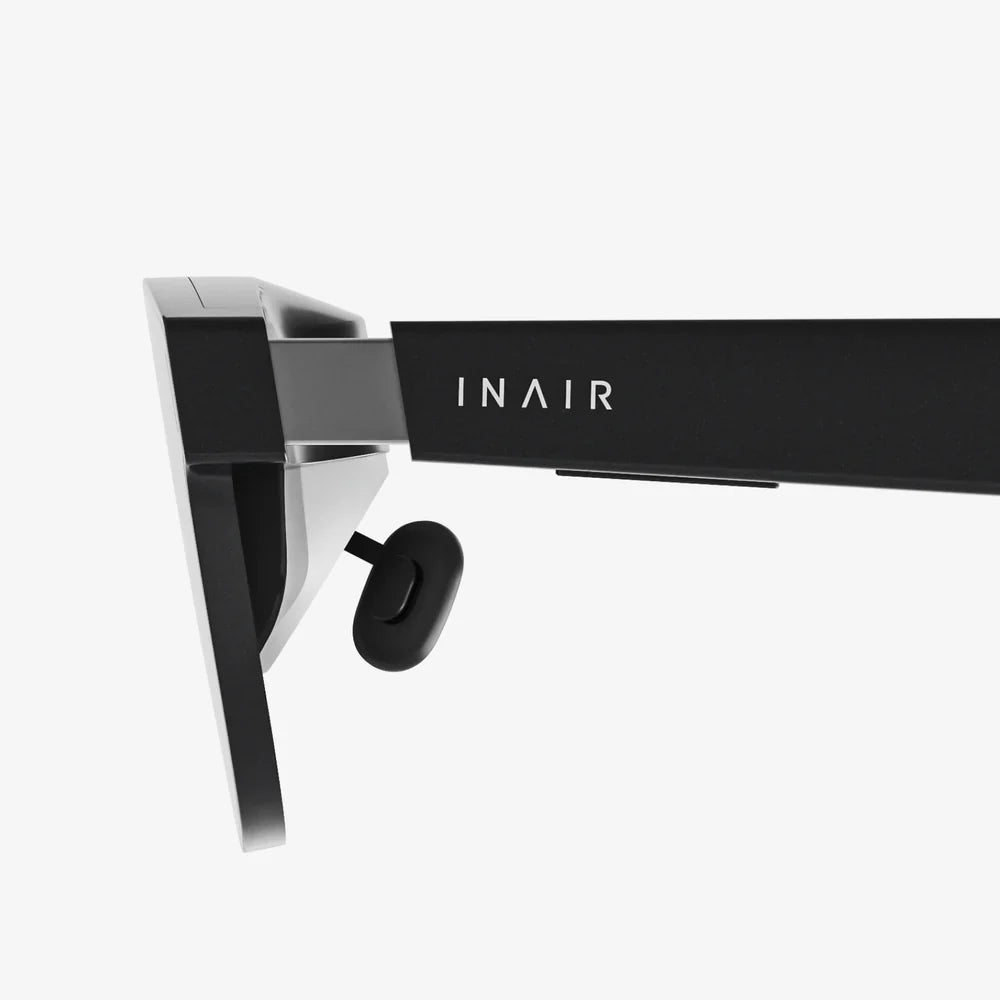
Imagine a world where the line between the digital and the physical not only blurs but disappears entirely. Where the answers to your questions appear as you think them, where translation is instantaneous, and where your surroundings are overlaid with a rich tapestry of contextual information. This is the tantalizing promise of adding AI to its glasses, a technological leap that is moving from the realm of science fiction into tangible reality. This convergence of advanced optics, miniature sensors, and powerful, on-device artificial intelligence is set to redefine our very perception of reality, creating a seamless, intelligent, and always-available digital assistant that sees what we see and understands what we need.
The Architectural Shift: From Handheld to Head-Worn
The fundamental proposition of AI-enhanced eyewear is a paradigm shift in human-computer interaction. For decades, the model has been one of active engagement: we pull a device from our pocket, unlock it, open an app, and consciously input a query. AI glasses promise a shift to passive and ambient assistance. The technology fades into the background, waiting to be summoned by a glance, a voice command, or even a predetermined contextual trigger, providing information precisely when and where it is needed without interrupting the flow of real-life experience.
This requires a sophisticated hardware architecture built around several core components:
- Advanced Micro-Displays: Tiny projectors, often using technologies like LCoS (Liquid Crystal on Silicon) or cutting-edge microLEDs, beam images directly onto specially coated lenses, which then reflect the light into the user's retina. This creates the illusion of vibrant, high-resolution screens floating in the user's field of view, either as a central focus or a subtle peripheral notification.
- A Multimodal Sensor Suite: This is the "eyes and ears" of the device. High-resolution cameras capture the visual world, while an array of microphones listens for voice commands and ambient sounds. Inertial Measurement Units (IMUs) and accelerometers track head movement and orientation, while depth sensors and LiDAR can map the environment in three dimensions, understanding the geometry of the space around the user.
- On-Device AI Processing: This is the revolutionary element. Rather than streaming all sensor data to the cloud for processing—which introduces latency, drains battery, and raises privacy concerns—a dedicated AI processor, or Neural Processing Unit (NPU), housed within the glasses' frame handles complex tasks in real-time. This allows for instant visual recognition, live translation, and audio processing without a constant internet connection.
- Bone Conduction Audio: To provide a private audio experience without blocking ambient noise, many designs employ bone conduction technology, which transmits sound waves through the bones of the skull directly to the inner ear. This keeps the user aware of their surroundings while receiving clear, private audio feedback from their AI assistant.
The Intelligence Within: Core AI Capabilities Redefining Functionality
It is the AI that transforms this collection of hardware from a simple display into a truly intelligent companion. The software capabilities are what will ultimately define the user experience and utility of these devices.
Real-Time Visual Recognition and Contextual Overlay
The most immediate application is the AI's ability to see and interpret the world. Using computer vision models running on the NPU, the glasses can identify objects, text, and landmarks. A user can glance at a menu in a foreign country and see an instant translation overlaid on the text. They can look at a complex piece of machinery and see animated repair instructions superimposed on the components. This contextual overlay turns the entire world into an interactive, informative canvas.
Advanced Audio Processing and Conversational AI
Beyond vision, the AI acts as an unparalleled auditory assistant. Beamforming microphones can isolate a single speaker's voice in a noisy room, allowing for crystal-clear recording or translation of conversations. The onboard AI can summarize meetings as they happen or provide real-time subtitles for someone who is speaking, a boon for those with hearing impairments. The conversational agent becomes more powerful and personal, capable of understanding nuanced requests based on what the user is currently looking at or doing.
Personalized and Predictive Assistance
Over time, the AI learns the user's habits, preferences, and routines. It can become a predictive guide. Walking through an airport, it might proactively highlight the way to your gate and notify you if the boarding time changes. In a grocery store, it could flag items on your shopping list and even suggest recipes based on what's on sale. This moves the interaction from reactive commands to proactive, anticipatory support, creating a truly personalized digital agent that is intimately aware of your context.
Navigating the Labyrinth: Challenges and Societal Implications
Despite the exciting potential, the path to widespread adoption of AI-powered glasses is fraught with significant technical, social, and ethical challenges that must be thoughtfully addressed.
The Privacy Paradox
This is the single greatest hurdle. A device that continuously captures audio and video from the wearer's perspective is a potent surveillance tool. The concept of consent becomes murky. How do we protect the privacy of individuals who are inadvertently recorded by someone else's glasses? Robust, transparent, and user-centric privacy frameworks are non-negotiable. Features like a clear recording indicator light, strict on-device data processing, and easy-to-use privacy controls that allow users to disable sensors will be critical for building public trust. The industry must prioritize privacy by design, ensuring that data is not stored or transmitted unnecessarily.
The Social Acceptance Hurdle
The specter of the "glasshole"—a term coined to describe users of early wearable cameras who were perceived as intrusive and socially awkward—still looms large. Wearing a camera on your face can be inherently alienating and threatening to others in social situations. Manufacturers must focus on design, making glasses that are stylish, lightweight, and indistinguishable from conventional eyewear. Furthermore, establishing clear social norms and etiquettes—for instance, when it is and isn't appropriate to use recording features—will be essential for mainstream acceptance.
Battery Life and Computational Constraints
Running powerful AI models and multiple sensors on a device the size of a pair of glasses is incredibly demanding. Early iterations will inevitably grapple with battery life limitations, potentially requiring frequent charging or external battery packs. The race is on to develop more efficient NPUs, low-power sensors, and advanced battery technologies that can deliver all-day performance without adding significant weight or bulk to the frames.
A Glimpse Into the Future: Transformative Applications Across Industries
While consumer applications are captivating, the true near-term impact of AI glasses may be most profoundly felt in enterprise and specialized fields, where the value proposition is clear and the ROI is easily calculated.
- Healthcare: Surgeons could access patient vitals and surgical plans hands-free during operations. Medical students could observe procedures with anatomical labels and guidance overlaid on their view. EMTs could receive remote expert guidance while treating a patient in the field.
- Manufacturing and Field Service: A technician repairing a wind turbine could have schematics and step-by-step instructions projected onto the machinery, drastically reducing errors and training time. Warehouse workers could see optimal picking routes and inventory information, streamlining logistics.
- Education and Training: Imagine learning a complex skill like engine repair or playing a musical instrument with interactive holographic guides showing you exactly what to do. Language learning could be revolutionized through real-time translation and contextual vocabulary prompts.
- Accessibility: For individuals with visual impairments, AI glasses could audibly describe scenes, read text, identify currency, and recognize faces. For those who are deaf or hard of hearing, real-time speech-to-text transcription could be displayed directly in their vision, making conversations fluid and effortless.
The journey of adding AI to its glasses is more than a simple product evolution; it is a fundamental reimagining of our relationship with technology. It represents a move away from the isolating screens that demand our full attention and towards a more integrated, ambient intelligence that enhances our perception of the world without separating us from it. The technical hurdles are immense, and the societal questions are profound, but the potential to augment human capability, break down communication barriers, and provide unprecedented levels of contextual information is too powerful to ignore. We are standing on the brink of a new sensory layer for humanity, one where our eyewear becomes a window not just to the world as it is, but to the world as it can be—informed, translated, and illuminated by artificial intelligence.
We are on the cusp of a revolution that will unfold not on our desks or in our palms, but directly before our eyes. The next time you put on a pair of glasses, you might not just be correcting your vision—you might be enhancing your entire reality, accessing a stream of intelligent information that transforms every glance into an opportunity and every interaction into a seamlessly assisted experience. The future is looking clear, connected, and incredibly intelligent.
Share:
Eyeglasses with AI Technology: The Invisible Revolution Reshaping Our Vision and Our World
AI Glasses Market Size: A Deep Dive into the Numbers and Future Projections