


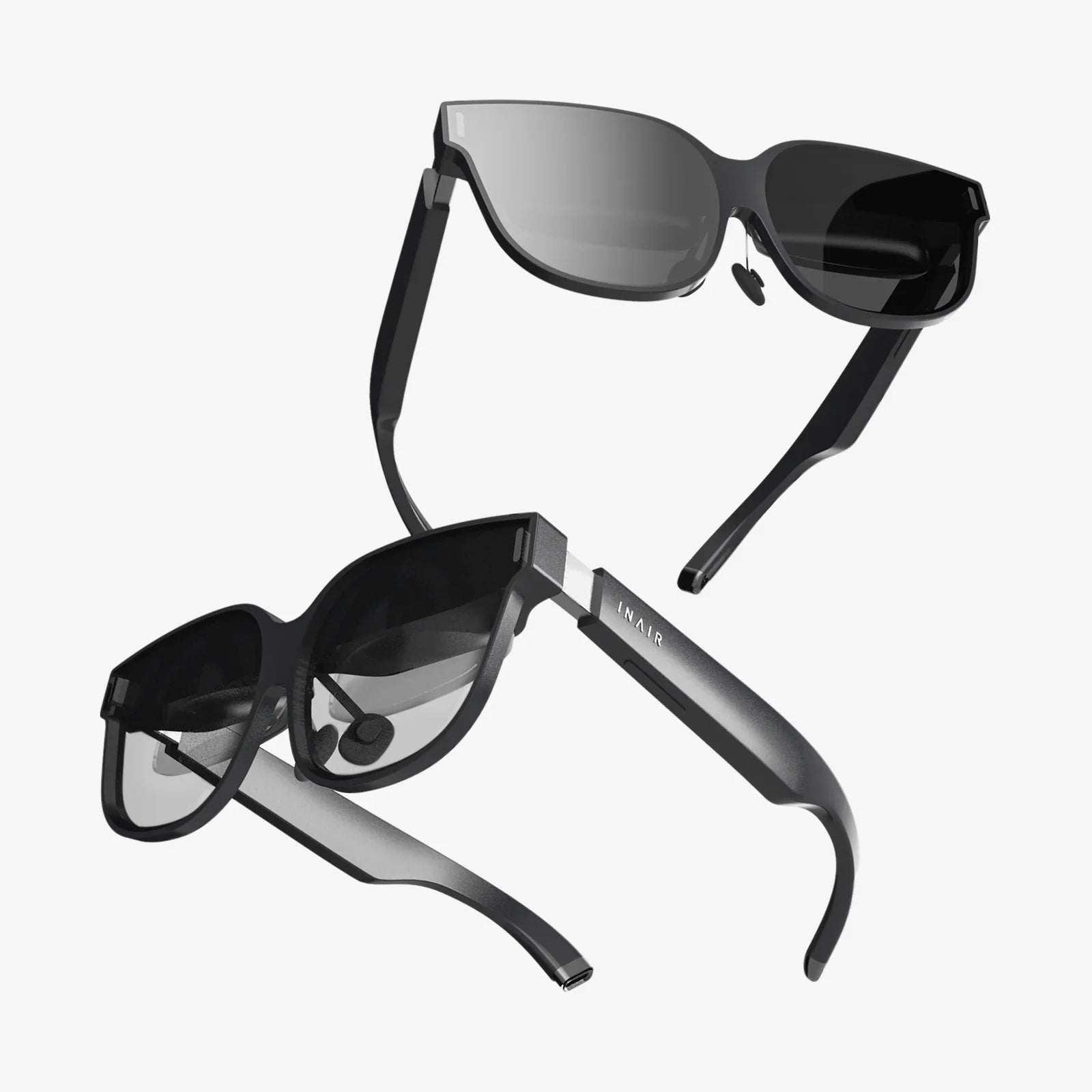
Imagine a world where your most personal accessory—the eyeglasses perched on your nose—transforms from a simple vision correction tool into a powerful, intelligent portal that augments your reality, safeguards your health, and connects you to the digital universe in a seamless, intuitive whisper. This is not a scene from a science fiction film; it is the rapidly dawning reality of eyeglasses with AI technology, a convergence of optics, data, and intelligence poised to revolutionize how we see, interact with, and understand the world around us.
The Convergence of Sight and Insight
The journey of eyeglasses is a long one, stretching back centuries as a fundamental aid for human vision. For generations, their primary function was singular: to focus light correctly onto the retina, correcting refractive errors like myopia and hyperopia. Then came transitions, blue light filtering, and progressive lenses—incremental innovations that enhanced the experience but did not fundamentally alter the glasses' core identity. The integration of artificial intelligence, however, marks a paradigm shift. We are moving from corrected sight to augmented insight.
This transformation is powered by a miniature ecosystem embedded within the familiar frame. Tiny, high-resolution cameras act as digital eyes, capturing the visual world in real-time. Sophisticated microphones listen for audio cues and commands. A compact, powerful onboard processor serves as the brain, crunching data at astonishing speeds. Bone conduction speakers or miniature grilles provide private audio feedback, and a transparent display—often using waveguides or holographic technology—projects digital information directly onto the lenses, overlaying it seamlessly onto the user's field of view. All of this is orchestrated by sophisticated AI algorithms, the true genius of the system, which interpret sensor data, understand context, and deliver relevant information precisely when and where it is needed.
Beyond Augmented Reality: A Multifaceted Tool for Daily Life
The applications for AI-powered eyewear are as diverse as human experience itself, extending far beyond the initial novelty of floating navigation arrows or virtual screens.
The Ultimate Navigation and Contextual Companion
Forget fumbling with a phone for directions. AI glasses can overlay turn-by-turn instructions onto the very streets you're walking, highlighting the correct door to enter or the specific historical landmark you're viewing. They can translate street signs, menus, and documents in real-time, breaking down language barriers instantly. Imagine walking through a foreign market and seeing the names of exotic fruits and their prices displayed in your native language. Furthermore, they can recognize products on shelves, providing instant reviews, price comparisons, and even nutritional information or allergen warnings, making every consumer an informed one.
Revolutionizing Accessibility and Inclusion
Perhaps one of the most profound impacts of this technology is its potential to create a more accessible world. For individuals with visual impairments, AI glasses can act as a powerful visual interpreter. They can identify and announce friends approaching, read text aloud from books, screens, or documents, describe scenes, and even detect obstacles and changes in elevation on a sidewalk, offering auditory or haptic warnings. For those who are hard of hearing, real-time speech-to-text transcription can be displayed on the lenses, turning conversations into captioned interactions, ensuring no word is missed in meetings or social gatherings.
A Proactive Guardian of Health and Wellness
By analyzing subtle changes in a user's gait, posture, or even pupillary response, AI algorithms can detect signs of fatigue, stress, or medical episodes like vertigo. They can remind a user to take breaks during long drives or computer work, suggest hydration, and even monitor exposure to harmful UV light. While not a replacement for medical devices, they serve as a constant, passive health monitor, offering insights and alerts that could prevent accidents and promote well-being. Early prototypes are exploring the ability to track vital signs through specialized sensors, pointing toward a future where continuous health monitoring is as simple as wearing your glasses.
Redefining Professional and Creative Workflows
In fields from engineering and medicine to logistics and repair, AI glasses are becoming indispensable tools. A mechanic can see a wiring diagram overlaid on the engine they are fixing, with the AI highlighting the specific component to check next. A surgeon could have vital patient statistics and imaging data visible without looking away from the operating field. An architect could walk through a construction site and see the digital building plans superimposed onto the physical structure, identifying discrepancies in real-time. For remote collaboration, an expert can see through a technician's glasses, annotate their field of view with arrows and notes, and guide them through complex procedures from thousands of miles away.
The Invisible Elephant in the Room: Privacy and Ethical Considerations
The capabilities of AI eyewear are undeniably powerful, but they introduce a host of complex ethical and privacy dilemmas that society must urgently address. A device that is always watching and listening, even with the user's intent, inherently collects a staggering amount of personal and environmental data.
The potential for constant surveillance is a primary concern. Unlike a smartphone camera which is pointed intentionally, glasses-mounted cameras could record people in public and private spaces passively and often without their knowledge or consent. This raises critical questions about the right to privacy in public and the concept of incidental data collection. Who owns the data recorded in a conversation between two people if one is wearing AI glasses? How is that data stored, processed, and potentially used by the companies that manufacture the devices?
Furthermore, the always-on nature of these devices challenges social norms. The "creep factor"—the unease people feel when they are unsure if they are being recorded—could stifle natural interaction. Clear social etiquette and likely technological solutions, like prominent recording indicators, will be essential for mainstream acceptance.
Addressing these concerns requires a multi-faceted approach: robust, transparent data encryption practices that ensure data is processed on-device whenever possible; clear and stringent regulations that govern data collection, usage, and retention; and a cultural shift that establishes new norms and permissions around recording in shared spaces. The development of this technology must be paralleled by an equally innovative and rigorous development of its ethical framework.
The Future Lens: Where Do We Go From Here?
The current generation of AI glasses is merely the first glimpse into this new paradigm. The trajectory points toward even more seamless and powerful integration. Future iterations will likely see improvements in battery technology, perhaps leveraging kinetic energy or advanced solar cells for longer uptime. Display technology will become brighter, higher resolution, and more energy-efficient, making augmented overlays indistinguishable from reality. The AI itself will evolve from a reactive tool to a proactive, predictive partner, anticipating needs based on context, calendar, and behavior.
We are moving toward a world where the boundary between the digital and the physical will dissolve. The smartphone, a device we constantly look down to, may eventually be supplanted by a technology that allows us to look up and engage directly with our environment, enhanced by a layer of useful, contextual digital information. The goal is not to distract us from the real world, but to enrich our interaction with it.
The ultimate success of eyeglasses with AI technology will not be measured by their computational power alone, but by their humanity. They must be designed to enhance human connection, not replace it; to empower the individual, not surveil them; to provide clarity, not clutter. The challenge for engineers, designers, and ethicists is to ensure this technology remains a tool for human betterment, a lens through which we can see not just a brighter digital future, but a more informed, accessible, and connected human present.
The next time you put on your glasses, consider this: the familiar frames are on the cusp of becoming the most intimate and powerful computer you will ever own, a silent guardian, a knowledgeable guide, and a window to a world of possibility you have only just begun to imagine.
Share:
Best Platform for Augmented Reality: A Deep Dive into the Ultimate Development Ecosystem
Adding AI to Its Glasses: The Next Frontier in Personal Technology