


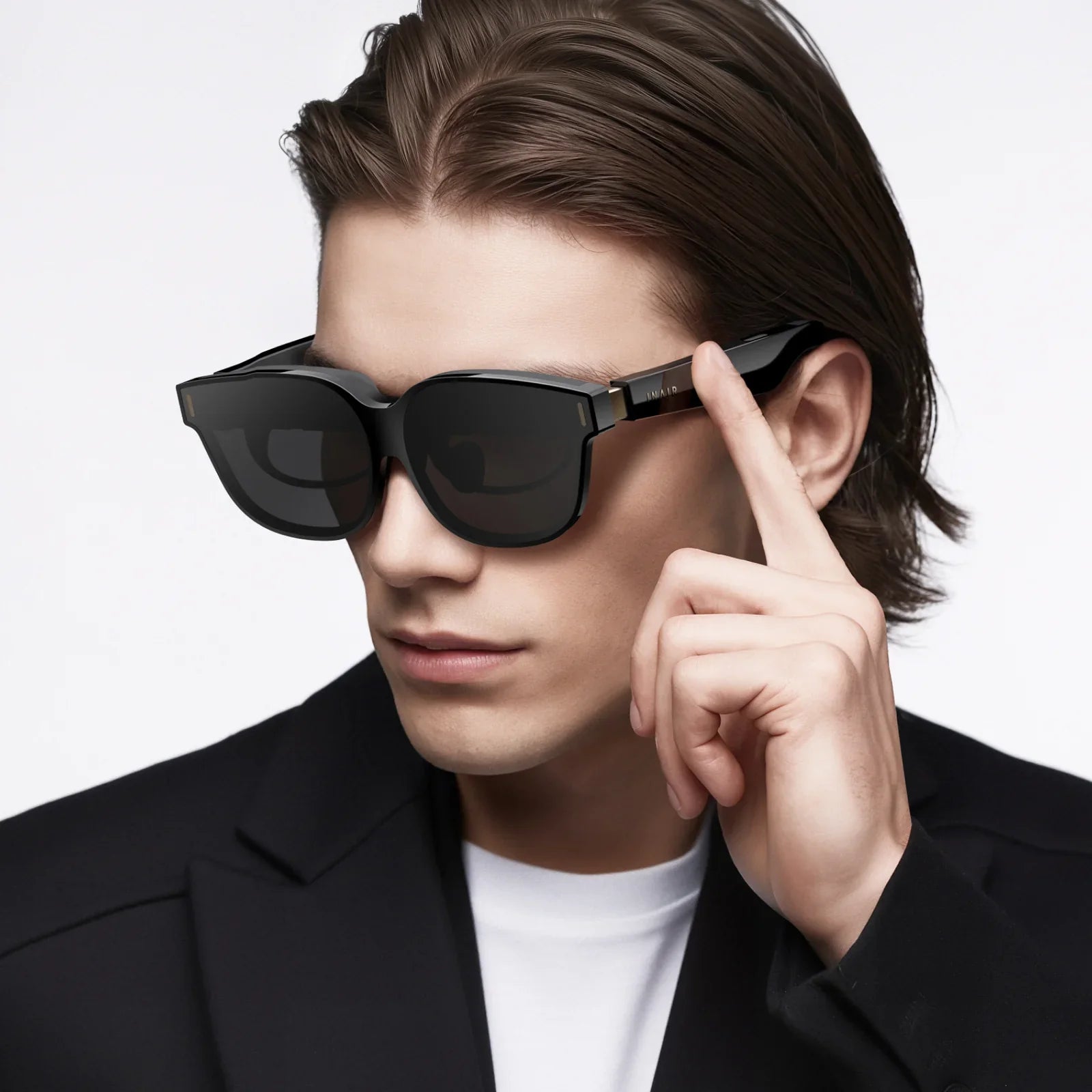
- by wangfred
Adjustable Focus Eyeglasses Technology: The Future of Personalized Vision Correction
- by wangfred
Imagine a world where a single pair of eyeglasses could effortlessly adapt to every visual demand of your day—from reading a book up close to working on a computer at an intermediate distance, and finally, gazing at a distant horizon. This is no longer the realm of science fiction but the tangible reality offered by the revolutionary breakthrough of adjustable focus eyeglasses technology. This innovation promises to shatter the long-held conventions of static vision correction, offering a dynamic, user-centric approach to seeing the world with perfect clarity, on your own terms.
For centuries, the fundamental principle behind eyeglasses has remained largely unchanged: a static, ground lens designed to correct a specific refractive error. While effective for a single focal point, this approach has inherent limitations. The human eye is a dynamic organ, constantly shifting focus between near, intermediate, and far objects—a process known as accommodation. As we age, the natural lens of the eye loses flexibility, leading to presbyopia, a condition that necessitates different lens powers for different tasks.
This has traditionally meant the inconvenience of multiple pairs of glasses (reading, computer, distance) or the compromised solution of progressive or bifocal lenses. Progressives, while a step forward, require users to learn to tilt and move their head to find the correct "sweet spot" in the lens, often resulting in peripheral distortion and an unnatural viewing experience. The quest for a more intuitive, seamless, and flexible solution has driven optical research for decades, culminating in the development of truly adjustable focus technology.
At its core, adjustable focus eyeglasses technology is a marvel of optical physics and micro-engineering. It replaces the static, single-prescription lens with a dynamic system that allows the user to change the optical power of the lens itself. The most prevalent and successful method for achieving this relies on the principles of fluid optics.
This ingenious design features a lens constructed from two flexible membranes that encapsulate a clear, optical-grade fluid. The curvature of these membranes is not fixed. By integrating a tiny, precise mechanism—often a dial or slider integrated discreetly into the temple arms of the frames—the user can apply pressure to the fluid-filled chamber.
Turning the dial forces the fluid to shift, which in turn alters the curvature of the flexible lens membranes. Increasing the curvature increases the lens power for near vision, while decreasing the curvature flattens the lens for distance vision. This creates a continuous, seamless range of correction between its minimum and maximum powers, effectively allowing the wearer to "tune" their vision to any distance instantly and with remarkable precision.
Beyond the mechanical actuation, sophisticated software and calibration are required. Each unit is meticulously calibrated during assembly to ensure that the range of adjustment is both smooth and accurate. Advanced optical engineering ensures that the fluid and membrane system provides exceptional clarity, minimizing aberrations across the entire range of focus. The result is a lens that is not only adjustable but also rivals the optical quality of high-end traditional progressive lenses, without the associated peripheral distortions.
The advantages of this technology extend far beyond mere convenience, offering profound benefits for users' quality of life, visual health, and economic efficiency.
This is the most significant benefit. Users are no longer constrained by a prescription that is optimal for only one distance. They can dial in the exact correction needed for any task or environment. Whether it's reading fine print, working on a laptop, watching television, or driving, a single pair of glasses can accommodate it all. This provides a level of personalized vision correction that was previously unimaginable.
Perhaps the most transformative potential of this technology lies in its application within developing nations and underserved communities. Access to eye care professionals and affordable prescription glasses is a critical global health issue. Adjustable focus glasses can be pre-set with a wide correction range and distributed to individuals who can then self-adjust them to achieve clear vision. This has the potential to provide vision correction to hundreds of millions of people who currently lack access, effectively democratizing clear eyesight.
While the initial investment may be higher than a standard pair of glasses, the long-term value is substantial. Instead of purchasing multiple pairs of single-vision glasses or needing new progressive lenses every time a prescription changes slightly, a single pair of adjustable glasses can last for years. As an individual's vision naturally changes with age, they can simply readjust the glasses to compensate, potentially extending the useful life of the eyewear significantly and reducing waste.
By eliminating the need to constantly switch between different glasses or navigate the narrow corridors of progressive lenses, users experience reduced eye strain and headaches. The ability to achieve perfect focus for any given task reduces the muscular effort required by the eyes, leading to greater comfort, especially during long periods of near work or screen time.
Like any pioneering technology, adjustable focus glasses are not without their challenges. Early iterations faced critiques regarding the weight and thickness of the fluid-filled lenses compared to ultra-thin high-index materials. However, ongoing advancements in materials science have led to lighter, more flexible membranes and frames, making modern designs increasingly comparable to traditional eyewear in terms of aesthetics and comfort.
Another focus of development is the expansion of the available correction range. Researchers are continuously working to widen the diopter span these lenses can cover, aiming to serve a broader spectrum of visual impairments, including higher levels of myopia, hyperopia, and astigmatism. Future iterations may incorporate elements of smart technology, such as auto-focusing capabilities using micro-sensors and AI to automatically adjust to the optimal focus without any user intervention, effectively creating a truly autonomous vision correction system.
The societal and economic implications of widespread adoption are profound. From reducing the global burden of uncorrected vision to changing how we think about eyewear as a static tool versus a dynamic interface, the impact is far-reaching. This technology represents a fundamental shift from a reactive model of vision care—where you get a prescription after your vision has degraded—to a more proactive and adaptive one, where your vision correction can evolve with your needs in real-time.
The promise of seeing the world with perfect clarity, tailored precisely to the moment, is no longer a futuristic dream. Adjustable focus eyeglasses technology is actively dismantling the old paradigms of vision correction, offering a glimpse into a future where our tools adapt to us, not the other way around. This isn't just an upgrade to your glasses; it's a liberation of your vision, empowering you to experience every detail of your life in sharp, customizable focus. The ability to master your sight is now literally at your fingertips.
Share:
AI 3D Glasses The Next Evolutionary Leap in How We Perceive Reality
What Are the Two Forms of Augmented Reality? A Deep Dive into Marker-Based and Markerless AR