


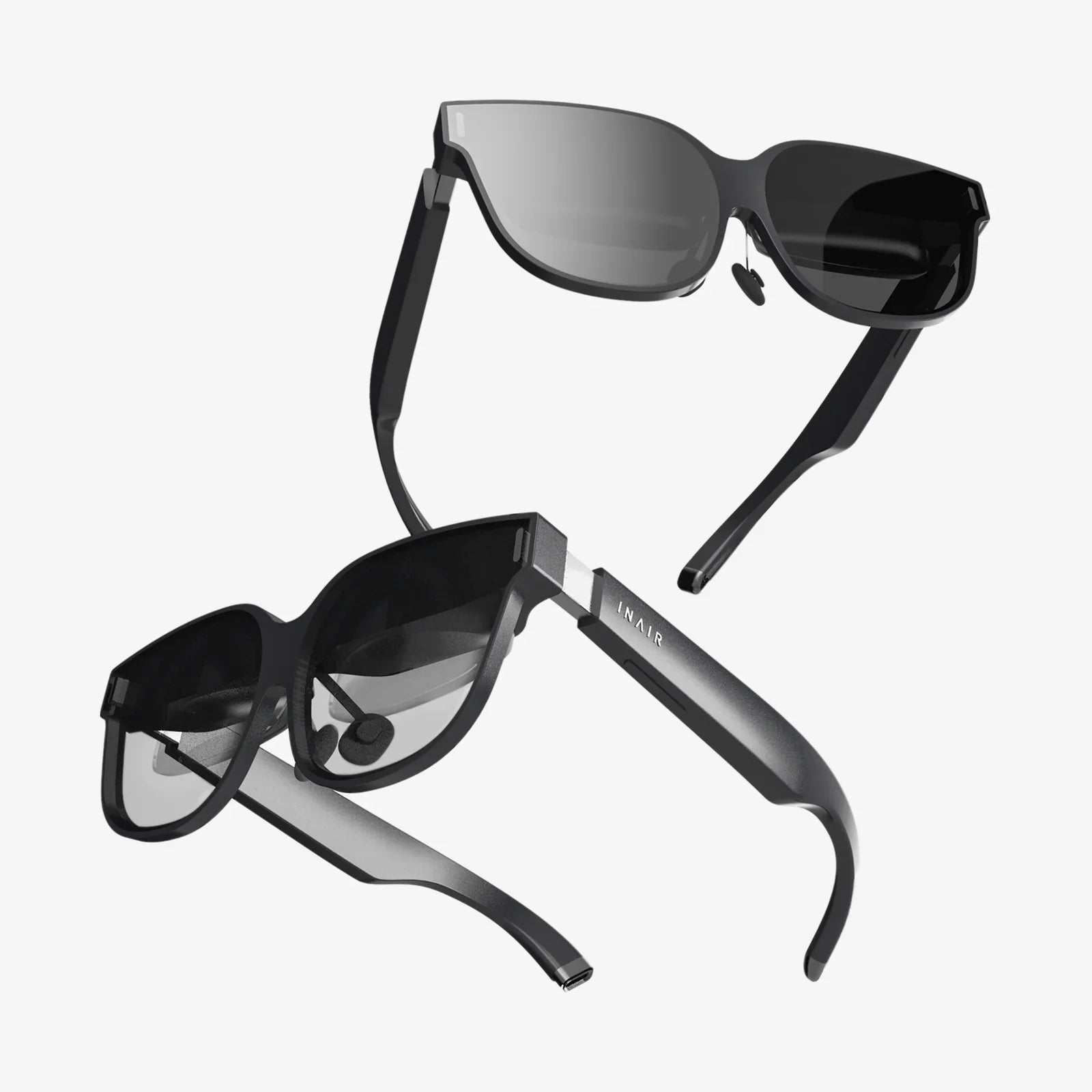
Imagine a world where a single pair of spectacles could effortlessly shift focus from the pages of a book to a bird soaring in the distant sky, all with a simple, intuitive adjustment. This is not a glimpse into a distant, sci-fi future but the remarkable reality offered by adjustable focus spectacles, a technological leap that is fundamentally reshaping our relationship with vision correction and challenging the very foundations of traditional optics.
The Genesis of a Visionary Idea
The quest for dynamic vision correction is not a new one. For centuries, the primary solution for presbyopia—the age-related loss of near focus—has been the bifocal, a design famously invented by Benjamin Franklin. Later, progressive addition lenses offered a more seamless transition between distance and near vision zones. However, these solutions are inherently static. They provide a fixed set of optical powers, forcing the wearer's eyes to move to the correct part of the lens. The revolutionary concept behind adjustable focus spectacles flips this paradigm entirely. Instead of the user adapting to the lens, the lens adapts to the user's immediate need. The core principle often involves a sophisticated fluid-filled lens system. By manually adjusting a dial or slider on the frame, the wearer changes the curvature of a flexible membrane, thereby altering the optical power in real-time. This ingenious mechanism allows for a continuous and customizable range of focus, from distance to intermediate to near, all within a single, seamless lens.
Democratizing Vision Correction on a Global Scale
Perhaps the most profound impact of this technology lies in its potential for global health. In many developing regions of the world, access to professional eye care is severely limited. There may be only one optometrist or ophthalmologist serving a population of hundreds of thousands. Traditional prescriptions require a skilled professional, precise equipment for measurement, and a supply chain for countless lens powers, making widespread distribution a monumental challenge. Adjustable focus spectacles present a paradigm-shifting solution. A single, robust pair can be adjusted on-site to perfectly suit the vast majority of individuals needing vision correction for presbyopia. This empowers community health workers, after minimal training, to provide life-changing clear vision to thousands without the need for complex infrastructure. The implications are staggering, offering a practical and scalable tool to combat vision impairment and restore productivity and independence to aging populations worldwide.
Unprecedented Convenience for the Modern User
Beyond the developing world, these spectacles offer unparalleled convenience for everyday life. Modern living demands constant visual shifting. We constantly transition from scrutinizing smartphone screens to working on desktop monitors to driving cars and conversing with people across a room. Traditional progressive lenses require specific head tilts and precise eye movements to find the "sweet spot" for each task, a process that can be frustrating and lead to eyestrain or even neck pain. Adjustable focus spectacles eliminate this hunt. The entire lens is the sweet spot. Reading a recipe while cooking? A quick adjustment brings the text into crystal clarity. Looking up to check the time on a wall clock? Another slight adjustment provides perfect distance vision. This fluid adaptability makes them exceptionally suited for hobbies and professions that require rapid changes in focal distance, such as mechanics, musicians reading sheet music, artists, and engineers reviewing blueprints. They effectively consolidate the need for multiple pairs of single-vision glasses into one supremely versatile tool.
Addressing the Challenges and Considerations
While the technology is revolutionary, it is not without its considerations. Early iterations faced critiques regarding aesthetics, as the fluid-filled lens systems could be slightly thicker than conventional lenses. However, ongoing research and material science have dramatically improved the form factor, producing designs that are increasingly sleek and indistinguishable from high-end traditional eyewear. The need for a manual adjustment is the core of its function, but it does represent a behavioral change for the wearer. It requires a brief period of acclimatization to learn the simple muscle memory of adjusting the dial. Furthermore, while exceptionally durable, the mechanism is a complex piece of precision engineering that demands reasonable care, much like one would afford a camera lens or other fine optical device. It is also crucial to understand that these spectacles are primarily designed to correct presbyopia, often in combination with myopia or hyperopia, but they are not a treatment for eye diseases like cataracts, glaucoma, or macular degeneration. A comprehensive eye exam remains an essential health practice.
The Future is Clear and Adjustable
The trajectory of this technology points toward an even more integrated and effortless future. We are already moving towards the development of auto-adjusting or electronic systems. Imagine spectacles with embedded micro-sensors that detect where you are looking and automatically adjust the focus without any manual intervention, effectively mimicking the natural accommodative ability of a young eye. Integration with augmented reality (AR) platforms is another fascinating frontier, where the adjustable optical layer could provide a always-in-focus visual canvas for digital overlays and information. As materials become smarter and micro-mechanics more refined, we can expect this technology to become lighter, more energy-efficient if electrified, and ultimately, the new standard for personalized vision. It represents a shift from passive correction to active visual assistance, empowering the wearer with a level of control never before possible.
The simple act of adjusting a dial on a pair of spectacles is more than a mechanical function; it is a key that unlocks a world of visual freedom. It restores not just clarity, but also confidence and autonomy, allowing individuals to engage with their environment on their own terms. This is the true promise of adjustable focus spectacles—a future where our tools don't just correct our vision, but actively adapt to enhance our lives, one clear glance at a time.
Share:
Wearable Gadgets Are Transforming How We Live, Work, and Connect
Hadup Display: The Future of Visual Communication and Immersive Experiences