


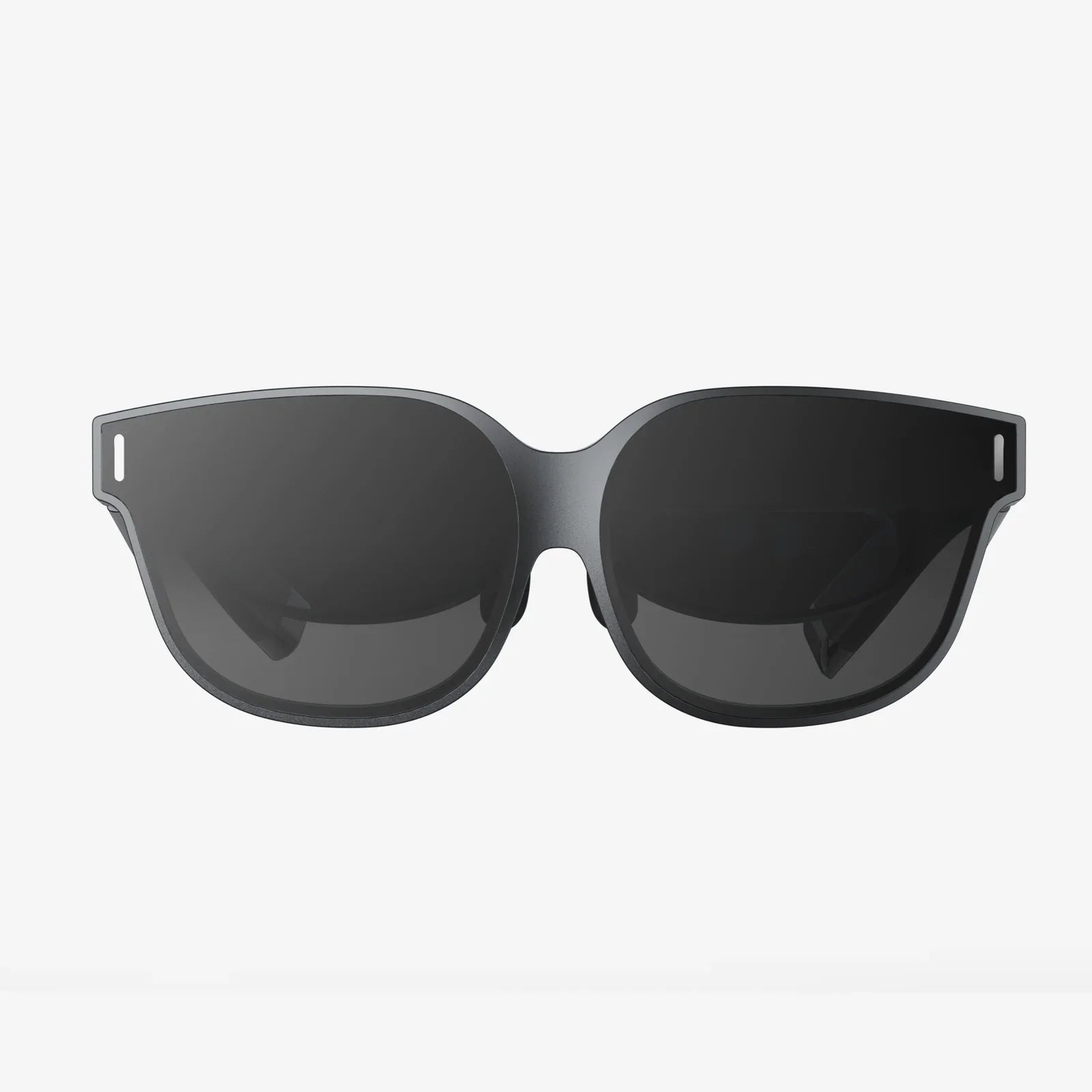
- by wangfred
Adjustable Glasses Technology: The Future of Vision Correction is Here
- by wangfred
Imagine a world where a perfect pair of glasses is not locked behind a costly appointment, a complex prescription, or the walls of an optician's office. A world where clear vision is as adaptable and immediate as tuning a radio to the right frequency. This is no longer a futuristic fantasy; it is the present reality, made possible by one of the most significant innovations in optical history: adjustable glasses technology. This groundbreaking advancement is not merely an incremental improvement but a paradigm shift, poised to redefine accessibility, affordability, and personal empowerment in vision correction for billions across the globe.
To truly appreciate the genius of adjustable glasses, one must first understand the fundamental problem they solve: refractive errors. Conditions like myopia (nearsightedness), hyperopia (farsightedness), and presbyopia (age-related farsightedness) occur when the eye cannot correctly focus light onto the retina. Traditional glasses and contact lenses correct this by using precisely ground lenses with a specific optical power, measured in diopters, to bend light appropriately. For centuries, this has required an optometrist to determine the exact correction needed and a skilled optician to craft the lenses. This process, while effective, creates significant barriers in terms of cost, time, and access to trained professionals, especially in remote or under-served regions.
At its core, adjustable glasses technology cleverly manipulates the principles of optics to allow the user to change the corrective power of their lenses. While several approaches exist, the most prevalent and successful system involves a ingenious design that mimics the eye's own ability to focus.
The primary mechanism relies on a fluid-filled lens system. Each lens is essentially a clear, flexible membrane that forms a small chamber filled with a transparent, optical-grade fluid. On the sides of the frame are small dials or sliders connected to miniature syringes. When the user turns the dial, the mechanism either injects more fluid into the chamber or withdraws it. Injecting fluid causes the membrane to bulge outward, increasing the lens's convexity and thus its power to correct for farsightedness. Withdrawing fluid flattens the membrane, making the lens more concave to correct for nearsightedness. This simple, mechanical action allows for a seamless and continuous range of correction, typically spanning from -6 to +3 diopters, covering the needs of a vast majority of the population.
Another approach, though less common, utilizes aligned lens technology. This system features two separate, rigid lenses that slide against each other. As the user adjusts the dial, the lenses move laterally. The specific curvature and alignment of these lenses create a variable corrective power based on their position relative to one another. While this method avoids using fluid, it relies on extremely precise engineering to ensure perfect alignment and clarity.
The implications of this technology extend far beyond mere convenience for the well-off. Its most profound impact is felt in the realm of global public health. The World Health Organization estimates that over a billion people suffer from uncorrected vision impairment simply because they lack access to basic eye care services. For these individuals, whose lives are hindered in education, work, and daily safety, adjustable glasses are nothing short of revolutionary.
Charitable organizations and social enterprises have been at the forefront of distributing these devices. A single, durable pair of adjustable glasses can replace the entire infrastructure of an eye clinic for basic refractive error correction. Non-specialist community health workers can be trained in minutes to distribute them and teach users how to self-adjust. This democratization of vision care empowers individuals, freeing them from a dependency on a system that may be days of travel away and financially out of reach. It restores the gift of sight, and with it, the potential for education, economic productivity, and an improved quality of life on an unprecedented scale.
While the global health angle is staggering, the technology also holds significant appeal for everyday consumers in developed nations. Consider the sheer convenience. Many people experience temporary changes in their vision needs. A programmer might find their eyes tired and focus shifting after a long day staring at a screen. A hobbyist might need slight magnification for intricate work like model-building or jewelry repair. Adjustable glasses offer an instant, on-the-fly solution without the need for multiple dedicated pairs.
They also serve as an excellent emergency backup. For anyone who has ever lost or broken their only pair of glasses while traveling, the panic and helplessness are all too familiar. A pair of adjustable glasses tucked into a suitcase or glove compartment provides priceless peace of mind. Furthermore, for those with early presbyopia who find themselves constantly swapping between regular glasses and cheap reading glasses, a single adjustable pair can seamlessly cover all intermediate distances.
No technology is without its limitations, and adjustable glasses are no exception. It is crucial to understand what they are not. They are not a replacement for a comprehensive eye exam. Underlying eye health conditions like glaucoma, cataracts, diabetic retinopathy, and macular degeneration cannot be detected or treated by these devices. Professional eye examinations remain essential for diagnosing these serious diseases early.
Additionally, while the range of correction is broad, it does not cover extreme prescriptions. Individuals with very high astigmatism or complex prescriptions involving prisms will still require custom-made lenses. The optical clarity of the very best traditional, ground lenses can also be slightly superior to that of fluid-based systems, though the difference is negligible for most daily tasks. The frames are also often designed for durability and function over high fashion, though this is rapidly changing as the technology matures and gains market acceptance.
The current state of adjustable glasses technology is impressive, but it is merely the first chapter. Research and development are pushing the boundaries even further. The next generation may see the integration of micro-electromechanical systems (MEMS) and tiny actuators to allow for electronic adjustment at the touch of a button, perhaps even linking to a smartphone app for precise control and memory settings for different tasks.
Another fascinating frontier is the development of autofocus lenses for presbyopia. Using sensors to measure the distance to the object a user is looking at, these smart lenses could automatically and instantaneously adjust their focus, effectively reversing the aging process of the eye's natural lens. This would be a monumental leap forward. Furthermore, we can anticipate the convergence of this technology with other advancements, such as augmented reality (AR) displays. Imagine a pair of glasses that not only corrects your vision to perfection but also overlays digital information onto the real world, all with lenses that adapt to your gaze in real-time.
The trajectory is clear: vision correction is moving towards greater personalization, accessibility, and intelligence. The rigid, one-time prescription is giving way to a dynamic, responsive, and user-centric model. From empowering a child in a remote village to see the chalkboard for the first time to helping a retiree effortlessly switch between reading a book and looking at the horizon, the impact is profound and deeply human. This technology shatters the old constraints, offering a glimpse into a future where clear sight is a universal right, not a privileged commodity.
The quiet revolution of adjustable glasses technology is already changing lives in every corner of the planet, proving that the most powerful innovations are often those that solve a simple, universal problem with profound elegance. The ability to grant oneself perfect vision with a simple turn of a dial is no longer magic—it's science, and it's available right now, waiting to open up a clearer world for anyone who needs it.
Share:
Sample of Augmented Reality: A Deep Dive into the Digital Layer Reshaping Our World
Where Was Augmented Reality First Used? The Surprising History