


- by wangfred
Sample of Augmented Reality: A Deep Dive into the Digital Layer Reshaping Our World
- by wangfred
Imagine pointing your device at a seemingly ordinary street and watching history come alive, with ghostly Roman legions marching through the modern pavement, or gazing at a complex engine component through smart glasses that overlay step-by-step repair instructions directly onto the machinery. This is the captivating promise of a sample of augmented reality, a technology not of total virtual escape, but of intelligent digital enhancement of the world we already inhabit. It’s a portal to a hidden layer of information, storytelling, and utility, waiting to be unlocked, and it’s rapidly moving from science fiction to an integral part of our daily lives.
At its core, a sample of augmented reality is any experience where digital information—be it images, text, 3D models, or audio—is superimposed and anchored onto the user's real-world environment in real-time. Unlike its cousin, Virtual Reality (VR), which seeks to replace reality entirely with a simulated one, AR aims to supplement and enrich it. The key differentiator is context; the digital content is not random but is directly relevant to what the user is seeing and interacting with at that moment.
This is achieved through a sophisticated technological ballet. A device's camera captures the live feed of the physical world. Simultaneously, sensors like gyroscopes, accelerometers, and GPS determine the device's precise position, orientation, and location. Software then processes this data, identifying surfaces, objects, and points of interest to use as anchors. Finally, the processor renders the appropriate digital assets and seamlessly composites them into the live video feed or the user's field of view, creating the illusion that the virtual and real coexist in the same space.
Not all samples of augmented reality are created equal. They exist on a spectrum of complexity, defined by how the digital content is triggered and anchored.
This is often the simplest and most reliable form. It uses a predefined visual marker, like a QR code or a specific image, to trigger the digital overlay. The software recognizes the unique pattern of the marker, which acts as a precise anchor point for the AR content. This method is highly stable and is commonly used in marketing materials, interactive packaging, and educational textbooks.
This more advanced form uses a device's GPS, compass, and accelerometer to place digital content in a specific real-world location. The classic example is the mobile game that placed fantastical creatures in parks and city streets, encouraging players to explore their surroundings. This type of AR is powerful for tourism, historical education, and large-scale urban planning visualizations.
This method projects artificial light onto physical surfaces, sometimes allowing that light to be interactive. It can be used to create immersive installations, project navigation arrows onto a factory floor, or change the appearance of a car's interior during the design phase. It doesn't necessarily require a user to hold a device.
This sophisticated form involves replacing the original view of an object with an augmented one. It relies heavily on object recognition. For instance, a furniture app might recognize your coffee table and allow you to see a new model in its place, or a medical application could overlay a reconstructed X-ray view directly onto a patient's body.
The seamless magic of a compelling sample of augmented reality is powered by a confluence of cutting-edge hardware and software.
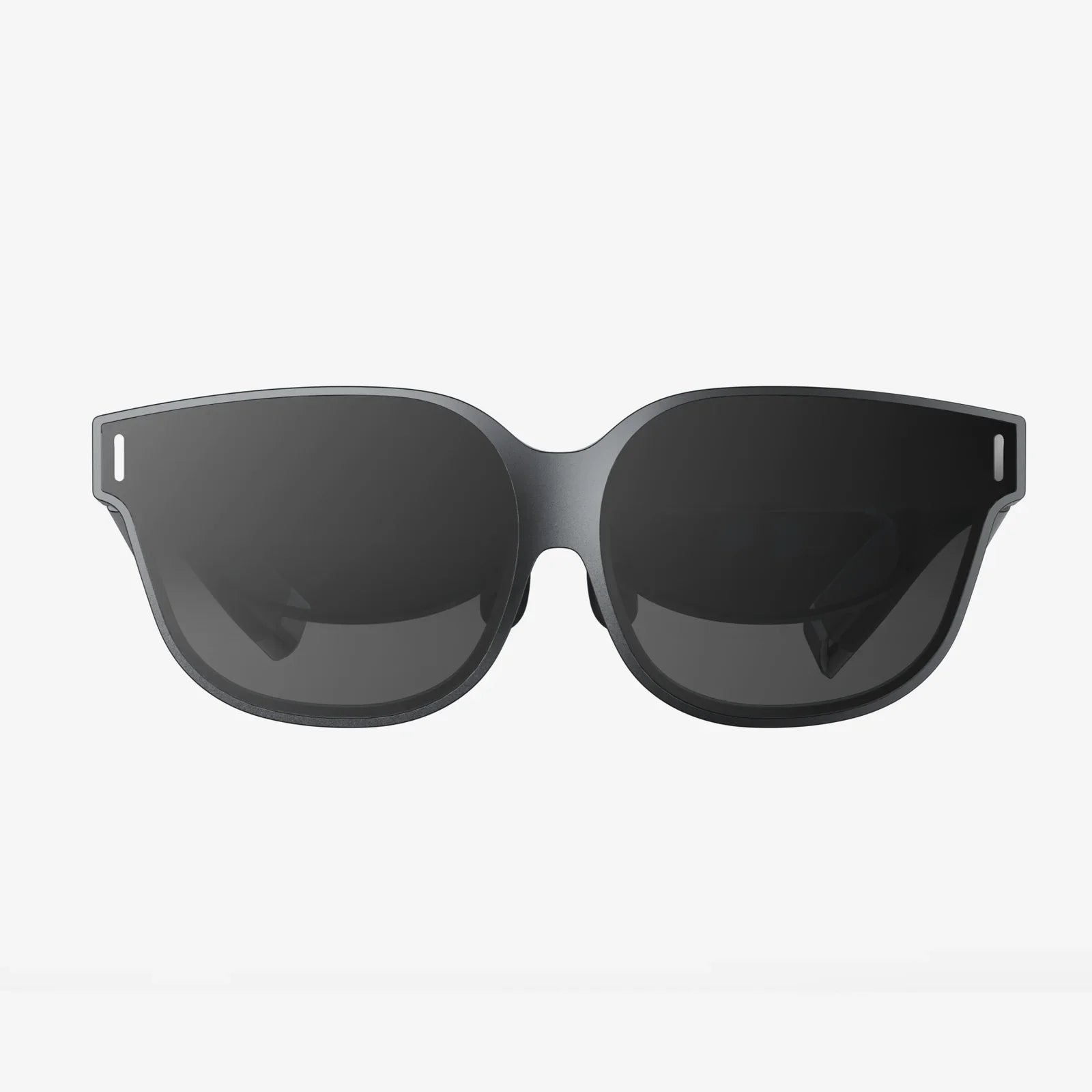
The device is the gateway. Smartphones and tablets are the most accessible AR platforms, leveraging their powerful cameras, sensors, and processors. For a more hands-free, immersive experience, smart glasses and headsets are the next frontier. These wearable devices project information directly into the user's line of sight, freeing their hands for work. More specialized AR employs head-up displays (HUDs) in aviation and automotive windshields, projecting critical data like speed and navigation without requiring the user to look away.
This is where the intelligence lies. SLAM (Simultaneous Localization and Mapping) is the critical software technology that allows a device to understand its environment. It creates a map of an unknown space while simultaneously tracking the device's location within it. This is what enables markerless AR to work. Furthermore, machine learning and computer vision algorithms are employed for complex object recognition, allowing the AR system to identify a specific piece of machinery, a human face, or a product on a shelf to trigger the appropriate digital response.
Beyond playful filters and games, the most profound impact of AR is its ability to solve real-world problems across numerous sectors.
AR is erasing the line between online and in-store shopping. Customers can use their phones to see how a new sofa would look in their living room, scaled to the correct size and matching the existing décor. They can "try on" glasses, makeup, or even clothes virtually before making a purchase. This not only enhances customer confidence and reduces return rates but also creates a novel and engaging shopping experience.
In industrial settings, a sample of augmented reality is a powerful tool for efficiency and accuracy. Technicians wearing AR glasses can have schematics, instruction manuals, or remote expert guidance overlaid directly onto the equipment they are repairing, eliminating constant glances back at a paper manual or tablet. This hands-free access to information drastically reduces errors, shortens training times, and improves safety. Factory workers can see digital pick lists and assembly instructions directly on their workstations, streamlining complex processes.
The medical field is embracing AR for both education and practice. Medical students can explore detailed, interactive 3D models of the human body, peeling back layers of anatomy in ways a textbook could never allow. Surgeons can use AR to visualize a patient's internal anatomy, such as the precise location of a tumor or major blood vessels, projected onto the patient's body during preoperative planning or even in the operating room, increasing precision and improving outcomes.
AR turns learning into an interactive, immersive discovery process. A history lesson can transform a classroom into an ancient civilization. A geometry class can allow students to manipulate 3D shapes to understand volume and surface area. Mechanics-in-training can practice complex procedures on virtual engines. This kinesthetic learning approach improves information retention and engagement for students of all ages.
As with any transformative technology, the widespread adoption of AR brings forth a host of challenges that society must address.
AR devices, with their always-on cameras and sensors, are unprecedented data collection tools. They continuously scan and map our environments, potentially capturing information about people and private spaces without explicit consent. The line between public and private data becomes dangerously blurred. Robust regulations and transparent data policies are urgently needed to prevent a dystopian future of constant surveillance.
High-quality AR experiences currently require powerful, and often expensive, hardware and fast, reliable connectivity. This risks creating a new digital divide, where access to this enhanced layer of reality and its associated benefits is limited to those who can afford it, exacerbating existing socioeconomic inequalities.
Walking through the real world while distracted by a digital overlay poses obvious physical dangers, from tripping over obstacles to more serious accidents, especially when using immersive headsets. Furthermore, the potential for addiction and the further erosion of real-world social interactions are genuine concerns that must be studied and mitigated through thoughtful design and user education.
The trajectory of AR points towards a future of even deeper integration. The eventual goal is the widespread adoption of comfortable, socially acceptable, and powerful AR glasses that will become as ubiquitous as smartphones are today. These devices will offer a persistent digital layer over our vision, providing contextual information, navigation, communication, and entertainment on demand. The concept of the "spatial web" or "metaverse" envisions a world where digital information is not confined to screens but is spatially mapped onto our reality, creating a shared, persistent digital landscape that everyone can interact with.
This is no longer a distant fantasy; it is the next logical step in the evolution of computing, moving from the personal computer to the personal cloud to the personally contextual. The sample of augmented reality we see today is merely a glimpse, a primitive precursor to a fundamental shift in how we perceive, interact with, and understand the world around us. The boundary between the atoms of our reality and the bits of our digital existence is set to dissolve, creating a hybrid experience that will redefine human potential, creativity, and connection. The only question that remains is not if, but how quickly we will choose to embrace this augmented age and, more importantly, how wisely we will build it.
Share:
How Do You Use Augmented Reality: A Comprehensive Guide to the Digital Overlay
Adjustable Glasses Technology: The Future of Vision Correction is Here