


- by wangfred
How Do You Use Augmented Reality: A Comprehensive Guide to the Digital Overlay
- by wangfred
Imagine a world where digital information doesn’t just live on your screen but is seamlessly painted onto the fabric of your reality, enhancing everything you see, do, and learn. This is the promise of augmented reality, a technology that has quietly evolved from a niche novelty into a powerful tool reshaping industries and redefining human interaction. The question is no longer what is AR, but rather, how do you use augmented reality to solve real problems, unlock new creative potentials, and navigate your daily life with unprecedented ease? The answers are as diverse as they are revolutionary, weaving a digital layer into the very tapestry of our physical existence.
Before diving into the "how," it's crucial to understand the "what." At its core, augmented reality is a technology that superimposes computer-generated images, sounds, and other sensory inputs onto a user's view of the real world. Unlike Virtual Reality (VR), which creates a completely immersive, digital environment, AR enhances your existing reality by adding to it. This is typically achieved through a device—most commonly the smartphone in your pocket, but also through specialized glasses, headsets, and even vehicle windshields.
The magic happens through a combination of sophisticated components:
This technological ballet enables several methods of how you use augmented reality. Marker-based AR uses a specific visual trigger (like a QR code or image) to anchor the digital object. Markerless AR, more common today, uses GPS, digital compasses, and accelerometers to place content based on your location. And finally, projection-based AR projects synthetic light onto physical surfaces, while superimposition-based AR replaces the original view of an object with an augmented one, crucial for fields like medicine.
One of the most impactful answers to "how do you use augmented reality" lies not in entertainment, but in driving efficiency, safety, and precision within the workforce.
In product design and architecture, AR is a game-changer. Designers and engineers can project 3D digital prototypes into the real world at scale. An automotive engineer can see a full-scale model of a new engine block on a workbench, walking around it, peering inside, and identifying potential design flaws long before a physical prototype is ever built. This not only saves immense amounts of time and resources but also fosters more effective collaboration, as teams can interact with the same virtual model from different locations.
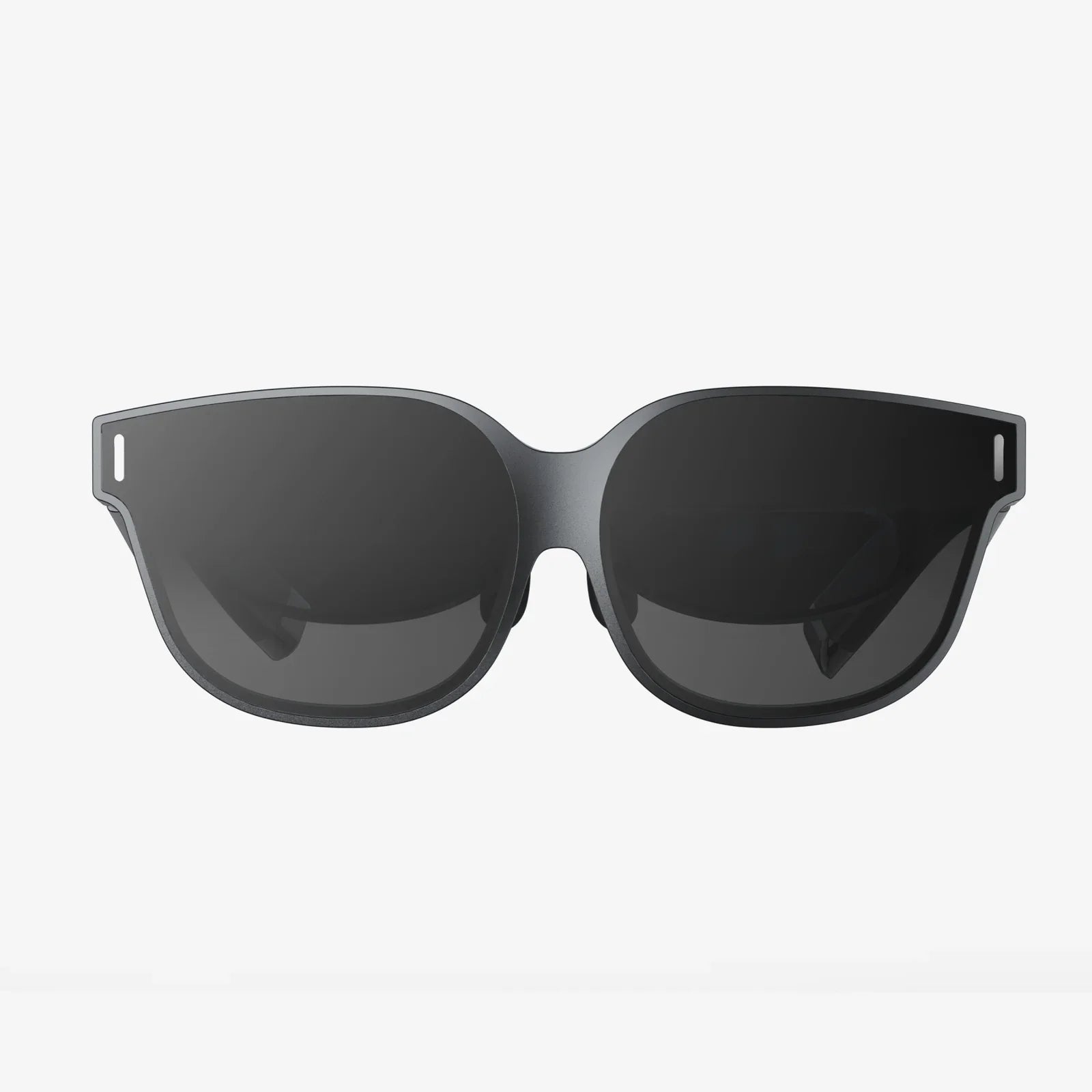
For technicians repairing complex machinery, AR provides a superpower. By wearing AR glasses, a technician can look at a malfunctioning piece of equipment and see digital annotations overlaid directly onto the components. These can highlight the specific part to be replaced, display torque specifications, and even provide animated step-by-step repair instructions. This drastically reduces errors, shortens training times for new technicians, and allows experts to guide less experienced colleagues remotely, seeing what they see and drawing digital arrows and notes into their field of view.
In massive distribution centers, finding and picking items is a time-consuming task. AR streamlines this process dramatically. Warehouse workers equipped with smart glasses can see the most efficient route through the warehouse displayed before their eyes. When they arrive at the correct aisle, digital indicators can highlight the exact shelf and bin containing the item. This "vision picking" increases accuracy and speeds up order fulfillment, a critical advantage in the age of next-day delivery.
Augmented reality has the profound ability to make learning an immersive, interactive, and deeply engaging experience, moving beyond static textbooks and diagrams.
Imagine a history student pointing their tablet at a textbook illustration of an ancient Roman forum. Suddenly, the still image erupts into a full 3D reconstruction on their desk, complete with bustling crowds and animated senators. In a biology class, students can explore a detailed, beating human heart from every angle, peeling back layers to see the ventricles, arteries, and valves. This experiential learning fosters a much deeper understanding and retention of complex subjects by allowing students to visualize and interact with abstract concepts.
From surgery to welding, AR is creating a safe, repeatable training environment. Medical students can practice intricate surgical procedures on augmented patients, receiving real-time feedback without any risk. Trainee mechanics can learn to assemble an engine with virtual guides, making mistakes and learning from them without wasting expensive parts. This "see-through" ability to practice and perfect a skill is revolutionizing vocational training across countless disciplines.
Beyond practical applications, AR offers powerful new mediums for creativity, commerce, and human connection, blending the digital and physical in playful and profitable ways.
The retail experience has been utterly transformed. The most common way how you use augmented reality today might be to see how a new piece of furniture would look in your living room. Apps allow you to place true-to-scale 3D models of sofas, tables, and lamps in your space, letting you walk around them and ensuring they fit both aesthetically and physically. Similarly, beauty apps allow you to "try on" countless shades of lipstick or eyeshadow instantly, while fashion retailers let you see how clothes look on your avatar. This reduces purchase anxiety and minimizes returns, creating a more confident consumer.
Artists are using AR to create dynamic public installations that exist only when viewed through a device. A city park can become home to a towering digital sculpture, and a blank building wall can tell a animated historical story. This creates a new, accessible layer of culture and narrative in public spaces, encouraging exploration and offering context to the world around us. Museums are leveraging this to make their exhibits more engaging, allowing statues to tell their own stories or paintings to animate.
Platforms have popularized AR through whimsical filters that add bunny ears, alter your appearance, or place you in a fantastical scene. This is a lightweight but powerful form of social expression. The phenomenon of location-based AR games demonstrated the mass-market potential, encouraging millions of people to explore their neighborhoods to find and interact with digital creatures overlaid onto parks, streets, and landmarks, fostering a unique blend of exercise, social interaction, and digital play.
Perhaps the most profound integration of AR will be its quiet, seamless incorporation into our daily routines, acting as an intuitive guide and assistant.
Turn-by-turn navigation is effective, but it requires you to constantly look down at your screen, divorcing you from your environment. AR navigation solves this. By using your phone's camera, arrows, directions, and street names are painted directly onto the live view of the road ahead. This makes navigating complex intersections or finding a specific shopfront in a crowded street incredibly intuitive. The technology is also beginning to appear in vehicle head-up displays, projecting speed, directions, and safety warnings directly onto the windshield.
AR holds immense promise for breaking down barriers. For individuals with hearing impairments, AR glasses could provide real-time subtitles for conversations happening in the physical world. For those with visual impairments, AR can highlight obstacles on a sidewalk, read out text from signs, or amplify the contrast of the environment to make navigation easier. Furthermore, point your phone at a menu in a foreign language, and see it instantly translated and overlaid in your native tongue, erasing a fundamental travel challenge.
The current state of AR is impressive, but it is merely the foundation for a more integrated future. The next evolution will move beyond handheld devices and clunky headsets toward more elegant, always-available solutions. The concept of the "spatial web" suggests a future where digital information is persistently anchored to locations and objects, accessible to anyone with the right AR interface.
We are moving toward interfaces controlled by natural gestures, eye-tracking, and voice commands, making the interaction with the digital overlay feel as natural as interacting with the physical world. As the technology miniaturizes into standard eyeglasses and eventually contact lenses, the line between the digital and the physical will blur into irrelevance. How you use augmented reality will become less of a conscious action and more of a constant, seamless aspect of perceiving and interacting with the world, fundamentally expanding human potential and reshaping every facet of society.
The digital layer is no longer confined to our screens; it's spilling out into our world, waiting for you to pick up your device and see the extraordinary hidden within the ordinary. The real magic begins the moment you ask not just what you're looking at, but what you could be seeing.
Share:
Augmented Reality Good or Bad: Navigating the Future of Our Digital Overlay
Sample of Augmented Reality: A Deep Dive into the Digital Layer Reshaping Our World