


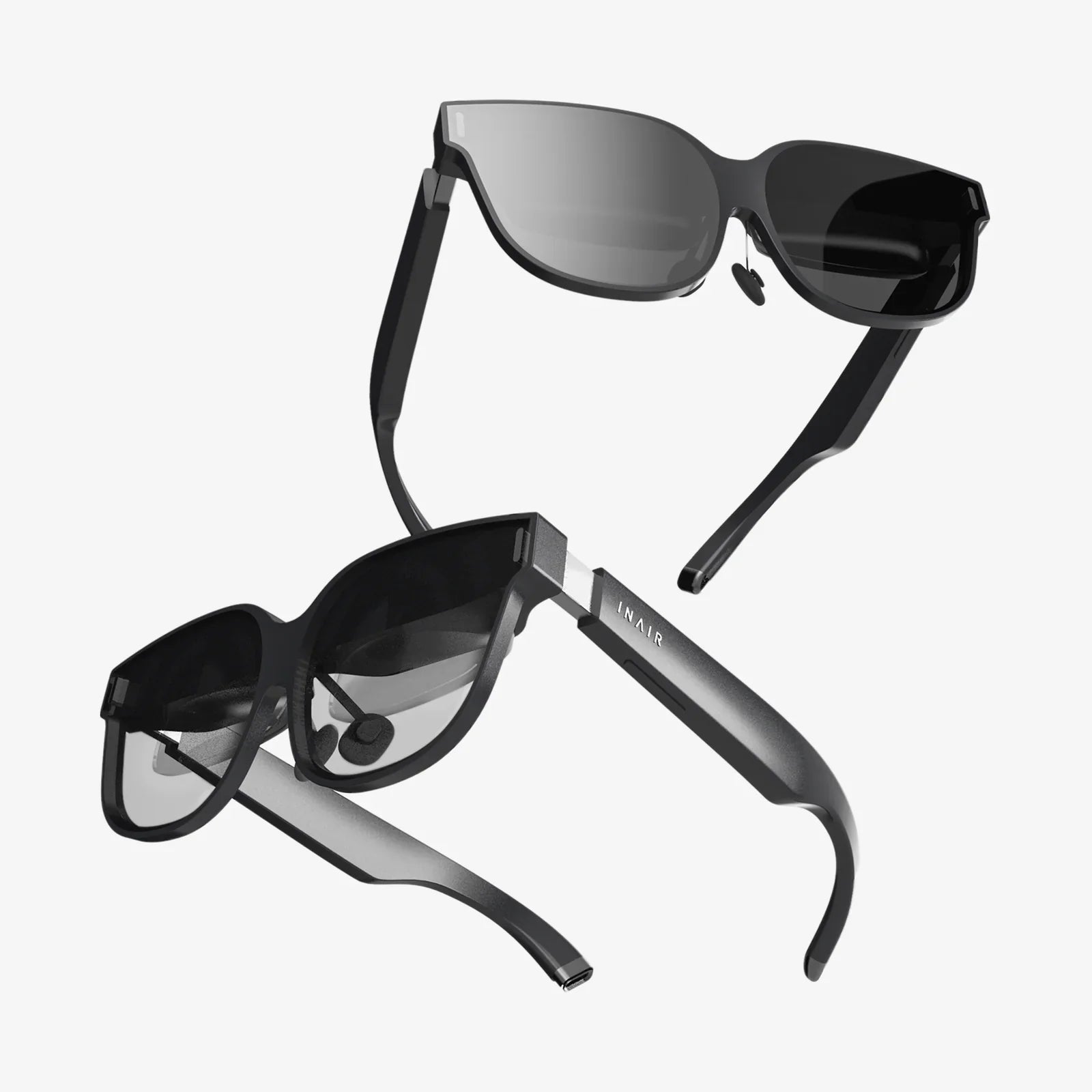
Imagine a world where digital information doesn't live on a screen in your hand but is seamlessly woven into the fabric of your reality. This is no longer the realm of science fiction; it is the promise and the rapidly unfolding present of advanced augmented reality devices. These are not mere gadgets; they are portals to a new layer of human experience, poised to revolutionize everything from how we work and learn to how we connect and create. The age of staring down at a device is ending, replaced by looking up and out into a world enhanced, explained, and enriched by digital intelligence.
The Core Technologies Powering the Revolution
At the heart of any advanced augmented reality device is a symphony of sophisticated technologies working in perfect harmony. Unlike their simpler predecessors, which often relied on smartphone cameras for rudimentary overlays, these devices are self-contained marvels of engineering.
Spatial Mapping and Environmental Understanding
The most critical capability of an advanced system is its understanding of the physical world. This is achieved through a combination of sensors:
- Depth-sensing Cameras (LiDAR, Time-of-Flight): These sensors fire out thousands of invisible points of light, measuring the time it takes for them to bounce back to create a precise, real-time 3D map of the environment. This allows the device to understand not just flat surfaces, but the complex geometry of a room, including chairs, tables, and stairs.
- High-Resolution Cameras: Multiple cameras work together to capture the world in high fidelity, identifying objects, reading text, and tracking surfaces.
- Inertial Measurement Units (IMUs): These accelerometers and gyroscopes track the precise movement and rotation of the user's head, ensuring digital objects remain locked in place even as the user moves.
This fusion of data creates a "digital twin" of the space, allowing virtual objects to interact with the real world convincingly—a digital ball can roll under a real table, and a virtual character can sit on your actual sofa.
Photorealistic Rendering and Display Systems
Creating the illusion that digital objects are truly present requires astonishing graphical power. Advanced processors render complex 3D models with realistic lighting and shadows in real-time. The display technology is even more crucial. Most advanced devices use either:
- Waveguide Optics: Thin, transparent glass lenses that use diffraction gratings to pipe light from micro-displays on the temples into the user's eyes. This allows for a sleek, glasses-like form factor.
- Birdbath Optics: A compact design that uses a combination of a beamsplitter and a curved mirror to reflect the image from a micro-display into the eye, often offering brighter colors and higher contrast.
These systems must also solve the challenge of vergence-accommodation conflict—the discomfort caused when your eyes focus on a virtual object that appears to be far away, but is actually projected on a lens mere centimeters from your face. Next-generation devices are experimenting with varifocal and light field displays to mimic natural depth cues, making long-term use comfortable and immersive.
Intuitive Interaction Paradigms
How do you interact with a world that doesn't physically exist? Advanced AR has moved beyond touchscreens to more natural input methods:
- Hand Tracking: Using onboard cameras and machine learning, devices can now track all 26 degrees of freedom of your hands, recognizing precise gestures like pinches, grabs, and taps. This allows you to reach out and manipulate digital objects as if they were real.
- Eye Tracking: By monitoring where you are looking, the system can enable foveated rendering (dynamically rendering the center of your gaze in high detail while saving processing power on your periphery), intuitive menu navigation, and more realistic social interactions with digital avatars.
- Voice Commands: Natural language processing allows for hands-free control, making it easy to summon information, launch applications, or take notes without breaking flow.
Transforming Industries and Redefining Professions
The potential of this technology extends far beyond entertainment and gaming. It is already creating profound shifts in professional fields.
Healthcare: The Augmented Surgeon and Therapist
In medicine, AR is becoming a life-saving tool. Surgeons can wear devices that overlay critical patient data—such as MRI scans, heart rate, or blood pressure—directly into their field of view during procedures, eliminating the need to look away at a monitor. More advanced applications can project 3D surgical guides onto a patient's body, showing exactly where to make an incision or place an implant. For physical therapists, AR can guide patients through rehabilitation exercises with perfect form, tracking their movements and providing real-time feedback.
Manufacturing and Field Service: Knowledge at a Glance
On the factory floor, technicians can use AR to see wiring diagrams overlaid on complex machinery, receive step-by-step instructions for assembly, or identify a faulty component simply by looking at it. A remote expert can see what the on-site worker sees and annotate their reality with arrows and notes, enabling knowledge transfer across vast distances and reducing downtime and errors dramatically.
Architecture and Design: Walking Through the Blueprint
Architects and interior designers are using AR to step inside their creations long before the first brick is laid. They can project full-scale 3D models of buildings onto empty lots, allowing clients to walk through virtual hallways and experience the space. Interior designers can place virtual furniture in a client's living room, allowing them to see how a new sofa would look and fit, drastically improving the design and sales process.
The Social and Ethical Landscape: A Double-Edged Sword
As with any transformative technology, the rise of advanced AR brings a host of complex questions that society must grapple with.
The Privacy Paradox
These devices are, by their nature, data collection engines. They have cameras and microphones that are always on, mapping the world and the people in it. This raises immense privacy concerns. Who has access to this data? How is it stored and used? The concept of consent becomes blurred when someone wearing AR glasses can potentially record you, identify you through facial recognition, or access your public digital profile without your knowledge. Robust legal and ethical frameworks will be essential to prevent a dystopian future of constant surveillance.
The Digital Divide and Accessibility
There is a significant risk that advanced AR could exacerbate existing social and economic inequalities. If these devices become essential tools for work, education, and social connection, their high cost could create a new class of "information haves and have-nots." Conversely, they also hold incredible promise for accessibility, offering real-time translation for the deaf and hard of hearing, navigation for the visually impaired, and memory aids for those with cognitive disabilities. The challenge will be to ensure these empowering tools are developed inclusively and made accessible to all.
Reality Ownership and Digital Vandalism
If everyone can augment the world around them, who controls the shared visual space? Could public monuments be defaced with virtual graffiti? Could advertisers pay to overlay digital billboards over every blank wall in your home? The battle over our perceptual real estate is coming. Concepts like "AR rights management" and geofencing digital content will become critical to maintaining a coherent and consensual shared reality.
The Future is Already Here: What's Next on the Horizon?
The current generation of devices is impressive, but it is merely the foundation for what is to come. The next decade will see advancements that feel like magic.
- True Contextual Awareness: Devices will evolve from understanding the geometry of a space to understanding its context. Your AR companion will not only see a coffee maker but know how to operate it, pulling up the manual the moment you look at it with a confused expression.
- The AR Cloud: A persistent, shared digital layer mapped to the entire planet. This would allow digital content—from notes left on a park bench to complex game worlds—to be permanently anchored to a location, experienced by anyone who visits.
- Neural Interfaces: The ultimate goal is to move beyond wearables. Research into non-invasive brain-computer interfaces could one day allow us to summon and control AR experiences with a thought, making the technology a true extension of our own cognition.
- Haptic Feedback: Integrating wearable haptic gloves or suits will add the sense of touch to digital interactions, allowing you to feel the texture of a virtual object or the weight of a digital tool.
We are standing at the precipice of a fundamental shift in human-computer interaction. Advanced augmented reality devices are the key that will unlock this new dimension, transforming our world from a static place into a dynamic, interactive, and intelligent canvas limited only by our imagination. The screen is fading, and the world itself is awakening.
Share:
Augmented Reality Explanation: A Comprehensive Guide to the Digital Overlay on Our World
Best AI Smart Sunglasses - The Ultimate Guide to Wearable Intelligence