


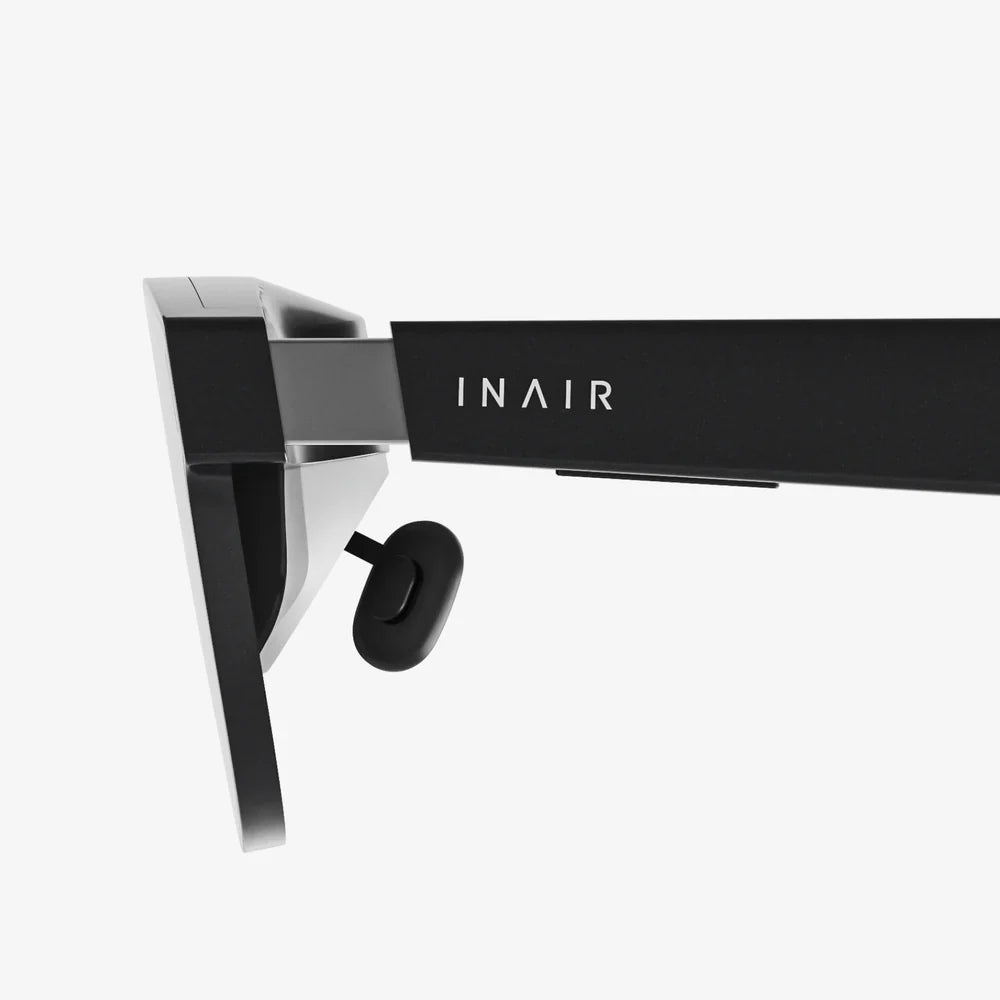
Imagine a world where information doesn't live on a screen in your hand but is seamlessly woven into the fabric of your reality. A world where directions appear as a gentle glow on the pavement, where the name of a colleague you met once appears discreetly in your periphery, and where a complex recipe hovers over your mixing bowl without a single greasy fingerprint on a tablet. This is the promise of AI glasses, a vision long confined to the realms of science fiction and prohibitively expensive prototypes. But a quiet revolution is underway. The era of affordable AI glasses is dawning, and it’s poised to change everything we thought we knew about personal technology.
From Sci-Fi Fantasy to Everyday Reality
The concept of computer-aided vision has tantalized innovators for decades. From the Terminator’s chilling heads-up display to the sleek, all-knowing spectacles in countless cyberpunk narratives, the idea has always been compelling. The first real attempt to bring this to market, however, served as a cautionary tale. A little over a decade ago, a much-hyped product entered the market. It was technologically ambitious but socially awkward, plagued by privacy concerns, a high price tag, and a design that screamed "tech enthusiast" rather than "everyday user." It was a brilliant failure that ultimately set the industry back, forcing a crucial period of reflection and recalibration.
This period of hibernation was essential. In the background, the core technologies needed to make smart glasses viable began their own rapid evolution. The miniaturization of processors, improvements in battery efficiency, breakthroughs in waveguide displays that project images onto lenses, and the explosive rise of artificial intelligence itself—all these elements converged, creating a perfect storm for a second, more thoughtful launch. Developers learned that for this technology to succeed, it couldn’t just be powerful; it had to be practical, socially acceptable, and, crucially, affordable.
Demystifying the Tech: What Makes AI Glasses "Smart"?
At their core, affordable AI glasses are a symphony of miniaturized components working in concert. Unlike their bulkier Augmented Reality (AR) cousins, which aim to create immersive, high-fidelity 3D graphics, the current generation of AI glasses focuses on delivering contextual, text-based information and simple graphics in a lightweight form factor. Here’s what’s inside:
- Micro-Displays and Optical Waveguides: This is the magic behind the images. Tiny projectors (often LCD or OLED) shoot light into a transparent piece of glass or plastic (the waveguide) etched with microscopic patterns. This pattern bends the light, directing it precisely into the user’s eye, creating the illusion that text, icons, or simple graphics are floating in the world ahead.
- Always-Listen Microphones: Multiple microphones allow for clear voice command capture, even in noisy environments, and facilitate advanced noise cancellation for crystal-clear calls.
- Bone Conduction or Micro-Speakers: To keep the experience private, many models use bone conduction technology, which transmits sound through the bones of your skull directly to your inner ear, leaving your ears open to ambient noise. Others use tiny, directional speakers that fire sound directly into the ear canal.
- A Suite of Sensors: Accelerometers, gyroscopes, and magnetometers work together as an inertial measurement unit (IMU) to track head movement and orientation. Many also include cameras for computer vision tasks, though these are often paired with strong privacy indicators like LED lights.
- The Brain: A Dedicated AI Co-Processor: This is the key differentiator from earlier attempts. A dedicated chip handles the constant stream of data from the sensors and microphones. It’s responsible for the always-on AI assistant, real-time translation, and processing visual data without needing to offload everything to the cloud, saving both battery life and data usage.
The Power of an Invisible Assistant: Use Cases That Resonate
The true value of affordable AI glasses isn't in the specs sheet; it's in the subtle yet profound ways they can augment daily life. By moving interactions away from a handheld screen and into our field of vision, they offer a hands-free, eyes-up experience that boosts productivity, accessibility, and connection.
Enhanced Productivity and Navigation
Imagine walking through a new city. Instead of constantly looking down at your phone, turn-by-turn directions are gently overlaid onto the streets ahead. Notifications for messages, emails, or calendar reminders appear without you needing to disrupt your flow. For professionals in fields like logistics, manufacturing, or repair, digital manuals and schematics can be called up and pinned to a machine, allowing them to work with both hands free. This isn't about adding more digital clutter; it's about presenting the right information at the right time, with minimal friction.
Real-Time Translation and Transcendence of Language Barriers
This is one of the most powerful applications. With AI glasses, a conversation with someone speaking another language can happen naturally. As they speak, subtitles of their translated words can appear in your lenses in near-real-time. Conversely, what you say can be translated and played aloud to them, or displayed on their phone. This technology has the potential to dismantle one of humanity's oldest barriers, making travel, business, and cultural exchange profoundly more accessible.
Accessibility and Empowerment
The assistive potential is enormous. For individuals with visual impairments, AI glasses can identify and audibly describe objects, read text from signs or documents aloud, and even recognize faces and currency. For those with hearing difficulties, they can provide live captions for in-person conversations, effectively turning the world into a subtitled experience. This transforms the glasses from a convenience into a vital tool for independence.
Content Creation and First-Person Perspective
For vloggers, journalists, and everyday users, AI glasses offer a new paradigm for capturing life. Instead of holding up a phone, you can record video and take photos from a natural first-person perspective, capturing moments as you actually experience them. This leads to more authentic and stable content without the physical barrier of a device.
The Elephant in the Room: Addressing Privacy and Social Acceptance
No discussion about wearable cameras and always-listening devices can be complete without addressing the legitimate concerns around privacy and the "creep factor." The specter of a society where everyone is constantly recording is a valid fear. The industry has learned from past mistakes and is (mostly) approaching this with more caution.
Modern affordable AI glasses are being designed with privacy-first features. Many include prominent physical switches to disable the camera and microphone, ensuring the user has absolute control. LED indicator lights that are hardwired to activate when the camera is in use are becoming a standard, providing a clear signal to those nearby. Furthermore, the on-device AI processing means that for tasks like object recognition or translation, visual data never needs to leave the glasses, being processed and discarded instantly. The path to social acceptance will be paved by transparent design, clear user controls, and responsible usage norms established by early adopters.
The Economics of Accessibility: How Did They Become Affordable?
The shift from multi-thousand-dollar development kits to sub-$500 consumer devices is not magic. It’s the result of several key economic and technological factors. The massive investment in smartphone technology over the last 15 years is arguably the biggest contributor. The components that power high-end phones—efficient ARM-based processors, high-density batteries, miniature cameras, and sensors—have all been ruthlessly optimized for scale and cost. Manufacturers of AI glasses can leverage this existing supply chain, essentially building upon a platform of commoditized components.
Secondly, the AI software that powers these devices, from neural networks for translation to voice assistants, has been widely developed and deployed by major tech companies. The R&D cost is amortized across millions of cloud services users, allowing the refined software to be licensed or adapted for a new hardware form factor at a relatively low cost. Finally, a new competitive landscape is emerging. Instead of one dominant player, numerous companies are entering the space, fostering competition that drives down prices and encourages innovation in design and functionality, all benefiting the consumer.
A Glimpse into the Near Future: Where Do We Go From Here?
The current generation of affordable AI glasses is just the beginning, the equivalent of the early PDA or the first MP3 players. They are functional and revolutionary in their own right, but they hint at a much more immersive future. We can expect rapid iterations that will bring improvements in battery life, display brightness and field of view, and even more seamless AI integration. The line between AI glasses and full AR glasses will blur as display technology advances.
Future applications could include advanced facial recognition with consent (imagine never forgetting a name at a conference), real-time health and fitness metrics overlayed during a workout, and interactive learning where historical facts pop up as you tour a museum or repair instructions animate over a broken engine. The potential for spatial computing—interacting with digital information as if it were a real object in your space—is the ultimate destination, and affordable AI glasses are the first crucial step on that journey.
The dream of intelligent eyewear is finally shedding its elitist skin and stepping into the light of day, ready for the masses. This isn’t about creating a more distracted world; it’s about building a more connected and intuitive one. Affordable AI glasses promise to unlock a new layer of human potential, offering a glimpse into a future where technology doesn’t demand our attention but quietly enhances our perception, making us more capable, connected, and informed than ever before. The revolution won't be televised; it'll be projected right before our eyes.
Share:
Latest Research Trends Augmented Reality 2025: The Invisible Revolution
The Role of AR and VR in Future Marketing Campaigns 2025: A New Reality for Brands