


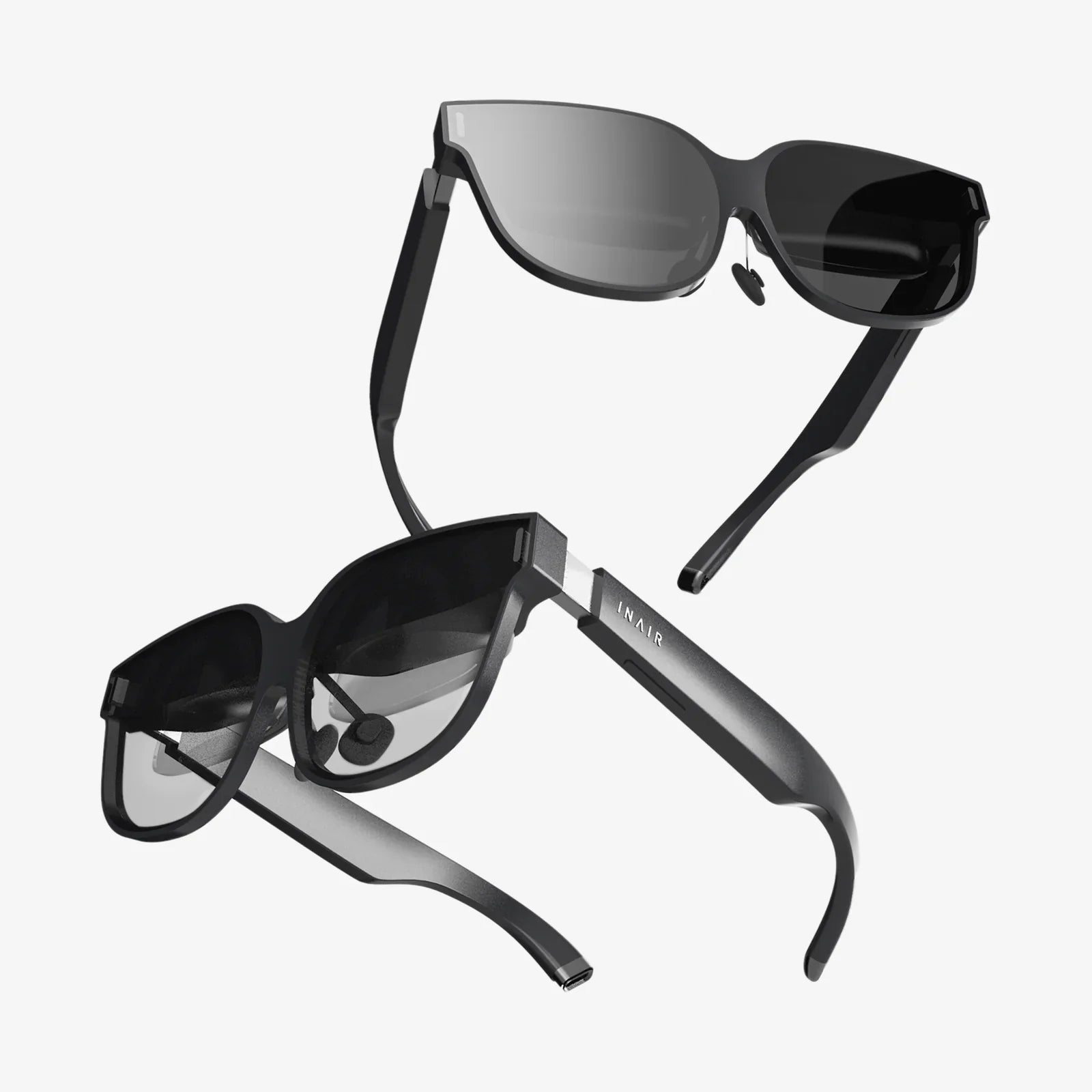
Imagine a world where the digital and physical aren't just overlapping but are seamlessly, intelligently fused, where information doesn't appear on a screen but is woven into the very fabric of your perception, responding to your needs before you even voice them. This isn't the distant future; it's the tangible target of the most cutting-edge research labs across the globe. The trajectory of augmented reality is undergoing a radical transformation, moving beyond clunky headsets and simplistic holograms towards an era of ambient, intuitive computing. The latest research trends in augmented reality for 2025 are not merely iterating on existing technology; they are fundamentally redefining what AR is and how it will integrate into our lives, promising a revolution that is felt rather than seen.
The Drive Towards Frictionless and Contextual AR
The most significant shift in AR research is the move away from generic, one-size-fits-all overlays and towards highly personalized, context-aware experiences. The goal is to minimize cognitive load—the mental effort required to interact with the technology—making the digital augmentation feel like a natural extension of thought.
Research is heavily focused on AI-driven contextual understanding. Systems are being trained to not just recognize objects but to comprehend scenes. Instead of simply identifying a coffee machine, a 2025-era AR system would understand you just walked into the office kitchen on a Monday morning, cross-reference your calendar for your first meeting, and subtly highlight your preferred coffee blend while indicating the estimated brew time. This requires a sophisticated fusion of computer vision, sensor data (location, time, biometrics), and predictive AI models that operate on the edge with minimal latency.
This push for context is inextricably linked to advances in spatial computing and mapping. Researchers are developing methods for devices to create hyper-detailed, semantically rich 3D maps of environments in real-time. These aren't just geometric maps; they are maps that understand function: this is a sit-able surface, this is a road, this is a navigable pathway. This allows digital content to behave in physically plausible ways, respecting occlusion, physics, and persistence, making the illusion of augmentation utterly convincing.
The Hardware Revolution: Invisible and Biomimetic
The dream of AR has long been hampered by hardware limitations—bulky devices, short battery life, and limited fields of view. The research trends for 2025 are tackling these challenges head-on with biomimetic and miniaturized solutions.
A major focus is on advanced waveguide and holographic optics. The goal is to create optical systems that are incredibly thin, light, and efficient, capable of projecting bright, full-color, wide-field-of-view imagery directly into the eye. Research into metasurfaces—nanostructures that manipulate light in precise ways—promises lenses that are flat and wafer-thin, a stark contrast to the complex array of lenses and prisms in today's devices. This could lead to AR glasses that are indistinguishable from standard prescription eyewear.
Similarly, research into low-power, event-based sensors is gaining traction. Instead of cameras that capture full-frame video continuously, these neuromorphic sensors mimic the human eye, only sending data when a change in the scene is detected (a movement, a change in light). This drastically reduces the amount of data processing required, leading to massive gains in power efficiency and enabling all-day battery life.
Perhaps the most futuristic trend is the exploration of vocal and neural interfaces
For AR to be truly believable, digital objects must not only be placed in the world but must look like they belong there. They must interact with the environment's lighting, cast accurate shadows, and have realistic textures and physics. This is the domain of photorealistic rendering, and the research is being supercharged by AI. Neural Radiance Fields (NeRF) and related technologies represent a paradigm shift. Instead of manually creating 3D models, NeRF uses a small set of 2D images of a scene or object to reconstruct a complex 3D model that accurately represents how light interacts with it. This allows for the creation of stunningly realistic digital assets that can be dynamically lit and viewed from any angle. By 2025, research aims to make this process real-time, allowing an AR device to instantly scan a room and integrate virtual objects with perfect lighting coherence. Furthermore, research is focused on generative AI for asset creation. The ability to type "a weathered bronze statue on a marble plinth" and have a high-fidelity, ready-to-use 3D model generated instantly will remove a major barrier to AR content creation. This will democratize development and allow for dynamic, responsive AR environments that can be generated on the fly. For AR to become a persistent layer on our world, it cannot exist solely on individual devices. It requires a shared, collaborative foundation—often called the AR Cloud or the spatial internet. This is a core research trend, essentially building a 1:1 digital twin of the real world that can be accessed and annotated by anyone. Research challenges here are immense. It involves large-scale simultaneous localization and mapping (SLAM) across millions of devices, creating a constantly updated, crowd-sourced 3D map of the planet. This requires breakthroughs in distributed computing, compression, and data synchronization. Privacy and security are paramount; research is focused on federated learning techniques where the map improves through crowd-sourced data without compromising individual users' raw video or location data. This effort is deeply tied to the rollout of 6G connectivity. While 5G offers low latency, 6G research aims for truly immersive, sub-millisecond latency and massive device connectivity. This will enable the complex processing required for high-fidelity AR to be offloaded to the cloud and streamed seamlessly to thin-client devices, making powerful AR experiences accessible on lightweight hardware. 6G's integration of sensing and communication could also allow devices to perceive the environment using the network itself, enhancing spatial awareness. As the technology becomes more powerful and pervasive, a critical branch of research is dedicated not to what we can do, but what we should do. The human and societal implications of pervasive AR are a major trend for 2025. Privacy-by-design architectures are a key focus. Researchers are developing on-device processing pipelines that never send raw camera footage or personal data to the cloud. Techniques like differential privacy, which adds statistical noise to aggregated data, are being explored to allow for the collective improvement of AR services without identifying individuals. There is also significant research into attention and safety systems. How do we prevent AR from creating dangerous distractions, especially in urban environments or while driving? Systems are being designed that can detect critical real-world events and automatically dim or pause digital content. Research into "attentional user interfaces" aims to design notifications and information that appear only when cognitively appropriate. Furthermore, the field of digital ethics and governance is expanding. Researchers are collaborating with social scientists and philosophers to establish frameworks for digital property rights in the AR cloud, prevent the proliferation of AR spam ("virtual graffiti"), and combat potential new forms of misinformation and manipulation that leverage hyper-realistic augmentations. The path to 2025 is not merely about sharper displays or faster processors; it is a concerted effort to make augmented reality disappear. The most exciting research is that which works to erase the boundary between the user and the technology, creating a seamless flow of information and interaction that enhances human capability without demanding human attention. It’s a shift from a technology we look at, to a technology we look through. The next wave of AR won’t be about what you see through your glasses; it will be about how the world itself becomes more responsive, informative, and magical, transforming every aspect of our daily lives from the mundane to the professional in ways we are only beginning to imagine.The Rise of Photorealistic and Neural Rendering
Architecting the Perceptual Future: The AR Cloud and 6G
The Human Factor: Ethics, Privacy, and Safety
Share:
Intelligent Zoom Technology Glasses: The Future of Vision is Here
Affordable AI Glasses: The Dawn of Mainstream Augmented Intelligence