


- by wangfred
Affordable Augmented Reality: The Accessible Future is Now
- by wangfred
Imagine a world where digital information doesn't just live on a screen but is seamlessly woven into the fabric of your everyday life—a world where learning, working, shopping, and playing are enhanced by a magical layer of interactive data. This isn't a distant sci-fi fantasy; it's the promise of affordable augmented reality, a technological revolution that is quietly shifting from an exclusive luxury to an accessible tool for the masses. The barrier to entry, once intimidatingly high, is crumbling, and the implications for how we interact with the world are nothing short of profound.
For years, Augmented Reality (AR) was synonymous with high-end, specialized hardware that carried a price tag placing it firmly in the domain of enterprises, developers, and hardcore tech enthusiasts. The narrative was one of potential, but its practical application was gated by cost. Today, that narrative is being rewritten. The driving force behind this seismic shift is the ubiquity of a powerful AR device that billions already own: the smartphone. By leveraging existing technology, AR has become democratized, opening doors to innovation and experiences that were previously unimaginable for the average consumer.
The most significant catalyst for affordable AR has been, without a doubt, the modern smartphone. These pocket-sized computers are equipped with a suite of sophisticated sensors—high-resolution cameras, gyroscopes, accelerometers, and GPS—that are precisely what AR needs to function. Software development kits (SDKs) and advanced computer vision algorithms have become incredibly efficient at using this hardware to understand surfaces, track movement, and anchor digital objects in the real world with surprising accuracy.
This approach, often called "markerless" or "world-scale" AR, eliminates the need for expensive dedicated hardware. Users don't need to invest in new equipment; they simply download an application. This drastically lowers the barrier to entry, allowing developers to reach a global audience instantly. From trying on virtual makeup and placing furniture in your living room to playing immersive games that transform your local park into a digital battlefield, smartphone-based AR has proven the concept's viability and mass appeal.
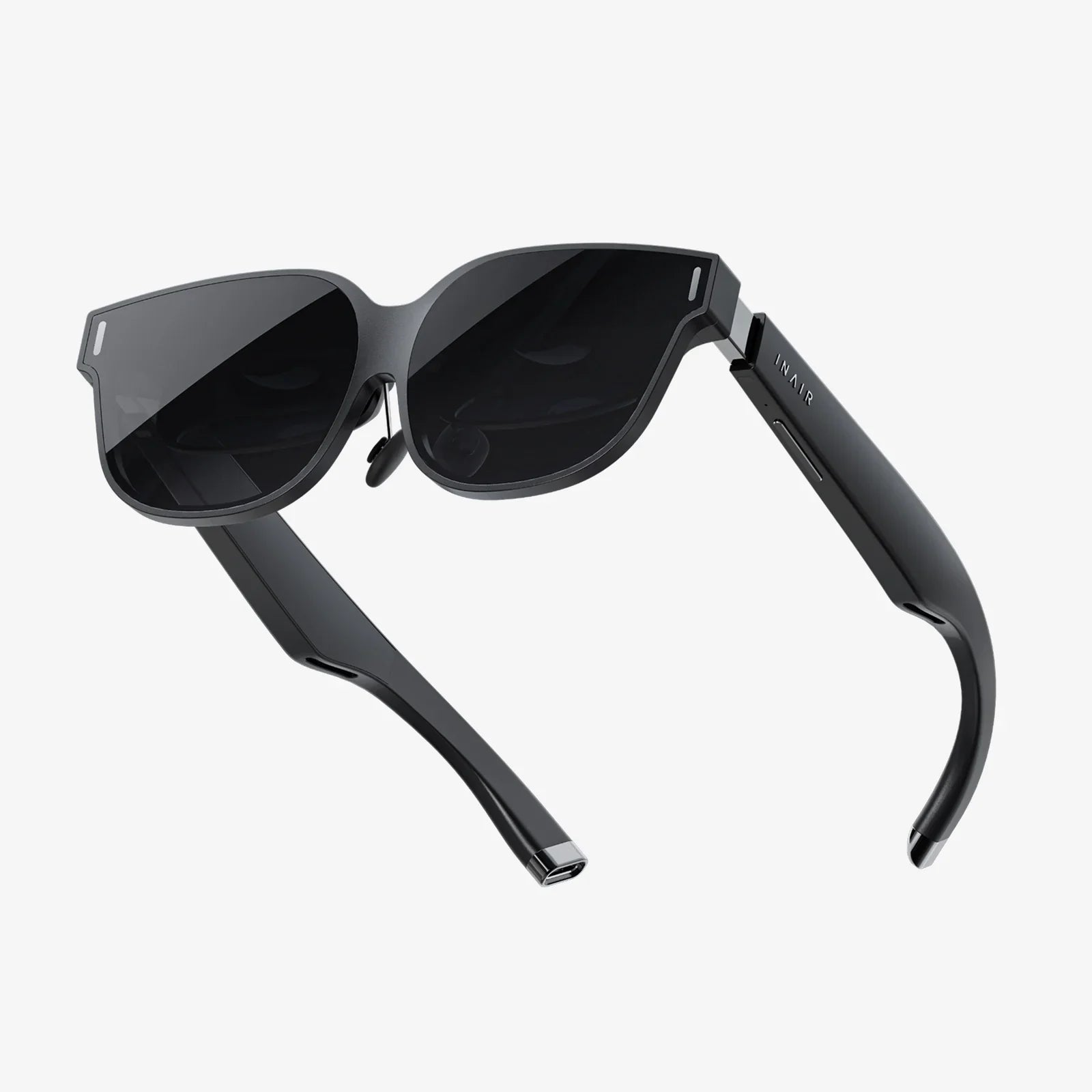
While smartphones kicked down the door, the next wave of affordable AR is emerging through dedicated wearable displays. These devices, often taking the form of lightweight glasses, are becoming increasingly viable for consumers. Early iterations were bulky, expensive, and limited in functionality. However, advancements in micro-display technology, waveguide optics, and battery efficiency are driving down both the size and the cost.
These newer wearable displays are designed for specific, practical use cases rather than trying to be all-encompassing computers. Some act as a secondary screen, projecting information like notifications, directions, or translations into the user's field of view. Others are focused on enterprise training or remote assistance, providing hands-free access to manuals and expert guidance. By focusing on utility over high-fidelity gaming or entertainment, manufacturers are able to produce capable devices at a fraction of the cost of their high-end counterparts, making them accessible to small businesses and curious early adopters.
Hardware is only one piece of the puzzle. The software and processing power required for complex AR experiences have also traditionally been a cost barrier. Rendering detailed 3D models and processing complex environmental data requires significant computational resources, which can drain smartphone batteries and necessitate high-end processors.
Two key innovations are solving this problem: Cloud AR and WebAR. Cloud AR offloads the heavy processing work to powerful remote servers, streaming the AR experience to the device much like a video game is streamed via cloud gaming services. This means even less powerful devices can run sophisticated AR applications. WebAR is perhaps the most accessible technology of all. It allows users to experience AR directly through a web browser without downloading any app. By simply clicking a link, a user can activate their camera and view an AR experience. This frictionless access is a game-changer for marketing, education, and casual entertainment, making AR instantly available to anyone with a compatible smartphone and an internet connection.
The move toward affordability isn't just about cool tech; it's about unlocking tangible value across countless sectors. When a technology becomes cheap enough to deploy at scale, its impact multiplies exponentially.
In education, affordable AR turns abstract concepts into interactive, 3D models. Students can dissect a virtual frog, explore the solar system from their desk, or watch historical events unfold in their classroom. For vocational training, AR glasses can provide step-by-step instructions overlaid on machinery, allowing trainees to learn complex procedures safely and efficiently, reducing errors and costs.
The retail sector has been an early adopter. Virtual try-on for clothes, sunglasses, and makeup is now commonplace. Furniture retailers allow customers to see how a sofa or table will look and fit in their actual living space before buying. This reduces purchase anxiety and minimizes returns, creating a better experience for the consumer and a more efficient sales process for the business.
In healthcare, affordable AR is assisting in everything from complex surgery to patient education. Surgeons can use AR overlays to visualize anatomy and critical structures during procedures. Medical students can practice on virtual patients. Practitioners can use AR to help patients better understand their conditions and treatments by visualizing them in 3D.
Technicians in the field can use AR glasses to receive remote expert guidance, with instructions and diagrams superimposed on the equipment they are repairing. This minimizes downtime, improves first-time fix rates, and allows less experienced workers to perform complex tasks with expert support.
Despite the rapid progress, the path to truly ubiquitous and affordable AR is not without its challenges. Battery life remains a significant constraint for both smartphones and wearable devices, as AR applications are notoriously power-hungry. There are also ongoing concerns about user privacy and data security, as these technologies often require access to cameras and real-time location data.
Furthermore, creating a seamless and intuitive user interface for AR is an ongoing design challenge. How do users interact with a digital layer that exists in the real world without a traditional mouse or keyboard? Voice commands, hand gestures, and simple taps on a smartphone screen are the current solutions, but the quest for the perfect natural user interface continues. Finally, there is the challenge of creating a robust and sustainable ecosystem of content. For AR to remain relevant, there must be a constant stream of valuable, engaging, and useful applications that justify its daily use.
The trajectory is clear: augmented reality is following the same path as most transformative technologies, moving from expensive and exclusive to affordable and universal. We are moving toward a future where AR is not a distinct app or a special pair of glasses, but an integrated feature of our digital lives—a constant, contextual, and helpful layer of information that enhances our perception and capabilities.
Future advancements in 5G connectivity will supercharge Cloud AR, enabling even more complex and real-time experiences. Artificial intelligence will make AR smarter, allowing it to better understand and interact with the environment. As these technologies converge, the line between the physical and digital worlds will continue to blur, creating a truly blended reality.
The era of expensive, niche AR is over. We are now entering the age of accessible augmentation, where the power to enhance reality is moving from the labs of tech giants into the pockets and onto the faces of everyday people. This isn't just a step forward for technology; it's a leap forward for human potential, unlocking new ways to learn, create, and connect with the world around us. The digital layer is settling over our physical world, and for the first time, everyone is invited to see it.
Share:
Best VR Headset for Augmented Reality: A Guide to Blending Worlds
Explain AR and VR: A Deep Dive Into the Digital Realities Reshaping Our World