


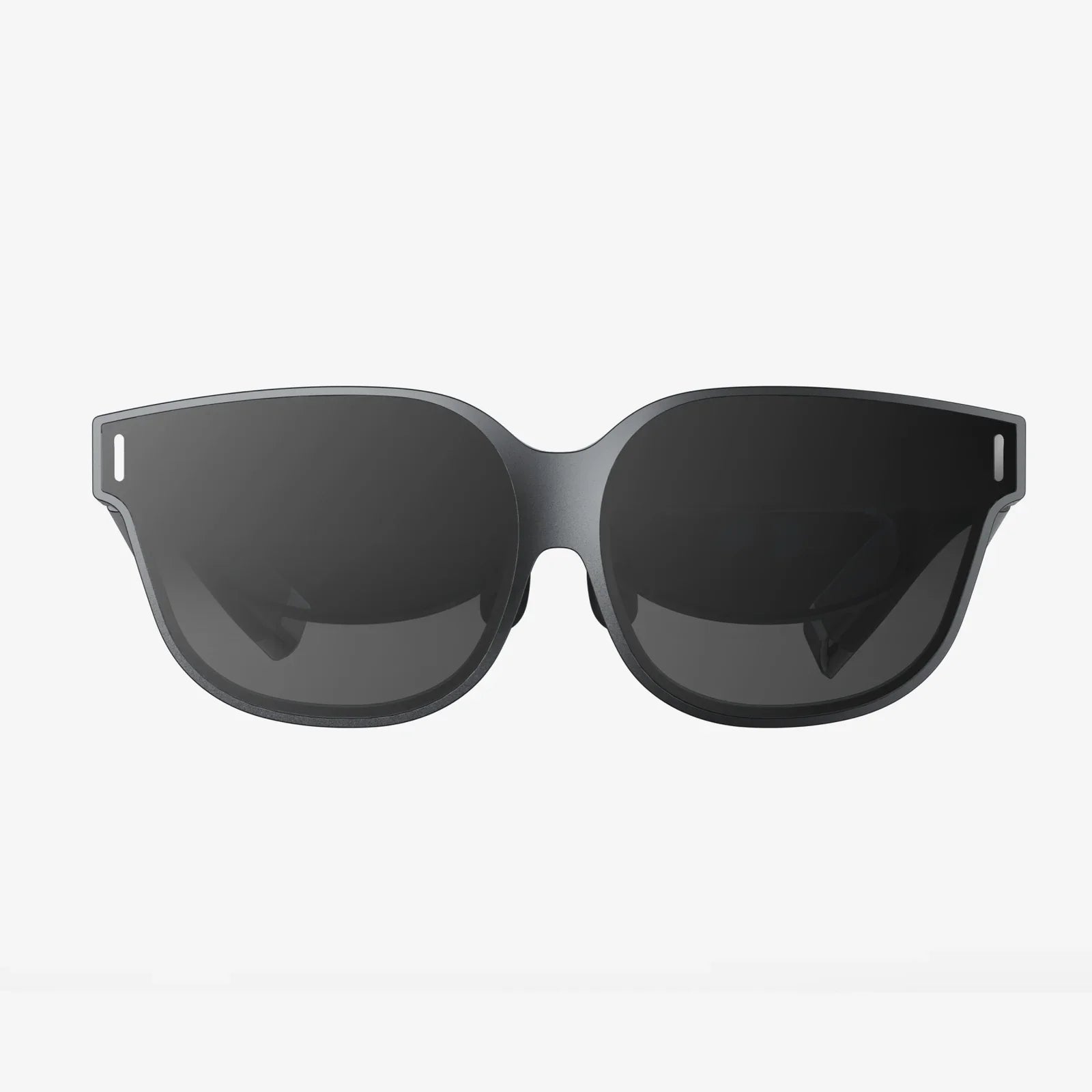
Imagine slipping on a pair of sleek, unassuming glasses and instantly stepping into a boundless digital universe—a meeting room with colleagues from across the globe, a front-row seat at a concert, or a meticulously recreated ancient Roman forum. This is the promise that has hovered over virtual reality for a decade, a future perpetually "five years away." But as we approach 2025, that future is finally materializing, not in the form of a multi-thousand-dollar specialized rig, but as an accessible, affordable standalone VR headset. The technological stars have aligned, and the result will be nothing short of a revolution in how we compute, connect, and play.
The Long Road to Affordability and Independence
To appreciate the significance of the 2025 landscape, we must first understand the journey. Early VR was a tale of two extremes: incredibly powerful but prohibitively expensive and complex tethered systems, or incredibly simple but underwhelming mobile-based viewers that offered little more than a novelty experience. The concept of a "standalone" headset—a self-contained unit with its own processor, battery, and tracking systems—was the obvious solution, but the technology needed to catch up.
The first generation of true standalone devices were marvels of engineering that proved the concept was viable. They broke the cord and offered genuine freedom of movement. However, they came with significant compromises: they were often heavy, front-heavy, and prone to overheating. Their processing power was a fraction of that available to tethered counterparts, limiting graphical fidelity and the complexity of virtual worlds. Their field of view often felt like looking through binoculars, and their resolution was just enough to discern pixels, breaking the illusion of reality.
The second generation addressed these issues with incremental improvements. Lenses got better, screens sharper, and chips more powerful. Yet, a chasm remained between the high-end, expensive standalone devices and truly affordable mass-market options. This is the gap that the 2025 generation is poised to close definitively.
The Technological Perfect Storm of 2025
What makes 2025 such a pivotal year? It’s the culmination of several independent technological trends reaching maturity simultaneously, creating a perfect storm for VR.
The Semiconductor Leap: Beyond Mobile Chipsets
The heart of any standalone headset is its System-on-a-Chip (SoC). By 2025, the chips powering these devices will no longer be modified versions of mobile processors. They will be custom-designed architectures built from the ground up for the unique demands of spatial computing. We are seeing the emergence of dedicated AI co-processors, real-time ray tracing units, and ultra-efficient neural processing units (NPUs) all on a single die.
This means a device costing a fraction of its predecessors will be capable of rendering stunningly realistic environments and characters. Foveated rendering, powered by eye-tracking, will become a standard, low-cost feature. This technique drastically reduces the rendering load by only fully rendering the exact spot the user is looking at, allowing for high-fidelity graphics without requiring a supercomputer on your face.
Visual Fidelity: The End of the Screen Door Effect
Display technology is undergoing its own revolution. Micro-OLED and advanced LCD panels are achieving pixel densities that finally surpass the human eye's ability to discern individual pixels at a standard viewing distance. The dreaded "screen door effect," where users could see the gaps between pixels, will be a relic of the past. Furthermore, these panels will support high dynamic range (HDR), offering vastly improved contrast, black levels, and color gamut. For the first time, the virtual world will not just be convincing in its geometry but in its raw visual splendor, capable of matching the brightness and vibrancy of the real world.
The Form Factor Revolution: From Headset to Headwear
Perhaps the most visible change will be in the design. The bulky, goggle-style design that has defined VR will give way to sleek, balanced, and lightweight forms. Advances in pancake lenses allow for a much shorter distance between the display and the eye, slimming down the entire profile. Manufacturers are exploring new materials like magnesium alloys and advanced composites to reduce weight without sacrificing durability.
The goal is a device that can be worn for hours without discomfort, moving from an activity you schedule to a peripheral you wear throughout the day. This shift is critical for the vision of the "metaverse" as a persistent spatial layer over our reality, rather than a destination we visit for short, discrete sessions.
Intuitive Interaction: Beyond the Handheld Controller
While controllers will remain a high-precision option for gaming, the primary mode of interaction for the affordable 2025 headset will be your own hands. Onboard cameras and dedicated AI processors will provide robust, low-latency hand tracking that is accurate enough for delicate tasks like typing on a virtual keyboard, manipulating 3D models, or navigating complex interfaces. Voice assistants, integrated seamlessly, will offer a hands-free way to launch apps, search for content, or send messages.
This shift away from mandatory peripherals is a key driver in reducing both cost and friction, making the technology instantly understandable and accessible to anyone.
The Software Ecosystem: A World of Possibilities
Hardware is nothing without software. The ecosystem surrounding these affordable devices will explode in 2025, driven by the certainty of a massive new audience.
The Evolution of Social and Productivity Platforms
The concept of the virtual office will mature beyond novelty Zoom calls with floating heads. Persistent virtual workspaces will allow for true collaboration on 3D designs, data visualizations, and architectural plans. Imagine brainstorming on an infinite whiteboard with a colleague sitting next to you, even though they are physically in another country. Affordable hardware is the key that unlocks this for every small business and remote team, not just large corporations with big budgets.
Social platforms will become more nuanced and expressive. Avatars will move beyond the cartoonish or uncanny valley, leveraging the headset's sensors to capture subtle facial expressions and eye movements, enabling genuine emotional connection in virtual spaces.
Gaming's Next Frontier
Gaming will, of course, remain a powerhouse. The increased processing power will allow for ports of titles previously only possible on consoles or high-end PCs. More importantly, it will empower indie developers to create rich, immersive experiences without being constrained by the hardware limitations of the past. We will see a new golden age of VR gaming that prioritizes compelling gameplay and innovative mechanics, not just graphical benchmarks.
A New Medium for Storytelling and Education
Documentarians and educators will harness this accessibility. A history class won't just read about the pyramids; they will explore them at full scale. Medical students will practice procedures in a risk-free environment. The affordable standalone headset becomes the ultimate empathy machine and teaching tool, distributed through schools and libraries with ease.
Redefining "Affordable": The New Market Reality
So, what does "affordable" mean in this context? It signifies a strategic shift by the industry. The goal is no longer to maximize profit per unit but to maximize the size of the overall platform. We can expect these devices to be priced competitively with mainstream gaming consoles and high-end tablets, positioning them as a viable consumer electronics purchase for a huge segment of the population.
Business models will evolve to support this. While some companies may sell hardware at a slim margin, they will recoup costs and generate revenue through software marketplaces, subscription services for premium content and cloud storage, and enterprise solutions. The headset itself is the gateway to a much larger digital economy.
Challenges and Considerations on the Horizon
This future is not without its challenges. The massive collection of biometric data—eye movement, hand gestures, voice recordings, and even facial expressions—raises profound questions about privacy and data security that the industry must address with transparency and robust user controls.
Furthermore, as these devices become more integrated into daily life, the societal impact of pervasive immersive technology needs careful consideration. Establishing healthy usage patterns and digital etiquette will be crucial to ensuring VR enhances our reality rather than allowing us to escape from it entirely.
Finally, true interoperability between different virtual platforms—the ability to take your avatar and digital possessions from one experience to another—remains a technical and commercial hurdle that must be overcome to realize the full vision of an open metaverse.
The stage is set for a seismic shift. The affordable standalone VR headset of 2025 is not merely a product; it is a portal. It represents the final dismantling of the barriers—cost, complexity, and comfort—that have kept virtual reality on the fringes. This is the moment it transitions from a niche hobby for enthusiasts and professionals into a truly mainstream technology, poised to reshape entertainment, redefine work, and reimagine human connection in ways we are only beginning to understand. The door to the next reality is opening, and everyone is invited to step through.
Share:
First PC VR Headset: The Prototype That Ignited a Digital Revolution
Can You Connect VR to iPhone? The Ultimate Guide to Mobile Virtual Reality