


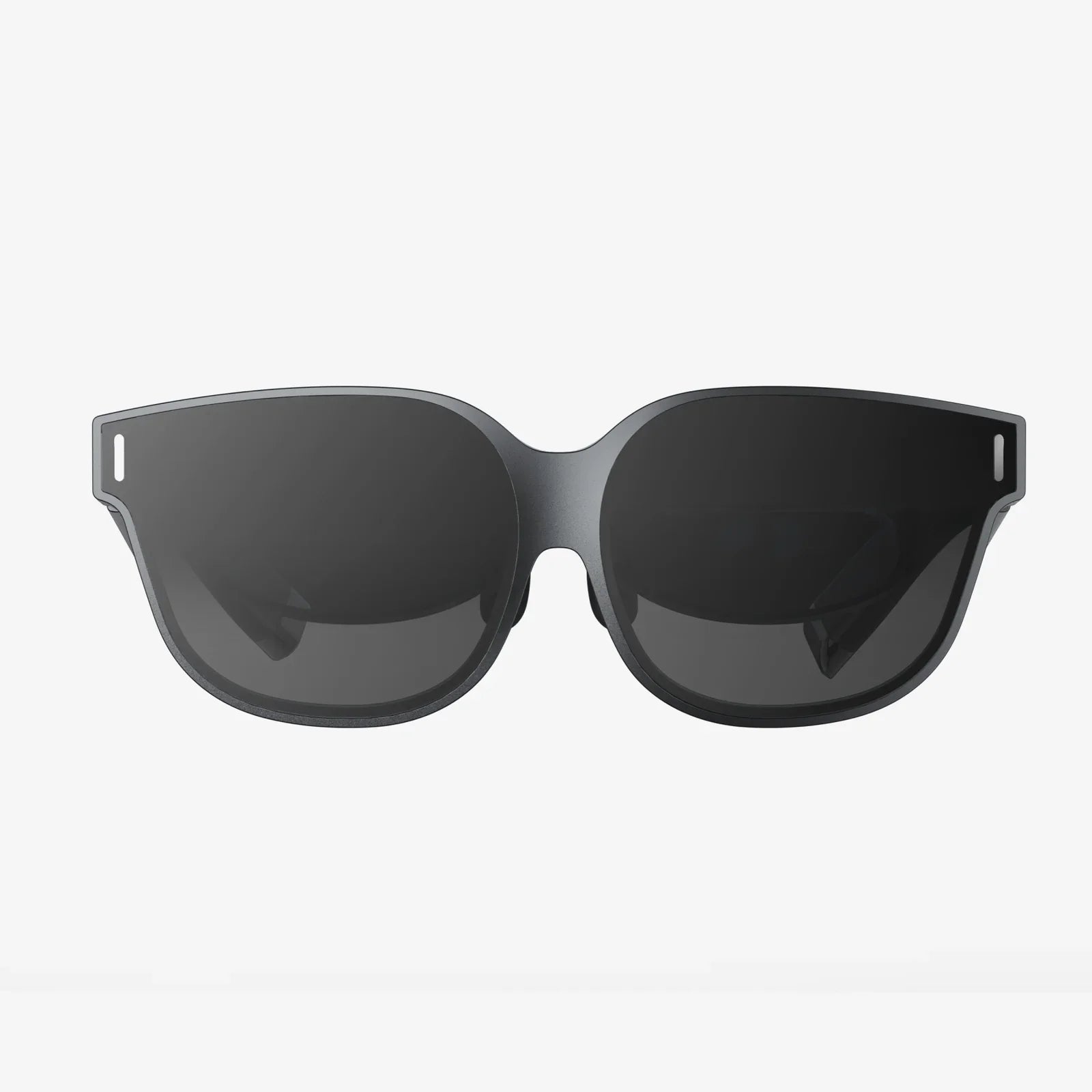
Imagine a world where your surroundings don't just exist; they understand you. A world where digital information isn't confined to a screen but is woven seamlessly into the fabric of your reality, anticipating your needs, answering your unspoken questions, and enhancing your every action. This isn't a distant science fiction fantasy; it is the imminent future being built today at the powerful intersection of Artificial Intelligence and Augmented Reality. The most innovative AI and AR projects are no longer siloed experiments but are converging to create a symbiotic relationship that is fundamentally more transformative than the sum of its parts. This convergence is poised to redefine every facet of our lives, from how we work and learn to how we connect and perceive the universe itself.
The Foundation: Understanding the Symbiosis
Before delving into the applications, it's crucial to understand the unique and complementary roles AI and AR play in this partnership. Augmented Reality provides the canvas and the context. It is the technology that overlays digital content—be it images, data, or 3D models—onto the user's view of the physical world through devices like smart glasses, headsets, or even smartphone cameras. AR creates a rich, interactive layer of information on top of our reality.
Artificial Intelligence, on the other hand, provides the brain. It is the cognitive engine that makes sense of this contextual canvas. AI algorithms, particularly those in computer vision, machine learning, and natural language processing, are what allow an AR system to:
- See and Understand: AI enables the AR device to not just display a video feed, but to actually comprehend it. It can identify objects, people, text, and spatial geometries within the user's environment.
- Interpret Intent: By analyzing user behavior, gaze, voice commands, and environmental context, AI can infer what information the user needs and why they might need it.
- Generate Content Dynamically: Instead of pre-rendered, static digital objects, AI can create or modify AR content in real-time, tailoring it specifically to the immediate situation and user.
- Enable Natural Interaction: AI allows users to interact with the AR layer through intuitive means like gesture control, voice commands, and even eye-tracking, moving beyond clumsy controllers.
In essence, AR gives AI eyes and a visual voice, while AI gives AR a brain and contextual intelligence. This symbiosis is the driving force behind the most compelling projects in the field.
Revolutionizing Industry: The Enterprise Frontier
Some of the most mature and impactful applications of combined AI and AR projects are emerging in industrial and enterprise settings, where they are solving real-world problems and delivering significant returns on investment.
Precision Manufacturing and Assembly
On factory floors, technicians wearing AR smart glasses are being guided through complex assembly processes with digital instructions overlaid directly onto the machinery they are working on. AI supercharges this. Instead of a generic manual, the AI system can:
- Use computer vision to identify the specific model of the equipment and its current state.
- Access a digital twin—a virtual replica of the asset—to understand the correct assembly sequence.
- Provide real-time, step-by-step visual guidance, highlighting exactly which bolt to tighten or which wire to connect.
- Flag potential errors before they happen, such as using the wrong part, by cross-referencing the live video feed with the Bill of Materials.
This not only drastically reduces errors and training time for new employees but also empowers existing workers to perform tasks far outside their normal expertise with expert-level precision.
Predictive Maintenance and Remote Assistance
When a critical piece of equipment fails in a remote location, every minute of downtime costs money. AI-driven AR projects are revolutionizing maintenance. A field engineer can point their device at a malfunctioning machine. The AI instantly analyzes the visual and sensor data, compares it to vast historical datasets, and diagnoses the likely problem. Through AR, the engineer sees:
- Animated overlays showing the internal components that need inspection.
- Real-time performance data and stress points visualized on the physical asset.
- Highlights of components showing wear and tear or abnormal heat signatures.
Furthermore, a remote expert located thousands of miles away can see exactly what the on-site engineer sees through a live AR feed. The expert can then draw digital annotations directly into the engineer's field of view—circling a valve, pointing to a lever, adding a note—to guide the repair process hands-free. This "see-what-I-see" capability, powered by robust AI-driven communication platforms, is collapsing geographical barriers for expertise.
Transforming Healthcare: A New Era of Medicine
The fusion of AI and AR is poised to create nothing short of a revolution in medical training, surgery, and patient care, enhancing the capabilities of medical professionals and improving outcomes.
Surgical Navigation and Visualization
Surgeons are beginning to operate with AR headsets that project critical information directly into their line of sight. AI algorithms process pre-operative scans (MRIs, CT scans) in real-time and create a precise 3D model of the patient's anatomy. This model is then registered and overlaid onto the actual patient on the operating table. The surgeon can, in effect, see “inside” the patient before making an incision, visualizing tumors, blood vessels, and nerves in precise relation to the surgical site.
This augmented vision provides an unparalleled level of spatial awareness, reducing the risk of damaging critical structures and allowing for more precise and less invasive procedures. AI continuously aligns the virtual model with the patient's body, accounting for subtle movements during surgery.
Medical Training and Education
Medical students can use AR to interact with hyper-realistic, AI-generated 3D models of the human body. They can “dissect” virtual cadavers, explore physiological processes in real-time, and practice complex procedures in a risk-free environment. AI can act as a personalized tutor within these simulations, adjusting the difficulty, providing real-time feedback on the student's technique, and creating unique scenarios based on their learning progress.
Redefining Retail and Consumer Experiences
The way we shop, decorate our homes, and try on products is being completely reimagined through intelligent AR applications.
Virtual Try-On and Personalized Shopping
AI-powered AR mirrors and smartphone apps allow consumers to try on clothing, eyewear, makeup, and jewelry virtually. The technology goes beyond simply superimposing an image. AI is used to:
- Accurately map the user's body and facial features for a true-to-life fit.
- Analyze skin tone and lighting conditions to simulate how a shade of makeup would look in real life.
- Recommend complementary items based on the user's selections and past preferences, creating a highly personalized shopping experience from their own home.
For furniture and home decor, AR apps allow users to place true-to-scale 3D models of products into their living space. AI can now analyze the room's dimensions, color scheme, and lighting to suggest products that will fit perfectly and match the aesthetic, dramatically reducing purchase uncertainty.
The Future of Navigation and Smart Cities
Forget looking down at a blue dot on a phone map. The future of navigation is through AR glasses that paint directions onto the world itself. AI is the critical component that makes this useful and safe. It doesn't just plot a route; it understands the context:
- It can highlight the specific entrance to a building you're looking for.
- It can display real-time information about public transit schedules as you look at a bus stop.
- It can translate street signs and menus instantly as you look at them.
- It can warn you of hazards, like a cyclist in your blind spot, by fusing data from various sensors.
On a city-wide scale, urban planners and engineers could use AR visors to visualize infrastructure data—seeing underground pipes, power lines, and traffic flow patterns overlaid on the street—allowing for more intelligent urban management and development.
Challenges and Ethical Considerations
The path forward for AI and AR projects is not without significant hurdles. Widespread adoption faces challenges related to hardware—creating devices that are powerful, socially acceptable, comfortable, and have all-day battery life. Network latency and bandwidth are critical for cloud-based AI processing, necessitating the rollout of advanced networks.
Perhaps more profound are the ethical and societal questions. The constant capture of first-person video and audio data raises immense privacy concerns. Who owns this data? How is it stored and used? There is also the risk of reality blurring, misinformation, and new forms of addiction. An AI that can manipulate our perception of reality could be used for incredibly persuasive advertising or, more nefariously, for state-controlled propaganda. Establishing robust ethical frameworks and regulations will be paramount to ensuring this technology develops responsibly and for the benefit of all.
The journey of AI and AR projects is just beginning, but the trajectory is clear. We are moving towards a world where computing becomes an invisible, intuitive, and intelligent layer over our reality. It's a world where information is contextual, assistance is proactive, and our human capabilities are augmented in ways we are only starting to imagine. The boundaries between the digital and the physical are dissolving, and from their fusion, a new, enhanced reality is being born. The most exciting projects are not yet in labs or launch videos; they are the ones waiting to be conceived by those who dare to reimagine the world through this powerful new lens.
Share:
Biggest Challenge for Wearable Technologies: The Invisible Barrier of User Adoption
Projection Based AR: The Invisible Interface Revolutionizing Our World