


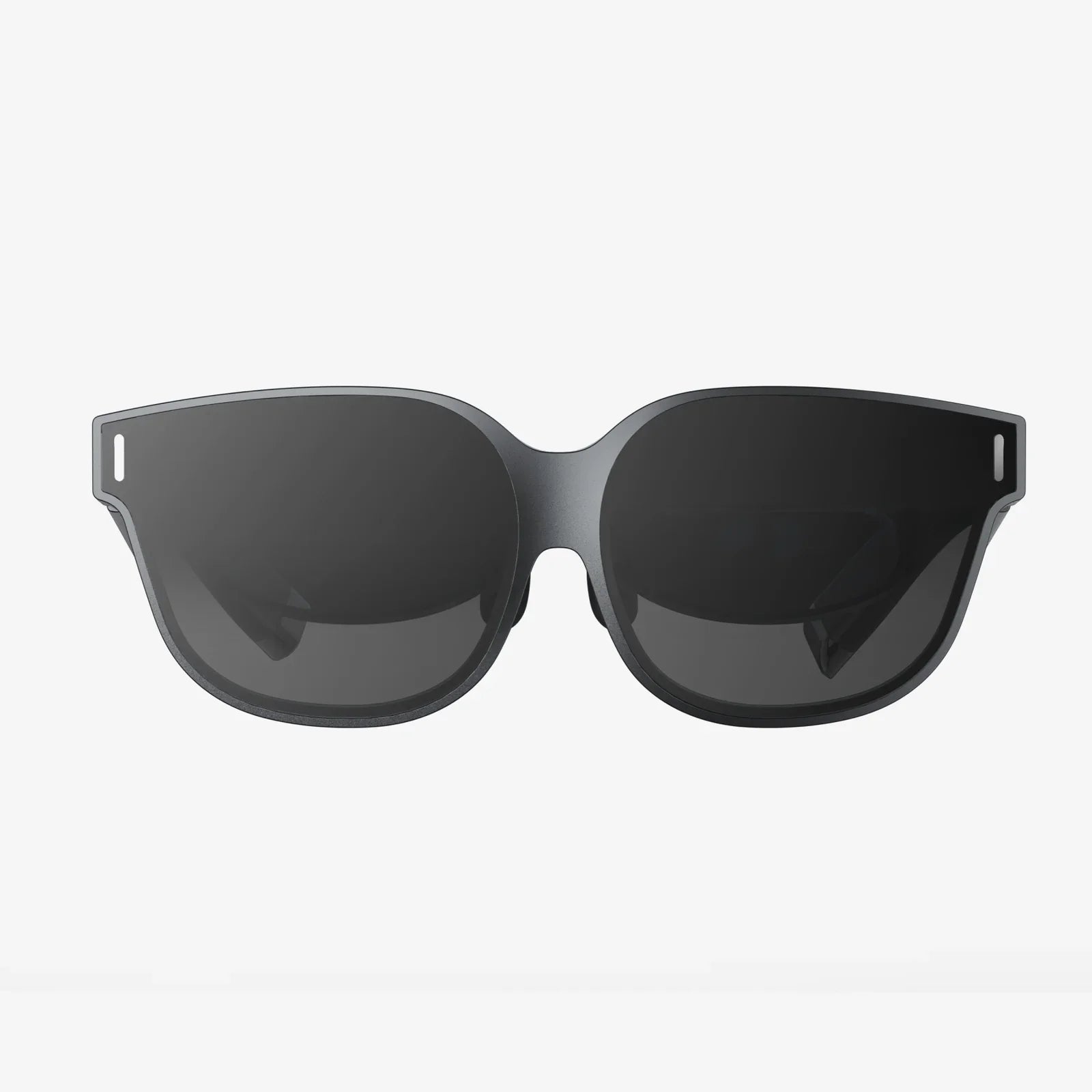
Imagine walking down a city street, but the world around you is not as it was built. The graffiti on a brick wall animates into a living, breathing ecosystem. The suit in a shop window morphs to match your exact measurements and preferred color palette. A historical monument, viewed through your device, is overlaid with the ghost of its original construction, workers and all. This is not a distant science fiction fantasy; it is the emerging, palpable reality being painted by the powerful convergence of Artificial Intelligence and Augmented Reality—a fusion we can aptly term AI AR Styles. This technological synergy is not merely adding a digital layer to our world; it is fundamentally reshaping the canvas of human perception, interaction, and expression, creating a new, deeply personalized aesthetic language.
The Confluence of Two Revolutions
To understand AI AR Styles, we must first dissect the two powerful technologies that form its foundation. Augmented Reality (AR) provides the canvas—the spatial framework that allows digital information to be convincingly anchored and overlaid onto our physical environment. It is the bridge between the bits of the digital world and the atoms of our own. For years, AR's potential was constrained by its reliance on pre-designed, static digital assets. An AR experience could only show what a human designer had previously created and uploaded.
Enter Artificial Intelligence (AI), and specifically, the branch of generative AI. AI provides the intelligent brush and the limitless palette. It is the engine that can create, adapt, and personalize content in real-time. Through machine learning, neural networks, and computer vision, AI can understand the context of a scene, recognize objects and surfaces, and generate appropriate stylistic content on the fly. It can learn a user's preferences, analyze their environment, and synthesize entirely new aesthetic elements that are both contextually relevant and uniquely tailored. The marriage is perfect: AR provides the where, and AI provides the what and the how.
The Core Mechanisms: How AI Powers AR Aesthetics
The magic of AI AR Styles unfolds through a complex but seamless orchestration of several AI-driven processes.
1. Real-Time Environmental Understanding and Semantic Segmentation
Before any style can be applied, the system must understand the world it's looking at. Using computer vision powered by AI, devices can now perform real-time semantic segmentation. This means an AI model can analyze a camera feed and not only identify a wall, a floor, a table, or a tree but also understand their properties. Is the wall rough or smooth? Is the floor made of wood or carpet? This granular understanding allows the AI to make intelligent decisions about how a digital style should interact with the physical world. A virtual, AI-generated ivy plant will not just be plastered onto a wall; its texture and how it clings will be influenced by the AI's understanding of the wall's material.
2. Generative Content Creation and Style Transfer
This is the heart of the stylistic revolution. Instead of pulling from a limited library of 3D models, AI can generate content dynamically. Techniques like Neural Style Transfer allow a user to impose the artistic style of Van Gogh, Picasso, or a cyberpunk anime onto their real-world surroundings in real-time. More advanced generative adversarial networks (GANs) and diffusion models can create entirely new objects, characters, and textures from a simple text prompt. You could point your device at your minimalist living room and whisper, "Baroque palace with gilded edges," and the AI would render that style onto your environment, generating ornate picture frames, intricate wall moldings, and lavish virtual furniture that fits perfectly into the existing space.
3. Personalized Contextual Adaptation
The most profound aspect of AI AR Styles is personalization. AI algorithms can learn from individual user interactions, preferences, and even physiological data. Your AI AR style filter might learn that you prefer calming, pastel color schemes in the morning and vibrant, energetic patterns in the evening. It could adapt the aesthetic of an informational overlay based on your level of expertise—showing a simple animated diagram for a novice and a complex, data-rich schematic for an engineer. The style is no longer one-size-fits-all; it is a living, adaptive layer that morphs to suit the context, the user, and the moment.
Transforming Industries: The New Stylistic Paradigm
The applications of AI AR Styles stretch far beyond novelty filters, poised to disrupt and elevate numerous sectors.
Retail and Fashion
The try-before-you-buy concept is being reborn. AI AR styling allows you to see how a piece of furniture would look in your actual living room, not just a blank space, with the AI adjusting its color and texture to match your existing decor and lighting conditions. In fashion, virtual try-on is evolving into holistic style consultation. An AI could analyze your wardrobe, your body shape, and current trends to generate entirely new outfits for you to "try on" in AR. It could then generate custom-designed clothing items tailored to your unique measurements, previewed on your body in a photorealistic way before a single thread is spun.
Art, Entertainment, and Storytelling
The world becomes a stage and a canvas. Museums can use AI AR Styles to not only restore artifacts to their original colored glory but to create dynamic, stylized reenactments around them. A tourist looking at a ruin could see it rebuilt in a style that matches its era, with AI-generated figures going about their daily lives. Filmmakers and game designers can create immersive, location-based experiences where the style of the narrative adapts to the environment. A detective story could overlay a gritty film noir aesthetic onto a modern city, complete with AI-generated stylized lighting and virtual characters.
Education and Training
Complex information becomes intuitively understandable through stylistic augmentation. A medical student studying anatomy can point a device at a mannequin and see an AI-generated, stylized overlay of the muscular system, the nervous system, or the circulatory system, each beautifully rendered and interactive. A mechanic working on a complex engine could have an AI AR style guide highlight specific components with customized visual cues, overlaying animated instructions tailored to the specific repair procedure. The style of the information is adapted to enhance learning and retention.
Architecture and Urban Planning
Professionals and citizens alike can visualize changes before they are made. An architect can walk through a bare construction site and see the finished building, with AI applying different exterior and interior stylistic themes in real-time. Urban planners can test how a new park would look in a neighborhood, with the AI generating stylized visualizations of green spaces, foot traffic, and lighting at different times of day, allowing for data-driven aesthetic decisions.
The Human Experience: Expression and Identity in a Augmented World
Perhaps the most significant impact of AI AR Styles is on personal expression and human interaction. We are moving towards a world where our personal style is not just expressed through clothes and haircuts, but through the digital aesthetic layer we choose to project onto our reality.
Your AR style filter could become a core part of your digital identity—a signature visual language that others see when they interact with you in shared AR spaces. This raises fascinating questions about authenticity, perception, and reality. Will we craft idealized aesthetic bubbles for ourselves? Will shared reality fragment into personalized stylistic echoes? This technology offers unprecedented power for creative self-expression, allowing individuals to become the artists of their own lived experience, constantly curating and creating the aesthetic of their world.
Navigating the Ethical and Societal Canvas
With great power comes great responsibility. The rise of AI AR Styles introduces a host of ethical challenges that我们必须 proactively address.
- Privacy and Surveillance: The constant environmental scanning required for these experiences generates vast amounts of data about our personal spaces and habits. Robust frameworks are needed to ensure this data is not misused.
- Reality Blurring and Psychological Impact: When the line between the real and the digitally styled becomes increasingly thin, what are the long-term effects on our cognition and mental well-being? The potential for aesthetic manipulation, from subtle advertising to more nefarious propaganda, is significant.
- Bias in Algorithmic Aesthetics: AI models are trained on data created by humans, and humans are biased. If left unchecked, AI AR systems could perpetuate and even amplify societal biases around beauty, culture, and design, promoting a homogenized or prejudiced view of style.
- Digital Divide and Access: Will the ability to beautify and customize reality become a premium service, creating a visual class divide between those who can afford sophisticated AI AR Styles and those who cannot?
Addressing these concerns requires transparent development, inclusive design, and ongoing public discourse to ensure this powerful technology enhances humanity without diminishing our shared reality.
The fusion of AI and AR is birthing a new aesthetic dimension, a dynamic layer of intelligence and style that sits between us and the physical world. It is a tool for unparalleled utility, a medium for boundless creativity, and a lens for deeply personal expression. We are standing at the precipice of a world where our environment is no longer a fixed stage but a responsive, malleable canvas. The brushes are intelligent, the palette is infinite, and the power to reshape our perception of reality is, quite literally, in our hands. The question is no longer if this future will arrive, but what stunning, strange, and beautiful styles we will choose to paint upon it, and who we will become as the artists of our own existence.
Share:
What Can You Do With DIY AR Glasses - A Deep Dive Into The Maker's Augmented Reality
Automated Personal Assistant: The Silent Revolution Reshaping Our Daily Lives