


Imagine a world where your most tedious tasks are handled before you even think to ask, where your schedule manages itself, and your digital life is organized by an ever-present, ever-helpful silent partner. This is no longer the realm of science fiction; it is the reality being built today by the rapid advancement of the automated personal assistant. This technology is quietly weaving itself into the fabric of our existence, promising a future of unprecedented efficiency and convenience, but also raising profound questions about privacy, dependency, and the very nature of human agency.
The Engine Room: How Automated Personal Assistants Actually Work
At its core, an automated personal assistant is a sophisticated symphony of software, designed to interpret, predict, and act upon human needs. The magic we experience is the result of several complex technologies working in seamless concert.
Natural Language Processing (NLP) is the foundational layer. This branch of artificial intelligence gives the assistant its ears and voice. NLP is what allows it to parse the messy, ambiguous, and often incomplete nature of human speech or text. It breaks down a command like "Remind me to call Sarah when I get to the office" into actionable components: the intent (set a reminder), the action (call), the entity (Sarah), and the trigger (geolocation: office). Advances in deep learning have dramatically improved NLP, moving assistants from rigid, keyword-based recognition to understanding context and nuance.
Machine Learning (ML) and Predictive Analytics form the brain. This is where the assistant transitions from reactive tool to proactive partner. By analyzing vast datasets of your behavior—your calendar appointments, email content, browsing history, and location data—ML algorithms build a model of your life. They learn your routines, your preferences, and your patterns. This is how an assistant can suggest leaving early for a meeting due to traffic conditions it detected, or proactively surface a grocery list based on your typical Sunday shopping habit. The more you interact, the more refined its predictions become.
Integration and APIs (Application Programming Interfaces) are the limbs. An assistant is useless if it cannot interact with other applications. APIs are the standardized protocols that allow the assistant to connect to your calendar, your email client, your smart home devices, your music streaming service, and your navigation apps. This interconnected ecosystem is what transforms a clever chatbot into a powerful utility that can control your environment, manage your communications, and orchestrate your digital world.
Beyond Simple Commands: The Multifaceted Roles of a Digital Helper
The popular conception of an assistant is a voice-activated tool for setting timers or playing music. But the modern automated personal assistant has evolved into a multi-role agent, operating across several key domains.
The Productivity Powerhouse
In the professional sphere, assistants are becoming indispensable. They can:
- Manage Calendars and Schedules: Beyond simple scheduling, they can find optimal meeting times for entire teams, buffer travel time between appointments automatically, and send polite decline messages for conflicts.
- Triage and Draft Communications: They can prioritize your inbox based on learned importance, generate short, context-aware email responses, and even summarize long email threads into key bullet points.
- Automate Repetitive Workflows: For knowledge workers, they can handle tasks like data entry between applications, generating routine reports, or formatting documents according to predefined rules, freeing up mental bandwidth for more complex, creative work.
The Domestic Concierge
At home, the assistant acts as the central nervous system for the smart ecosystem.
- Smart Home Control: It adjusts thermostats for efficiency, manages lighting based on occupancy and time of day, controls entertainment systems, and preheats ovens.
- Household Management: It can track shopping lists, automatically reorder household supplies when they run low, and provide recipe suggestions based on the ingredients available in your connected smart fridge.
- Family Coordinator: It can sync family calendars, send reminders to children about homework deadlines, and even act as an intercom system throughout the house.
The Personal Wellness Coach
A growing role for these assistants is in the realm of health and well-being.
- Health Monitoring: By integrating with wearable devices, they can track activity levels, heart rate, and sleep patterns, offering insights and gentle nudges toward healthier behavior.
- Mindfulness and Focus: They can guide short meditation sessions, schedule focus blocks by automatically enabling "Do Not Disturb" modes, and remind you to stand up and move after periods of inactivity.
- Dietary Tracking: Some can log meals via voice command and provide a rough nutritional breakdown, helping users maintain dietary goals.
The Double-Edged Sword: Navigating the Challenges and Ethical Quandaries
For all their benefits, the rise of the automated personal assistant is not without significant concerns. The very features that make them powerful—their constant presence and deep data access—also create vulnerabilities.
The Privacy Paradox: To be truly effective, an assistant requires a staggering amount of personal data. It needs access to your emails, your location, your contacts, and your search history. This data is often processed on remote servers, raising questions about ownership, security, and potential misuse. Who has access to the transcripts of your home conversations? How is this data being used to train other models? Could it be used for targeted advertising or, more worryingly, insurance or employment profiling? The potential for surveillance, both corporate and governmental, is a serious threat that requires robust legal and technical safeguards.
The Erosion of Skills and Over-Reliance: As we offload more cognitive tasks to our digital helpers, we risk what experts call "digital atrophy." Will future generations lose the ability to manage their own schedules, navigate without turn-by-turn directions, or commit information to memory? This over-reliance creates a single point of failure; if the technology fails or is unavailable, our personal and professional lives could grind to a halt. There is a delicate balance between using tools for enhancement and becoming dangerously dependent on them.
Algorithmic Bias and the Filter Bubble: Assistants learn from data, and our world contains biased data. If not carefully audited, these systems can perpetuate and even amplify societal biases related to race, gender, and class. Furthermore, by presenting information and options it predicts we will like, an assistant can inadvertently wall us off in a personalized filter bubble, limiting our exposure to new ideas, diverse perspectives, and serendipitous discoveries that are essential for a vibrant society and personal growth.
The Horizon: What Does the Future Hold for Automated Assistance?
The technology is still in its relative infancy. The next decade will see assistants evolve from reactive tools to truly anticipatory and empathetic partners.
We are moving toward contextual awareness that is exponentially richer. Future assistants will understand not just your location, but your emotional state from vocal tone and facial expression (with consent), the social context of a situation, and your unstated goals. Imagine an assistant that knows you have a big presentation and, noticing a rise in your stress levels via biometrics, suggests a five-minute breathing exercise and dims the lights in your room.
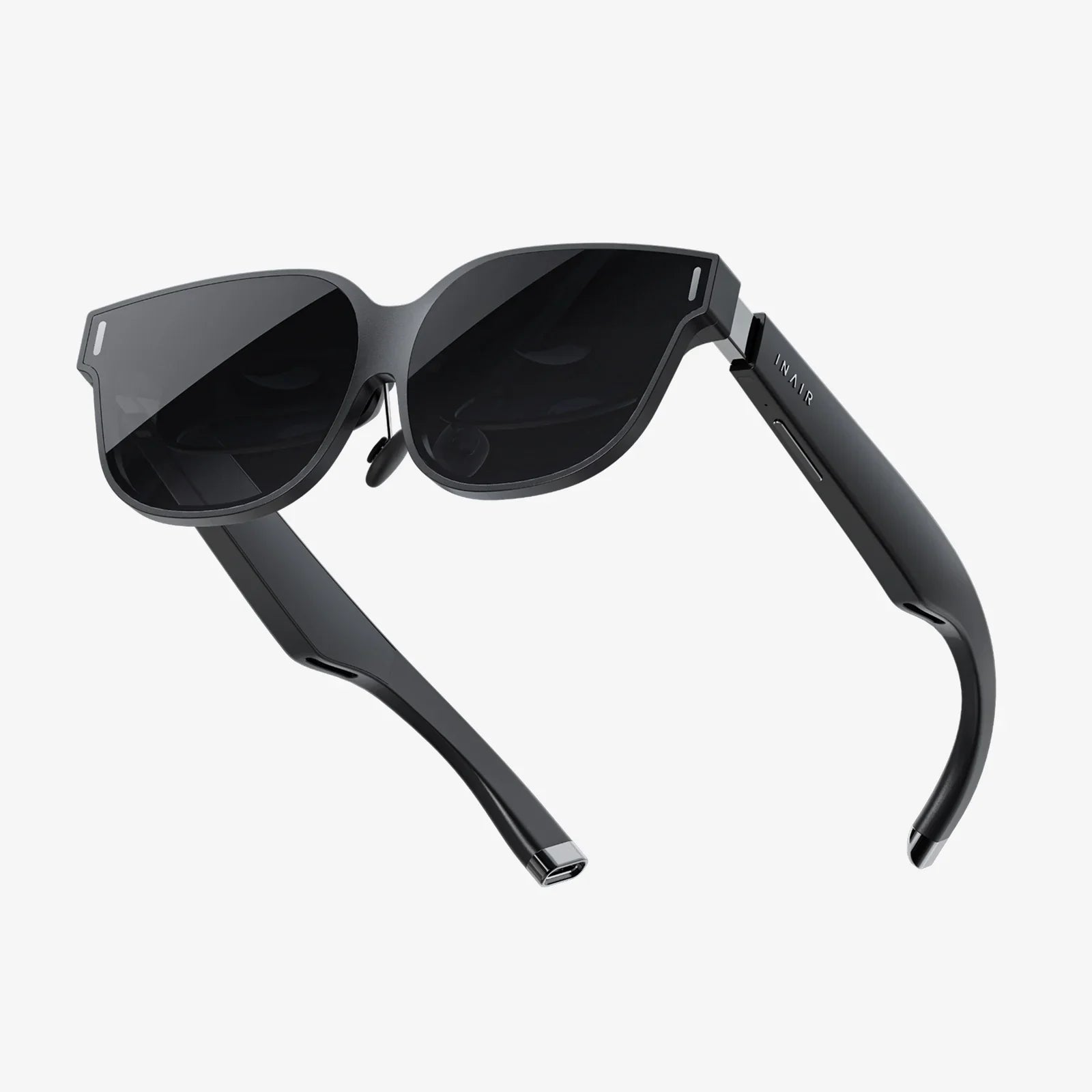
Multi-modal interaction will become the standard. Instead of interacting solely by voice or text, we will engage with assistants through a combination of touch, gesture, gaze, and voice seamlessly. They will become embodied in new forms, from advanced smart glasses that overlay information onto the real world to holographic projections that can be interacted with physically.
The most profound shift will be toward agentic action. Instead of simply following commands, future assistants will be granted the autonomy to act on our behalf within clearly defined boundaries. They might negotiate a lower price for a subscription service, automatically reschedule a missed flight, or conduct preliminary research for a project by synthesizing information from dozens of sources and presenting a distilled report. This moves the paradigm from "tool" to "true agent," acting as a proxy for our intentions in the digital world.
The automated personal assistant represents one of the most significant and intimate technological shifts of our time. It is a mirror reflecting our desire for control over an increasingly complex world and our hunger for more time to spend on what truly matters. The path forward is not to reject this technology, but to engage with it critically—to demand transparency, advocate for strong ethical standards, and consciously choose how we integrate it into our lives. The goal is not to create a world where machines live our lives for us, but one where they handle the mundane, so we can better focus on the uniquely human: creativity, connection, and experience. The silent revolution is here; the question is how wisely we will guide it.
Share:
AI AR Styles Are Reshaping Reality and Redefining Human Expression
Virtual Reality Workflow: The Ultimate Guide to Immersive Design and Collaboration