


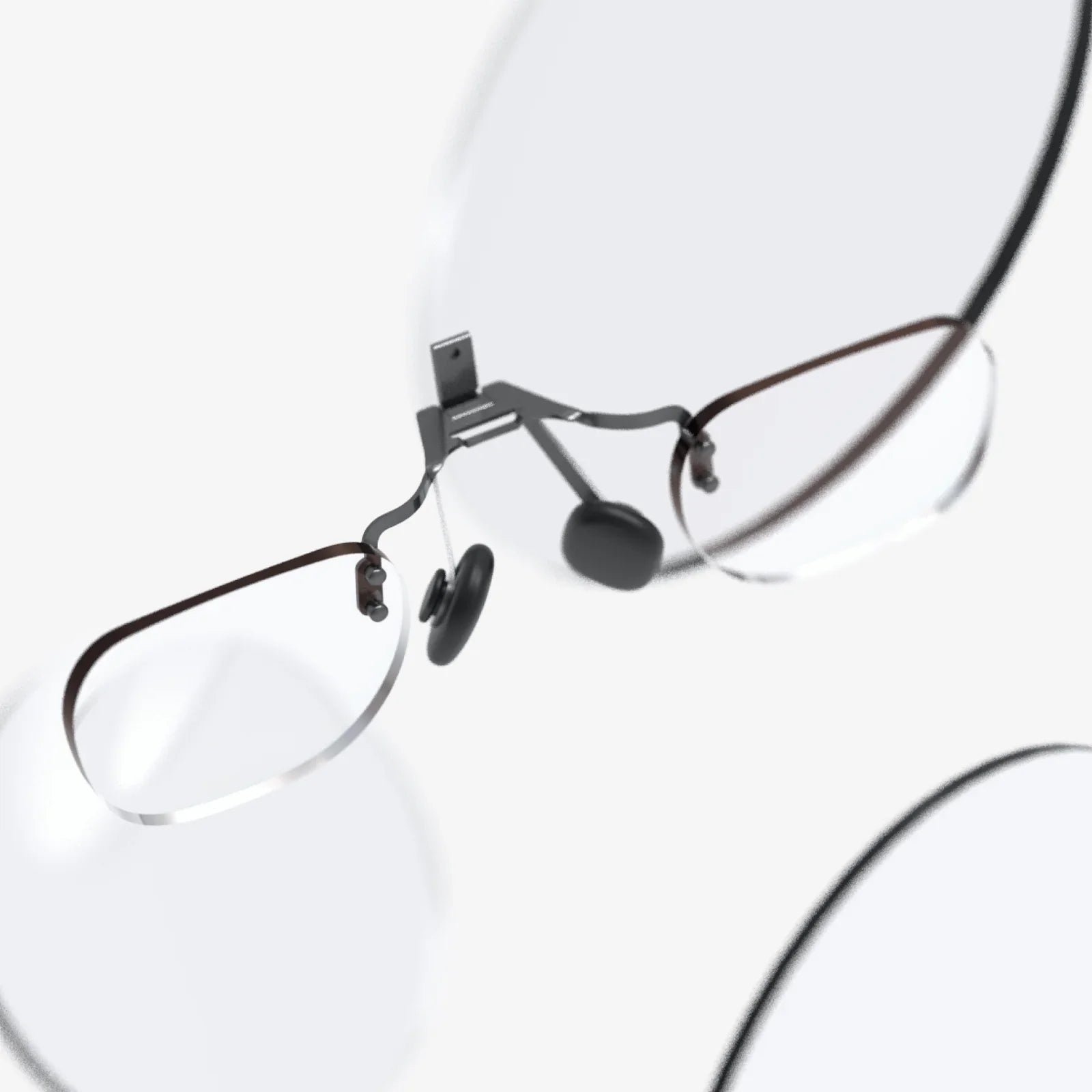
Imagine a world where the line between the digital and the physical isn't just blurred—it's intelligently woven together by an invisible force. A world where your environment understands you, responds to you, and enhances your reality in ways previously confined to science fiction. This isn't a distant future; it's the emerging present, powered by the powerful and synergistic convergence of three revolutionary technologies: Artificial Intelligence (AI), Augmented Reality (AR), and Virtual Reality (VR). This series explores this trinity of innovation, a fusion so potent it is fundamentally reshaping our reality, one intelligent layer at a time.
The Individually Powerful Pillars
Before we can appreciate the symphony, we must understand the unique instruments. Each technology in this series brings a distinct and powerful capability to the table.
Artificial Intelligence: The Digital Brain
At its core, AI is the engine of cognition. It is the suite of technologies that enables machines to sense, comprehend, act, and learn. From machine learning algorithms that discern patterns in vast datasets to natural language processing that allows for fluid conversation with machines, AI provides the 'smarts'. It is the reason a system can recognize a face, predict a user's next action, understand a spoken command, or generate a realistic 3D model from a simple text prompt. Without AI, our digital tools are merely sophisticated calculators; with it, they become perceptive partners.
Virtual Reality: The Total Escape
VR is the technology of complete immersion. By blocking out the physical world and replacing it with a computer-generated digital environment, VR transports the user. Through headsets and motion-tracking sensors, users can look around, move through, and interact with a world that exists only as bits and bytes. The primary goal of VR is presence—the convincing feeling of being somewhere else. This makes it unparalleled for applications like immersive training simulations, virtual tourism, and deep, narrative-driven gaming experiences. It creates realities from scratch.
Augmented Reality: The Enhanced World
If VR replaces reality, AR augments it. AR overlays digital information—images, text, 3D models—onto the user's view of their real-world environment. Through the lens of a smartphone, tablet, or, more powerfully, AR glasses, users see the world, but better. A navigation arrow painted onto the street, a historical figure standing on a monument, or the preview of a new piece of furniture in your living room—all are examples of AR. It seeks to enhance our perception of and interaction with the world we already inhabit, rather than replacing it.
The Convergence: Where the Magic Happens
Individually, these technologies are transformative. Together, they are revolutionary. Their convergence creates a feedback loop where each makes the others exponentially more powerful, intelligent, and useful.
AI as the Engine for AR and VR
This is perhaps the most critical synergy. AI acts as the central nervous system for immersive experiences, solving some of the most significant challenges in AR and VR.
- Spatial Understanding and Mapping: For AR to place a digital object convincingly on your table, it must understand the geometry and physics of your room. AI-powered computer vision algorithms analyze camera feed in real-time to identify surfaces (floors, walls, tables), estimate depth, and create a precise 3D map of the environment. This allows digital objects to occlude correctly behind real-world objects and stay locked in place as you move.
- Gesture and Gaze Tracking: Traditional controllers are a barrier to natural interaction. AI enables advanced inside-out tracking, using cameras to understand hand gestures, finger positions, and even where a user is looking. An AI model can interpret a pinch, a grab, or a wave, turning your hands into the controller. This makes interactions within AR and VR far more intuitive and immersive.
- Realistic Avatars and Social Presence: For social VR and AR experiences to feel genuine, the digital representations of people must be expressive. AI drives the creation of realistic avatars by using sensors to map and replicate a user's facial expressions and lip movements in real-time, conveying emotion and intent that is critical for human connection.
- Intelligent Content Generation: AI can dynamically generate VR environments or AR content based on user input or context. Imagine an AR storytelling app where the narrative and characters change based on your real-world location, or a VR training simulation that adapts its challenges in real-time based on the user's performance, all powered by generative AI models.
AR and VR as the Interface for AI
Conversely, AR and VR provide the perfect visual and interactive canvas for AI. They make the invisible, visible.
AI often operates as a mysterious black box, making decisions we can't see. AR can visualize AI's thought process. A technician wearing AR glasses can look at a complex machine and see AI-driven diagnostics overlaid directly on the components—highlighting a part that is likely to fail, displaying performance metrics, or providing animated repair instructions. A doctor could examine a patient's MRI scan as a 3D hologram, with AI algorithms highlighting potential areas of concern. This spatial computing interface allows humans to collaborate with AI in a shared, understood space, dramatically improving decision-making and efficiency.
Transforming Industries: The Practical Applications
The theoretical fusion of these technologies is compelling, but its real power is revealed in its practical, world-changing applications across countless sectors.
Healthcare and Medicine
The combination is a game-changer for health. Medical students can practice complex surgeries in risk-free VR simulations guided by an AI tutor that provides real-time feedback. Surgeons can use AR overlays during actual operations, projecting critical information like patient vitals or a 3D model of a tumor directly into their field of view. AI can analyze medical scans and project findings as AR holograms for better pre-operative planning. Furthermore, VR therapy sessions powered by AI are being used to treat PTSD, phobias, and anxiety, with the AI dynamically adjusting the therapeutic environment based on the patient's physiological responses.
Manufacturing and Field Service
On the factory floor, an engineer wearing AR glasses can see assembly instructions overlaid on a product. The AI backend recognizes the specific model and customizes the instructions. If the engineer encounters a problem, they can live-stream their view to a remote expert, whose annotations appear in their AR display. The AI can also analyze the feed to proactively identify potential errors or safety hazards. This reduces errors, cuts training time, and allows a single expert to guide countless workers anywhere in the world.
Retail and E-Commerce
Try before you buy is being redefined. AR allows customers to see how a piece of clothing fits, how a new sofa looks in their lounge, or how a shade of paint appears on their wall—all from their home. AI enhances this by recommending products based on your style, your room's dimensions, or even the color palette of your uploaded photo. It personalizes the experience at scale, merging the convenience of online shopping with the confidence of an in-store purchase.
Education and Training
Textbooks become living entities. Students can take a VR field trip to ancient Rome, with AI-powered historical figures acting as guides. They can dissect a virtual frog, with an AI explaining each organ's function. Mechanics can train on the virtual engine of a new vehicle model, with the AI simulating faults and guiding them through repairs. This experiential, hands-on learning, tailored by AI, leads to drastically improved retention and understanding.
The Human Factor: Challenges and Ethical Considerations
With great power comes great responsibility. The integration of AI, AR, and VR raises profound questions we must address as a society.
- Privacy and Data Security: These technologies are data-hungry. They constantly scan and analyze our environments, our movements, our gaze, and even our biometric responses. Who owns this incredibly intimate data? How is it stored and secured? The potential for surveillance is unprecedented.
- Algorithmic Bias: AI systems are only as good as the data they are trained on. If that data contains societal biases, the AI will perpetuate and potentially amplify them. An AR hiring tool that analyzes candidates could discriminate, or a VR training simulation could reinforce stereotypes. Rigorous auditing and diverse data sets are non-negotiable.
- The Reality Gap: As these experiences become more convincing, the line between what is real and what is simulated may become dangerously thin. This could lead to new forms of manipulation, misinformation (e.g., convincing deepfake AR experiences), and psychological impacts. Establishing digital literacy and ethical guidelines for content creation is crucial.
- Access and the Digital Divide: This technology is currently expensive and resource-intensive. There is a real risk of creating a new divide between those who can afford to access and shape these enhanced realities and those who cannot, potentially exacerbating existing social and economic inequalities.
The Future is a Blend
The trajectory of this convergence points towards a future of ambient computing, where intelligent, context-aware interfaces are seamlessly integrated into our lives. We are moving towards lighter, more socially acceptable AR glasses that will become as ubiquitous as smartphones, offering a constant stream of contextual information powered by an ever-present AI. VR will achieve photorealistic fidelity and full haptic feedback, making virtual spaces indistinguishable from physical ones for work, socializing, and play. The very concept of 'going online' will dissolve as the digital and physical worlds become a continuous, intelligently blended experience.
The journey of the AI AR VR series is just beginning. It is a narrative of technological synergy that promises to redefine human potential, creativity, and connection. It challenges us to dream bigger, to imagine not just new products, but new realities. And as we stand on the brink of this new era, the most important question is not what these technologies will do, but what we, humanity, will choose to do with them. The power to shape this blended future—to ensure it is ethical, equitable, and ultimately, human—rests firmly in our hands. The next chapter of reality is waiting to be written, and you already have a front-row seat.
Share:
Augmented Reality VR 2025: The Blurred Lines Between Digital and Physical
AR VR AR: The Seamless Loop of Our Digital and Physical Futures