


- by wangfred
AI Assistant AR Smart Glasses: The Invisible Revolution Reshaping Reality
- by wangfred
Imagine a world where information doesn’t live on a screen in your hand, but is seamlessly painted onto the canvas of reality itself. A world where a digital assistant, powered by a formidable artificial intelligence, doesn’t just respond to your voice but sees what you see, understands your context, and offers guidance before you even ask. This is not a distant sci-fi fantasy; it is the imminent future being forged at the intersection of two transformative technologies: the AI assistant and AR smart glasses. This convergence promises to dissolve the barrier between the digital and the physical, creating a new, intuitive, and profoundly powerful way to navigate our lives and environments.
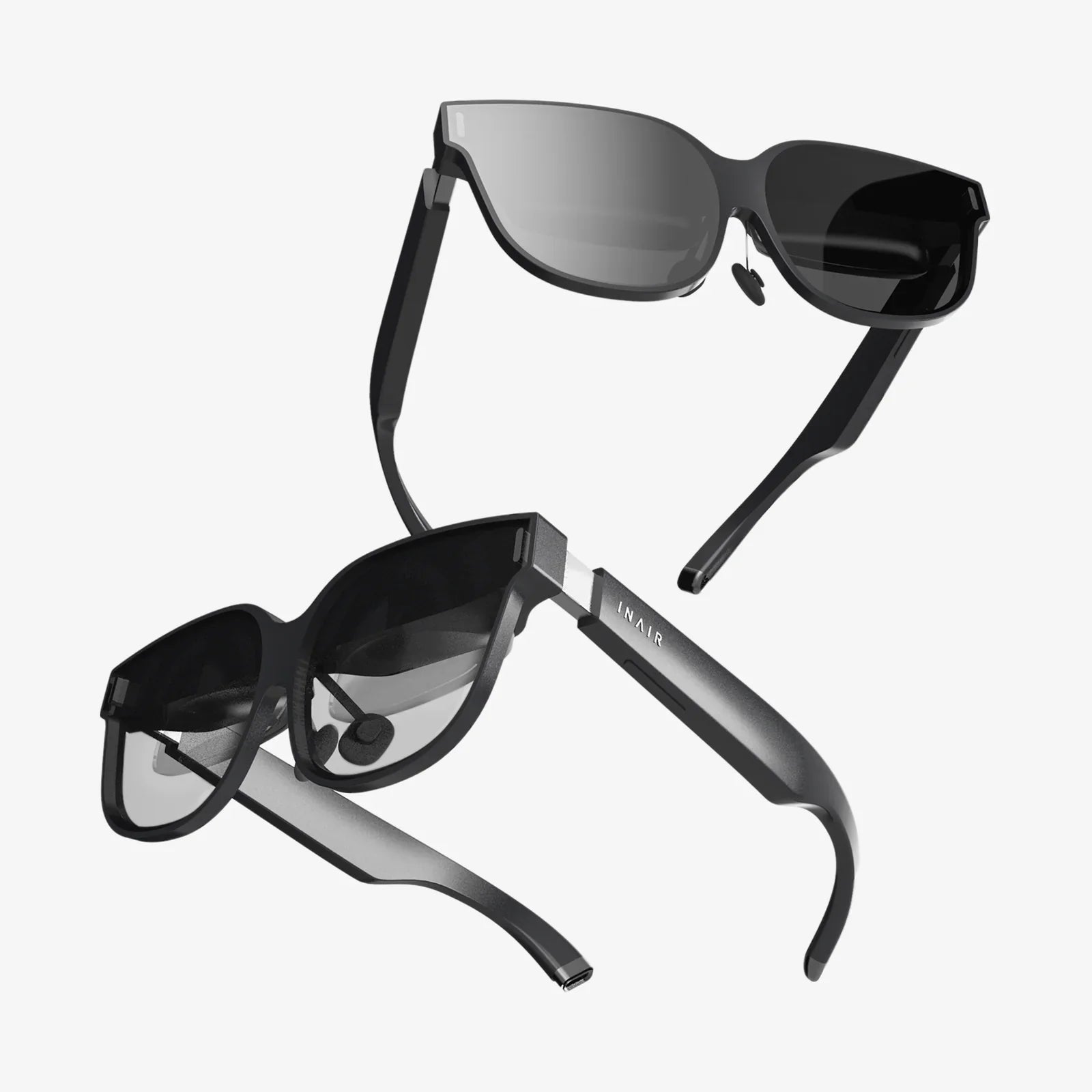
To understand the revolution, one must first appreciate the individual components and their symbiotic relationship. Augmented reality smart glasses are the hardware—the eyes and ears of the operation. They are a sophisticated wearable computer disguised as eyewear, equipped with a constellation of sensors:
This sensor suite generates a torrent of raw, unstructured data about the user's environment. On its own, this data is largely meaningless. This is where the AI assistant enters the stage. It acts as the brain, a sophisticated software platform running complex algorithms, often powered by neural networks in the cloud. Its role is multi-faceted:
The magic happens in the feedback loop between the two. The glasses feed data to the AI, and the AI enriches what the glasses show you. It’s a continuous cycle of perceiving, processing, and projecting, creating an intelligent layer of augmentation atop reality.
The potential of AI-powered AR glasses extends far beyond getting directions superimposed on the street. They are poised to become indispensable tools in professional and personal contexts.
For technicians, engineers, and field service workers, these devices are a game-changer. An engineer repairing a complex piece of machinery can see a digital schematic overlaid directly onto the equipment, with the AI assistant highlighting the specific component to replace and providing animated instructions. A warehouse worker fulfilling an order can have navigation arrows guide them to the exact shelf, with the AI verifying they pick the correct item by scanning it. This hands-free, eyes-up paradigm drastically reduces error rates, accelerates training, and improves safety and efficiency.
Surgeons could operate with a patient's vital statistics and 3D anatomical models visible in their periphery, without ever looking away from the operating table. Medical students could practice procedures on holographic patients. For general practitioners, an AI assistant could pull up a patient's records instantly during a consultation, displaying key information discreetly on the lens, allowing for more natural, face-to-face interaction.
Navigation will become intuitive and immersive. Instead of glancing down at a phone, directions will be painted onto the sidewalk, with arrows turning and flowing with the path. For individuals who are blind or have low vision, the AI can become a powerful visual interpreter, describing scenes, reading text aloud from menus and signs, and identifying obstacles and people, granting a new level of independence.
In daily life, the technology promises to make us more present. Imagine meeting someone and having their name and a reminder of how you know them appear subtly next to their face. You could translate a foreign menu in real time, just by looking at it. A recipe could be followed with instructions floating next to the mixing bowl, hands remaining flour-free. The constant need to unlock a phone, open an app, and break focus could become a relic of the past.
Despite the exciting potential, the path to mainstream adoption is fraught with significant technical and social challenges that must be overcome.
The ultimate goal is a device that is indistinguishable from regular eyewear—lightweight, stylish, and comfortable enough for all-day wear. Current technology often requires trade-offs between battery life, processing power, display brightness, and size. Achieving a socially acceptable design that doesn't scream "tech enthusiast" is paramount for widespread consumer acceptance.
The computational demands of real-time computer vision and AI are immense. While some processing can be offloaded to a paired device or the cloud, this requires robust, low-latency connectivity (like 5G). Relying solely on cloud processing introduces lag and fails in areas with poor service. Therefore, a balance of on-device processing (for speed) and cloud processing (for power) is needed, all while managing voracious power consumption to avoid bulky batteries.
This is perhaps the most significant hurdle. A device with always-on cameras and microphones worn on one's face is a privacy advocate's nightmare. The potential for constant surveillance, both by corporations and governments, is a serious concern. Clear and transparent data policies, robust on-device data anonymization, and physical privacy features like a prominent "recording" light or a mechanical camera shutter are non-negotiable to build public trust.
How do we interact with someone wearing AR glasses? Are they recording me? Are they even paying attention? New social norms will need to evolve. Furthermore, the cost of this advanced technology could initially create a new digital divide, limiting access to its benefits for lower-income populations.
The evolution of AI assistant AR smart glasses will not be a single event but a gradual progression. We will likely see initial dominance in enterprise and niche applications where the value proposition is clear and the users are trained. As the technology matures—becoming smaller, more powerful, and longer-lasting—it will trickle down to consumers.
Future iterations will move beyond simple graphics to full-color, high-fidelity holograms that are indistinguishable from real objects. The AI will evolve from a reactive assistant to a proactive agent, anticipating needs based on patterns and context. We may see the development of a spatial operating system, a unified platform where apps are not confined to rectangles but are instead environmental experiences that persist in specific locations.
The endpoint of this trajectory is a shift in human-computer interaction as profound as the move from the command line to the graphical user interface. The goal is invisible computing—where the technology fades into the background, and we are left only with its enhanced utility, allowing us to be more capable, more connected, and more immersed in the real world, not less.
The true potential of this technology lies not in replacing reality, but in amplifying it, offering a seamless fusion of human intuition and machine intelligence that will forever change how we work, learn, and perceive the world around us. The future is not in your pocket; it’s right before your eyes.
Share:
Smart Glasses Frames Are Revolutionizing How We See and Interact With the World
Smart Glasses with Built-in Display 2025: The Dawn of Seamless Augmented Reality