


- by wangfred
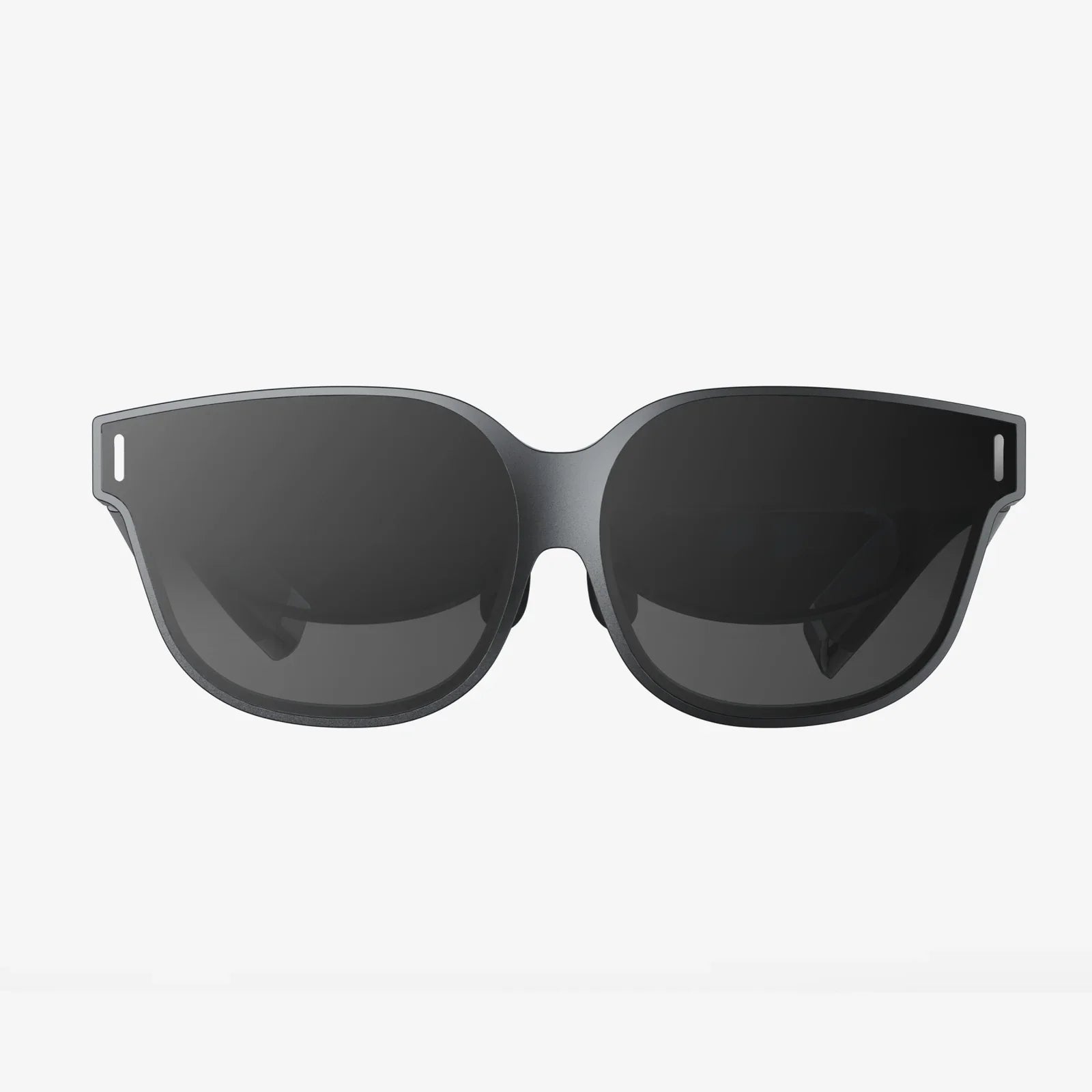
Smart Glasses with Built-in Display 2025: The Dawn of Seamless Augmented Reality
- by wangfred
Imagine a world where information doesn't live on a screen in your hand but is seamlessly painted onto the canvas of your reality. This is the promise of 2025, a year poised to become the definitive inflection point for smart glasses with built-in displays, moving them from the realm of speculative fiction and clunky prototypes into the fabric of our daily lives. The convergence of critical technological advancements is creating a perfect storm, ready to deliver a wearable device that is not just functional but truly desirable.
The journey of head-worn computing has been a long and often awkward one. For years, the concept was hampered by a trifecta of limitations: bulky and socially unacceptable designs, underwhelming battery life that tethered users to power outlets, and display technology that was either too faint for outdoor use or too resource-intensive. Early iterations often felt like solutions in search of a problem, failing to articulate a compelling reason for the average consumer to adopt them.
However, the years leading up to 2025 have been a period of intense and quiet refinement. Breakthroughs in miniaturization, optical engineering, and power efficiency are finally aligning to overcome these historical barriers. We are no longer asking if these devices will become mainstream, but rather how quickly they will integrate into our social and professional norms. The foundational work has been laid, and 2025 is set to be the year it all crystallizes into a cohesive and powerful user experience.
The smart glasses of 2025 will be powered by a symphony of integrated technologies, each playing a critical role in creating a seamless and immersive experience.
At the core of these devices will be system-on-a-chip (SoC) architectures designed specifically for augmented reality workloads. Unlike the processors in your phone or computer, these chips will prioritize ultra-low power consumption and efficient thermal management to avoid uncomfortable heat build-up on the user's face. Crucially, they will feature dedicated neural processing units (NPUs) or AI co-processors. These specialized components will handle the immense computational tasks required for real-time computer vision and contextual understanding without draining the battery. This onboard intelligence is what will allow the glasses to understand the world you're looking at, overlaying relevant information instantly and accurately.
To see and understand the world, these glasses will be equipped with a sophisticated array of sensors that go far beyond a simple camera. This will likely include:
While touchpads on the temple or gesture controls will be available, the primary interface will be a vastly improved voice assistant. By 2025, these AI assistants will be truly contextual. Instead of requiring specific, rigid commands, they will understand natural language and, more importantly, the context of what you are looking at. You could simply look at a restaurant and ask, "Do they have any vegetarian options?" and the glasses would cross-reference the menu it sees with a database to provide an instant answer.
The most significant differentiator for the 2025 generation will be the built-in display. The quest for the perfect blend of high resolution, wide field of view, brightness, and energy efficiency is nearing its culmination. Several technologies are leading the charge.
This remains the most promising path for consumer-grade devices. Waveguides are essentially transparent pieces of glass or plastic that use microscopic gratings to "pipe" light from a micro-projector at the temple into the user's eye. Advancements in 2025 will focus on expanding the field of view to something more immersive (closer to 50 degrees rather than the current 20-30) while drastically improving optical efficiency for brighter images and better battery life. Manufacturing yields are also expected to improve, bringing costs down.
MicroLEDs are incredibly small, bright, and energy-efficient light sources. As a micro-display technology, they are ideal for projecting information onto waveguide combiners. Their ability to produce vibrant colors and deep blacks in all lighting conditions, including direct sunlight, will be a key factor in making these glasses usable anywhere. Their efficiency is a major contributor to all-day battery life aspirations.
While other technologies dominate, continued refinements in LCoS (which uses liquid crystals to modulate light on a reflective surface) and Laser Beam Scanning (which uses tiny moving mirrors to draw images directly onto the retina) will persist, potentially finding niches in specific professional or high-end applications where their particular advantages in contrast or efficiency are paramount.
The true measure of this technology's success lies in its utility. By 2025, smart glasses will begin to fade into the background, becoming an invisible conduit to a digitally-augmented world.
This is where adoption will likely be fastest and most impactful. Imagine a field engineer repairing a complex piece of machinery. With a glance, their glasses overlay animated repair instructions, highlight specific components, and display real-time sensor data from the machine itself. A surgeon could see vital stats and imaging data superimposed on their patient without ever looking away from the operating field. Architects could walk through a construction site and see their digital building models perfectly aligned with the physical structure, identifying potential clashes before they become costly problems. The gains in efficiency, accuracy, and safety will be transformative.
For the consumer, the applications are both practical and playful. Navigation will evolve from looking at a blue dot on a phone to seeing vibrant arrows and signs laid over the actual streets and sidewalks. Travelers will benefit from real-time translation subtitles appearing over street signs and conversations. Shopping will be enhanced with instant product comparisons, reviews, and style recommendations as you browse store shelves. Socially, the ability to share immersive experiences—watching a concert together from across the globe or leaving digital notes for friends at specific locations—will create new forms of connection.
This bright future is not without its significant hurdles. For widespread adoption to occur, manufacturers and society must confront critical issues head-on.
A device that records audio and video continuously presents an obvious privacy nightmare. The 2025 generation must have privacy built into its hardware. This means physical shutter switches for cameras, clear indicator lights that signal when recording is active, and a robust, transparent data policy that gives users complete control over their information. On-device processing will be crucial, ensuring that sensitive data from a user's environment is analyzed locally and never needs to be sent to a cloud server.
How will we interact with someone wearing glasses that could be recording us? New social norms and potentially even laws will need to evolve. The "glasshole" stigma of earlier devices must be overcome through elegant, unobtrusive design and clear social cues that communicate the device's status to others.
All-day battery life is the holy grail. While improvements are constant, the laws of physics are challenging. We will likely see a combination of ultra-low-power displays, efficient processors, and innovative solutions like swappable battery packs or companion devices that offload processing and power needs to a device in your pocket, extending the glasses' own battery significantly.
The success of the smartphone was not due to the hardware alone but to the vibrant ecosystem of apps that grew around it. The same will be true for smart glasses. By 2025, we can expect mature application stores filled with experiences built specifically for an augmented world. Developers will have access to sophisticated software development kits (SDKs) that make it easier to create spatially-aware applications. This ecosystem will be the true engine of innovation, finding uses for the technology that its creators never even imagined.
The horizon of 2025 is not just about a new product category; it is about the beginning of a fundamental shift in human-computer interaction. We are moving away from pulling a rectangle out of our pocket and towards a future where computing is ambient, contextual, and seamlessly integrated into our perception of the world. The smart glasses emerging in this period will be the first true window into that future, offering a glimpse of a world where the digital and physical are no longer separate realms but a unified, enhanced experience. The device itself will become invisible, and all that will remain is the magic it enables.
Share:
AI Assistant AR Smart Glasses: The Invisible Revolution Reshaping Reality
RealWear Smart Glasses: The Dawn of a New Industrial Revolution