


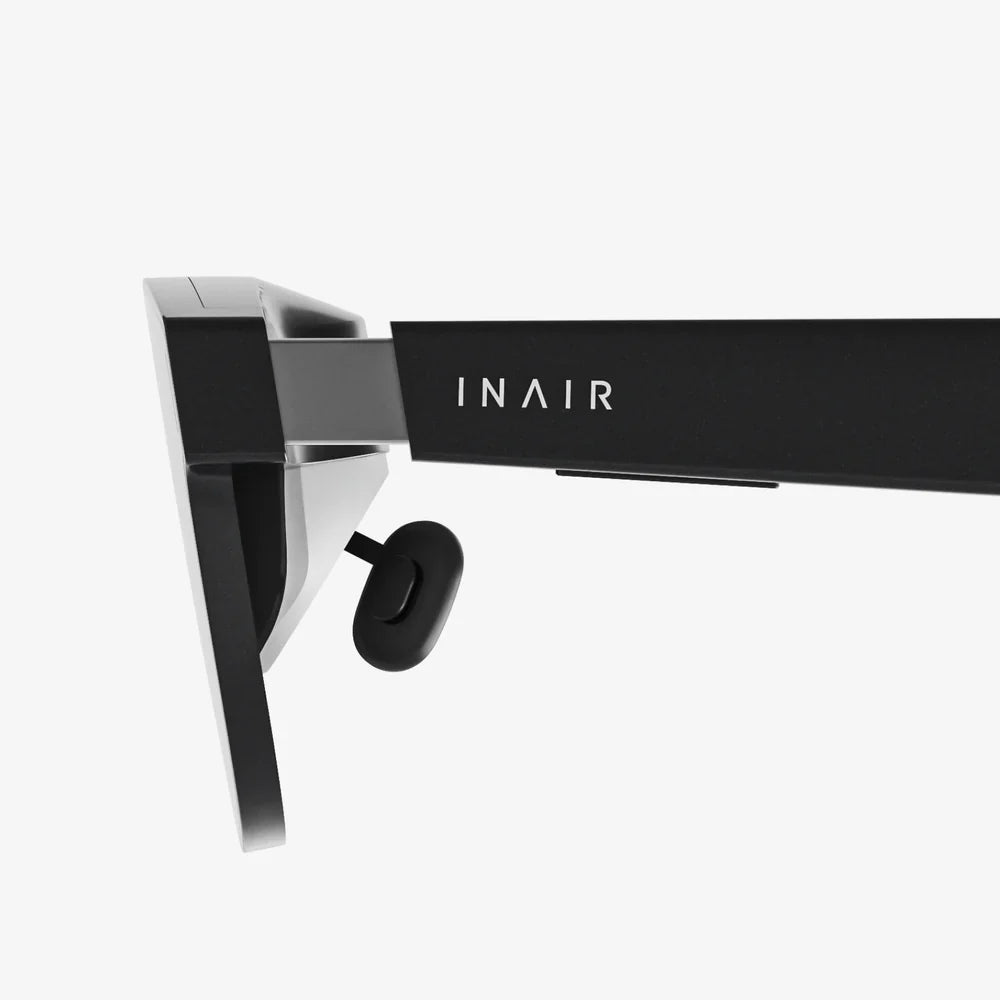
Imagine a world where the line between human intuition and digital intelligence blurs into a seamless dance of productivity, where every task is informed, every movement optimized, and every worker is empowered with the collective knowledge of their entire field. This is not a distant science fiction fantasy; it is the emerging reality ushered in by the advent of AI force working augmented reality goggles. These sophisticated devices are poised to become the most transformative tool in the modern industrial and service sectors, augmenting human potential in ways previously unimaginable and fundamentally reshaping the concept of work itself.
The Convergence of Two Revolutionary Technologies
To understand the profound impact of these systems, one must first appreciate the powerful synergy they represent. Augmented reality, by itself, is a powerful visualization tool. It overlays digital information—text, images, 3D models—onto the user's view of the physical world. Artificial intelligence, separately, is the engine of prediction, pattern recognition, and autonomous decision-making. When fused within a single wearable form factor like goggles, these technologies cease to be mere tools and become an active, intelligent partner.
The AI component acts as the brain, continuously processing a vast array of data inputs: live video feed from the goggles' cameras, sensor data, pre-loaded schematics, real-time operational metrics, and even streaming data from other connected devices in an Internet of Things (IoT) ecosystem. It analyzes this data, identifies relevant patterns, predicts potential outcomes, and determines the most crucial information a worker needs at that exact moment. The AR component then becomes the voice of this digital brain, projecting those insights directly into the user's field of vision in an intuitive and contextually relevant manner. This creates a closed-loop system of perception, analysis, and action, dramatically enhancing human efficiency and accuracy.
Transforming the Industrial Workspace
The most immediate and dramatic applications are found in industrial environments. Factories, warehouses, and construction sites are complex, dynamic, and often hazardous places where precision and safety are paramount.
Complex Assembly and Manufacturing
On the assembly line, AI force working goggles are revolutionizing workflows. A technician tasked with assembling a intricate piece of machinery no longer needs to constantly consult paper manuals, PDFs on a tablet, or distant computer monitors. Instead, the goggles provide a holographic, step-by-step guide overlaid directly onto the physical components in front of them. The AI can recognize each part via computer vision, highlight the exact connection points with digital arrows, and display torque specifications or wiring diagrams right where the work is happening. If the technician picks up a wrong part or attempts to install something incorrectly, the AI can immediately recognize the error, highlight the discrepancy in a contrasting color, and provide corrective instructions, virtually eliminating assembly errors and reducing training time for new hires from weeks to days.
Warehouse Logistics and Inventory Management
In massive distribution centers, pickers and packers are equipped with these intelligent goggles. The AI system, integrated with the warehouse management software, calculates the most efficient route through the labyrinth of shelves. The goggles then project a digital path on the floor for the worker to follow. Upon arriving at the correct bin, the goggles highlight the specific item and the required quantity. They can also display vital information like weight, handling instructions, or expiration dates. This hands-free, guided process drastically improves picking speed and accuracy, reduces walking time, and minimizes training requirements. Furthermore, the AI can continuously monitor inventory levels in real-time by visually auditing shelves as workers pass by, automating a traditionally tedious and error-prone task.
Predictive Maintenance and Remote Expertise
One of the most powerful applications is in equipment maintenance. A field service engineer can look at a complex piece of industrial equipment through their goggles. The AI, using its vast database of 3D models and operational data, can identify components, display their service history, and show internal parts that are otherwise hidden. By analyzing thermal imaging from the goggles' sensors or listening to audio patterns, the AI can predict a potential component failure before it happens, alerting the engineer to replace a part during a scheduled maintenance window rather than responding to a catastrophic failure days later.
Perhaps even more transformative is the ability to summon remote expertise. If an engineer encounters a problem they cannot solve, they can initiate a live, AR-supported video call with a senior specialist located anywhere in the world. The remote expert can see exactly what the on-site engineer sees, and then use digital annotation tools to draw arrows, circles, or instructions directly into the engineer's augmented field of view. This creates a collaborative environment where decades of experience can be beamed directly onto a problem, reducing equipment downtime and ensuring first-time fixes without the cost and delay of travel.
Beyond the Factory Floor: Applications Across Sectors
The potential of this technology extends far beyond heavy industry. Its ability to enhance human perception and decision-making is finding use in numerous other fields.
Healthcare and Surgery
In the medical field, surgeons are using AI-powered AR goggles to visualize critical patient data, such as heart rate or blood pressure, without looking away from the operating field. More advanced applications allow for the overlay of pre-operative scans—like MRI or CT data—directly onto the patient's body, effectively giving the surgeon "X-ray vision" to see tumors, blood vessels, or bone structures beneath the surface. The AI can help identify margins and guide precise incisions, improving surgical outcomes and reducing operation times.
Training and Education
The realm of education and skills training is being upended. From medical students practicing complex procedures on virtual patients to mechanics learning to repair new engine models, the goggles provide an immersive, interactive, and risk-free learning environment. The AI can tailor the training difficulty in real-time, provide instant feedback on the trainee's actions, and create a deeply engaging educational experience that accelerates mastery.
Navigating the Human and Ethical Dimensions
Such a powerful technological shift does not come without its challenges and ethical considerations. The integration of a constant, AI-driven data stream into the human experience raises critical questions about privacy, data security, and the changing nature of work itself.
There is a legitimate concern about worker monitoring and surveillance. The same sensors that provide helpful guidance can also be used to monitor employee performance, attention, and breaks with unprecedented detail. Establishing clear ethical guidelines and transparent policies on data collection and usage is paramount to maintaining trust and ensuring this technology empowers rather than oppresses the workforce.
Furthermore, the fear of automation replacing human jobs is amplified here. However, the prevailing perspective is that this technology is primarily augmentative. It is designed to take over repetitive, data-intensive, or physically strenuous tasks, freeing up human workers to focus on higher-order problem-solving, creativity, and strategic decision-making—areas where humans still significantly outperform machines. The goal is not to create a workforce of automatons guided by AI, but to create super-powered experts, enhancing their innate skills with a seamless flow of actionable intelligence.
The Future is Augmented
The evolution of AI force working augmented reality goggles is moving at a breathtaking pace. Future iterations will feature improved battery life, wider fields of view, more sophisticated and smaller sensors, and ever-more-capable AI models. We can anticipate advancements in brain-computer interfaces that will allow for control of the interface through mere thought or subtle gestures, making the interaction even more seamless and intuitive. As 5G and subsequent network technologies become ubiquitous, the latency in data transmission will vanish, enabling complex computations to be handled in the cloud, making the goggles lighter and more powerful.
This will unlock applications we are only beginning to conceive: architects walking through fully interactive holographic models of their buildings before ground is broken, firefighters seeing through smoke to locate victims and identify safe paths, and mechanics collaborating with an AI co-pilot to diagnose and repair the complex systems of tomorrow.
The era of passive computing, where we seek out information from a device, is coming to a close. We are entering the age of contextual computing, where relevant information finds us, presented in a way that is immediately useful within our real-world context. AI force working augmented reality goggles are the vanguard of this shift, moving digital intelligence from our pockets and onto our faces, and ultimately, into our perceptual framework. They represent not just a new gadget, but a fundamental upgrade to human capability, promising to unlock new levels of efficiency, safety, and understanding across every facet of our working lives.
The workspace of tomorrow is being built today, not with bricks and mortar, but with bits and algorithms, projected directly before our eyes. This silent fusion of human and machine intelligence, facilitated by a simple pair of goggles, is unlocking a new tier of human potential, turning every worker into a master of their craft and every task into an opportunity for flawless execution. The future of work isn't just automated; it's augmented, intelligent, and already here, waiting for you to see its true potential.
Share:
What's The Newest VR Headset - A Deep Dive Into The Next Generation of Immersive Technology
Best VR Headset for Work: Revolutionizing Productivity in the Virtual Office